


An outdoor LED billboard should match the conditions at its installation site. Brightness and IP ratings alone cannot cover glare, heat, rain, corrosion, and difficult servicing. A useful specification connects image visibility, cabinet protection, cooling, access, and long-term operating costs.
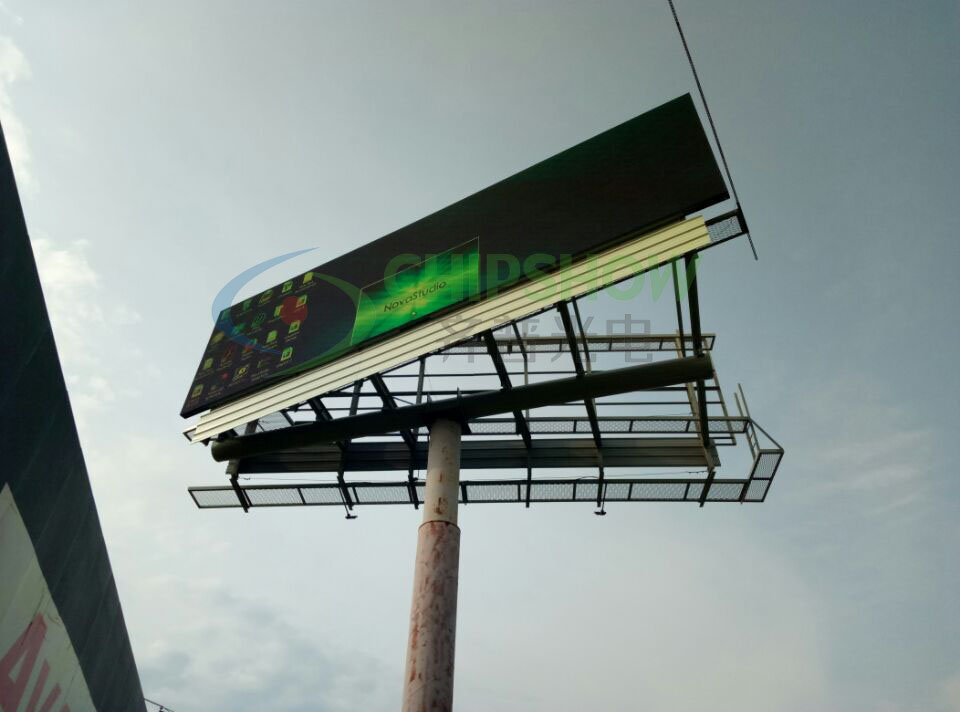
Record Site Conditions for the Outdoor LED Billboard
A detailed site record gives suppliers a clear basis for design and pricing.
| Site Factor | Information to Record | Why It Matters |
|---|---|---|
| Screen orientation | Compass direction, mounting angle, and screen tilt. | Shows when direct or reflected sunlight may reduce contrast. |
| Climate | Temperature range in °C (°F), rain, snow, ice, dust, and humidity. | Affects enclosure, drainage, and cooling requirements. |
| Corrosion exposure | Salt air, road spray, industrial pollution, and cleaning chemicals. | Affects coatings, fasteners, connectors, and inspection schedules. |
| Installation height | Screen elevation in m (ft), lifting access, and work area. | Affects structural work, labor, and maintenance cost. |
| Service conditions | Rear clearance, front access, power isolation, and spare storage. | Determines how technicians can service the screen. |
Sun Exposure and Screen Orientation
Record sunlight conditions during normal advertising hours. Check the site in the morning, around midday, and late afternoon.
South-facing screens often receive long periods of sun across Europe and North America. West-facing screens may face strong afternoon exposure.
Nearby glass can reflect sunlight directly onto the display. These reflections may reduce contrast even at partly shaded sites.
Screen tilt also affects glare after dark. Check viewing angles from roads, homes, offices, and nearby upper floors.
Climate and Corrosion Exposure
Annual rainfall figures do not show every local risk. Wind-driven rain, frozen water, salt deposits, and dust need separate review.
Coastal locations need suitable coatings, sealed connectors, corrosion-resistant fasteners, and protected cable entries. Industrial sites may need more frequent cleaning.
Cold climates require drainage paths that stay open during freeze-thaw cycles. Hot climates require thermal checks under direct sunlight.
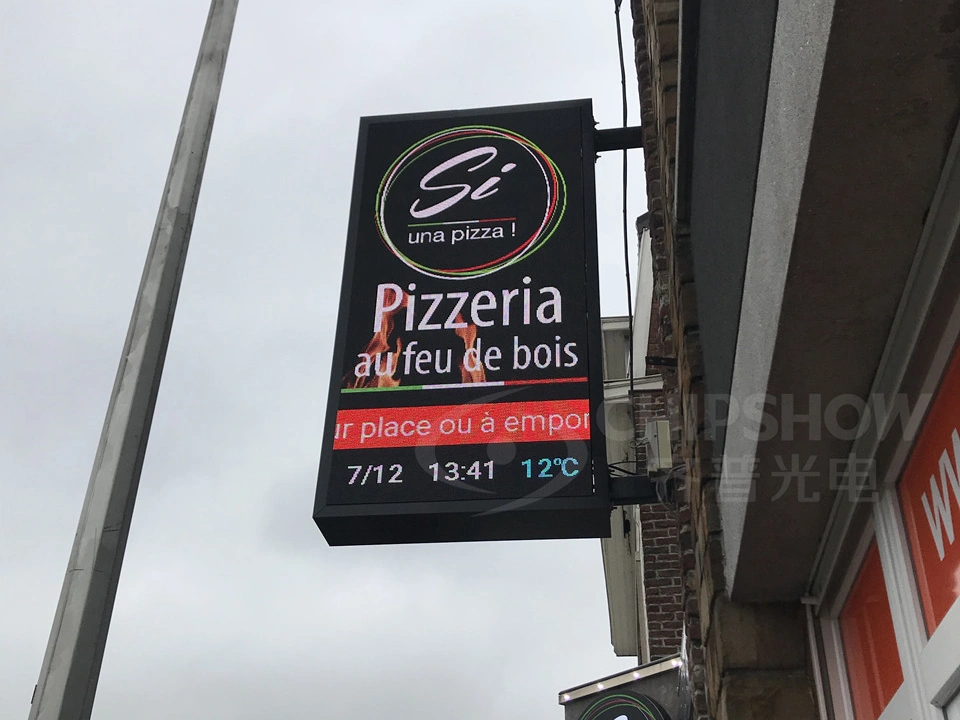
Match Outdoor LED Billboard Brightness and Pixel Pitch to the Viewing Route
Set the optical specification around viewing distance, movement speed, ambient light, viewing angle, and content detail.
| Viewing Factor | Site Question | Effect on the Specification |
|---|---|---|
| Nearest viewer | How close can vehicles or pedestrians get? | Sets the useful pixel pitch range. |
| Travel speed | How long will each message remain visible? | Faster routes need larger text and simpler layouts. |
| Ambient light | Does direct or reflected sunlight hit the display? | Sets brightness and contrast requirements. |
| Viewing angle | Will viewers approach from the side? | Requires checks for side-angle brightness and color. |
| Content type | Will the screen show text, video, or detailed graphics? | Affects pitch, processing, and content resolution. |
A sunlight readable LED billboard needs strong contrast across the actual viewing route. Extra pixel density cannot fix small text or crowded content.
Daylight Visibility and Contrast
Outdoor LED display brightness is measured in nits. The required output varies with orientation, reflections, and surrounding light.
| Site Condition | Initial Review Range | Main Risk |
|---|---|---|
| Shaded or partly shaded urban site | 5,500 to 8,000 nits | Unused output may raise purchase and energy costs. |
| Open site with regular direct sunlight | 8,000 to 10,000 nits | Midday washout may reduce advertising visibility. |
| Perpendicular or concentrated reflected sunlight | 10,000 to 14,000 nits | High rated output may still provide weak contrast. |
These figures are early planning ranges. Final outdoor LED billboard specifications should use site measurements and project-specific testing.
Minimum viewing distance (ft) ≈ 3 × pixel pitch (mm).
Minimum viewing distance (m) ≈ 0.9 × pixel pitch (mm).
A P10 display has an estimated minimum viewing distance of about 9.1 m (30 ft). Fast traffic may require a longer distance.
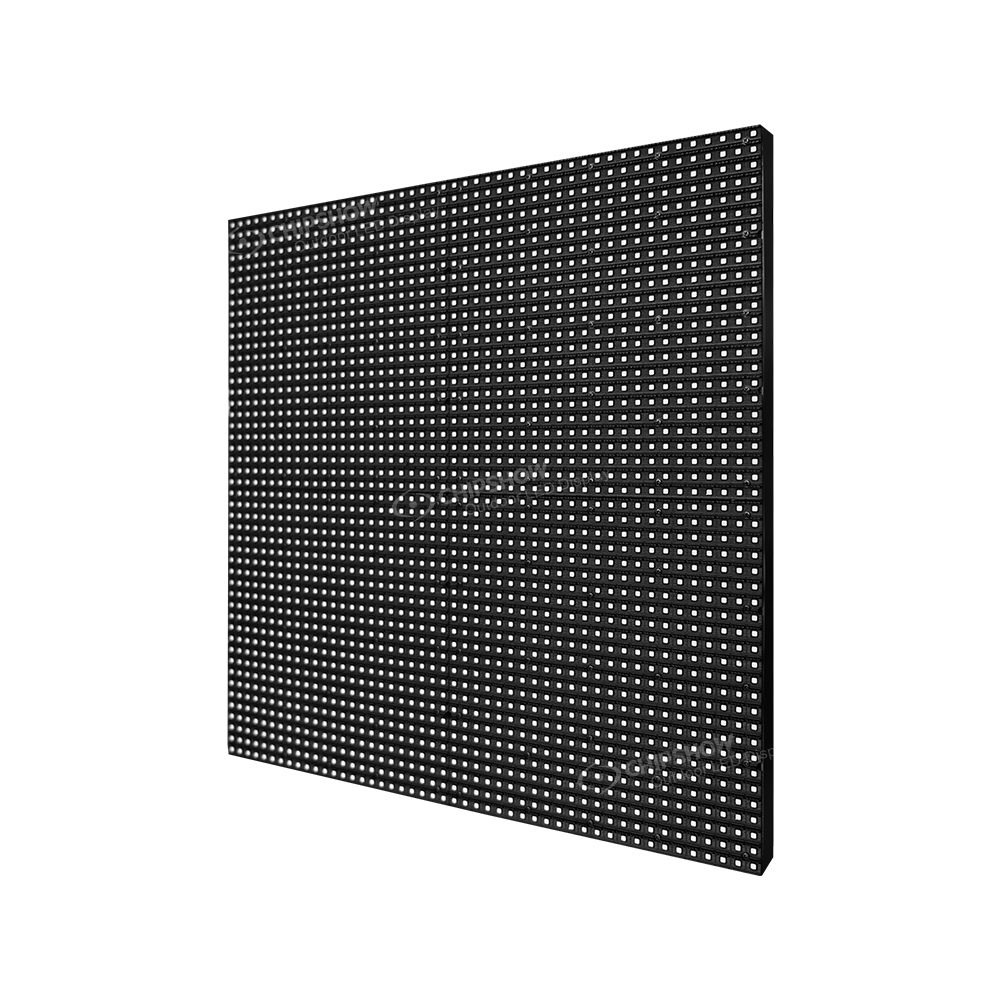
For sites with heavy direct sunlight, our C-Fit Easy Ultra High-Brightness supports P6.67, P8, and P10.
Those pitches equal 6.67 mm (0.26 in), 8 mm (0.31 in), and 10 mm (0.39 in).
The cabinet measures 960 × 960 mm (37.8 × 37.8 in) and 87 mm (3.43 in) deep. Its specified maximum brightness reaches 14,000 nits.
The magnesium cabinet reduces structural weight. Adaptive power profiles support different daylight conditions and operating schedules.
Optional controlled cooling is available for projects with higher thermal loads. The C-Fit Easy cabinet video shows the cabinet layout.
Nighttime Dimming and Viewing Comfort
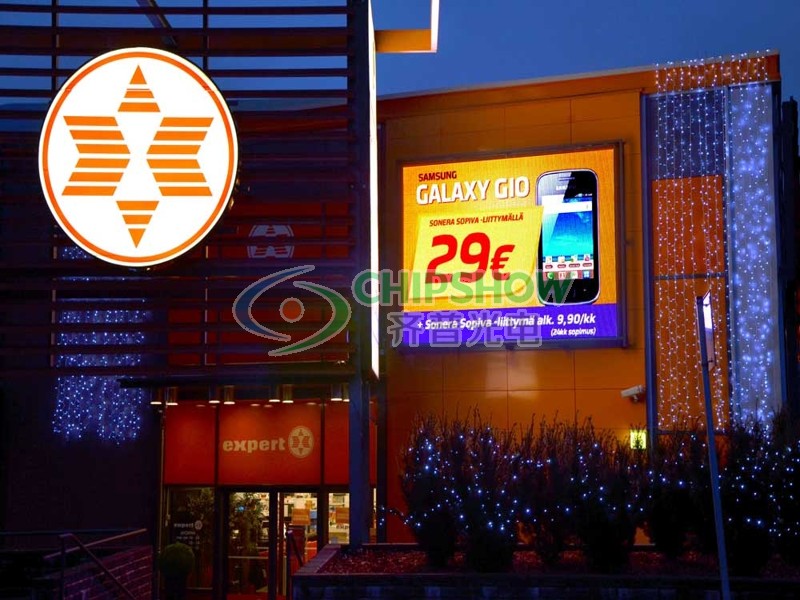
Peak daytime output should not remain active after dark. Excessive brightness can cause glare, increase energy use, and breach local sign limits.
Specify automatic dimming with a calibrated ambient light sensor. Scheduled brightness limits can provide backup if the sensor becomes dirty or shaded.
Set separate output limits for dusk, nighttime, rain, and fog. Local planning rules may also restrict brightness during certain hours.
Check Weather Protection Beyond the IP Rating
An IP code describes enclosure resistance under controlled test conditions. It does not cover every outdoor risk.
The IEC 60529 IP rating system classifies protection against solids and liquids. It does not assess corrosion, drainage, UV exposure, or wind loads.
Drainage and Cable Entry
Water should leave the cabinet without collecting near modules, power supplies, or connectors.
Cabinet joints should direct water away from internal electronics.
Cable glands should match the diameter of each installed cable.
Drip loops should stop water from running into connectors.
Drain openings should remain clear after mounting and finishing.
Service doors should use replaceable seals with even compression.
Front and rear IP ratings may differ. Confirm the rating for each exposed face and for the complete installed assembly.
Cabinet Materials and Corrosion Protection
Aluminum and magnesium cabinets can reduce structural weight. Coating quality, alloy choice, and fastener materials still affect service life.
Request details about cabinet materials, surface treatments, fastener grades, and connector protection. Salt-mist test records may also matter at coastal sites.
Contact between different metals can cause galvanic corrosion in wet conditions. Mounting hardware should suit both the cabinet and support structure.
Plan Heat Management and Outdoor LED Billboard Service Access
Cooling design and service access affect uptime throughout the display’s operating life.
Thermal Load and Airflow
Solar heating can raise cabinet temperatures above the surrounding air temperature. LEDs, drivers, and power supplies add further heat.
Record the highest expected shade temperature in °C (°F). Review thermal performance under direct sunlight and high output.
Ask suppliers for thermal test conditions, airflow paths, alarm thresholds, and high-temperature output limits.
Passive cooling can reduce maintenance at suitable sites. Enclosed structures and severe climates may still require active cooling.
Routine Inspection and Module Replacement
Front access suits installations without rear clearance. Rear access may suit sites with a protected service corridor.
Technicians should be able to replace modules, power supplies, receiving cards, and cables without removing unrelated cabinets.
| Interval | Main Focus | Typical Checks |
|---|---|---|
| Monthly | Display and playback condition. | Pixels, color, brightness, content, and system alerts. |
| Quarterly | Cabinets and electrical connections. | Seals, cables, grounding, drainage, ventilation, and hardware. |
| Annual | Full technical review. | Cleaning, corrosion, controls, structure, modules, and spare parts. |
| After severe events | Weather or physical damage. | Water entry, movement, cable damage, and structural condition. |
The final schedule should follow the local climate, supplier instructions, and operating conditions. Coastal and dusty sites may need shorter intervals.
Store approved spare modules, power supplies, receiving cards, and connectors near the service area. Matching production batches may simplify color calibration.
Compare Total Outdoor LED Billboard Cost, Not Only Purchase Price
A shared cost model makes supplier proposals easier to compare.
| Cost Item | What to Measure | Why It Matters |
|---|---|---|
| Screen hardware | Cabinets, control equipment, spares, and warranty scope. | Defines the initial capital cost. |
| Structural work | Steel, mounting, lifting, permits, and wind engineering. | Cabinet weight and screen area affect installation costs. |
| Energy | Average power in W/m² (W/ft²), dimming hours, and utility rate. | Power use affects the site’s operating margin. |
| Routine access | Lift rental, traffic control, permits, and labor hours. | Difficult access raises service costs. |
| Spare parts | Modules, power supplies, cards, and connectors. | Delayed parts can extend downtime. |
| Downtime | Lost advertising slots and service penalties. | Technical faults can reduce contracted revenue. |
| Cleaning | Frequency, equipment, water, and labor. | Dirt and salt may reduce visual performance. |
Annual energy cost = average power (kW) × operating hours × electricity rate.
Use measured or contractually stated average power. Rated peak power does not represent normal outdoor LED billboard operation.
LED billboard maintenance cost should include labor, lifting equipment, replacement parts, and lost advertising time.
Wind calculations should follow local building codes and site data. In the United States, many projects use ASCE/SEI 7-22 for wind load calculations.
Specify the Right Outdoor LED Billboard for Your DOOH Site
Complete the site survey, optical brief, access plan, and total cost model. Then match the outdoor LED billboard to its route and climate.
Once you have defined the brightness, pixel pitch, enclosure, cooling, and service requirements, compare them with the available outdoor LED display options. A site-specific specification can reduce unnecessary energy use, difficult repairs, and avoidable advertising downtime.
FAQs
Q1. How Long Is the Operational Half-Life of an Outdoor LED Billboard?
Up to 100,000 hours under specified conditions. Operational half-life means brightness falls to about 50% of its initial level. Temperature, moisture, brightness settings, and maintenance affect actual performance.
Q2. What Refresh Rate Should an Outdoor LED Billboard Use?
Use at least 3,840 Hz for screens that may appear on camera. A 7,680 Hz refresh rate suits broadcast and high-speed filming where visible flicker and scan lines require tighter control.
Q3. Does an Outdoor LED Billboard Need Surge and Lightning Protection?
Yes. The protection system should cover grounding, power lines, data lines, control equipment, and the supporting structure. Local electrical codes and a site-specific lightning risk assessment should define the final design.
Q4. How Many Spare Parts Should an Outdoor LED Billboard Project Keep?
Keep 2% to 5% matching spare modules, power supplies, and receiving cards. Ordering them with the screen supports batch matching and reduces downtime when replacements are needed.
Q5. What Content Resolution Should an Outdoor LED Billboard Use?
Use the screen’s native pixel resolution and controller map. Match the media canvas to its pixel dimensions and aspect ratio. Large text, strong contrast, and short messages improve readability for moving viewers.





