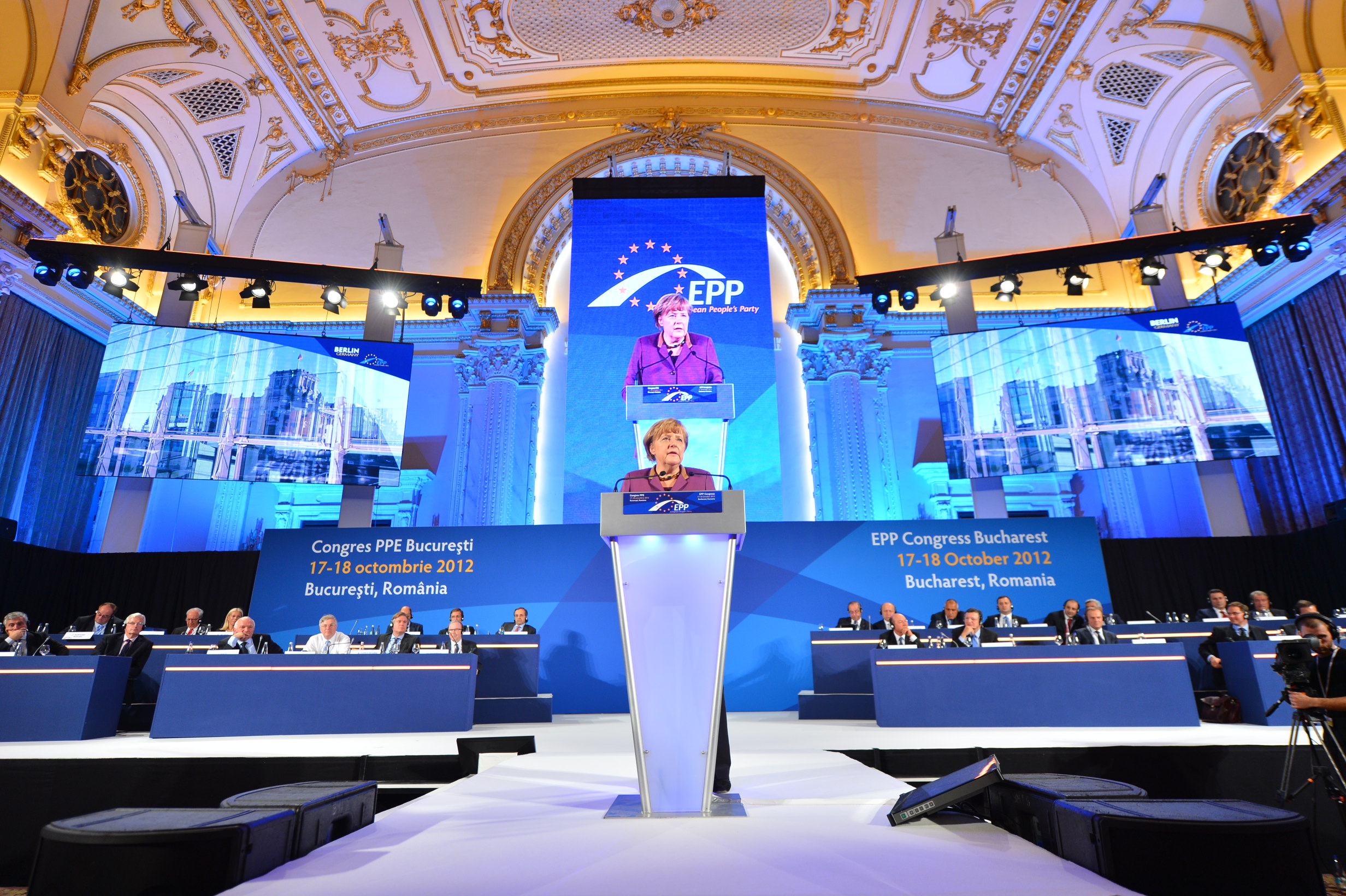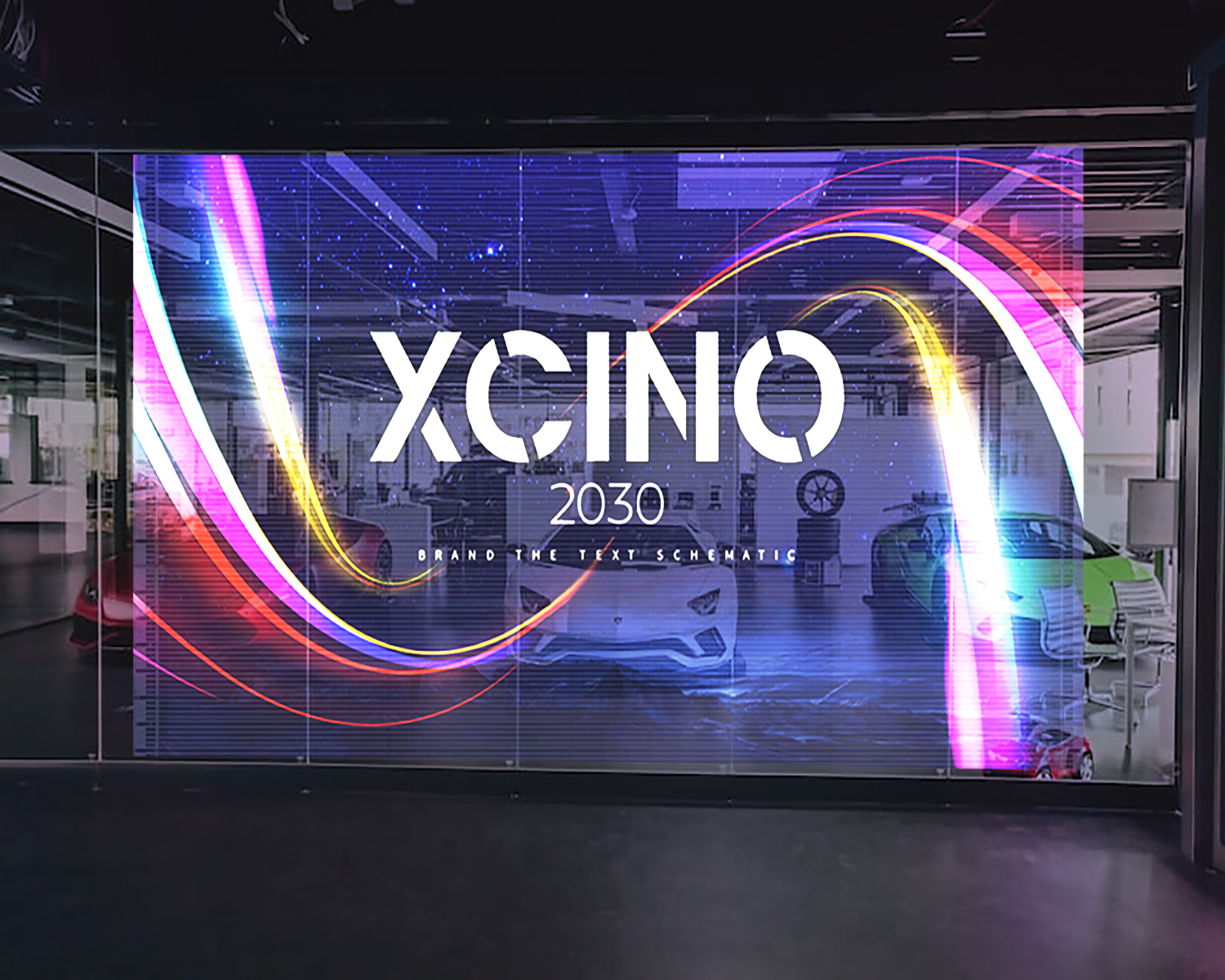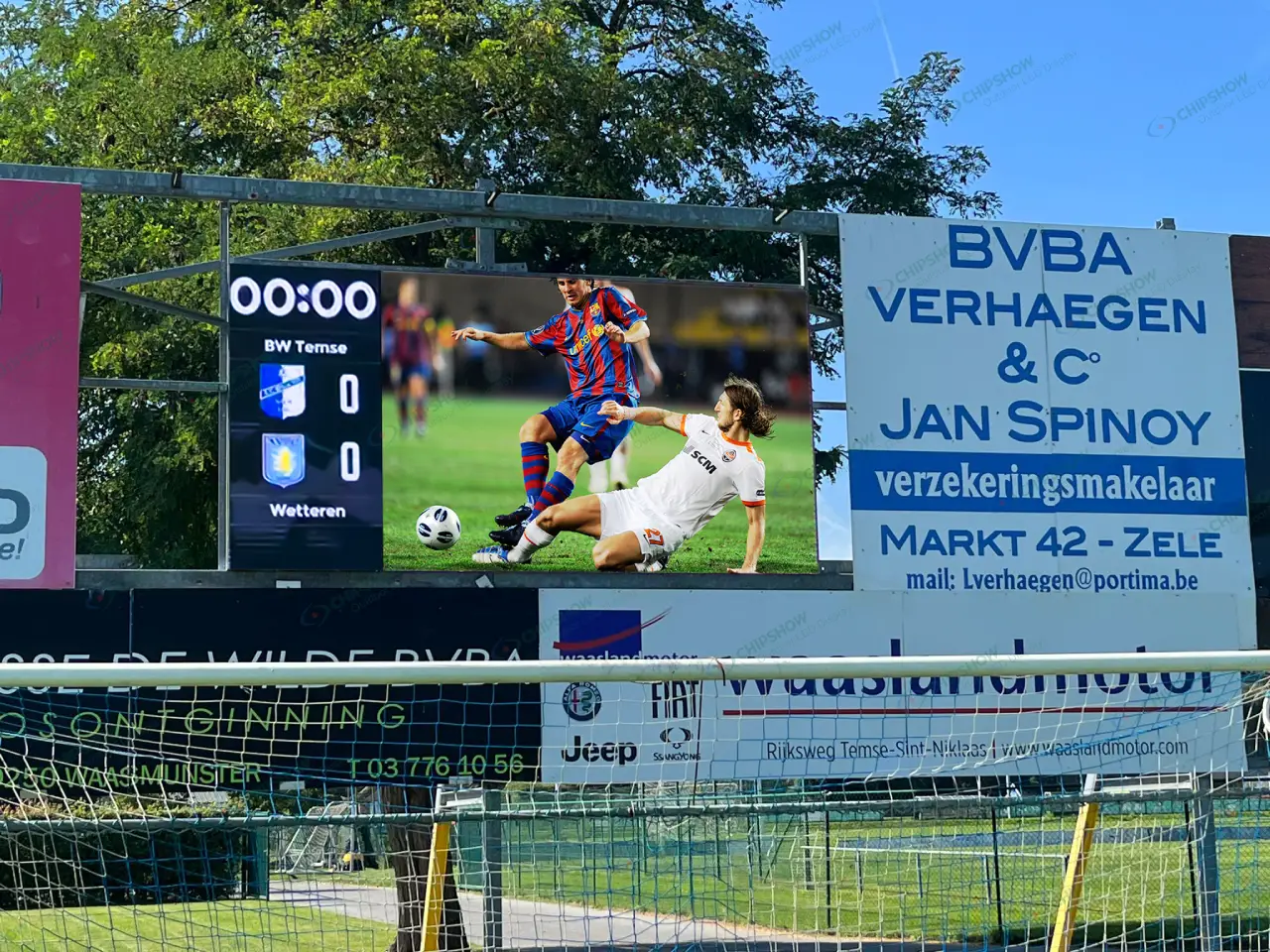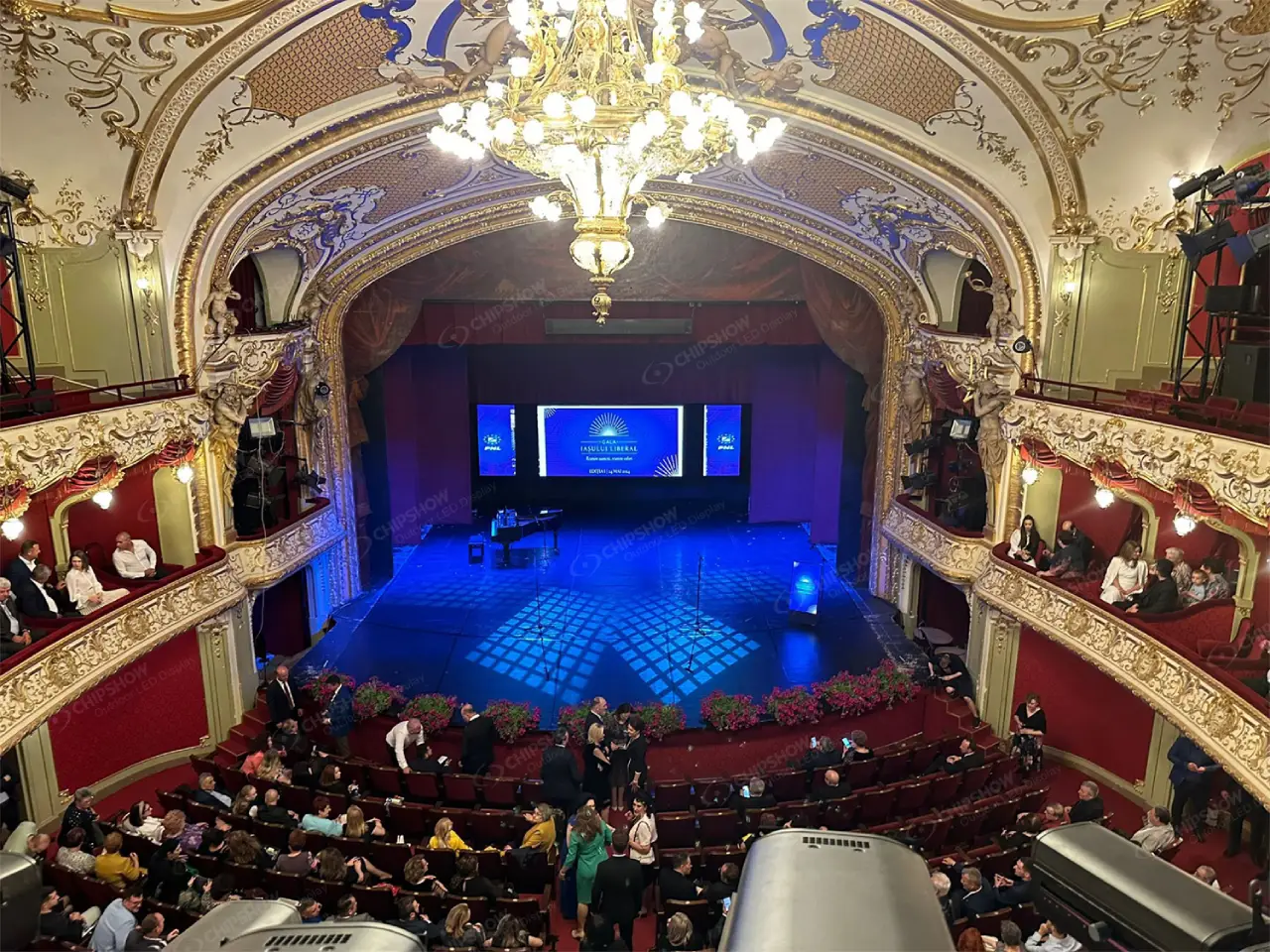


Choosing between an indoor LED display and an outdoor LED display is not just about location. The two product categories are engineered for entirely different operating conditions, and specifying the wrong one can result in visible performance failure. This guide covers the technical differences that matter for procurement decisions: brightness, pixel pitch, IP protection, power consumption, and application fit.
What Is an Indoor LED Display and What Is It Designed For?
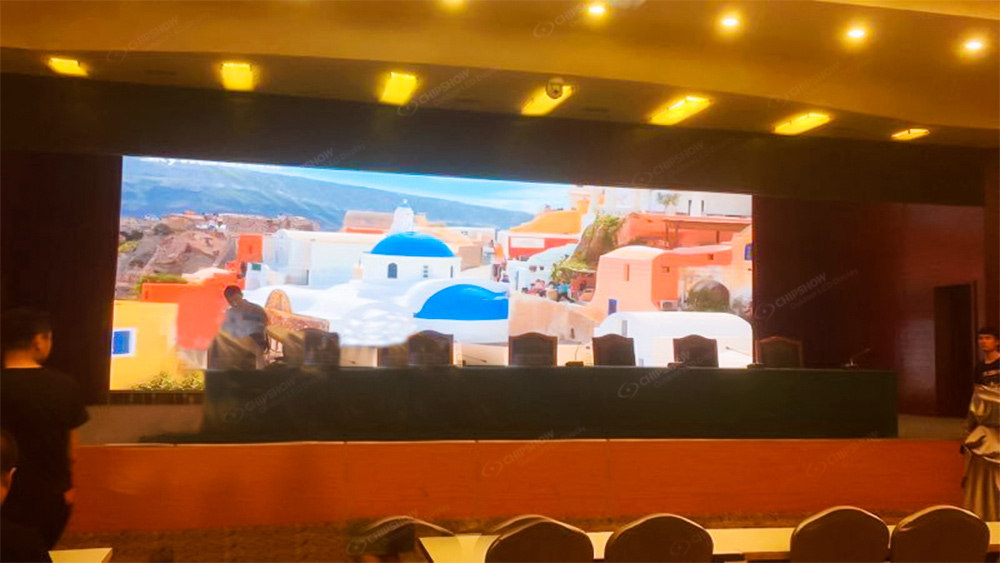
Indoor LED screens are built for controlled environments where lighting is stable, viewing distances are short, and weather exposure is zero. The design priorities are visual quality and close-range clarity, not environmental resilience.
Common Use Environments
Indoor LED displays appear in a wide range of commercial and institutional settings. Typical applications include corporate lobbies, conference rooms, mission-critical control rooms, retail environments, school auditoriums, and live event stages. Each environment has different resolution and brightness requirements, which is why indoor LED screen specifications vary significantly across use cases.
Optimal Brightness for Indoor Comfort
Indoor LED screens typically operate at 600 to 800 nits. Exceeding this in a conference room causes eye strain, and higher brightness does not mean higher quality for indoor applications.
The real differentiator is high grayscale at low brightness. Two screens running at 700 nits can look entirely different: one delivers vibrant colors and deep blacks, the other looks washed out. The difference lies in grayscale processing and LED driver quality, not the brightness ceiling.
For operators running both indoor and outdoor inventory, the brightness gap is significant in practice. Chipshow’s C-Max series operates at 600 to 800 nits with verified high-grayscale performance at low drive current. The outdoor C-Slim delivers up to 14,000 nits with five selectable brightness modes and common-cathode power architecture. Content scheduling should account for this difference in CMS configuration from the outset.
Refresh Rate
A refresh rate of 3,840Hz or above is the current industry standard for indoor LED displays. At this level, Moiré patterns (wavy lines visible on camera screens) are effectively suppressed when the screen is filmed by broadcast or event cameras. For rental staging and broadcast studio applications, this is a non-negotiable specification. While 1,920Hz was previously the standard, 3,840Hz is now required for flicker-free broadcast performance.
Cabinet Weight
Traditional fixed-installation LED cabinets carry a reputation for being heavy, but this is no longer accurate across the board. Magnesium alloy cabinet technology has brought fixed-install cabinet weight down to approximately 7.5 kg (16.5 lbs) per cabinet. This approaches the weight profile of rental-grade panels and reduces both installation labor costs and structural load requirements for system integrators.
What Is an Outdoor LED Display and What Sets It Apart?
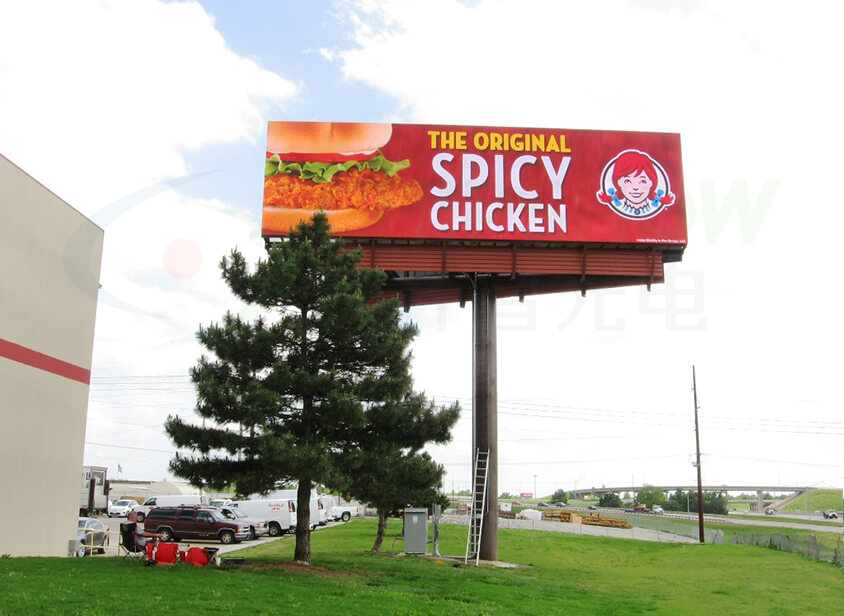
Outdoor LED displays are engineered to maintain visibility and structural integrity under direct sunlight, rain, dust, and wide temperature fluctuations. Environmental resilience is the primary design objective, not pixel density.

The 5,000+ Nits Brightness Standard
Direct sunlight washes out displays that cannot produce sufficient luminance. Outdoor LED billboards require brightness levels between 5,000 and 10,000+ nits depending on sun exposure angle and geographic location. Auto-dimming is equally important. Integrated light sensors should automatically and continuously adjust display brightness in response to ambient light levels. In the United States, the OAAA recommends that digital billboards not exceed 0.3 foot candles above the surrounding ambient light level, measured by a photocell sensor at all hours of operation. Specifying a screen without verified auto-dimming capability creates regulatory risk regardless of the installation region.
IP Rating for Indoor and Outdoor LED Displays
IP ratings use a two-digit system defined by IEC 60529. The first digit covers solid particle protection (scale 0 to 6), the second covers liquid ingress (scale 0 to 9). Standard indoor displays carry IP20 to IP54. Outdoor fixed displays require IP65 minimum on both front and rear panels.
Always request IP ratings for front and rear panels as separate figures. Some datasheets quote a single IP65 that applies only to the front enclosure. In mission-critical control rooms, airborne particulate and electrostatic discharge are documented causes of LED driver failure. Chipshow’s C-Pad Command achieves IP54 on both front and rear panels, reducing particulate-related failure risk in 24/7 operations.
Weather Protection Standards for Outdoor Installations
Rear panel ingress is a documented cause of premature outdoor screen failure, particularly in installations without canopy protection. Coastal and high-rainfall sites should specify IP66 or IP67 on the front panel. Cabinet materials should include UV-stabilized housings and corrosion-resistant hardware. Verify operating temperature specifications against site climate conditions before purchase.
LED Screen Durability
A waterproof outdoor lED screen must also handle UV exposure, corrosion, and thermal stress. Cabinet materials should include UV-stabilized housings and corrosion-resistant mounting hardware. Professional outdoor displays are typically rated to operate across a wide temperature range. Verify the operating temperature specification against the climate conditions of the installation site before finalizing a purchase. Thermal management systems, including passive heat sinks or active fans, are necessary to prevent internal LED chip temperature from exceeding safe operating limits under sustained high-brightness operation.
How Do Indoor and Outdoor LED Displays Compare Across Key Specs?
The table below summarizes the primary technical differences between indoor and outdoor LED displays across the specifications that matter most for procurement decisions.
| Specification | Indoor LED Display | Outdoor LED Display |
| Operating Brightness | 600–800 nits | 5,000–10,000+ nits |
| Pixel Pitch Range | P0.78–P4 | P4–P16+ |
| IP Rating (Front) | IP20–IP54 | IP65 minimum |
| IP Rating (Rear) | Not rated | IP54 minimum; IP65 available on specified models |
| Average Power Consumption | ~180 W/m² | Varies by design; energy-efficient models from ~140 W/m²; conventional designs significantly higher |
| Refresh Rate (Recommended) | 3,840Hz+ | 1,920Hz+ |
| Viewing Distance | 0.3–4.5 m (1–15 ft) (typical) | 15 ft and beyond |
| Operational Half-Life | Up to 100,000 hours | Up to 100,000 hours |
| Primary Design Priority | Grayscale quality at low brightness | Brightness and weatherproofing |
High-quality LED displays are rated for an operational half-life of up to 100,000 hours under optimal conditions. In industry terms, this refers to the point at which brightness output falls below 50% of the original calibrated level, not total product failure. Outdoor screens operating in extreme climates typically reach this threshold faster due to sustained high-drive-current operation.
Pixel Pitch and Viewing Distance
Pixel pitch determines how close a viewer can stand before individual pixels become visible. The standard integrator rule is: minimum viewing distance in feet is approximately 3 times the pixel pitch in millimeters. Specifying a finer pitch than the viewing distance requires adding cost without improving perceived image quality.
The following ranges cover the most common applications:
- P0.78–P1.2: Under 1.5 m (5 ft). Data-dense control rooms and broadcast studios.
- P1.2–P1.8: 1.5–3 m (5–10 ft). Executive boardrooms and corporate presentation spaces.
- P2.0+: 3 m (10 ft) and beyond. Large auditoriums, hotel lobbies, and commercial displays.
- P6–P16+: Outdoor billboards, stadium perimeters, and highway signage.
For outdoor applications, a larger pixel pitch reduces cost substantially without compromising legibility at the correct viewing distance.
Power Consumption and Total Cost of Ownership (TCO)
Indoor displays average approximately 180 W/m² under typical operating conditions. Conventional outdoor display designs have historically required far more power to sustain daylight-visible brightness. Modern outdoor LED displays using advanced driver technology, including common-cathode technology (a high-efficiency power distribution method), can reduce average operating power consumption to the range of 140 to 180 W/m² under typical daylight conditions. This is a meaningful improvement over conventional designs and directly reduces the long-term electricity cost of a DOOH installation.
For DOOH network operators and media owners, power efficiency should be modeled as part of TCO from the outset. Requesting average power draw figures under real operating conditions, rather than relying on peak brightness specifications, gives a more accurate picture of annual operating costs across a multi-site network.
Front-access serviceability is another TCO factor. Displays installed at elevation, such as rooftop billboards or highway gantry signs, require front-serviceable panels to avoid costly lifts or road closures during maintenance. Specifying rear-access cabinets for high-mount applications increases the operational cost of the installation over its service life.
How Do Indoor and Outdoor LED Screens Differ for Rental and Stage Use?
Rental and staging applications span both indoor and outdoor environments, and the specification priorities differ from fixed installations.
Key Specs for Stage Rental: Weight, Build Speed, and Protection
Rental companies face three recurring operational costs: slow rigging (labor), heavy transport (logistics), and physical damage from frequent handling. Cabinet weight is the primary driver of all three. Lightweight magnesium alloy frame technology has reduced rental panel weight significantly compared to conventional aluminum enclosures, enabling single-person panel handling on touring productions and reducing crew requirements per installation. Verify target cabinet weights with the supplier against your specific rigging and transport requirements.
For outdoor rental screens, IP65 protection is required. Brightness should reach at least 4,000 to 6,000 nits to maintain visibility in ambient daylight at outdoor festivals or stadium events. For indoor rental and studio applications, refresh rate is the critical specification. At 3,840Hz, the screen effectively suppresses camera flicker and moiré patterns across standard broadcast frame rates.
COB vs SMD: Choosing Based on Viewing Distance
When choosing between COB and SMD technology, the watching distance should be taken into account, not the desire for more advanced technology.
When LED chips are embedded in a plastic surface, this is called COB encapsulation. It makes the screen more resistant to drops, improves the level of blackness, and makes sure that it works reliably at a tiny pixel pitch. For viewing distances of less than 6 feet (2 m), COB is the highly recommended choice.
SMD technology remains the dominant standard for viewing distances of 6 ft (2 m) and beyond. It offers a better cost-per-square-meter ratio and covers the full range of large-format auditorium, commercial lobby, and event staging applications.
COB carries a higher unit cost. The additional investment is justified when close-range viewing quality and surface durability are primary requirements
Which LED Display Is Right for Your Project?
To determine the most suitable solution, evaluate your project requirements against this essential five-question checklist and application matrix.
A Five-Question Specification Checklist
- Is the installation indoor, outdoor, or partially sheltered? Partially sheltered environments, such as storefront canopies or covered transit areas, require higher brightness than standard indoor screens (2,000 to 4,000 nits minimum) and at least IP54 protection. A standard indoor LED screen is not suited to these conditions.
- What is the minimum viewing distance? Use the 3x rule to establish the maximum acceptable pixel pitch. Specifying a finer pitch than the viewing distance requires adding cost without improving perceived quality.
- Will the screen be exposed to rain, dust, or direct sunlight? If yes, confirm IP65 on both front and rear panels. Request documentation of both ratings separately from the manufacturer.
- Is this a fixed installation or a rental deployment? Fixed installations prioritize long-term reliability and maintenance access. Rental deployments prioritize cabinet weight, rigging speed, and impact resistance.
- Will cameras be filming the display? If yes, specify a 3,840Hz refresh rate regardless of indoor or outdoor application.
Aligning Your Use Case with the Right Display Type
Based on typical engineering requirements, the following provides guidance on matching your project profile to the appropriate display category.
| Application Category | Recommended Tech | Key Specifications | Design Priorities |
| 24/7 Control Rooms | COB | Pixel pitch ≤ P0.78; Dual-side dust protection; Low-brightness grayscale | Operational reliability & close-range clarity |
| Boardrooms & Lobbies | COB / SMD | Ultra-slim cabinet (~34mm); Common-cathode driver; Verified color accuracy | Aesthetics, low heat output & color precision |
| Auditoriums & Schools | SMD | Native 4:3 magnesium alloy cabinets; Full front serviceability; Seamless tiling | LCD replacement & low maintenance cost |
| Commercial Projects | SMD (P2.0–P4.0) | Lightweight cabinets; Standardized modules | Rapid delivery & straightforward installation |
| Fixed DOOH Screens | SMD / DIP | 5,000+ nits; IP65+ rating; Auto-dimming sensors | Sunlight visibility & environmental resilience |
| Stage & Event Rental | Magnesium Alloy | 3,840Hz+ refresh rate; Fast-lock rigging; IP65 (for outdoor) | Rigging speed, durability & camera readiness |
By selecting the technology and specifications that align with your specific application, you ensure optimal visual performance while maximizing the long-term return on your investment.
Specify the Right LED Display Screen Before Committing to Your Next Project
Specifying an indoor LED screen or outdoor LED display correctly at the procurement stage prevents costly replacements and operational failures. The core decision factors are: installation environment, minimum viewing distance, brightness requirement, IP protection level on both front and rear panels, and long-term power cost modeled on average draw rather than peak figures. For any project involving camera filming, a 3,840Hz refresh rate is the non-negotiable floor for professional performance.
FAQs About Indoor and Outdoor LED Displays
Q1. Can I Use an Indoor LED Screen in a Storefront Window or Covered Canopy?
Not without risk. Most LED TVs used inside are bright enough at 600 to 800 nits. There is too little of it when there is direct or reflected sunshine around. The storefront window and covered canopy need lights that are at least 2,000 to 4,000 nits bright and have an IP54 grade.
Q2. How Should I Model Power Costs When Comparing Indoor and Outdoor LED Displays?
The amount of power used per square meter during normal use, not at the brightest setting, should be used for the calculations. This means that most indoor LED TVs use about 180 W/m2. How much power outdoor display screens use varies depending on how they are made. Some, like those with energy-saving features and advanced driver systems, can use about the same amount of power on average as indoor screens, while others use a lot more.
Q3. What Certifications Are Required for Outdoor LED Displays in European and US Markets?
In European markets, CE marking is required for general commercial displays. The traffic VMS display should meet EN12966 standards, which cover problems like sign structure, color, and brightness for signs facing the road. People in the USA think that the UL listing mark is fine. Check all necessary certifications before the seller is qualified, not after the purchase has been made.
Q4. Can I Use an Outdoor LED Display Indoors?
Not a good idea. When watched in a dark room, outdoor screens that put out 5,000 to 10,000 or more nits can cause a lot of eye strain. Images taken indoors look distorted when the pixel size is P4 or higher. The noise from the fans is not acceptable for studios or meeting rooms. Pick an indoor screen that works with the way you sit and the amount of light you have.
Q5. How Does Maintenance Differ Between Indoor and Outdoor LED Displays?
The indoor display won’t need much upkeep; it just needs to be cleaned regularly and calibrated every so often. You will need to set up a well-coordinated care program for the outdoor display, though, so that you can do things like check the IP sealing and clean the cooling system. There is an extra charge for maintaining devices that are higher up. When you figure out the TCO, keep this in mind.
Q6. How Do Viewing Angle Requirements Differ Between Indoor and Outdoor LED Displays?
Indoor LED screens need to have a horizontal viewing range of at least 120 degrees. This is enough for places like conference rooms and shopping malls where people will be in a certain area. The outside LED screen should have a viewing angle greater than 140 degrees so that drivers and people walking by can still see the picture. All of the above features will get worse with the viewing angle.