CE/FCC/ETL Certified LED Solutions with Local Stock in US & EU Hubs.
Church LED Display Solutions — Sanctuary & Worship
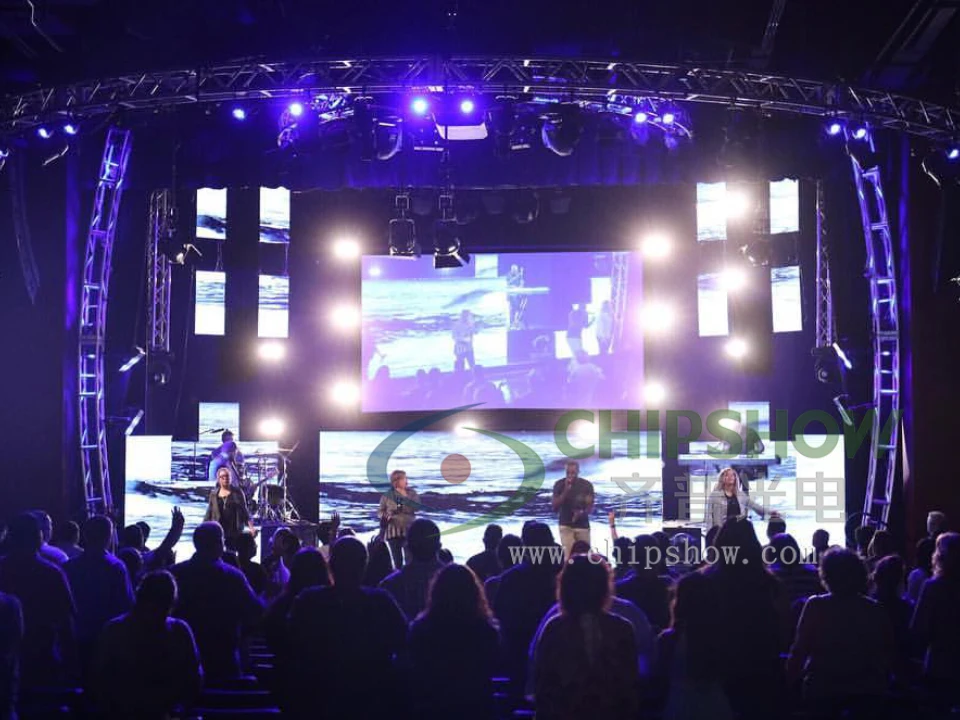
Church LED That Displays Scripture Without Glare. Silent COB, Camera-Friendly.

Explore COB and Fanless Church LED That Displays Scripture Without Glare.
CE/FCC/ETL Certified LED Solutions with Local Stock in US & EU Hubs.
Church LED That Displays Scripture Without Glare. Silent COB, Camera-Friendly.
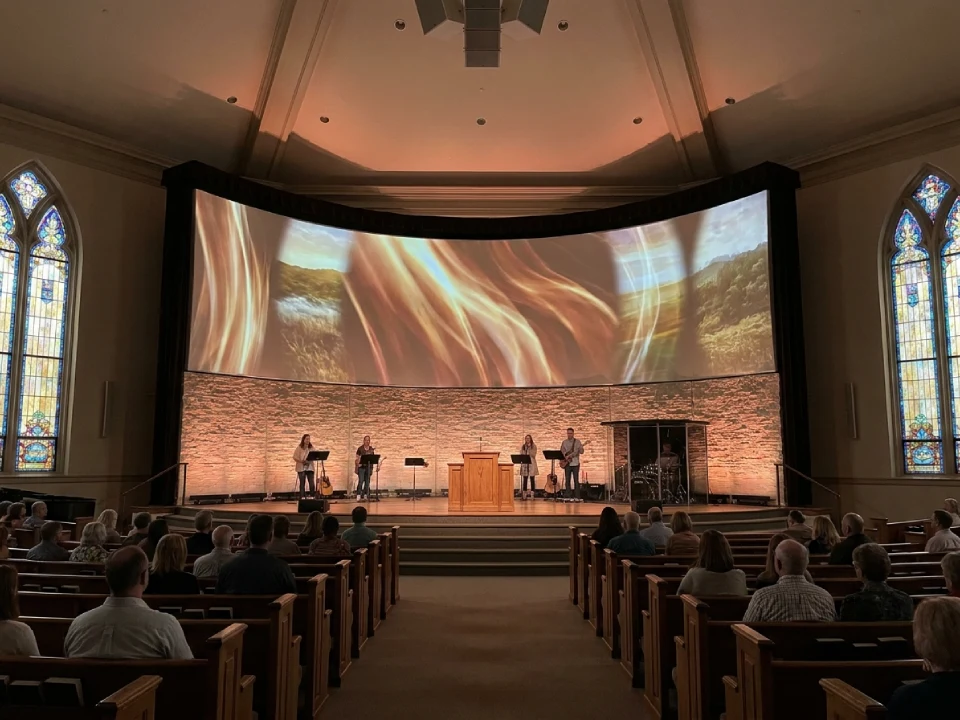
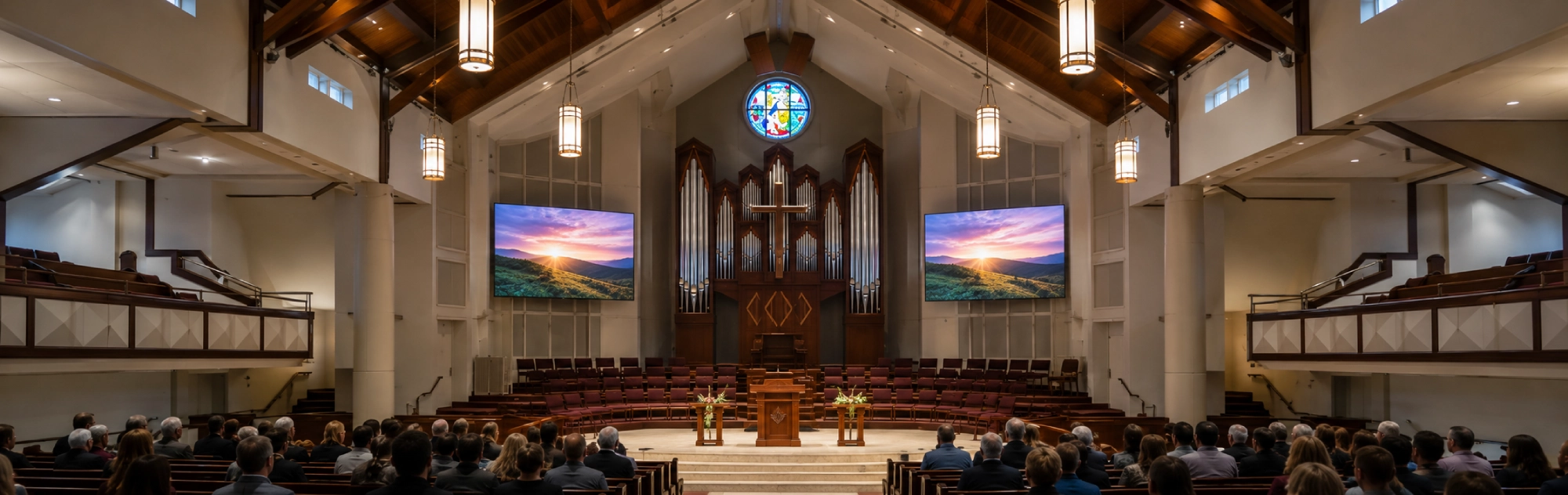
Benefit: Digital scenery, sermon points, and scripture verses projected onto one seamless canvas that the entire congregation sees together.
Recommended: P1.5 – P1.8 · 600-800 nits · Front Service
Suggested Series: C-Max COB
Why: Matte COB finish absorbs overhead lighting with zero reflection. Fanless 0dB preserves silent prayer moments.
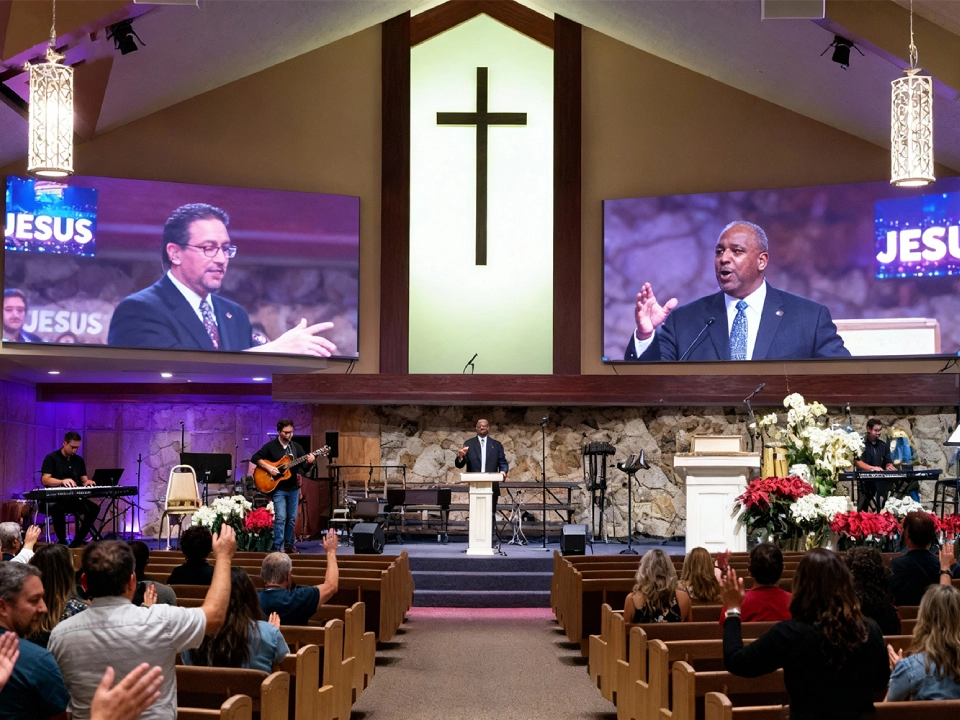
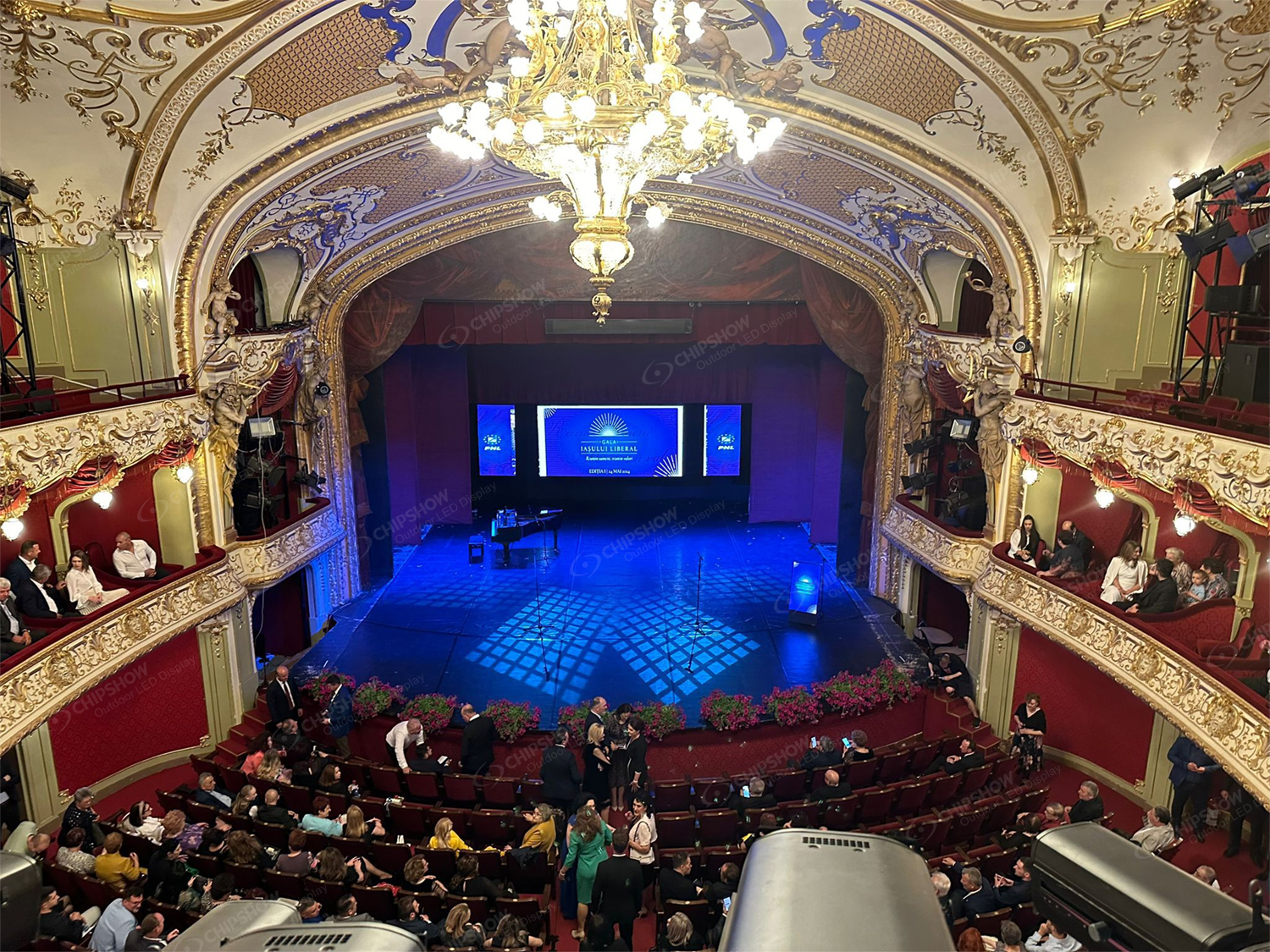
Benefit: Keep every seat in clear view of the stage. Lyrics and scripture readable even from the back of the sanctuary.
Recommended: P2.6 · 1000 nits
Suggested Series: C-Shine Plus
Why: 160° wide viewing angle for side aisles. Low latency syncs speaker to screen. Crisp text renders lyrics and scripture at distance.
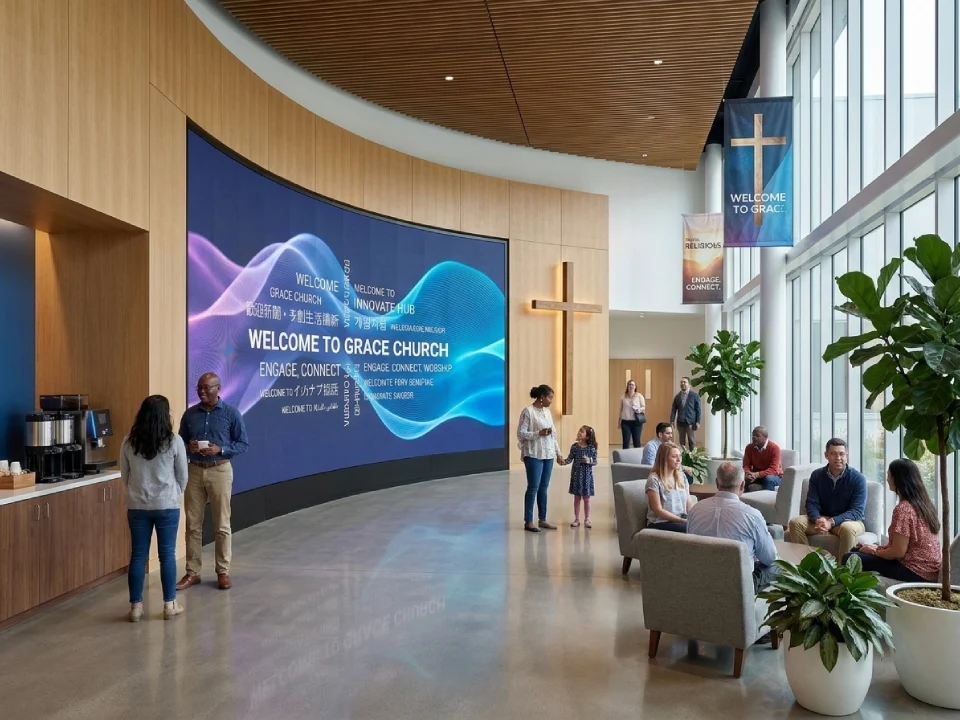
Benefit: Visitors walk in and see everything they need on one screen. The screen guides them.
Recommended: P2.5 · 800 nits · Fixed Installation
Suggested Series: C-Max (Indoor Fixed)
Why: High brightness defeats ambient light in glass-walled foyers. Slim ADA-compliant depth for hallway traffic.
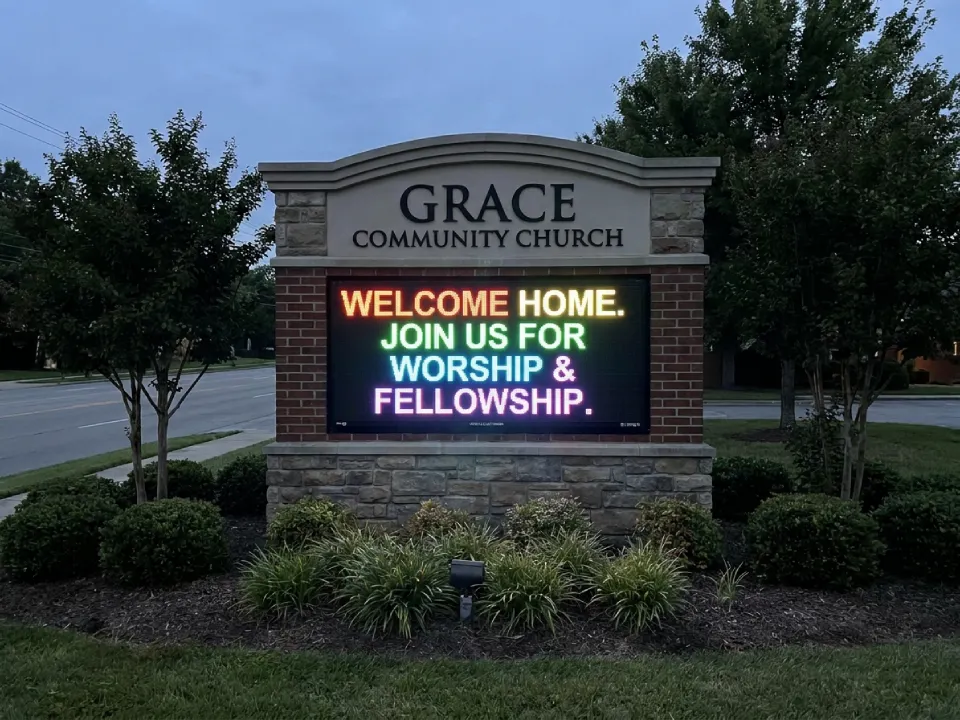
Benefit: A driver passing at speed reads the service time in one glance. The sign keeps working 24/7.
Recommended: P5 – P6.67 · 5000+ nits · Outdoor Rated
Suggested Series: C-Fit-Easy / C-Slim
Why: IP65 weatherproof for year-round outdoor duty. Auto-dimming satisfies local ordinances at night.
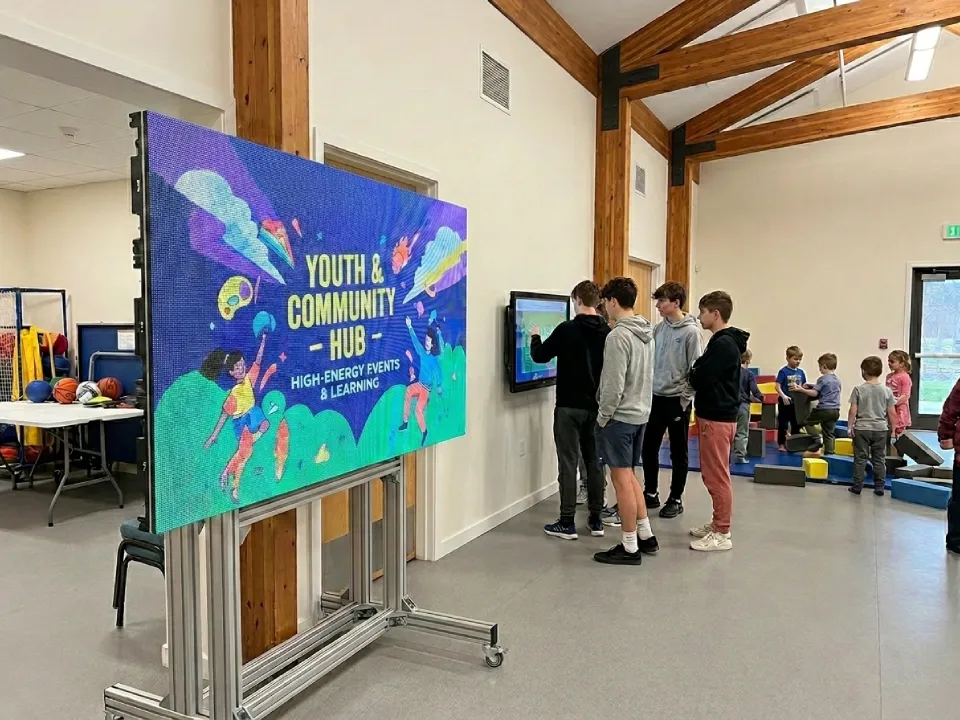
Benefit: The same screen serves worship, movie night, and youth events. Switch between them instantly.
Recommended: P2.6 · 1200 nits · Rental/Fixed Hybrid
Suggested Series: C-Shine Plus
Why: Impact-resistant masks survive accidental bumps during youth events. Hybrid rental/fixed design reconfigures for different room layouts.
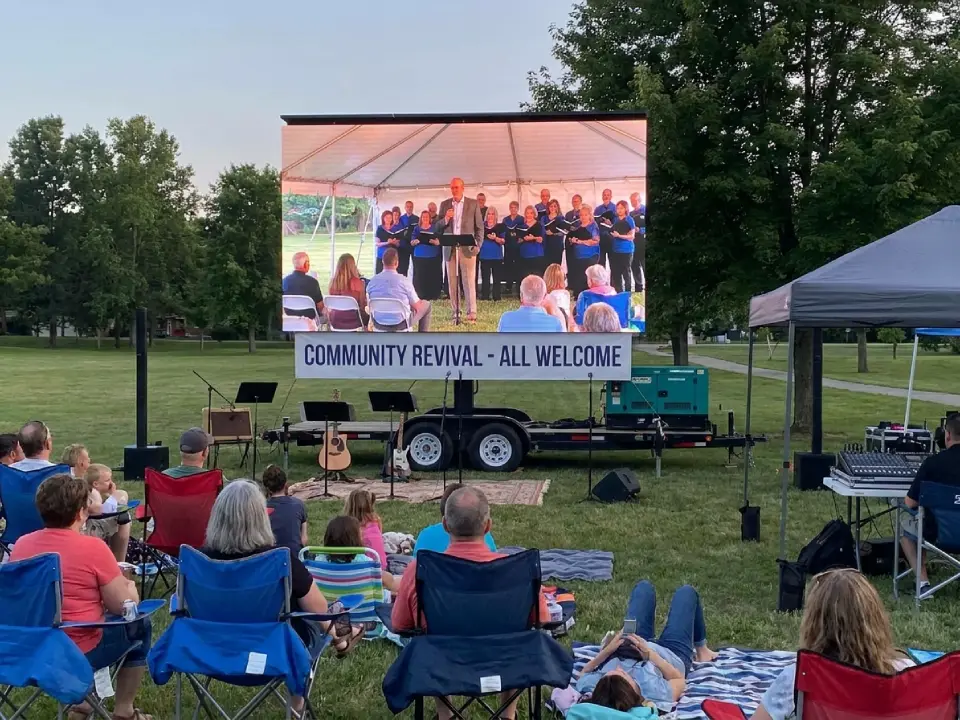
Benefit: Set up a complete worship backdrop outdoors in two hours. The screen quality matches what you see indoors.
Recommended: P2.9 – P3.9 · 4500 nits · Rapid Build
Suggested Series: C-Lite Plus / C-Rock
Why: Quick-lock rigging for volunteer assembly. Lightweight frames reduce structural load on temporary stages. Reinforced corners survive frequent transport between events.






For most churches, the display decision splits into two questions: what does the congregation see, and what does the camera capture. A church LED wall and a projection screen answer both differently, at different price points, with different operational consequences. This article compares both technologies across brightness, silent operation, refresh rate, and installation requirements to support your display selection.
These two display technologies serve the same general purpose but operate on different principles. Knowing how each works clarifies which one fits your sanctuary.
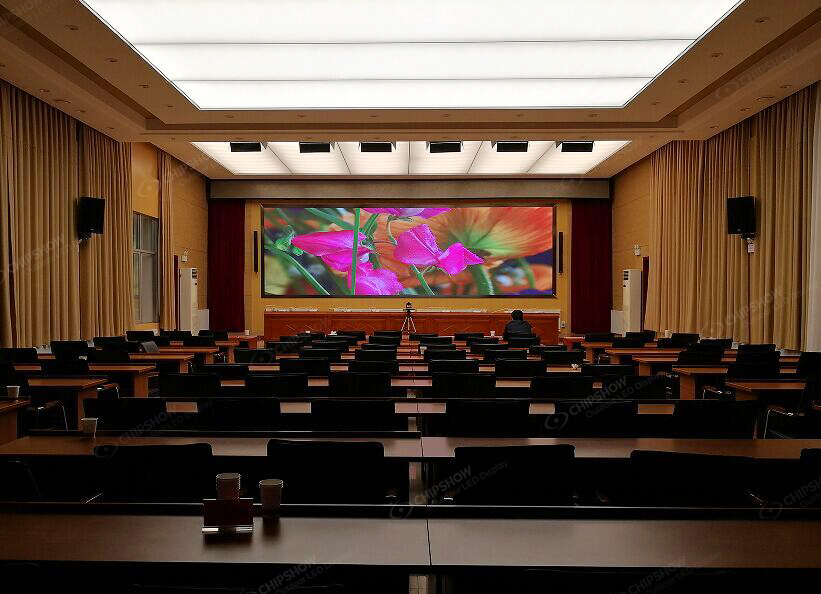
A church LED wall is an array of self-emitting LED modules assembled into a seamless display surface. Each pixel generates its own light. Brightness stays consistent regardless of ambient light, including stage wash lighting and natural daylight through windows. The display mounts directly on a wall or stage frame, with no projector, no throw distance, and no reflective screen surface required.
A projector casts light onto a reflective surface. Image quality depends on the ratio between the projector output and the ambient light in the room. In a fully darkened room, a high-lumen projector produces a clean, readable image. As ambient light increases, contrast drops and the image washes out. Lamp-based models require replacement bulbs at $200–$500 per cycle for typical church projectors, with higher-lumen units costing more. Laser projectors carry a higher upfront cost but last significantly longer than lamp-based units. Either way, full unit replacement is eventually required.
The differences that affect Sunday service quality, livestream output, and long-term operating cost are worth examining individually.
| Factor | Church LED Wall | Projection Screen |
| Upfront Cost | $15,000–$150,000+ | $2,000–$15,000 |
| Consumable Costs | None after installation | Lamp replacement every 1–2 years ($200–$500 per cycle for typical church projectors) |
| Image in Bright Room | Full visibility at any ambient light level | Washes out above 50% room brightness |
| Livestream Quality | Vibrant, stable at 3,840Hz or higher | Washed out on camera; scan line risk at certain shutter speeds |
| Refresh Rate | 3,840Hz–7,680Hz depending on model | 60Hz (standard commercial models) |
| Fan Noise | Fanless models available | Fan noise from projector unit during operation |
| Operational Half-Life | Up to 100,000 hours (L50 standard: brightness to 50% of initial output) | Lamp-based: 5–7 years for unit; laser: significantly longer |
| Installation Complexity | High; structural, electrical, AV integration required | Low to moderate |
| Content Flexibility | Multi-zone; IMAG (image magnification), lyrics, motion graphics simultaneously | Single image; limited by throw distance and screen size |
The projector remains a practical option for dark sanctuaries without an active streaming program and with a limited display budget. For churches with ambient light challenges or active streaming, LED is the functional starting point.
Fan noise is an afterthought in most LED display comparisons. In a sanctuary, it is a primary specification.
Active-cooled LED panels typically generate 35–55 dB of fan noise during operation. The ambient noise floor in a well-designed sanctuary during quiet worship can fall below 35 dB. At that level, fan hum is audible to the congregation, picked up by podium and choir microphones, and recorded into every sermon audio file and livestream output.
Passive heat dissipation through cabinet geometry eliminates moving parts and produces no mechanical noise during operation. Chipshow’s C-Max Commercial uses a magnesium alloy chassis that acts as a natural heat sink, dissipating heat without any cooling fan. The result is fully silent operation during services, with no fan hum picked up by microphones or recorded into sermon audio. It is built specifically for quiet environments including churches where audio clarity cannot be compromised.
Selecting a church stage LED screen requires matching pixel pitch to viewing distance and refresh rate to camera workflow. These two specifications determine real-world image quality more than any other parameter.
A practical industry reference: minimum comfortable viewing distance in feet is approximately three times the pixel pitch in millimeters. Use this as a starting point, not a fixed rule, since content type and ambient light also affect perceived clarity.
| Pixel Pitch | Minimum Viewing Distance | Typical Church Application |
| P1.9–P2.6 | 6–8 ft (1.8–2.4 m) | Stage backdrop, front-row seating, conference sanctuary |
| P2.6–P3.9 | 8–12 ft (2.4–3.6 m) | IMAG side screens, mid-size sanctuary |
| P3.9–P4.8 | 12–16 ft (3.6–4.8 m) | Large sanctuary supplemental screens |
For stage backdrop use, base pixel pitch on camera-to-wall distance, not audience-to-wall distance. If a speaker stands close to the backdrop and appears in frame, the wall enters the depth of field. Wider pixel pitches at that distance produce visible banding in video. This is a separate issue from moiré. Moiré appears when the camera sensor frequency interferes with the panel’s pixel grid, and is controlled through pixel pitch selection and camera positioning, not refresh rate.
Across the LED display industry, 3,840Hz is now the commonly adopted minimum for camera-facing indoor applications. At this level, scan lines are effectively eliminated in standard camera workflows. For churches that livestream regularly or use broadcast-grade cameras, configurations reaching 7,680Hz remove scan line risk at any shutter speed or frame rate.
Chipshow’s C-Rock Indoor supports refresh rates from 3,840Hz up to 7,680Hz on selected configurations. It is built for conferences, studios, and worship spaces where viewing distance is close and ambient noise must stay low. Its fine pixel pitches and fanless design make it suitable for stage backdrop applications where both broadcast camera performance and quiet operation matter.
Chipshow’s C-Shine Plus reaches up to 7,680Hz across its full pixel pitch range and features a quick-release control box that supports fast assembly and disassembly between services or events. Both panels address the two requirements that define church stage backdrop use: clean video capture and efficient venue turnaround.
Brightness for indoor church displays is frequently misunderstood. The relevant question is not how bright the panel can go, but how well it maintains image quality at reduced brightness levels.
Indoor sanctuary environments typically require 600–800 nits during operation. Running panels above that range in a controlled interior space causes eye strain for the congregation. Peak brightness figures on product datasheets reflect maximum output, which is rarely the operating condition in a worship space.
The real performance differentiator for indoor church LED walls is high grayscale at low brightness. This refers to a panel’s ability to maintain color depth, contrast separation, and image detail when brightness is reduced to comfortable sanctuary levels. A panel without strong low-brightness grayscale performance produces a flat, gray-toned image when dimmed. A panel with high grayscale at low brightness retains full color rendering and contrast across the entire operating range used in actual worship conditions. This specification separates panels designed for indoor environments from those built for high-ambient outdoor or retail applications.
Panel cost is rarely the full project budget. Structural, electrical, and AV integration costs can significantly exceed the base panel price and should be budgeted separately from the outset.
Wall-mounting with front serviceability is the optimal configuration for permanent sanctuary installations. Front-access designs let crews replace panels without rear clearance, eliminating the need to disturb surrounding architectural finishes.
Ceiling-rigging requires a structural engineering assessment. Older buildings with wooden joists frequently need steel reinforcement before any LED wall can be safely suspended. Floor-stacking on a stage frame requires 3–4 feet (0.9–1.2 m) of depth clearance behind panels for counterweights, which creates constraints on shallow stages.
For permanent sanctuary wall installations, Chipshow’s C-Max Wall is worth considering where architectural continuity matters. Its proprietary textured surface aligns patterns seamlessly across cabinets, mimicking tiled walls or wallpaper. When powered off, the display blends into the surrounding wall finish rather than presenting a black screen. When powered on, it delivers full-resolution visuals. For sanctuaries where the LED wall needs to coexist with existing interior materials and décor, this removes the visual disruption that a standard black panel surface creates at rest.
Most church LED wall installations require dedicated electrical circuits, which add to the project cost. LED panels without FCC compliance generate RF noise that disrupts wireless microphone systems, in-ear monitor (IEM) transmitters, and assistive listening devices. Identifying and remediating RF interference after installation is costly and disruptive.
For EU and UK installations, CE marking is the baseline market-entry requirement. In the U.S., UL or ETL listings (both are recognized safety certification bodies in the U.S.) are required for fire code compliance and insurance coverage.
These two cost lines are underestimated in most church LED budgets. Order 3–10% spare panels at the time of purchase. LED panels from different manufacturing batches will not match existing installed panels in color or brightness. Content production is a recurring operating cost: dynamic stage backgrounds require motion graphics software, platform licensing, and either in-house design capacity or an ongoing subscription service.
The right configuration depends on sanctuary lighting conditions, seating capacity, livestream priority, aesthetic requirements, and budget sequencing.
| Church Profile | Recommended Configuration |
| Under 200 seats, dark sanctuary, no active livestream | Laser projector is cost-appropriate |
| Under 200 seats, windows or bright stage lighting | LED wall with fanless design; P2.6 recommended |
| 200–500 seats, active livestream | LED center stage; projector for side screens (hybrid) |
| 500+ seats, contemporary worship production | Full LED center stage; P2.6 or finer for stage backdrop |
| Traditional or liturgical congregation | Evaluate aesthetic fit first; physical backdrop or projector as Phase 1 |
Physical backdrop alternatives, including printed banners and wood panels with uplighting, serve as a viable Phase 0 for churches not yet at the LED investment threshold.
For any church committed to production-quality livestreaming, the center-stage LED wall is where that investment begins.
In terms of light sensitivity, quality livestreaming capability, and long-term expenses, the church LED wall will beat the projection screen almost every time. While the projector will work in churches that have no plans to livestream and low budgets for visual displays, the LED wall offers clear advantages otherwise.
Silence through fanless operation is something that many LED vs. projector analyses omit because of its church-specific nature. In all churches that stream consistently, 3,840Hz is the absolute lowest refresh rate necessary for pristine video capture, and some setups even go as high as 7,680H.
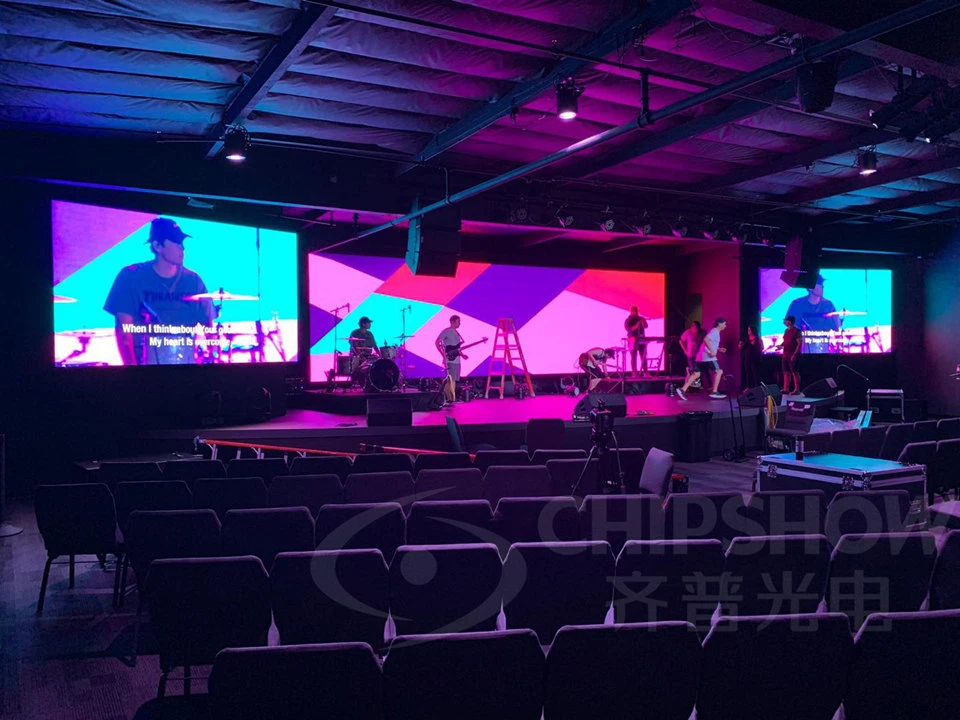
On an LED screen facing the audience, lyrics, the Bible, and PowerPoint presentations are shown. Along with the video camera and praise leaders, lyrics, the Bible, and PowerPoint presentations are shown on the stage’s back wall. These days, churches need both kinds of LED TVs, but they need to be set up in different ways.
The cost of adding extra panels at a rate of 3% to 10% per panel per batch to keep colors consistent during batching, special power outlets, RF interference treatment for wireless microphones, and the cost of creating new content every year can often be big on top of the base cost of a display panel. Motion graphic software licensing fees, ProPresenter subscriptions, and the use of in-house or outside designers are all yearly costs that most churches don’t plan for when they buy the software.
Yes. The center screen has LED screens because it faces the camera directly and needs pictures that are good enough for broadcast. Projectors can be used for the other screens since they don’t have to face the cameras. Using screens for two different purposes will save a lot of money compared to just using LED screens because it meets all needs.
The first problem that comes up when you use project screens on camera is that stage lights and scan lines can wash out images at certain shutter speeds. The 3,840Hz LED wall gets rid of any scan lines and makes sure that the quality of the output color doesn’t change no matter how bright the room is. The data source can be changed, which is another good thing about the LED wall system for church streaming. With an LED wall, the same source of input can be used for more than one zone output.
When using video cameras to record behind stage backdrops, the pixel pitch should be based on how far away the camera is, not how far away the crowd is. When there is a camera rolling and the speaker is close to the backdrops, the backdrops become clear. This means that when someone stands close to the background and appears in the frame, there will be banding in the video because the pixels are closer together. When you use a backdrop, the usual pixel pitch is P2.6.