





C-Smart Series Outdoor LED Modules
Outdoor LED installations demand more than brightness — they require structural efficiency, weather resilience, and maintenance systems that hold up over years of real-world operation. The C-Smart Series delivers all three through a cabinet-free modular platform standardized on a 640 × 320 mm module format, with IP65 or IP66 sealing, fanless thermal management, and dual-access serviceability built into every product.
Outdoor Scenarios
Each C-Smart product is purpose-engineered for a specific deployment context rather than positioned as a general-purpose solution.
C-Smart HD Sign — Fine-Pitch Clarity for Brand Facades
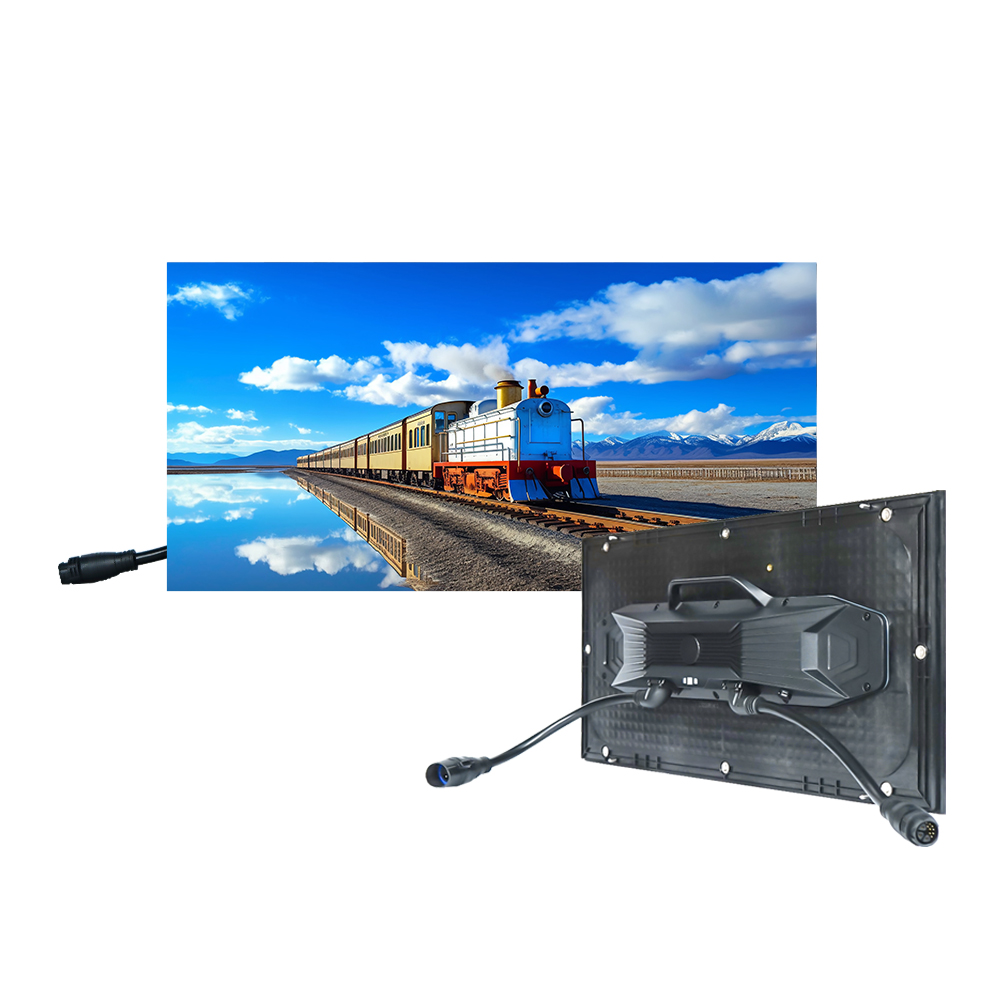
The C-Smart HD Sign Smart Module Outdoor LED Display targets retail facades, corporate signage, and brand installations where pixel sharpness at street-level distances is non-negotiable. Available in P2.96, P4, P5, and P6.67, it delivers 5,500+ nits of typical brightness with full IP65 front and rear sealing — no external glass required. Module weight stays at ≤ 29 kg/m², keeping structural load within standard wall-mount tolerances.
The fanless design eliminates noise entirely, a requirement in premium retail environments. Both front and rear maintenance access are supported, adapting to recessed facades where rear access is physically blocked. Independent smart modules simplify spare parts management — a single faulty unit is swapped on-site without disturbing adjacent modules.
C-Smart Long-View DIP — Highway-Speed Readability at Distance
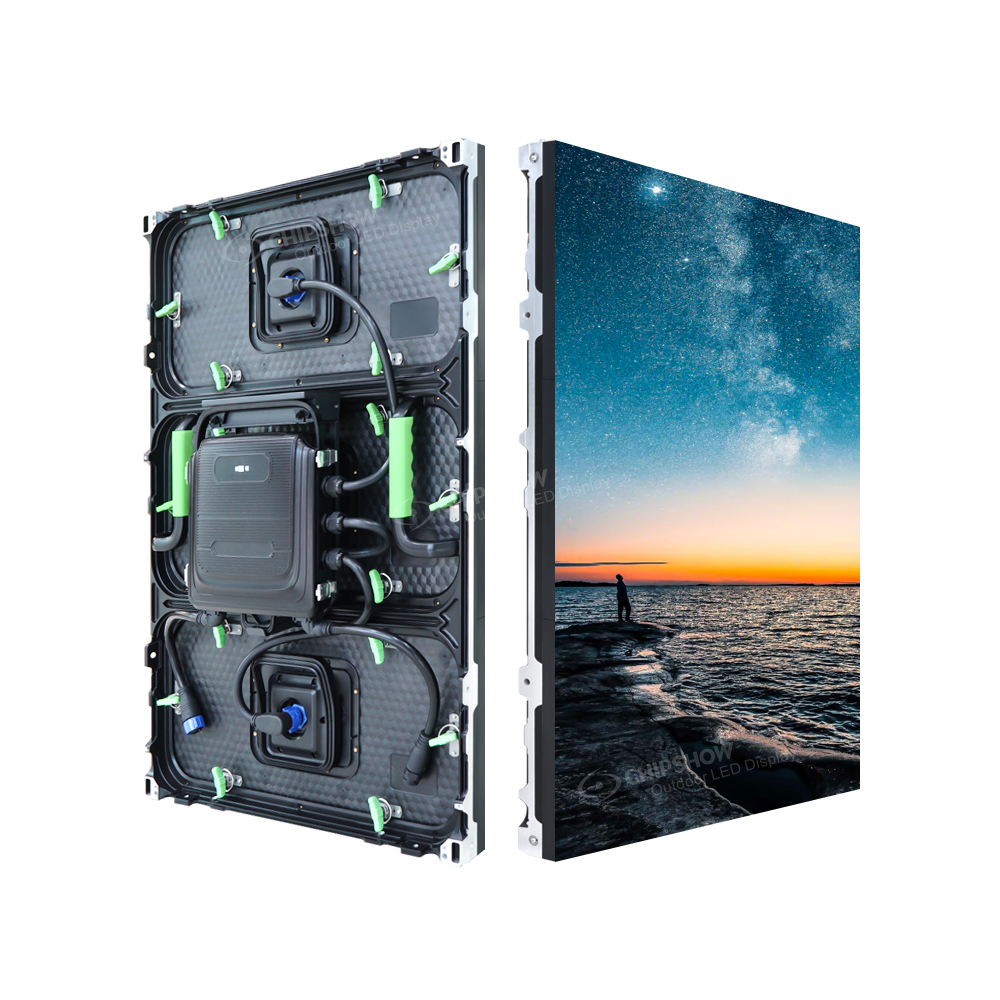
The C-Smart Long-View Smart DIP Outdoor LED Screen is built for highway gantries, traffic message boards, and roadside infrastructure where drivers at speed need to read content from hundreds of meters away. The P10 DIP346 packaging delivers 8,500 nits with proven stability under vibration and thermal stress. Protection reaches IP65 / IP66, with IP66 covering high-pressure water jet exposure common in highway maintenance.
Deep shading masks raise contrast ratios during low-angle sun conditions — morning and evening peak traffic hours when washed-out displays create the most legibility risk. Modules mount directly to gantry brackets, cutting suspended weight and wind-load profile without cabinet frames.
C-Smart Ultra-Bright DOOH — 11,000 Nits for Rooftop Advertising
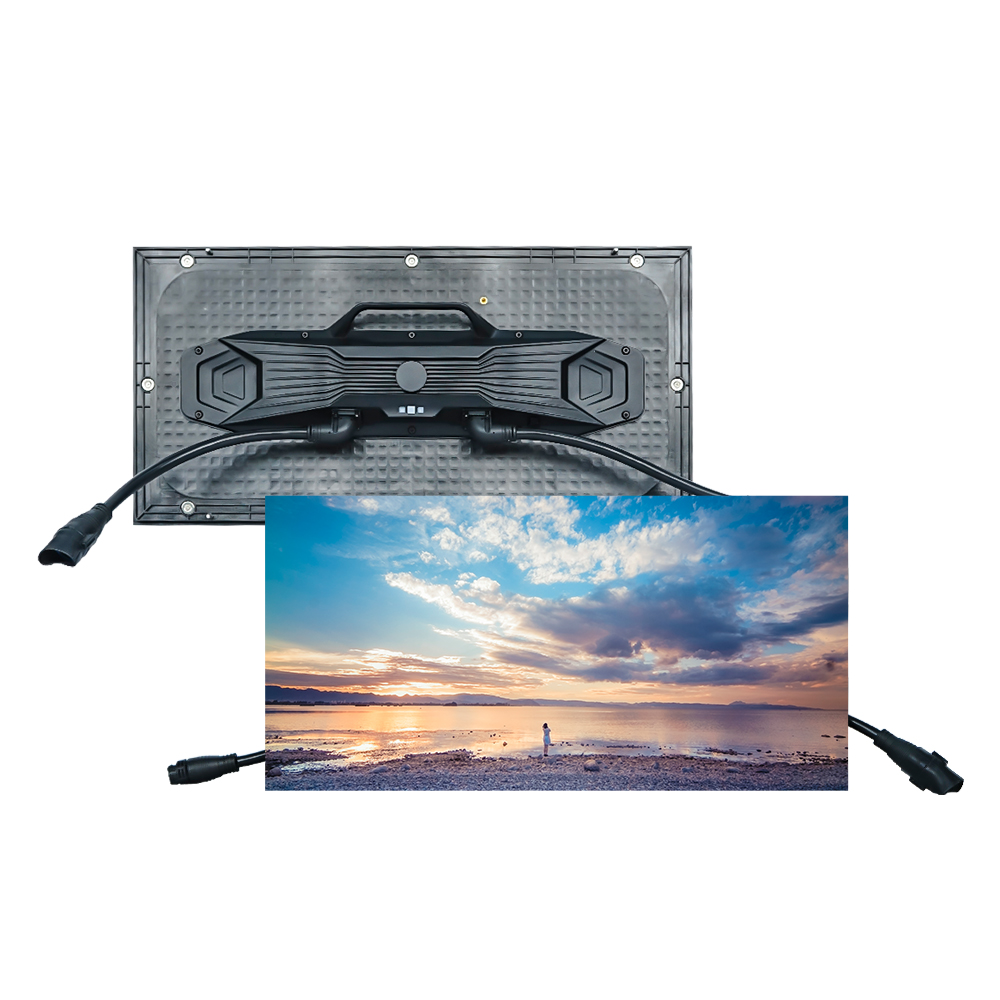
The C-Smart Ultra-Bright DOOH LED Modules address the most demanding brightness requirement in the outdoor category: rooftop and large-format advertising under direct midday sun. Peak brightness reaches 11,000 nits across P6.67 and P10 options, keeping content fully saturated throughout the daylight operating window.
At ≤ 26 kg/m², its lightweight design helps reduce rooftop reinforcement scope and structural engineering costs. Average power consumption stays at ≤ 160 W/m², which meaningfully reduces electricity OPEX across large screens running 16–18 hours daily. Full IP65 sealing on both faces protects against moisture and particulate exposure typical of elevated rooftop environments.
Shared Engineering Across the Entire Series
All three products share the same foundational design decisions, which matter for operators managing multi-site deployments.
Cabinet-Free Build and Structural Savings
Eliminating steel cabinet frames reduces screen depth, wind resistance, and on-site installation labor. For rooftop and gantry deployments, the lower weight profile directly shrinks the structural reinforcement scope — a cost that often rivals the display hardware itself on large-format projects.
Fanless Thermal Design and Long-Term Reliability
Passive heat dissipation removes the most common failure point in outdoor LED systems. The C-Smart HD Sign and Ultra-Bright DOOH modules feature fanless designs, eliminating bearings that wear, dust accumulation in airflow paths, and noise output — critical for urban environments where noise ordinances are tightening and premium retail neighbors have zero tolerance for mechanical hum.
Standardized Modules for Multi-Site Operations
The 640 × 320 mm module format stays consistent across all three products. Spare parts, mounting hardware, and maintenance procedures remain interchangeable across every site in a network. For operators managing 10, 20, or 50 locations, that standardization cuts inventory overhead and eliminates the technician retraining that comes with mixed-platform deployments. Replacement modules remain compatible across the product lifespan — a meaningful assurance for infrastructure projects with 10–15 year operational timelines.


