The Ultimate Guide to Retail LED Displays (2025): Boost Foot Traffic & Slash Rollout Costs
Introduction
In the omnichannel retail era, capturing pedestrian attention requires more than static printed posters. Recent industry insights show retail LED display adoption surged by 22% in 2024. Why? Because the window to drive a passerby into your store is just three seconds.
However, deploying commercial screens involves complex B2B challenges: fighting storefront sun glare, managing expensive union labor for installations, and navigating strict municipal architectural codes. This guide breaks down the 2025 retail LED landscape, helping you select the right display to maximize ROI while avoiding costly deployment traps.
1. What is A Retail Shop LED Display?
A retail LED display is a commercial-grade, high-brightness digital canvas engineered to operate 12–24 hours a day in challenging retail environments. Unlike consumer TVs or basic LCDs, modern retail LED walls offer bezel-free seamless splicing, daylight-defying brightness, and smart cloud-sync capabilities. They act as automated visual merchandisers, driving impulse foot traffic and drastically reducing the recurring costs of printed signage.
2. Top Retail LED Display Types & Scenarios
Not all screens fit all spaces. Here is how modern LED form factors align with specific retail zones and Chipshow’s engineered solutions:
2.1 Transparent LED Window Displays
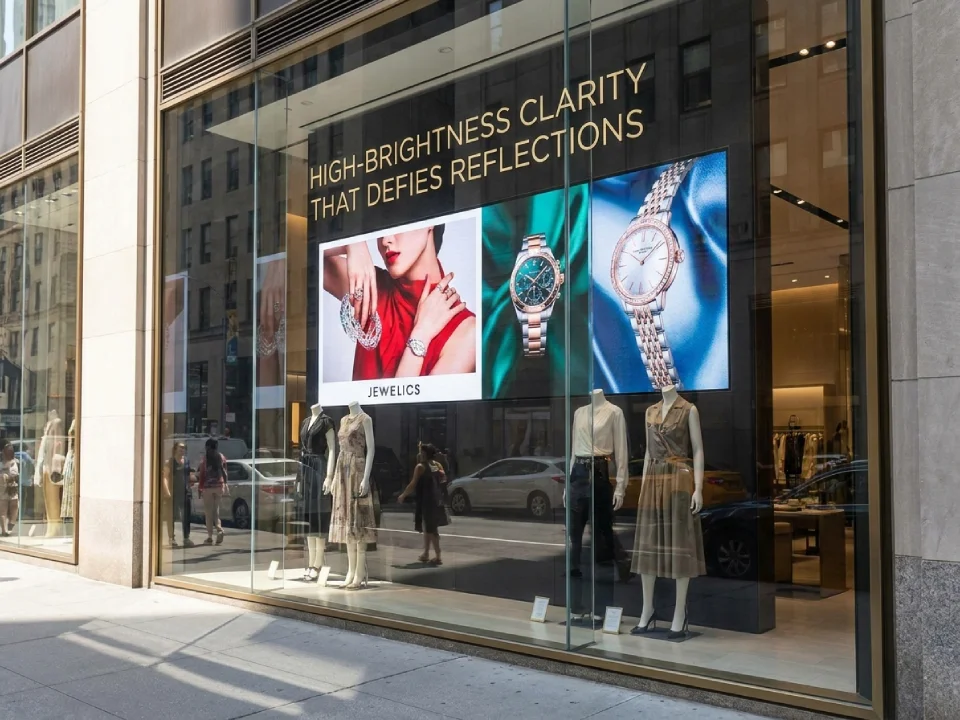
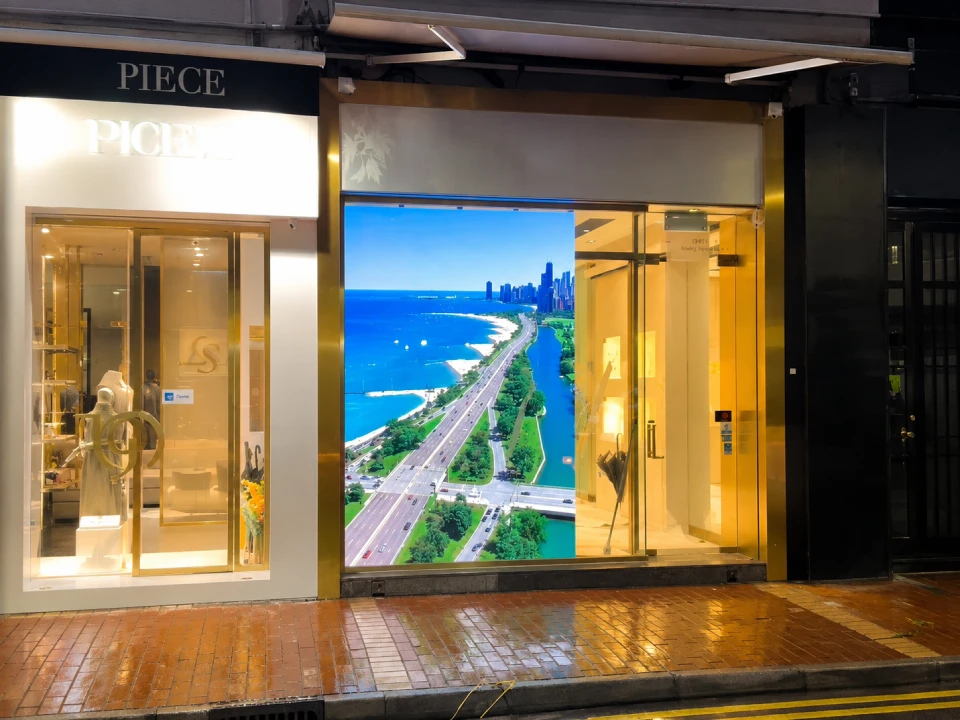
The Application: High-street storefront windows.
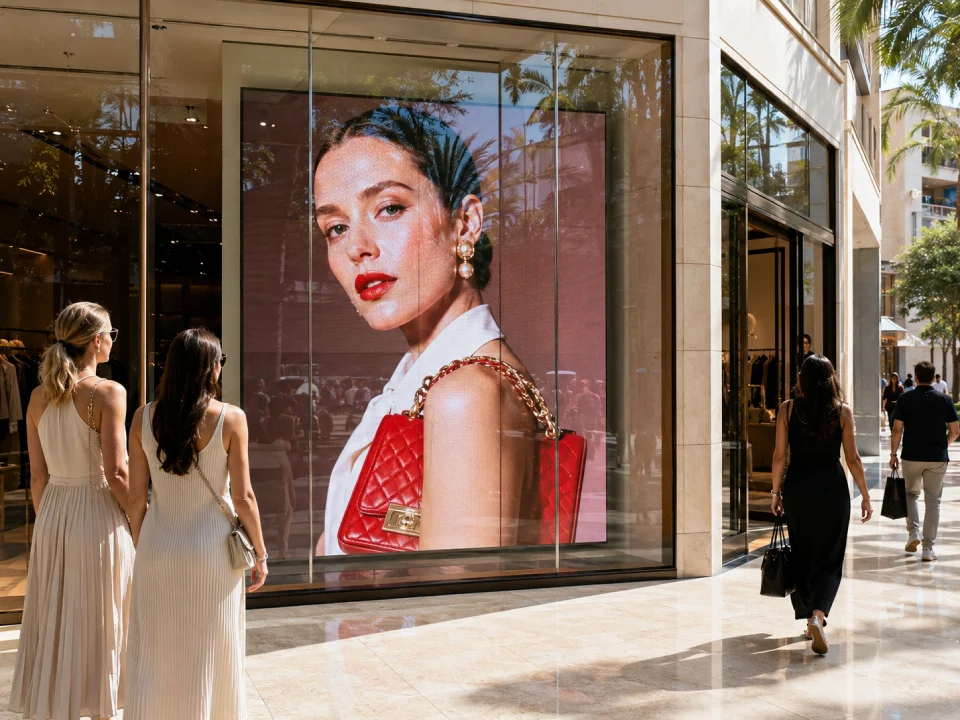
The Value: Delivers vibrant advertising without blocking natural daylight or hiding the physical merchandise behind the glass.
Suggested Series: C-Mesh F / G. Features up to ~80% transparency (model-dependent) and ultra-light frames (5kg/㎡) to bypass complex facade drilling permits.
2.2 Indoor Fine-Pitch Video Walls
The Application: Luxury boutique feature walls and cashier backdrops.
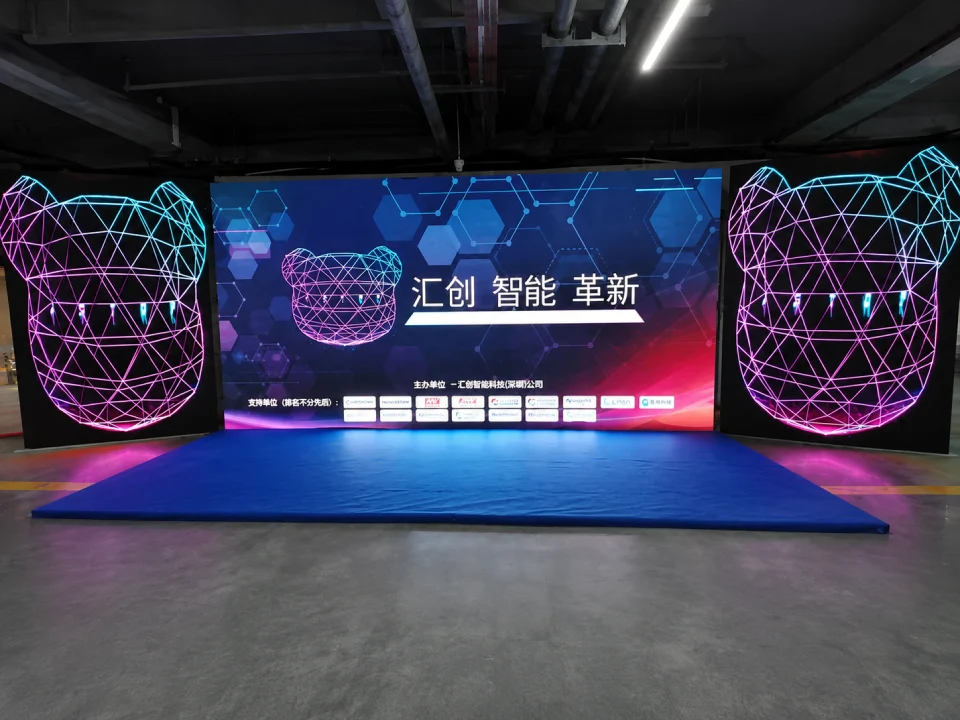
The Value: Provides pristine, high-resolution visuals for shoppers standing just feet away.
Suggested Series: C-Max (COB). P1.53–P1.86 pixel pitches deliver seamless, gap-free imagery with an epoxy-coated surface that resists accidental shopper collisions.
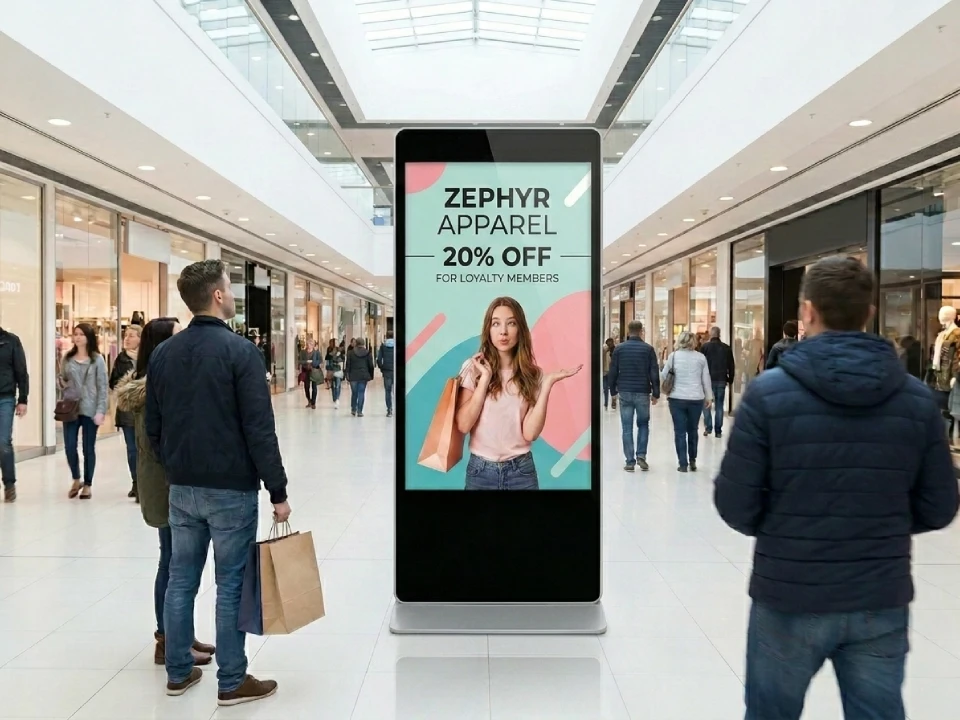
2.3 Freestanding Smart LED Posters
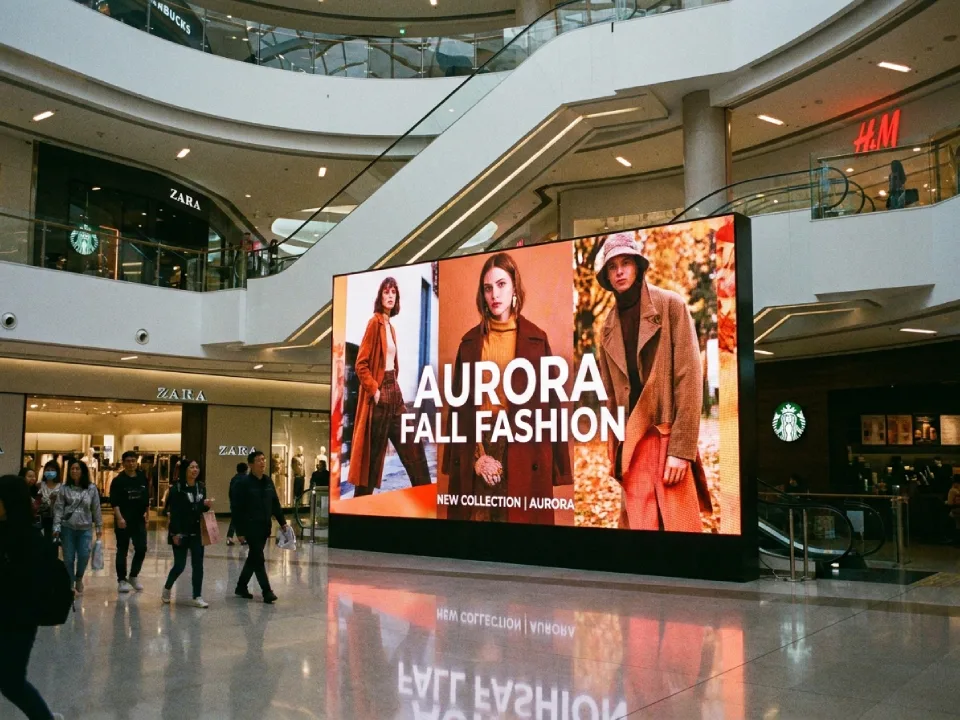
The Application: Pop-up stores, seasonal promotions, and mall entrances.
The Value: Zero-installation mobility. These plug-and-play units can be rolled onto the floor or placed on tool-free bases, eliminating expensive contractor fees.
Suggested Series: C-Mesh F Poster.
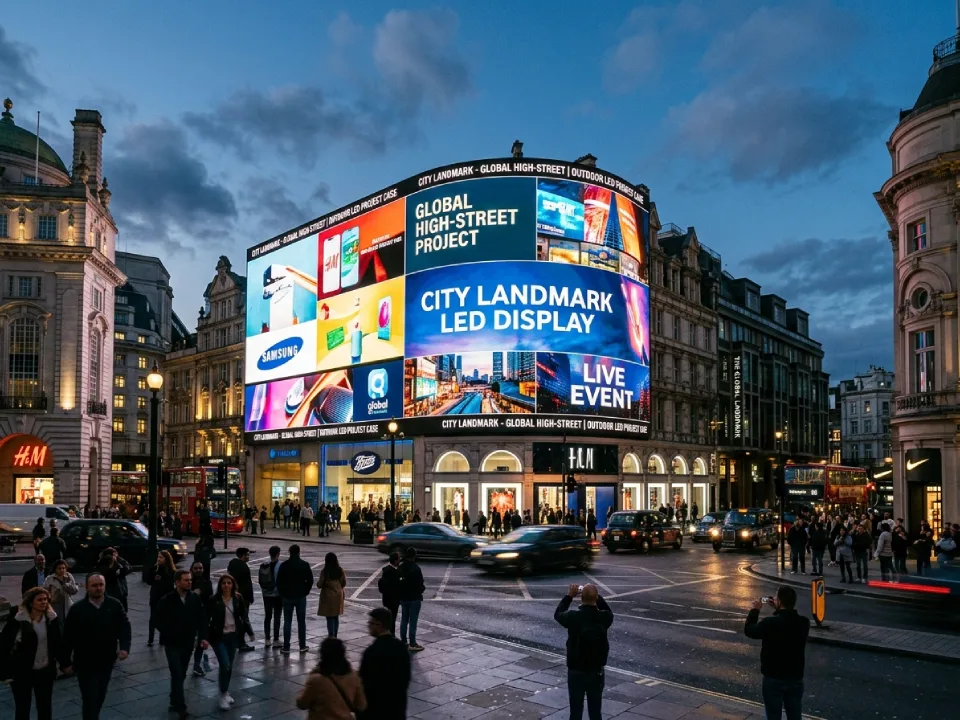
2.4 Outdoor Plaza & Façade Billboards
The Application: Exterior shopping mall walls and drive-thru signage.
The Value: IP65-rated enclosures built to endure rain, salt, and extreme temperatures while delivering 5,000+ nits to fight direct sunlight.
Suggested Series: C-Fit-Easy / C-Smart. Standardized cabinet sizes streamline heavy structural steelwork planning.
2.5 Lightweight Suspended Atrium Screens
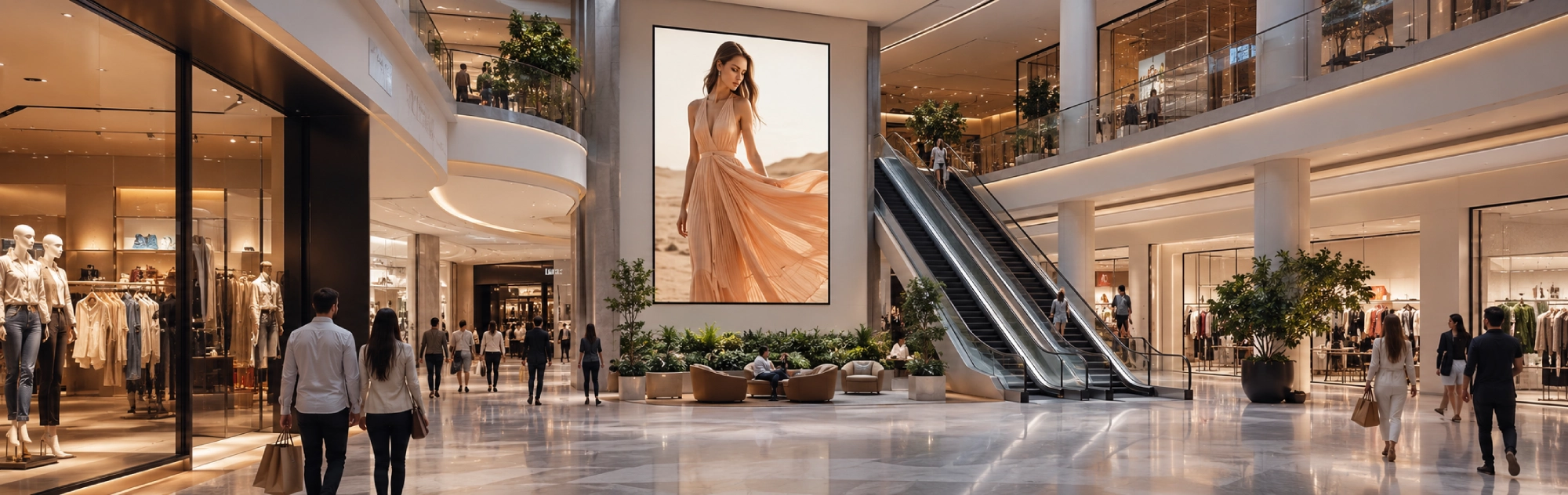
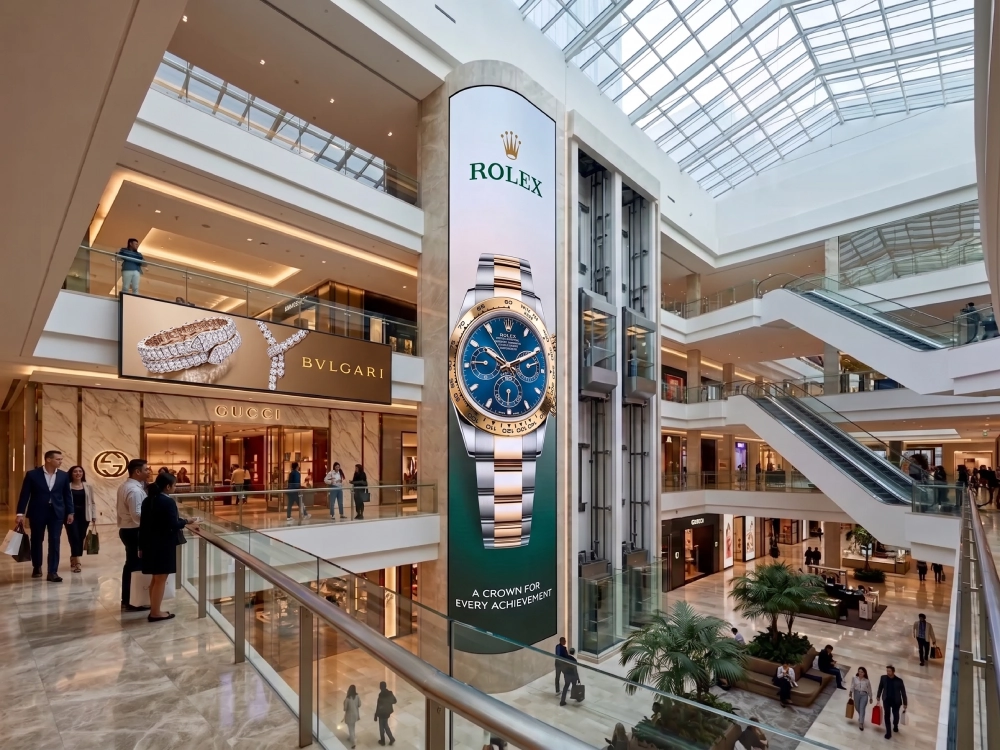
The Application: Multi-floor shopping mall central courts.
The Value: High-impact visibility from multiple angles without overwhelming ceiling load limits.
Suggested Series: C-Shine Plus. Engineered for fast-lock rigging and safe overhead hoisting.
3. Key Engineering Features for Shopping Malls
B2B retail displays must prioritize operational stability. Look for these crucial engineering markers:
Daylight-Defying Brightness: Window-facing screens require ≥3,500 nits to remain readable under afternoon sun glare. Standard 800-nit indoor screens will wash out completely.
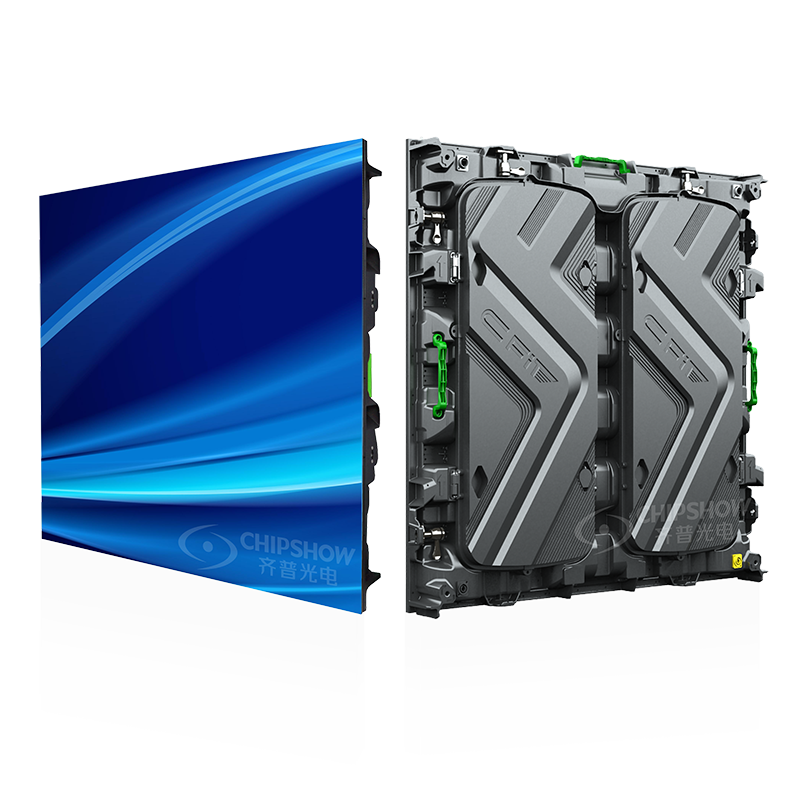
100% Front Maintenance: Retail space is expensive. Fully front-serviceable modules (using magnetic suction tools) allow repairs in minutes without tearing down architectural wall cladding.
Silent & Fanless Operation: High-end boutiques require 0dB environments. Advanced aluminum die-cast cabinets dissipate heat naturally, eliminating noisy mechanical fans.
Cloud CMS Compatibility: Enterprise displays must work seamlessly with mainstream controllers (e.g., NovaStar), allowing HQ to update campaigns across 500 global stores instantly.
4. How LED Displays Increase Retail Sales and ROI
Investing in retail LED networks shifts marketing from a sunk cost to an appreciating asset.
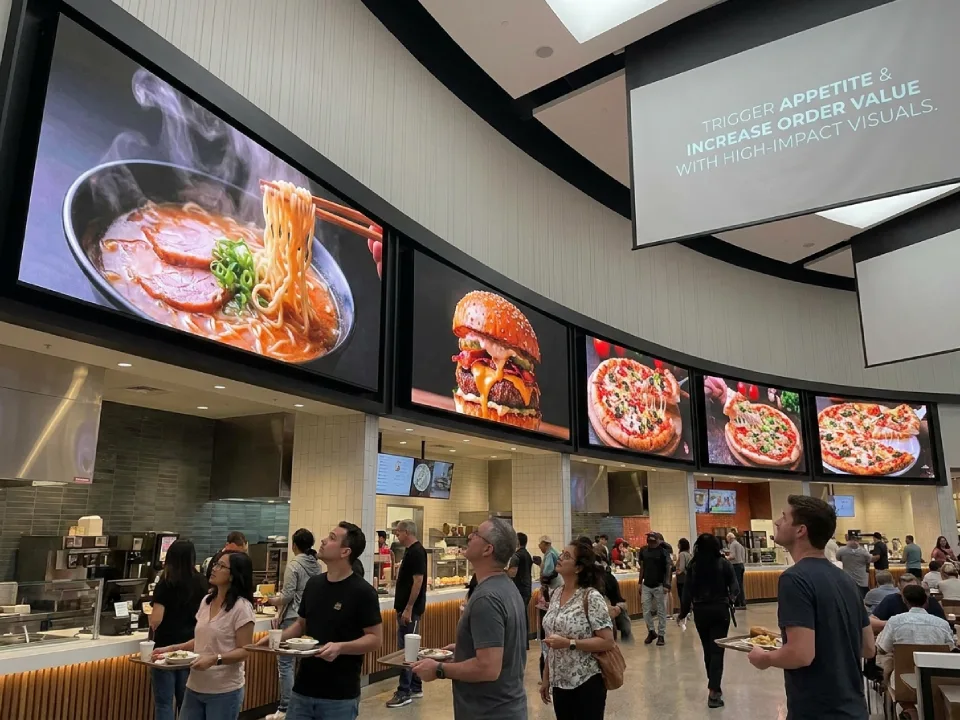
Triggering Impulse Purchases: Dynamic motion and bright, high-contrast imagery create a sense of urgency. Strategic point-of-sale displays have been shown to lift impulse buying by over 20%.
Slashing OPEX (Operating Expenses): Eliminate the endless cycle of printing, shipping, and manually installing paper posters. Digital screens allow for unlimited, free campaign updates.
Extending Dwell Time: Immersive 3D content and lifestyle branding keep shoppers engaged longer, directly correlating to higher average transaction values.
ESG & TCO Mindset: Modern optimized PCB designs drastically lower average power consumption, helping European and US mall operators meet strict energy sustainability targets.
5.Buyer’s Checklist: How to Spec the Right Screen
Pixel Pitch (P) vs. Distance: * Close-up indoor (within 2 meters): P1.5 to P1.8.
Mall Atriums (3–5 meters): P2.5 to P2.9.
Storefront Windows (viewed from the street): P3.91 to P6.25.
ADA & Safety Compliance: Ensure your indoor screens feature ultra-slim profiles to meet ADA protruding object regulations.
Fire & EMC Ratings: Shopping malls demand strict safety certifications. Ensure your supplier provides CE/EMC Class B and localized fire-retardant documentation.
6. The Supply Chain Advantage: Local Stock Matters
A 30-day ocean freight delay can ruin a Black Friday store opening. For integrators and retail chains, localized warehousing is a game-changer. Chipshow maintains strategic logistics hubs in the Netherlands (Europe) and California (USA). This allows for overnight dispatch of fast-moving series (like C-Max and C-Shine Plus), giving you a virtual inventory without the cash-flow burden of stocking hardware yourself.
7.2025 Retail Display Technology Trends
COB (Chip-on-Board) Dominance: Micro-pitch COB technology is becoming the standard for luxury retail, offering superior collision protection, deeper blacks, and wider viewing angles compared to traditional SMD.
Naked-Eye 3D Content: High-refresh-rate (3840Hz) corner-wrap screens are increasingly used to display hyper-realistic 3D illusions, acting as massive social media magnets for foot traffic.
ESG-Compliant Architectures: As energy costs rise globally, 2025 screens focus heavily on low-heat, common-cathode power routing to cut electricity bills by up to 30%.
8. FAQs
Q: What is the best LED display for a sunlit shop window?
A: A Transparent LED Display (like C-Mesh) configured at 3,500+ nits. It punches through direct sun glare while maintaining up to 80% transparency so natural light still enters your store.
Q: LED vs. LCD video walls for retail: Which is better?
A: LED is the definitive choice for large retail canvases. LCD panels have unavoidable bezels (creating ugly black grid lines across your content), while fine-pitch LED offers a 100% seamless, bezel-free image.
Q: Do I need a structural permit to install an LED screen?
A: It depends on local municipal codes. However, freestanding LED posters and ultra-lightweight mesh displays (5kg/㎡) often bypass heavy structural drilling permits, making them ideal for historic European buildings or fast US rollouts.
9. Conclusion
A retail LED display is not just a screen; it is an architectural asset that lowers long-term operational costs and directly influences shopper behavior. By matching the right pixel pitch, brightness, and maintenance design to your specific retail zones, you can build a digital ecosystem that pays for itself.