

Choosing the wrong outdoor LED display costs more than the purchase price. Poor pixel pitch selection, inadequate brightness, or skipped permits can result in wasted media spend, regulatory fines, and premature hardware failure. This guide provides a clear, practical framework for selecting an outdoor LED billboard that delivers measurable advertising returns.
What Types of Outdoor LED Displays Are Available for Advertising?
The display format you choose determines your installation logic, content flexibility, and long-term operating costs. Each format serves a distinct advertising use case.
Fixed LED Billboards
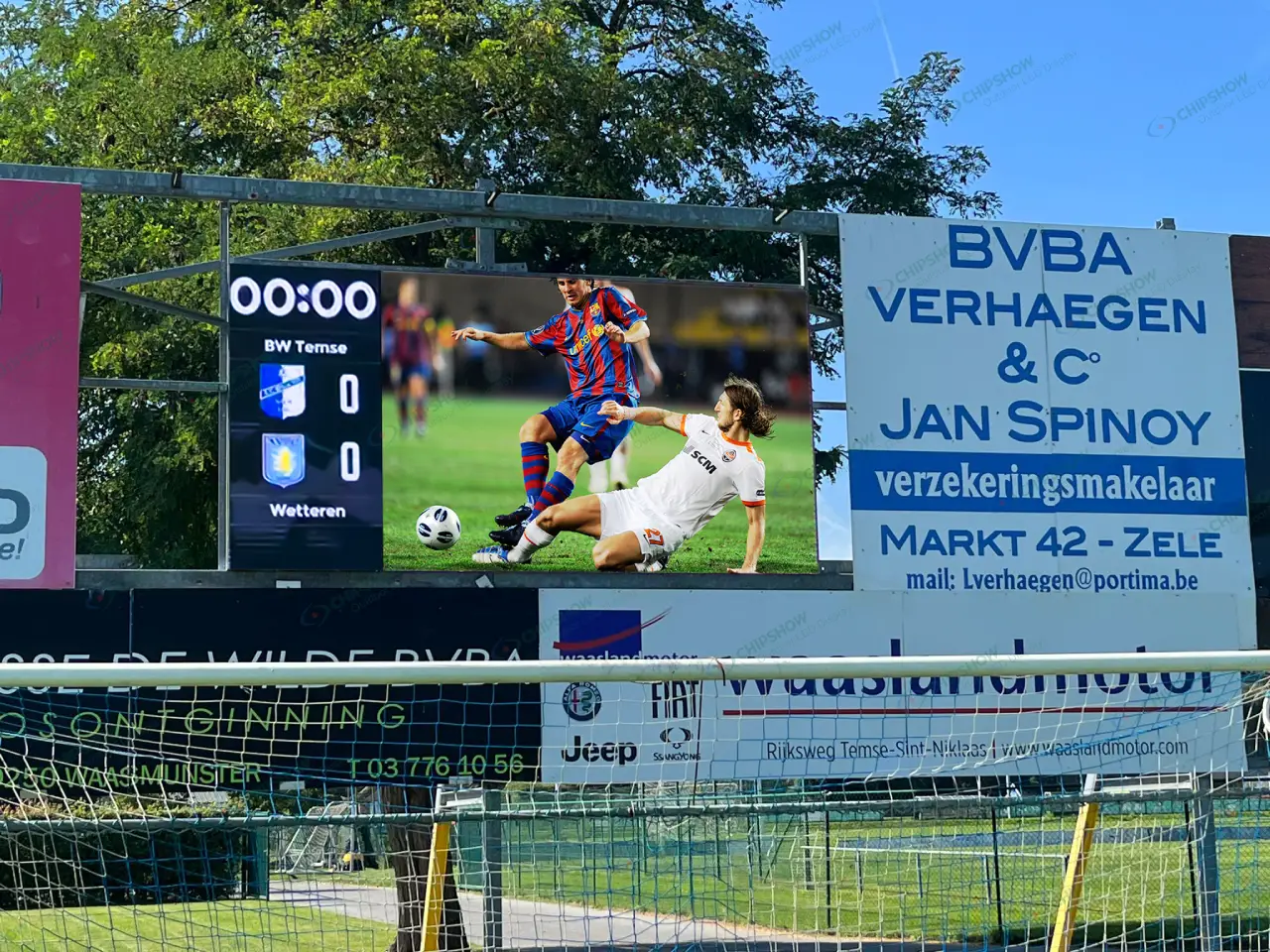
Fixed outdoor LED displays are mounted to permanent structures such as building facades, steel poles, or rooftop frames. They run 24/7 and are built for high-traffic locations where consistent audience exposure drives advertising value. These are the standard formats for roadside digital billboards and DOOH network infrastructure. For operators prioritizing structural compatibility and energy efficiency, Chipshow’s C-slim series is engineered as the default choice across outdoor fixed installations — combining a lightweight profile, installation-friendly cabinet design, competitive brightness output, and low-power options that reduce long-term operating costs.

Rental and Modular LED Displays
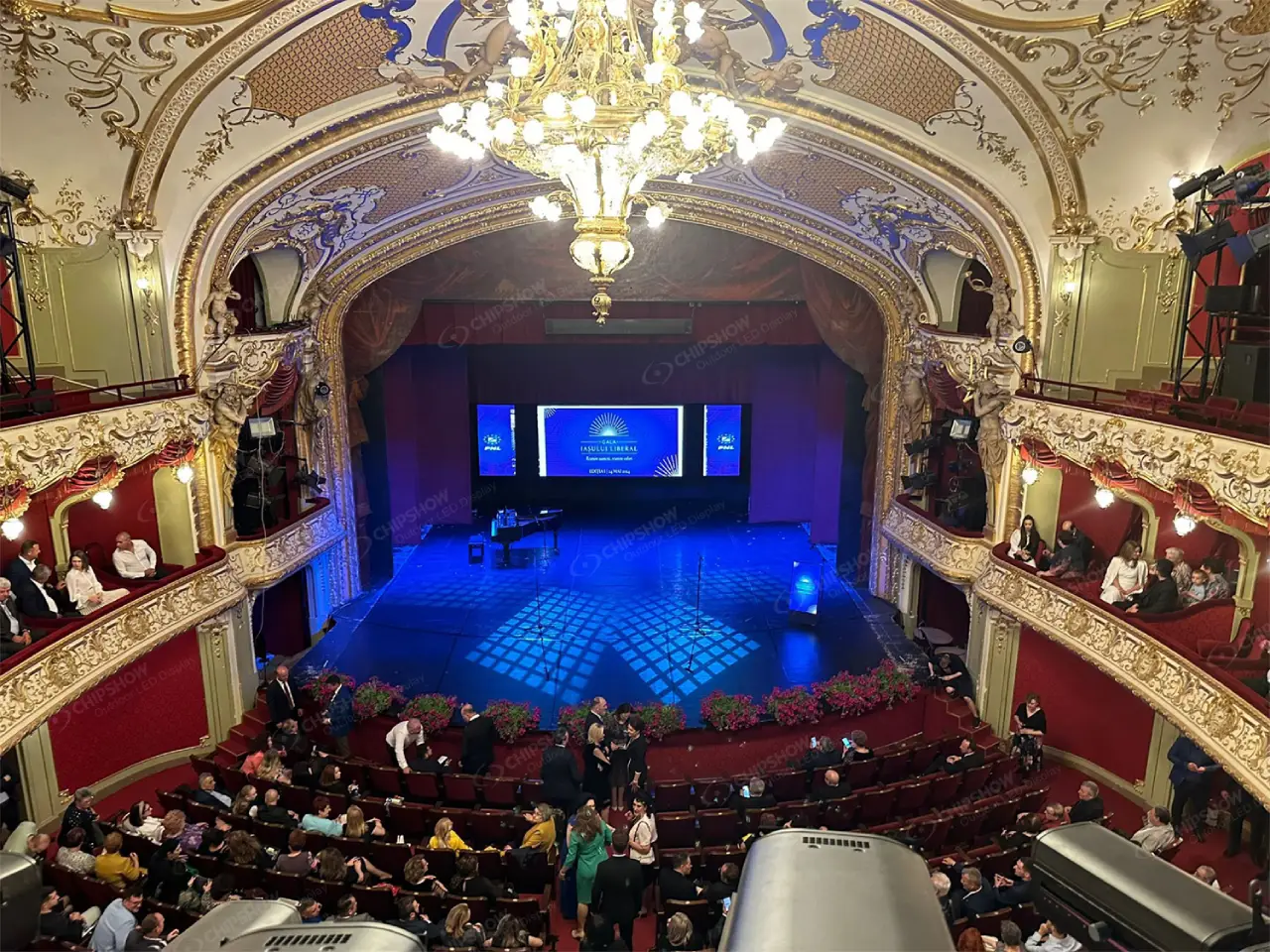
Modular rental panels are designed for temporary setups at concerts, festivals, and brand activations. Lightweight cabinet construction and tool-free assembly reduce labor costs. For advertising operators who need flexible deployment across multiple sites, modular outdoor displays offer strong cost-per-event efficiency.
Transparent and Curved LED Displays
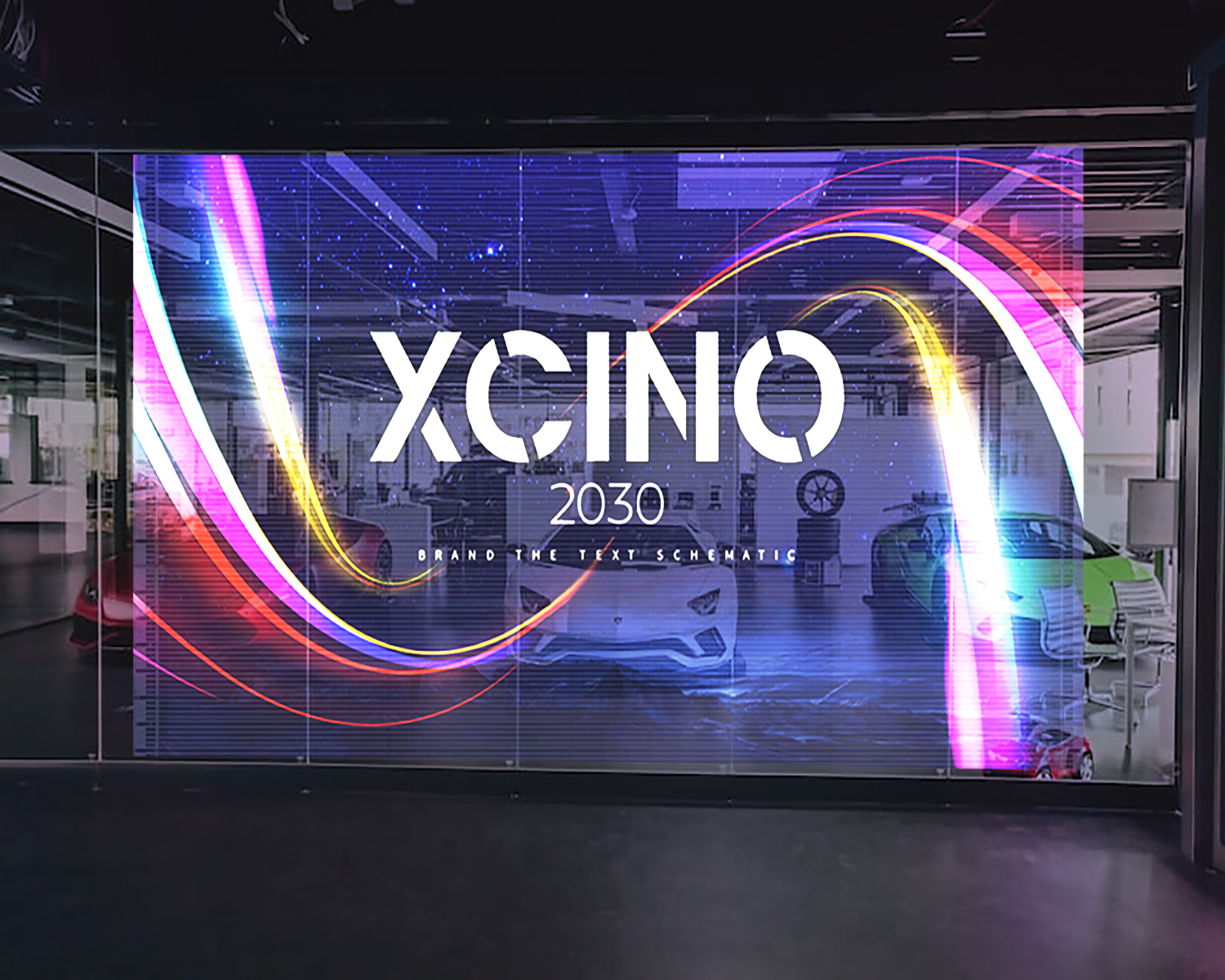
Transparent outdoor LED screens maintain sightlines while projecting advertising content. They are common in luxury retail storefronts, airport terminals, and glass-facade commercial buildings. Curved configurations wrap around columns or building corners, extending the visible advertising surface area. For heritage buildings and architecturally sensitive facades where structural intervention must be minimized, Chipshow’s C-Smart offers a 75mm ultra-slim, cabinet-free design that eliminates heavy steel substructures and protects existing wall construction.
Fixed Roadside and Highway Billboards
Fixed roadside and highway billboards serve high-traffic corridors, interstate exchanges, and arterial roads where advertiser visibility and regulatory compliance are non-negotiable. They demand maximum brightness, wind-load-rated structures, and low TCO. Chipshow’s C-vent P16 Traffic (VMS) delivers high-brightness output, ventilated thermal management, and traffic-grade certification for highway and VMS compliance in a single specification.

What Pixel Pitch Should You Choose for an Outdoor LED Display?
Pixel pitch dictates image clarity. To avoid overpaying, match your pitch to the viewer’s location.
Pixel Pitch vs. Viewing Distance
A reliable planning rule used across the industry: minimum viewing distance (ft) ≈ 3 × pixel pitch (mm). A P10 display, for example, requires a minimum viewing distance of approximately 9 meters (30 ft).
| Installation Type | Recommended Pixel Pitch | Minimum Viewing Distance | Typical Application |
| Highway billboard | P10 – P16 | 9 – 15 meters (30 – 50 ft) | Interstate roadside advertising |
| Urban roadside billboard | P6 – P8 | 5.5 – 8 meters (18 – 26 ft) | City center, arterial roads |
| Commercial plaza / retail frontage | P4 – P6 | 3.5 – 5.5 meters (12 – 18 ft) | Shopping districts, building facades |
| Event / temporary outdoor screen | P3.91 – P4 | approx. 3.5 meters (12 ft) | Concerts, brand activations |
For most roadside billboard applications, P8 to P10 delivers the optimal balance of image quality, brightness output, and cost per square meter.
Common Pixel Pitch Mistakes
The most frequent mistake is selecting a fine pitch designed for close viewing and installing it on a highway structure. At 30 meters (100 ft), a P4 screen delivers no perceptible quality advantage over a P10 screen, but costs more per square meter. Specify pitch based on your actual minimum viewing distance, not on peak specification.

How Bright Does an Outdoor LED Display Need to Be?
Brightness is the most important optical specification for outdoor advertising screens. Insufficient brightness makes content invisible in direct sunlight. Excessive brightness creates glare, triggers regulatory complaints, and increases power consumption without advertising benefit.
Nit Requirements by Installation Environment
| Environment | Recommended Brightness Range | Notes |
| Direct sunlight, open highway | 6,000 – 10,000 nits | Full sun exposure, no shade |
| Urban street level, partial shade | 5,000 – 7,000 nits | Buildings provide partial shading |
| Semi-outdoor / covered structure | 2,500 – 4,000 nits | Reduced ambient light load |
Most outdoor advertising screens perform well between 5,000 and 8,000 nits when paired with automatic dimming, according to industry standards.
Auto-Dimming Technology and Brightness Compliance Regulations
Automatic brightness control adjusts output based on ambient light sensors throughout the day. This keeps content readable at noon and prevents nighttime glare that draws complaints from local authorities. In most U.S. jurisdictions, municipalities impose maximum nighttime brightness limits for digital billboards. Auto-dimming is a baseline requirement for compliant outdoor LED billboard installation, not an optional feature.
Balancing Brightness and Power Consumption
Peak brightness ratings are rarely relevant to daily operation. However, power efficiency is a critical factor for long-term ROI. Energy-efficient models, particularly those utilizing Common Cathode technology, can reduce average power consumption to approximately 180W per square meter under normal operating conditions. This is significantly lower than the industry average of 400W/m², offering media operators a direct path to higher net advertising margins.
What Weather Protection Standards Should an Outdoor LED Display Meet?
Outdoor displays face continuous exposure to rain, dust, humidity, UV radiation, and temperature extremes. Inadequate protection is one of the leading causes of premature hardware failure in outdoor advertising installations.
IP65 vs. IP67: What You Actually Need
IP65 certification means the cabinet is fully dust-tight and protected against water jets from any direction. IP67 adds the ability to withstand temporary immersion in water up to 1 meter (3.3 ft) for 30 minutes. For standard roadside and rooftop billboard installations, IP65 is the accepted industry minimum. Installations in coastal environments, flood-prone areas, or regions with heavy seasonal rainfall should specify IP66 or IP67.
Thermal Management Design and Long-Term Reliability
LED chips degrade faster under sustained heat. Effective thermal management, through passive heat dissipation fins, active cooling fans, or ventilated cabinet design, directly extends the operational half-life of the display. The industry-standard operational half-life for outdoor LED displays is up to 100,000 hours, which represents the point at which LED brightness falls to 50% of its initial calibrated output.
Structural Durability and Materials
Billboard structures in open locations must meet wind load requirements that vary by region and installation height. Cabinet materials should be evaluated for corrosion resistance, particularly in coastal or industrial environments. Aluminum alloy cabinet construction offers a strong weight-to-durability ratio and is standard for permanent outdoor installations.
What Are the Permitting and Zoning Requirements for Outdoor LED Billboards?
Regulatory compliance is the most frequently underestimated obstacle in outdoor LED display projects. Installing a digital billboard without the correct permits can result in forced removal, fines, and lost advertising revenue.
Key U.S. Billboard Regulations
The Highway Beautification Act governs off-premise signage visible from interstate highways and federal-aid primary roads. It sets spacing requirements and restricts billboard placement near scenic, historic, and residential areas. Beyond federal regulation, each municipality enforces its own sign codes covering maximum display size, height, setback from road edges, and permitted zoning districts. Both layers of regulation apply simultaneously and require verification before purchase.
Common Restrictions on Brightness Levels and Dwell Time
Most U.S. municipalities require a minimum static dwell time of 6 to 8 seconds per frame before the image may change, though some jurisdictions require longer intervals. Full-motion video and animated content are prohibited for standard roadside billboard applications under federal highway guidelines, with limited exceptions in designated entertainment districts. Brightness caps typically apply during nighttime hours, with specific nit limits varying by location. Check these rules with local planners before you buy. This prevents expensive equipment changes later if your screen is too bright or switches images too fast.
Required Technical Documentation
Permit applications for outdoor LED displays typically require the following technical documentation: display dimensions and total square footage, maximum brightness output in nits, auto-dimming certification, structural load calculations, electrical specifications, and proposed installation height. Having these figures prepared from your supplier before submitting reduces review cycles and accelerates approval timelines.
How Do You Calculate the Total Cost of Ownership for an Outdoor LED Display?
Purchase price accounts for a fraction of the total investment over a display’s operating life. Media operators who evaluate TCO rather than upfront cost make more accurate capital allocation decisions.
Purchase Price vs. Long-Term Operating Costs: A Full TCO Breakdown
| Cost Category | Notes |
| Hardware purchase | Largest single expense at acquisition; varies by size and pixel pitch |
| Annual electricity | Based on approximately 180W/m² average; scales with daily operating hours |
| Annual maintenance | Typically 5–10% of hardware value; covers cleaning, module replacement, and periodic calibration. Costs trend toward the higher end for installations in coastal, high-humidity, or extreme-temperature environments. |
| Content management software | Pricing varies by platform and network scale; enterprise outdoor DOOH systems are typically priced per screen count and feature set |
| Permitting and licensing | Varies by municipality; includes initial permit and annual renewal fees where applicable |
During a 10-year lifespan, the running cost of power and maintenance often surpasses the initial cost of the hardware itself when it comes to large billboards. Those who include such expenses in their initial assessment make more realistic assessments.
LED Display Operational Half-Life and Depreciation
The operational half-life of up to 100,000 hours is the industry-standard measure for LED component longevity. It represents the point at which brightness falls below 50% of its initial calibrated output, not complete hardware failure. At 16 hours of daily operation, 100,000 hours represents approximately 17 years before brightness recalibration or panel replacement is required. Most operators use an 8-to-12-year replacement cycle for capital depreciation planning.
Outdoor LED Advertising ROI vs. Print and Static Billboard Formats
A single LED outdoor billboard could cycle different advertisers on a rotation schedule of 6-8 seconds per advertiser, thereby earning money from multiple advertisers through one billboard’s installation. For instance, a billboard that was previously earning the company $5,000 monthly from one advertiser could earn from up to eight advertisers within the same time period, resulting in an income of between $15,000-$30,000 per month, based on current market rates, from those six to eight advertisers. This is possible since there will be no need for printing new faces every now and then.
What Content Management and Connectivity Features Should You Look For?
The hardware investment in an outdoor LED display only delivers returns if the content management infrastructure supports efficient scheduling, remote updates, and reliable uptime.
Cloud-Based vs. Local Control Systems
Cloud-based CMS platforms allow operators to manage content across multiple screens from a single dashboard without on-site visits. They support scheduling by time of day, day of week, or trigger conditions such as weather data. Local PC-based control systems offer higher data security for sensitive applications but require on-site access for updates. For DOOH network operators managing multiple billboard locations, cloud-based platforms deliver a clear operational efficiency advantage.
Remote Scheduling, Multi-Screen Management, and Real-Time Content Updates
In terms of content management within an outdoor network utilizing LED advertising, it is vital that there be a system that permits updates to occur to specific panels or sets of panels at once. The scheduling of a campaign may allow rotation intervals, as well as specifying the start and end date and dayparts.
Wi-Fi, 4G/5G, and Ethernet for Reliable Operation
Fixed billboards will usually be hard-wired to Ethernet for the highest level of reliability. For remote or temporary setups, 4G and 5G mobile broadband will work. Wi-Fi works well where there is a reliable network in the immediate vicinity. Using a display that has several connectivity options available offers resilience and prevents network downtime.
How Do You Choose a Reliable Outdoor LED Display Supplier?
Warranty coverage, spare parts availability, and after-sales technical support directly affect the total operating cost of an outdoor LED billboard installation. Evaluating these factors before purchase is as important as evaluating the hardware specifications.
Certifications to Verify Before You Buy
| Certification | Relevance | Market |
| CE marking | Electromagnetic compatibility and electrical safety | EU and European markets |
| UL listing | Electrical safety testing | U.S. market |
| RoHS compliance | Restriction of hazardous substances | EU mandatory; U.S. voluntary |
| FCC certification | Radio frequency emissions | U.S. market |
Verifying certifications before purchase protects against customs delays, installation rejections, and liability exposure in regulated markets. Request original certification documentation rather than relying on spec sheet claims.
Warranty Terms, After-Sales Support, and Spare Parts Availability
A standard warranty for outdoor LED displays covers 3 to 5 years on LED modules and cabinets. Spare parts availability matters more than warranty length for long-term operations. Confirm that the supplier commits to spare parts availability for a minimum of 7 to 10 years post-purchase before signing a supply agreement.
Questions to Ask Any Supplier Before Signing a Contract
Request documented brightness uniformity test results at the full-screen level, not single-module specifications. Confirm IP rating certification through original documentation. Ask for references from customers operating displays in comparable climate conditions. Establish the technical support response time commitment in writing as part of the contract terms.
Specify the Right Outdoor LED Display for Your Advertising Operation
When picking an outdoor LED screen, there are six main things to think about: the screen’s format, its pixel density based on viewing distance, its luminance based on your environment and the laws in your area, its weatherproofing based on where you want to put it, its TCO based on energy costs and maintenance, and the supplier’s ability to provide certified products and replacement parts.
FAQs About Outdoor LED Displays
Q1: Do I Need a Permit to Install an Outdoor LED Billboard?
Yes. In the US, LED billboard that are installed outside need permission from both the federal government and the local government. The display must comply with the Highway Beautification Act if it is visible from federal highways. Cities have rules about what sizes, heights, and brightness levels are allowed for displays.
Q2: What Is the Minimum Content Dwell Time Allowed for Digital Billboards in the U.S.?
Most U.S. cities require at least six to eight seconds of dwell time between frames before the content changes. However, the required dwell time can vary from city to city, and sometimes the dwell times are even longer than six to eight seconds per frame. Federal highway rules say that billboards along the side of the road can’t use full-motion movies.
Q3: How Does Owning an Outdoor LED Display Compare to Renting Static Billboard Space?
Having an outdoor LED sign saves money every month because you don’t have to print and place ads. Also, different ads can use the same sign, which means you can make the most money from one installation. A static sign that makes $5,000 a month from one ad would make a lot more if the ad were digital and changed every thousand views at the same cost per thousand.
Q4: What Is the Typical Hardware Cost Range for an Outdoor LED Billboard?
The price of hardware alone can range anywhere from about $8,000 for a small neighborhood display to more than $300,000 for a big billboard on the highway. For the job itself, structural steel, concrete, electrical work, permits, and other costs add up to between $100,000 and $500,000. Get quotes from different providers for the costs of both the hardware and the installation.
Q5: How Do You Measure the Return on Investment of an Outdoor LED Billboard?
ROI calculations for digital signage depend on impression metrics, cost-per-thousand, and action metrics. Typically, businesses track large amounts of traffic to their websites, promotional codes, special phone numbers, or QR codes that are used. To find the return on investment (ROI) for owned digital signs, divide the net income from changing advertisers by the annual costs of power, maintenance, and financing.