A 3D anamorphic billboard uses perspective-based video and a planned viewing point to create a glasses-free depth illusion on an LED screen. For brands and media owners, that illusion creates attention, social sharing, and stronger brand recall. The effect is powerful, but it depends on the right screen shape, content design, brightness, pixel pitch, and viewing angle. Creative impact starts with technical planning.
What Is a 3D Anamorphic Billboard?
A 3D anamorphic billboard is an LED display that uses perspective-based content to create a naked-eye 3D illusion. The screen is still flat, curved, or corner-shaped, but the video is designed so objects appear to have depth, float forward, or break out from the display when viewed from a planned angle.
It is not a true holographic display or VR experience. A holographic display creates a different type of three-dimensional light effect, while VR, or Virtual Reality, requires a headset. A 3D anamorphic billboard works in public space without special glasses, which makes it useful for outdoor advertising, brand launches, city plazas, and social media campaigns.
5 Creative Formats for 3D Anamorphic Billboard Advertising
Strong 3D advertising combines the content concept, screen shape, and planned viewing position. The following five creative formats show how a 3D anamorphic billboard can support different campaign goals and public spaces.
Format 1: Corner-Wrap Brand Launch Content
A corner LED screen is one of the most effective formats for 3D anamorphic billboard advertising. The screen wraps around two building faces to create a virtual box. Content can make an object appear to move between the two sides, lean toward the street, or extend beyond the screen edge.
This format works well for major launches because the screen shape becomes part of the creative concept. A product, mascot, package, or visual symbol can appear to occupy the building corner like a physical object.
Best use: Product launches, landmark campaigns, entertainment promotions, and destination marketing.

Format 2: Depth-Based Product Showcases
A depth-based product showcase makes an item appear larger and more physical. The animation may place the product inside a virtual room, rotate it toward the street, or make it appear to extend beyond the LED surface.
This format is useful when product shape, texture, or movement is central to the campaign. Instead of showing only a logo, the content can present the product as an object with visible depth and scale.
Best use: Premium product displays, retail campaigns, product feature reveals, and limited-time promotions.

Format 3: Event-Driven Content for City Plazas
City plazas often give viewers more time to stop and watch. This makes them suitable for longer 3D scenes, countdowns, seasonal visuals, and public celebration content.
The creative can follow an event calendar. A screen may show a virtual stage before a festival, a countdown before a sports final, or themed content during a holiday campaign.
Best use: Festivals, tourism campaigns, public celebrations, shopping center events, and cultural promotions.
Format 4: Interactive Content with Real-Time Triggers
Interactive 3D content changes in response to an outside signal. A trigger may come from the time of day, weather data, audience movement, mobile interaction, or a scheduled event.
For example, the display may change when people gather nearby, when a countdown ends, or when a defined weather condition occurs. The hardware, sensors, software, and content system must be coordinated for this format.
Best use: Experiential marketing, live events, social media campaigns, and projects that encourage audience participation.
Format 5: Multi-Brand Content Rotation for DOOH Networks
Digital Out-of-Home advertising, or DOOH, means digital advertising shown in public places such as billboards, malls, transit areas, and plazas. A DOOH network can rotate several 3D campaigns on one screen.
For media owners, this format allows multiple advertisers to use the same landmark display. Several short 3D spots can run within a scheduled content loop while giving each campaign its own creative identity.
Best use: Media networks, shopping districts, commercial streets, airport zones, and mixed-brand advertising packages.
What LED Hardware Does a 3D Anamorphic Billboard Require?
A 3D effect depends on both content and hardware. Even a strong animation may look weaker if the screen is too dim, too coarse, poorly aligned, or placed at the wrong angle.
Screen Shape, Resolution, and Pixel Pitch for 3D Effects
Resolution means the number of pixels on a screen. Pixel pitch means the distance between LED pixels, usually measured in millimeters. A smaller pixel pitch gives finer detail at closer viewing distances.
For a 3D anamorphic billboard, the right pixel pitch depends on how close people stand. A city plaza or sidewalk location may need a finer pitch because viewers are closer. A roadside location can often use a wider pitch because viewers see the screen from farther away.
The screen should also have enough resolution to display sharp shadows, edges, and motion. Blurry content reduces the 3D illusion.
Corner-Wrap vs Flat-Screen Installations
A corner-wrap screen usually creates the strongest naked-eye 3D effect because the physical building corner supports the virtual 3D box. The left and right screen faces work together to create a sense of depth.
A flat screen can still create 3D advertising effects, but the content must work harder. Designers often use a virtual frame, deep shadows, and a fixed viewing point to create the illusion.
Chipshow’s display resources include creative LED options for corner and 3D advertising projects. For early project review, media owners can check the C-Slim 3D outdoor LED display reference to see how 3D billboard applications can be presented on outdoor LED display formats.
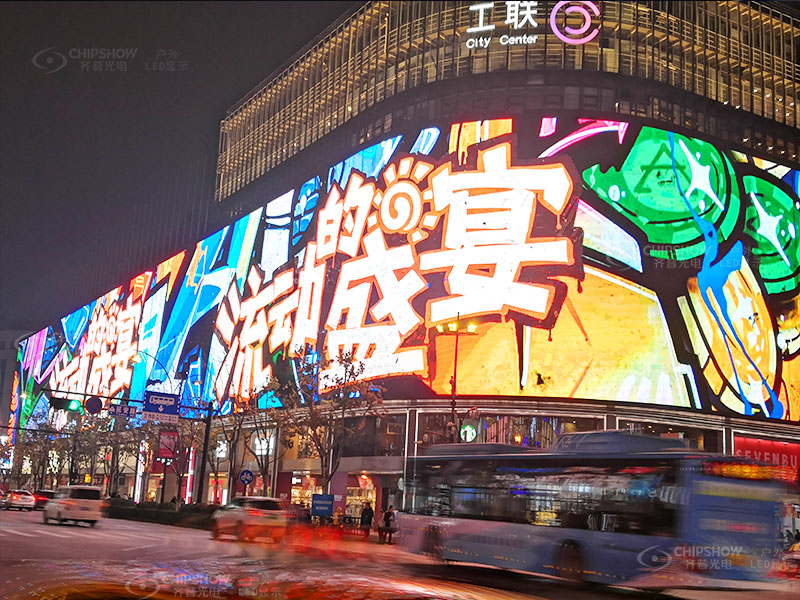
Brightness, Refresh Rate, and Viewing Angle Considerations
Brightness is measured in nits, also called cd/m². Outdoor 3D screens need strong brightness because sunlight can reduce contrast. Compare the working brightness and dimming range of the proposed outdoor configuration against the site’s sunlight and content conditions. Chipshow can review high-brightness options for the project.
Refresh rate means how many times the screen updates per second. A higher refresh rate helps reduce flicker when people record the screen with phones or cameras. This matters because social sharing is often part of the campaign value.
Viewing angle means the area where people can see the screen clearly. A 3D billboard still needs one planned “sweet spot” for the illusion, but wide viewing performance helps more people enjoy clear content around the main viewing zone.
The table below summarizes the main hardware choices for 3D billboard planning.
| Hardware Factor | Why It Matters for 3D Advertising | Planning Direction |
| Screen shape | Supports the depth illusion | Corner-wrap is often stronger than flat |
| Pixel pitch | Controls close-view clarity | Match pitch to viewing distance |
| Brightness | Keeps contrast visible outdoors | Use high-brightness outdoor configurations |
| Refresh rate | Reduces camera flicker | Important for phone videos and live content |
| Viewing angle | Expands clear visibility | Plan the main viewing zone first |
| Cabinet alignment | Protects seamless 3D edges | Keep corners and seams precise |
Hardware does not create the illusion alone, but it gives the content enough clarity, brightness, and shape to work.
How Much Does a 3D Billboard Campaign Cost?
The cost of a 3D billboard campaign depends on two main parts: the LED display system and the creative production. A permanent media owner usually spends more on screen hardware and installation. A brand running one campaign may spend more on 3D content, media placement, and campaign management.
LED Display System Cost Factors
LED display cost depends on screen size, pixel pitch, brightness, refresh rate, cabinet design, weather protection, control system, and installation structure. Corner-wrap or L-shaped screens may need more precise cabinet alignment because the two screen faces must work together for the 3D illusion.
For outdoor projects, buyers should also plan for power connection, mounting structure, maintenance access, spare parts, and long-term operating cost. A reliable LED display system helps protect campaign quality because sharp edges, stable brightness, and smooth playback all affect the final 3D effect.
3D Content and Campaign Cost Factors
3D content production is a separate cost. It may include concept design, 3D modeling, animation, rendering, perspective testing, file formatting, and on-site adjustment. The content must be made for the exact screen size, corner angle, and main viewing position.
Campaign costs may also include media booking, content scheduling, reporting, and creative updates. For media owners, strong 3D content can help support premium ad pricing. For brands, the main value often comes from public attention, social sharing, and stronger brand recall.
How to Launch a 3D Anamorphic Billboard Project
A 3D anamorphic billboard project should start with location and screen geometry, not content. The creative team needs to know where people stand, how the screen wraps, and how the building corner is shaped before designing the illusion.
Choosing the Right Location and Screen Configuration
Location decides whether the illusion can be seen properly. The best sites usually have a clear viewing zone, steady foot traffic, strong visibility, and enough space for people to stop safely.
Key checks include:
- Main viewing angle
- Pedestrian flow
- Vehicle speed
- Nearby buildings and shadows
- Screen height
- Power access
- Permits and local sign rules
- Camera-friendly sightlines
Screen configuration should match the viewer’s path. A corner screen near a plaza can create a strong 3D box effect. A flat wall near slow pedestrian traffic may work better for simpler depth effects.
Working with 3D Content Studios and LED Manufacturers
A 3D content studio creates the visual illusion. The LED manufacturer helps ensure the screen can display it clearly. Both teams should coordinate early.
The content studio needs screen dimensions, pixel map, viewing point, safe content area, brightness range, and file format. The LED supplier needs to understand the creative goal, viewing distance, installation site, and maintenance needs.
A strong workflow includes content testing before final launch. The illusion should be reviewed from the real viewing point, not only on a computer screen.
Specifying L-Shaped and Corner LED Screens
L-shaped and corner LED screens often work well for 3D advertising because the physical screen shape supports the forced-perspective effect. The two screen faces must align precisely, so cabinet structure, seam control, refresh rate, brightness, and viewing angle all matter.
For projects that need outdoor 3D advertising displays, Chipshow can support high-brightness LED configurations, corner display planning, and service-friendly cabinet options. Project teams can also review Chipshow’s C-Arc LED display reference to explore how shaped LED display formats support creative visual layouts.
Build a Stronger 3D Billboard Project With Chipshow
A 3D anamorphic billboard succeeds when creative content and LED hardware are planned together. The right site, screen shape, brightness, pixel pitch, refresh rate, and viewing angle all shape the final effect. Share your location, target viewing point, screen dimensions, and creative goal with Chipshow to evaluate a practical LED display solution for 3D advertising.
FAQs
Q1. Does a 3D Anamorphic Billboard Need Special Glasses?
No, a 3D anamorphic billboard does not need special glasses. The effect is created through forced perspective, screen layout, and 3D animation. Viewers see the illusion directly from the planned viewing angle.
Q2. Can Any LED Screen Be Used for a 3D Anamorphic Billboard?
A 3D anamorphic billboard works best with a screen that has suitable brightness, pixel pitch, refresh rate, alignment, and viewing geometry. A corner or L-shaped layout often supports a stronger illusion than a basic flat screen.
Q3. What Pixel Pitch Is Recommended for a 3D Billboard Effect?
The recommended pixel pitch depends on viewing distance. Closer city plaza screens usually need finer pitch, while long-distance roadside screens can use wider pitch. The best choice should be based on screen size, content detail, and the nearest viewing position.
Q4. What Is the Best Viewing Angle for a 3D Anamorphic Billboard?
The best viewing angle is the planned sweet spot where the perspective illusion lines up correctly. This is usually the main pedestrian or traffic viewpoint. Project teams should test the content from that exact location before launch.