

Choosing between SMD and COB determines pixel pitch capability, surface visual quality, physical durability, and total operating cost across the installation operational half-life. This article maps each core difference to the procurement variable it shapes. The framework covers indoor fine-pitch walls and large-format commercial screens.
What Is an SMD LED Display?
SMD has been the backbone of the global LED display market for over two decades. It remains the dominant technology for large-format, outdoor, and general commercial applications.
How SMD LED Packaging Technology Works
In SMD packaging, red, green, and blue chips are assembled into a single lamp bead. That bead is placed onto a PCB using automated surface-mount equipment and fixed through reflow soldering. This process is mature and highly automated, supporting a stable global supply chain and competitive unit pricing.
Core Strengths of SMD for Large-Format and Commercial LED Screens
SMD technology is capable of pixel pitches from P1.2 down to P0.9 using smaller packages such as SMD1010. For most commercial, outdoor, and large-format applications with viewing distances of 2 meters (6.5 ft) or more, SMD at P1.6 and above is the recommended and cost-efficient specification.
- Individual lamp beads can be replaced on-site with standard rework tools, keeping field repair fast and affordable.
- For outdoor use, SMD panels routinely reach brightness levels above 5,000 nits, meeting direct-sunlight visibility requirements.
- Modular cabinet designs support large-format and irregular configurations with proven supply chain availability.
Where SMD LED Displays Fall Short
At viewing distances under 2 meters (6.5 ft), the point-light-source structure of SMD creates visible pixelation. Each lamp bead sits raised above the PCB surface, and without additional encapsulation, it remains exposed to impact and moisture. These constraints limit SMD’s visual performance at close viewing distances, where COB’s surface light source delivers a materially better result.
What Is a COB LED Display?
COB takes a fundamentally different approach to chip packaging. That structural difference has direct consequences for image quality, durability, and how maintenance is planned across a 5 to 10-year installation.
How COB Chip-on-Board Packaging Works
In COB packaging, bare LED chips are bonded directly onto the PCB substrate. A continuous epoxy resin layer then covers the entire chip array, creating a single flat module surface. Two sub-types matter for procurement decisions.
Wire-bonding COB uses gold wire connections between chips and the PCB. Flip-Chip COB eliminates those wires by flipping the chip so its contacts face down onto the board directly. Flip-Chip COB shortens the thermal path and reduces surface temperature by up to 10°C under equivalent brightness, based on the manufacturer testing. It also supports pixel pitches below P1.0 that wire-bonding cannot reliably produce. For any specification at P0.9 or below, the wire-bonding versus Flip-Chip distinction is a material procurement consideration.
Core Strengths of COB for Fine Pitch Indoor LED Displays
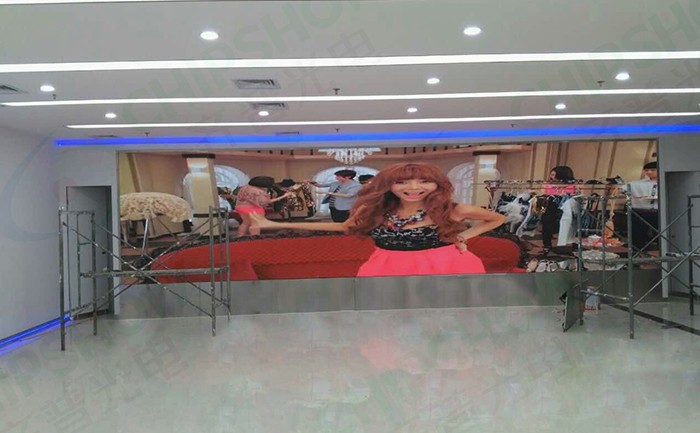
COB produces a surface light source rather than a point light source. This eliminates visible pixel boundaries at any viewing distance, including under 1 meter (3.3 ft).
- Contrast ratios typically range from 5,000:1 to 25,000:1, delivering deep blacks and sharp image separation.
- Viewing angles reach up to 170 degrees with minimal color or brightness shift off-axis.
- The encapsulated surface provides inherent IP54-level front protection without additional treatment.
For indoor environments, the real technical benchmark is High Grayscale at Low Brightness: the ability to maintain full color depth and contrast at the normal operating range of 600 to 800 nits, rather than producing a flat or washed-out image. Peak brightness above this range causes eye strain in controlled-light environments.
For camera-facing applications, 3,840Hz is the current indoor standard for eliminating moiré patterns. For XR virtual production, 7,680Hz is recommended.
What COB Does Not Do Well
COB carries a higher upfront cost than SMD, though the gap has narrowed as production scales. In fine-pitch configurations below P1.5, a premium of approximately 10 to 20 percent is common.
- Color consistency across modules depends heavily on the manufacturer’s process control. COB skips the light-and-color separation step used in SMD production.
- Individual pixel replacement is not possible. A failed module requires module-level or factory servicing.
- Spare module planning is required at purchase. Procuring a matched batch from the same production run reduces color-mismatch risk during later replacements.
SMD vs COB LED Display: How the Two Technologies Compare
Each technical difference maps to a specific procurement variable. The table below organizes the comparison for buyers specifying indoor or outdoor LED display panels.
| Criteria | SMD LED Display | COB LED Display |
| Recommended pixel pitch for typical use cases | P1.6 and above (technology capable of finer pitches; COB recommended below P1.6 for close-range environments) | P0.78 to P1.5 (industry COB technology extends to P0.4; range shown reflects typical commercial configurations) |
| Light source type | Point light source | Surface light source |
| Recommended viewing distance | 2m (6.5 ft) and beyond | Under 2m (6.5 ft) |
| Close-range visual quality | Visible pixels under 2m | Seamless at any distance |
| Front IP protection | Requires additional treatment | IP54 inherent |
| Physical impact resistance | Exposed lamp beads, higher damage risk | Encapsulated, collision-resistant |
| Contrast ratio | 3,000:1 to 5,000:1 typical | 5,000:1 to 25,000:1 |
| Viewing angle | Up to 140 to 160 degrees | Up to 160 to 170 degrees |
| On-site repairability | Individual lamp bead replacement | Module-level or factory repair |
| CAPEX | Lower | Higher; gap narrowing as production scales |
| Operational half-life | Up to 100,000 hours | Up to 100,000 hours; shorter thermal path supports more consistent brightness retention over time |
SMD leads on cost per square meter and field repairability. COB leads on fine-pitch capability, surface visual quality, and physical durability. The right choice depends on viewing distance, environment, and maintenance model.
Total Cost of Ownership: SMD vs COB Over a 5 to 10 Year Installation
The upfront price difference between SMD and COB narrows once operating costs are calculated across the full installation period.
What a True TCO Calculation Includes
A complete TCO covers five components: initial hardware and installation cost; annual power consumption; maintenance frequency multiplied by per-event repair cost; downtime cost; and the replacement horizon before image quality falls below acceptable thresholds.
For power budgeting, an average operating draw of approximately 180W per square meter is the relevant figure under typical conditions. Rated peak brightness figures are not the basis for energy cost projections.
COB’s upfront premium must be weighed against its generally lower annual failure rate, reflecting the reduced number of exposed solder points and the protection provided by full-surface encapsulation.
When Each Technology Delivers Better Long-Term ROI
COB’s TCO advantage materializes in three scenarios. First, mission-critical environments where unplanned downtime carries a high operational cost. Second, fine-pitch applications where COB delivers superior visual quality and reliability. Third, premium indoor settings where visible image degradation would trigger early screen replacement before the operational half-life is reached. COB’s generally lower annual failure rate, reflecting fewer exposed solder points and full-surface encapsulation, offsets its higher upfront cost over a 5 to 10 year period in these scenarios.
SMD delivers a better TCO outcome for standard commercial applications at P2.0 and above with accessible service points. Lower CAPEX, faster on-site repair, and broad supply chain availability reduce both upfront and per-event maintenance costs. For large-format outdoor and rental applications, SMD’s cost structure remains the stronger financial case.
How to Choose Between SMD and COB Based on Your Application
Viewing distance is the primary input. Pixel pitch follows from that determination. Technology selection follows from pitch. This sequence avoids over-specification and budget waste.
Start with Viewing Distance, Then Derive Pixel Pitch
As a standard integrator reference, the minimum comfortable viewing distance in meters approximately equals pixel pitch in millimeters. This is a planning baseline, not a precise formula. It holds for most commercial content types and standard audience configurations.
| Viewing Distance | Recommended Pixel Pitch | Technology |
| Under 2m (6.5 ft) | P0.78 to P1.5 | COB |
| 2m to 5m (6.5 ft to 16 ft) | P1.6 to P1.9 | SMD |
| 5m and beyond (16 ft+) | P2.0 and above | SMD |
Viewer proximity drives pitch selection. Specifying finer pixel density than the application requires increases cost without delivering a perceptible visual return.
Where SMD LED Displays Perform Best
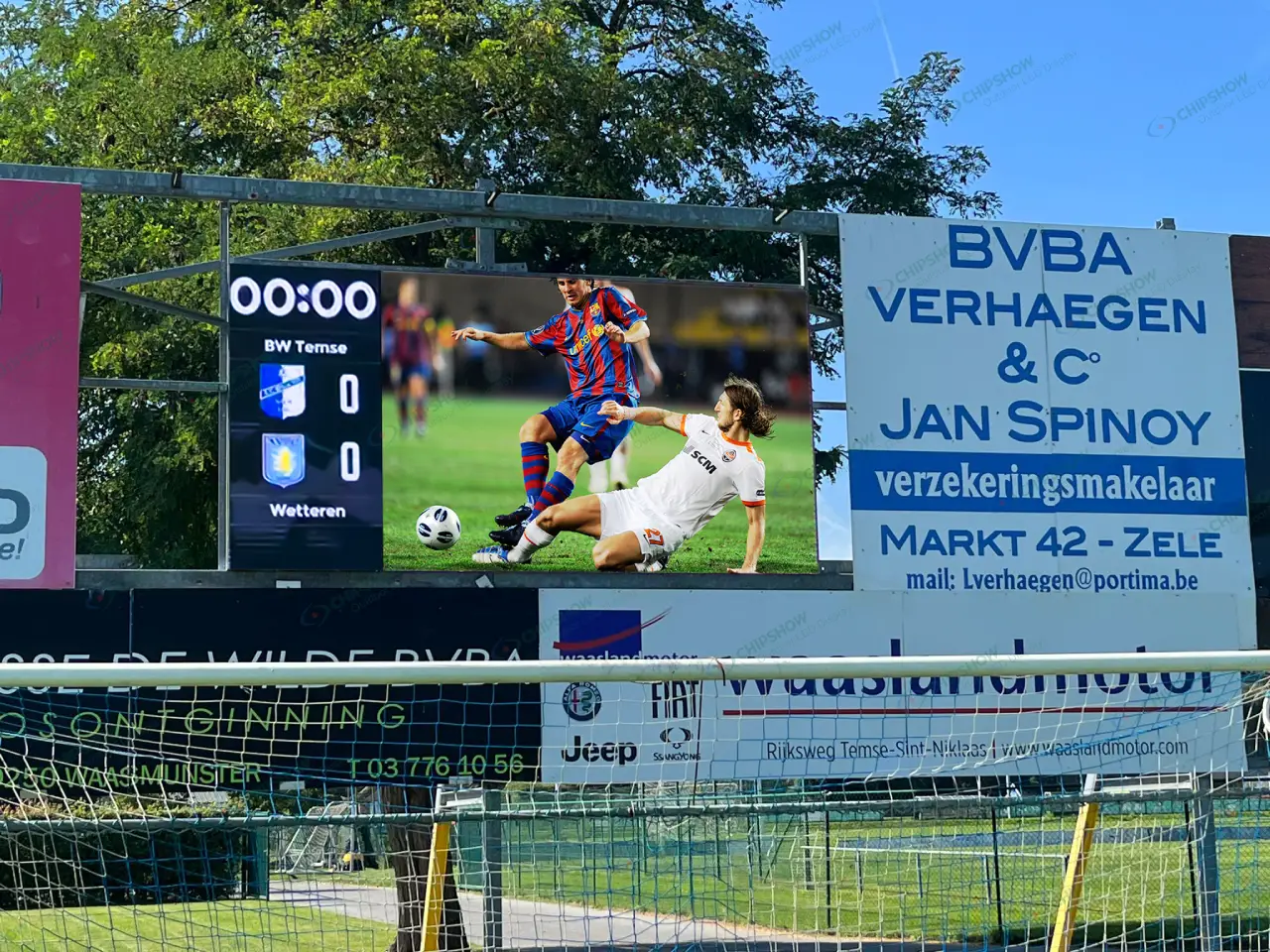
SMD is the established specification for outdoor billboards and DOOH networks. High brightness output, proven supply chain stability, and on-site lamp replacement make it the cost-efficient choice for large-format installations at distance.
- Outdoor billboards and DOOH networks requiring above 5,000 nits and on-site serviceability.
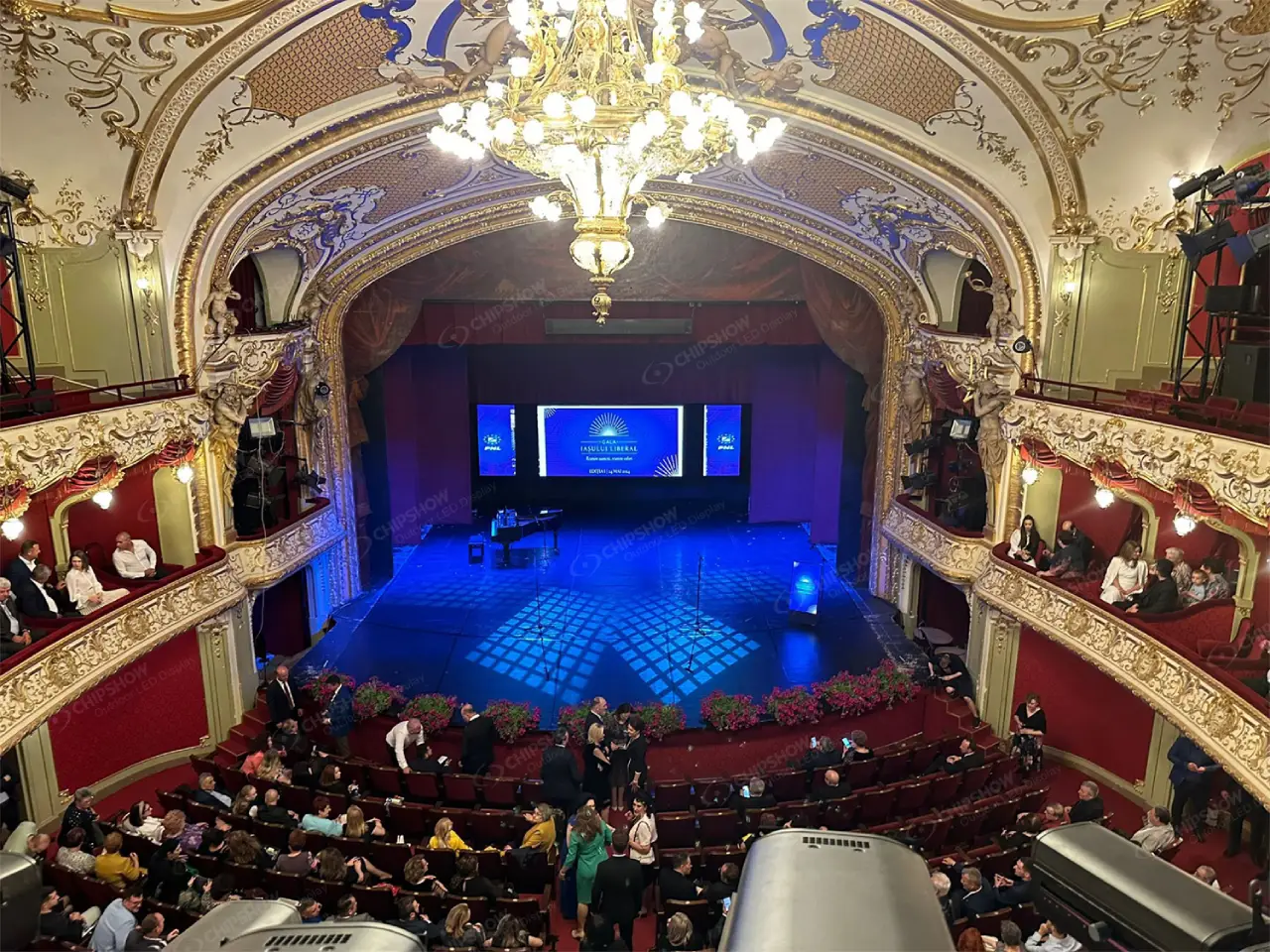
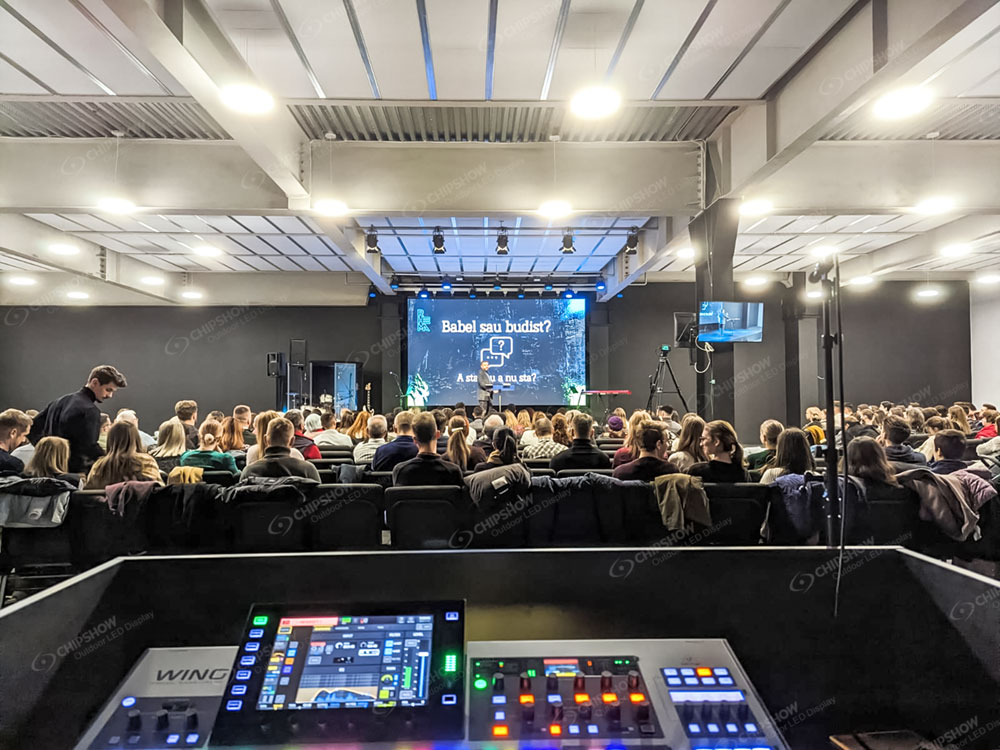
- Large auditoriums and educational venues with viewing distances beyond 2 meters (6.5 ft), where SMD at P1.6 and above delivers strong cost-efficiency.
- Commercial tenders and fast-deployment projects where ready stock availability, lightweight cabinets (7.5 kg / 16.5 lb per unit), and P2.0 to P4.0 coverage meet mid-to-large viewing distance requirements.
- Rental and staging configurations where per-square-meter cost and field repairability drive procurement decisions.
Where COB LED Displays Perform Best
COB is the appropriate specification for demanding close-range indoor environments where visual quality and physical durability are primary requirements.
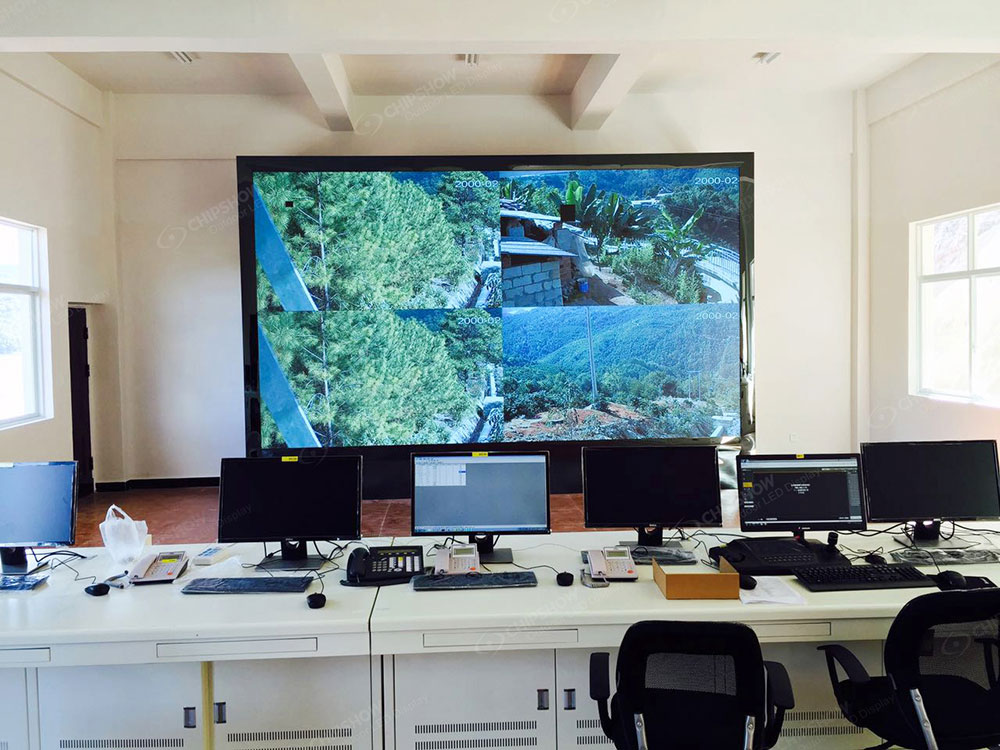
- 24/7 control rooms and command centers requiring ultra-fine pixel pitch down to P0.78 and dual-side IP54 protection for continuous operation.
- Broadcast studios and XR virtual production stages where moiré-free performance and 7,680Hz refresh rates are required for camera-facing content.
- Executive boardrooms and premium conference rooms where viewers sit within 2 meters (6.5 ft) of the screen.
- High-traffic public-facing indoor installations where COB’s encapsulated surface resists the physical impact that exposed SMD lamp beads cannot tolerate.
Choose the Right SMD or COB LED Display for Your Next Project
In the LED display panel market, there are two different ways in which you can use the technologies. SMD is the economical solution that works well for outdoor and large-sized screens. COB is the high-end technology that comes with more costs because of the quality offered. Let us start by determining the viewing distance first. Based on the viewing distance, we will determine the pixel pitch needed.
Chipshow®’s indoor LED display range covers both COB fine-pitch (C-Pad-C) and SMD commercial configurations (C-Max Series) across these applications. Full product specifications are available on the product pages for project-level configuration support.
FAQs About SMD vs COB LED Displays
Q1: Can a COB LED Display Be Cleaned With Water?
Yes. In COB technology, the continuously applied epoxy resin layer makes the display naturally resistant to water. This means that wet cloths can be used to clean the screen. On the other hand, you can’t clean SMD screens with wet cloths because water could easily get into the lamps if they aren’t sealed.
Q2: Does COB LED Use More Power Than SMD?
COB, especially when used with a common cathode driver, normally uses lower power compared to SMD, while providing similar levels of light intensity. This is because the thermal management system allows dissipation of heat directly to the board, resulting in lower energy consumption. When budgeting for power usage, 180 watts per square meter is required for each system.
Q3: Is COB LED Display Technology Future-Proof?
COB is becoming more and more common as the best technology for fine pitch applications that need pitches smaller than P1.5. In 2024, market data showed that COB already had a bigger than 50% share of the sub-P1.2 uses market, and the cost of making it has been steadily going down. When it comes to close-up indoor uses, COB has become the future of high-end display technology.
Q4: Is COB LED Display Better Than SMD for Eye Comfort During Long Viewing Sessions?
Yes. The COB technology surface light source keeps the glare from the SMD lamp beads’ point sources to a minimum. This ensures better lighting and less strain on the eyes of the viewer. COB technology is better than SMD at lowering visual stress in control rooms, command centers, and meeting rooms.
Q5: Can SMD LED Displays Be Used for Rental and Staging Applications?
For renting and staging purposes, SMD is the best choice. They are small and light, can be fixed with common tools in the field, and come in a lot of different pixel pitch options. Replacing lamps one at a time helps keep event repair costs low. Because COB is expensive and needs to be fixed at the module level, it is generally less suited for rental purposes.
Q6: How Does Color Consistency Differ Between SMD and COB LED Displays?
During the SMD production process, light and color separation is done. This is where each lamp is sorted by its output before it is put together to make sure that each module has the same color performance. Because COB doesn’t have this step, color uniformity depends even more on how well the maker does their job. When you buy COB modules, you need to make sure you get ones from the same production batch.