


Deciding between renting and purchasing an LED screen depends on annual event frequency, labor costs, and long-term ROI goals. Owning a core fleet offers lower per-event costs and faster response times. Renting provides flexibility for those with limited initial capital or specialized project needs.
How the Event LED Market Structures the Rent-or-Buy Decision
Market dynamics in North America and Europe dictate whether equipment ownership or third-party sourcing is more profitable.
Who Typically Rents and Who Typically Buys Event LED Screens
Understanding which approach best fits your business depends on project frequency, technical capacity, and financial strategy. Here is a breakdown of typical profiles for each:
Typical Profiles for Renting LED Screens:
- Occasional Event Organizers: Organizations running fewer than ten shows per year avoid high overhead costs from storage and technical maintenance.
- Boutique Creative Agencies: Teams focused on one-off experiential marketing rent specialized hardware like transparent or curved panels to match unique creative themes.
- Production Startups: New entrants use renting to preserve cash flow while testing which pixel pitches are in the highest demand locally.
- Scalable Event Firms: Established companies rent additional panels to supplement their core fleet during peak seasons or for exceptionally large venues.
Typical Profiles for Buying LED Screens:
- Full-Service AV Rental Houses: Professional providers supplying multiple events per week purchase equipment to build asset equity and eliminate recurring rental expenses.
- Large-Scale Touring Companies: Production teams managing multi-city tours require the consistency of single-batch calibrated panels that only ownership guarantees.
- Fixed Venue Integrators: Houses of worship and corporate headquarters purchase systems to ensure constant availability and zero logistical lead times for operations.
- Specialized Staging Firms: Operators focusing on broadcast or XR production invest in premium series to maintain an edge in visual stability and camera compatibility.
By identifying which profile aligns with your current operations, you can make more informed decisions on whether the next project calls for a rental contract or a strategic capital investment.
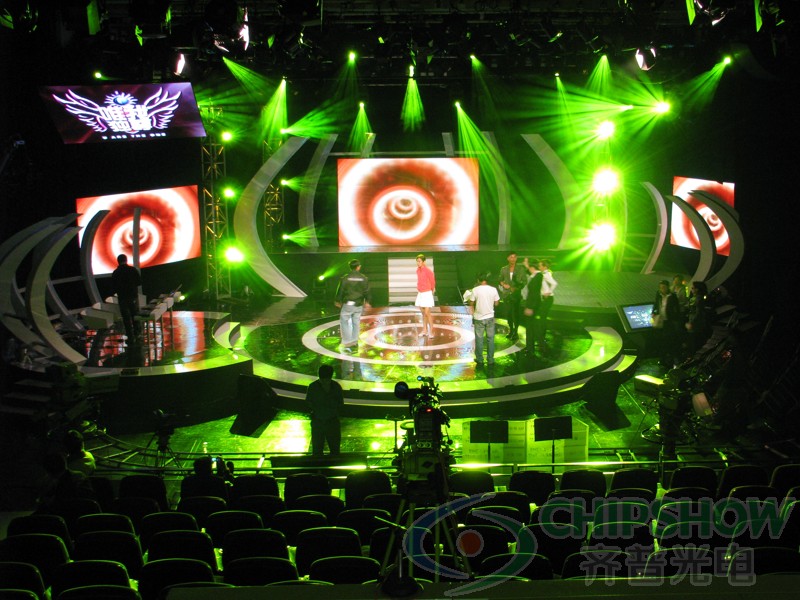
How Event Frequency and Production Scale Shift the Calculation
When equipment utilization exceeds 25% of the calendar year, purchasing often shifts the financial advantage toward ownership. High-frequency users avoid rising costs of union labor and logistics associated with repeated third-party rentals.
The Full Cost of Renting LED Screens for Events
Renting involves more than a daily rate, as logistical and quality risks impact your bottom line.
Daily and Weekly Rental Rate Structures in the EU and North America
Daily rental rates for professional panels typically range from $600 to $1,500 per square meter, depending on pixel pitch and the complexity of the service package. Multi-day events often qualify for weekly rates, which typically cap at three or four times the daily price.
Hidden Costs of Renting: Freight Insurance and Mismatched Batches
Freight and specialized insurance for high-value electronics add overhead to every rental contract. A major risk involves receiving mismatched batches of panels from different rental houses, causing visible color discrepancies that damage your professional reputation.
When Rental Costs Compound Faster Than Expected
Rental expenses grow linearly with every show and offer no long-term reduction in cost per event. In many scenarios, for high-frequency operators, two years of consistent renting often offsets the cost of a complete, high-quality system purchase.
The Full Cost of Purchasing an LED Screen Inventory (CapEx vs. OpEx)
Buying LED panels transforms a recurring expense into a depreciable industrial asset with long-term value.
CapEx and Amortization: Evaluating Screens as Industrial Assets
The industry defines LED life as the operational half-life of up to 100,000 hours. This marks the point where brightness reaches 50% of its initial level. Amortizing this cost over a five-year period reduces the per-show hardware expense to a fraction of rental prices.
That calculation only holds if the asset performs without defect for every one of those years. Panels that develop on-stage artifacts within the first season cannot be booked for premium events, which collapses the utilization rate the entire amortization model depends on. Before committing to any purchase, evaluate the factory’s component sourcing, not just the per-panel price.
The Sourcing Trap: Why On-Stage “Ghosting” Cannot Be Fixed on Site
When evaluating whether to purchase an LED asset or continue renting, smart buyers look beyond the upfront price tag. Many budget assembly factories use cheap, low-spec ICs to quote lower prices. However, when these panels are dimmed for indoor comfort, they exhibit severe ghosting (motion artifacts) and low-gray discoloration (mosaic patterns). B2B buyers must realize that ghosting and color-shifting are unalterable on-site via software — they are locked in by the factory’s chip configuration and scan rate. Investing in Chipshow premium rental hardware ensures you get tier-1 component sourcing (like high-end 2153S driver ICs) that protects your investment from immediate technical obsolescence, ensuring a high asset utilization rate and excellent resale value.
The Hidden Trap of Fleet Expansion
Expanding a fleet by buying small quantities from different sources results in unmatchable screen segments. High-quality systems like Chipshow’s C-series provide single-batch calibration to ensure your entire inventory looks identical when expanded.
Hedging Technological Obsolescence
A screen might function for a decade, but its commercial value depends on staying relevant to market demands. Investing in future-proof pixel pitches like P1.9 or P2.9 ensures your inventory remains in high demand for several years.
Beyond Cash CapEx: Equipment Financing and Lease-to-Own Models
Professional AV firms often use equipment financing or lease-to-own structures rather than paying full cash up front. Industrial-grade assets with high resale value make it easier to secure low-interest loans compared to low-end hardware.
Ongoing OpEx: Storage Maintenance and Staff Training
Ownership requires dedicated climate-controlled storage and a budget for routine maintenance, evaluating the right maintenance access configuration, and quick component repairs.Training a local crew on a specific system increases setup efficiency and reduces the risk of accidental damage during transit.
Preventing On-Site Electrical Failure: The Power Cascading Limit
For companies purchasing their first LED fleet, immediate breaker tripping during initial setup is a common frustration. This is rarely a faulty breaker; it is a power cascading overload. As a strict staging rule, a single main power cable should never daisy-chain more than 15 standard rental cabinets (exact maximum depends on voltage and the screen’s peak power draw). Chipshow provides clear power distribution schematics with every fleet purchase to ensure your local crew maps electrical loads safely without blowing venue fuses.
Building Your Margin: Matching the Right Asset to the Right Project
Strategic inventory selection allows you to target high-margin events while minimizing operational overhead.
Selection Matrix for Stage LED Inventory
| Project Type | Recommended Strategy | Primary Focus |
| Large Outdoor Tours | Purchase Ultra-Lightweight (C-Carbon) | Labor and Freight Savings |
| Daily Mid-Sized Events | Purchase Universal Splicing (C-Shine Plus) | Maximum Utilization |
| High-End Broadcast / XR | Purchase Fine Pitch (C-Rock) | High Grayscale at Low Brightness |
High-performance hardware directly impacts your ability to win premium bids for broadcast or corporate events.
Slashing Union Labor and Freight: The Ultra-Lightweight Carbon Advantage
In markets with high union labor rates, the speed of setup is more important than the initial price. The C-Carbon series uses carbon fiber frames to reach a weight of 20kg/m² (4.1 lb/ft²), allowing for single-person installation and lower rigging costs.
Maximizing Utilization and ROI: The Versatility of Universal Splicing
Profitability comes from keeping screens working as many days as possible. Universal systems like the C-Shine Plus series support indoor and outdoor use with 500 x 500 mm (1.64 x 1.64 ft) and 500 x 1,000 mm (1.64 x 3.28 ft) mixed configurations.
Winning Premium Bids: Mission-Critical Stability and Broadcast Aesthetics
Top-tier clients in esports and automotive shows require high refresh rates of 3,840 Hz or 7,680 Hz to prevent moiré patterns. In line with the IEEE 1789-2015 standard, our high refresh rates also mitigate health risks like eye strain associated with LED flickering. The C-Rock series offers fine pixel pitches and “High Grayscale at Low Brightness” technology to maintain deep colors without being too bright for indoor settings.

The Hybrid Strategy: Owning a Core Fleet Plus Smart Spot Renting
Many successful event companies own 70% of their typical requirement and rent the remaining 30% during peak seasons.
Strategic Infrastructure Requirements
- Virtual Warehousing: Leveraging manufacturer local stocks allows for rapid expansion without permanent storage costs.
- Ecosystem Compatibility: Industry-standard control systems make it easier to rent extra panels from peers or dry-hire your gear out.
- Physical Standardization: Standard 500 x 500 mm (1.64 x 1.64 ft) cabinets ensure your equipment is easy to rent to other production companies.
Technical Prerequisite for Cross-Renting
Buying equipment that uses industry-standard control systems makes it easier to rent extra panels from peers. Proprietary or closed systems limit your ability to supplement your inventory during busy months or dry-hire your gear to others.
Evaluate These Factors Before Renting Stage LED Panels
Building a profitable event business requires a balance between owning core assets and renting specialized gear for unique projects. Focus on hardware that offers lightweight frames, high refresh rates of at least 3,840 Hz, and standardized sizing. Chipshow provides event and stage solutions designed to maximize ROI through lower power consumption (averaging 180W/m²) and faster installation. Align your purchase with your most frequent project types to ensure your inventory remains a productive asset.
FAQs About Stage LED Screen Investment
Q1: Does a Stage LED Screen Require Specialized Power Infrastructure?
Yes. LED stage backgrounds have high power consumption when starting up and running. Although the power consumption of an average unit is estimated at 180W per square meter, it is important to consider the maximum load capacity that you can use without overloading the circuits. It is imperative that you determine whether there is enough three-phase power available in the premises.
Q2: How Do I Select the Correct Pixel Pitch for Different Venues?
Choose pixel pitch according to the closest viewing distance and not the display’s size. Follow the 1mm pitch = 1m viewing distance formula when choosing pixel pitch. For instance, choose P2.9 pitch when the viewing distance is three meters. Do not waste money on a small pixel pitch since you will only incur unnecessary expenses.
Q3: How Long Do Rental LED Panels Actually Last Before Needing Replacement?
The LED lights have an operational half-life of up to 100,000 hours, although the material used will determine the actual life span. Magnesium and carbon fiber frames will survive for thousands of setup cycles while aluminum frames may distort after one tour cycle. It is necessary to use reliable hardware, such as Chipshow brand hardware.
Q4: Are Stage LED Screens Compatible With Standard Video Media Servers?
Professional LED screens use HDMI or SDI input via a video processor, and they can connect with media servers. The controller should be able to cope with the resolution of the wall. In terms of complex stage design, it is important to have processors that have low latency and Genlock features to ensure synchronization with the camera.
Q5: Is Equipment Financing Available for LED Screen Purchases?
Yes, since most professional production firms use equipment leasing or purchase financing as a way to keep cash flows. Equipment with a high resale value, like the Chipshow series, usually comes with easier financing opportunities and reduced interest rates. High-end equipment is always considered good security by financiers; thus, it enables young enterprises to have a whole LED wall system.





