

Maintenance design determines where your LED panel can be installed, how quickly it can be serviced, and what it costs to operate over five years. Structural work is often complete before the maintenance approach is finalized. This article gives a direct decision framework: site constraints first, then pixel pitch, operating environment, team capacity, and total cost of ownership.
What Are Front-Access and Rear-Access LED Panels
The two designs differ at the cabinet level, and that difference affects every downstream decision from site planning to long-term servicing.
Front-Access LED Panels
Front-access panels allow technicians to remove and replace modules from the viewing side. No rear entry is required. Two mechanisms are standard across the industry:
- Magnetic mount systems are common in indoor and semi-outdoor installations. A suction cup tool lifts each module from the front. Single-module replacement typically takes under two minutes.
- Front screw-fixed systems with a rotary wrench apply to larger outdoor panels. This method resists wind vibration and supports a full IP65 (a dust-tight and water-resistant enclosure rating) enclosure sealing.
Front-access cabinets are thinner and lighter than rear-access equivalents. They mount flush to walls with no rear clearance requirement.
Rear-Access LED Panels
Rear-access panels are serviced through the back of the cabinet. Technicians open a hinged rear door or remove a back panel to reach modules, power supplies, and signal cards. Cabinets attach to steel mounting frames with mechanical fasteners. The deeper cabinet structure supports better airflow, cable routing, and component layout. This is the standard design for large outdoor fixed installations and highway signage.
Why Installation Space Drives the Maintenance Decision
Before comparing panel specifications or pricing, confirm what the physical site allows, because that single constraint eliminates most of the decision tree.
When There Is No Rear Access
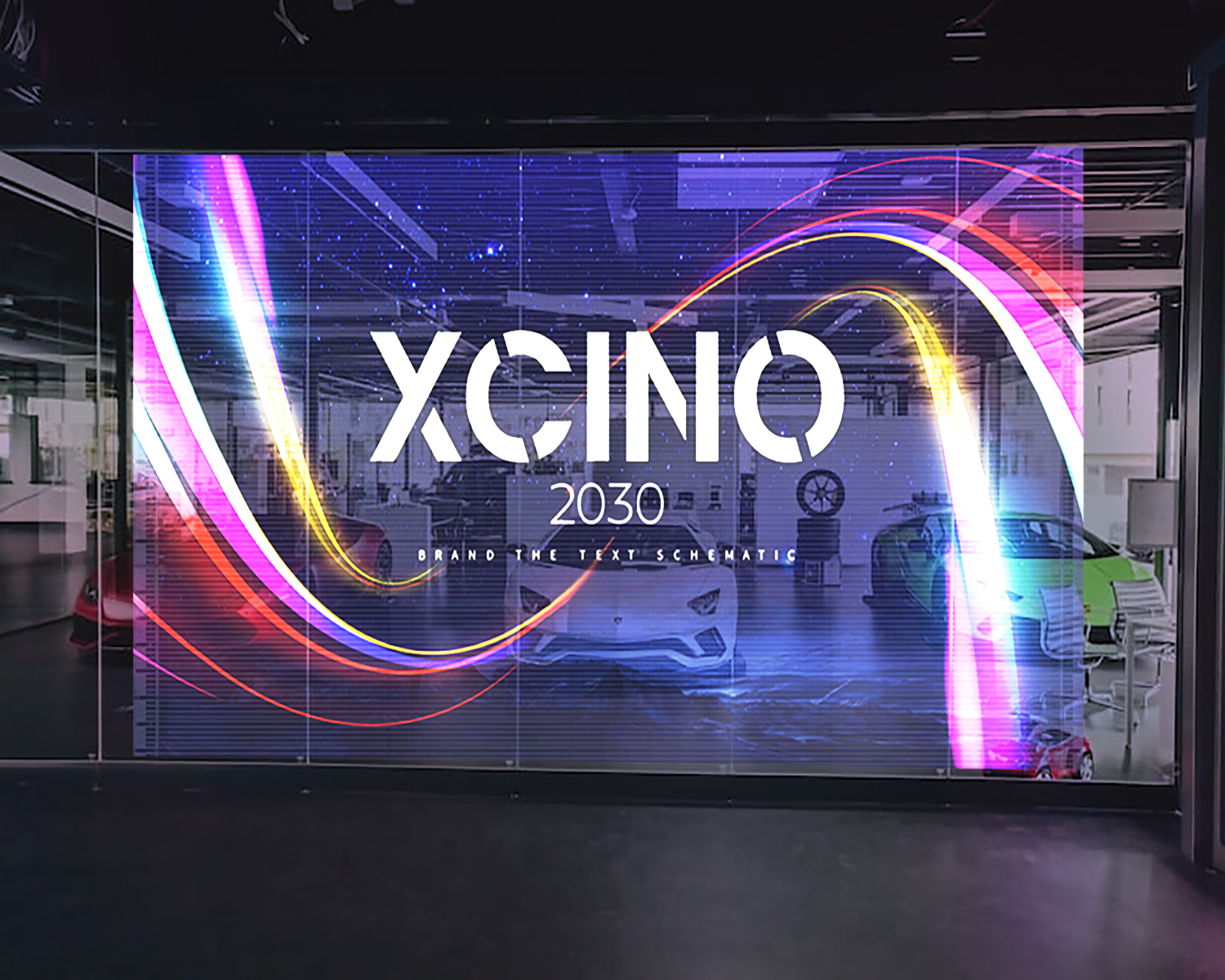
Wall-flush billboard faces, glass curtain wall integrations, and building facade screens leave no rear working space. In these cases, front-access design is not a preference. It is a structural requirement. Front-access cabinets also reduce overall installation depth, lowering the structural load on the mounting surface.
When Rear Access Is Available
Freestanding billboard structures, rooftop installations with maintenance platforms, and stadium screens typically have rear clearance. Both designs are technically feasible in these conditions. The industry minimum for rear maintenance corridor clearance is 80 cm (32 inches). For large-format screens or installations requiring tool access, 100 to 120 cm (40 to 47 inches) is the practical standard.
Confirm This Before Construction Begins
The last practical point to confirm your maintenance design is before structural drawings are finalized. Converting a sealed installation to the alternative design after construction is complete typically costs more than the original price difference between the two panel types. Involve structural engineers at the planning stage. Confirm at that point whether a rear maintenance corridor will be built or the rear surface will be sealed.
Which Maintenance Design Fits Each Outdoor Installation Type
Each installation category carries a different set of physical and operational constraints, and matching the maintenance design to those constraints determines both initial cost and long-term serviceability.
Digital Out-of-Home (DOOH) Billboards and Roadside Digital Signage
Freestanding roadside billboards with rear structural access suit rear-access panels. Hardware cost is lower, airflow is better, and routine servicing is straightforward. Building-integrated or street-furniture DOOH screens frequently require front-access design. For DOOH network operators, the deciding calculation is downtime cost per hour of lost advertising revenue, not the upfront panel price difference.
Building Facades and Glass Curtain Walls
Front-access design is the only practical option for facade-integrated screens. The cabinet must achieve IP65 sealing on both the display face and the sealed rear cover. Request dual-side IP65 certification documentation. A front-only IP rating is insufficient for outdoor facade use.
Street-furniture DOOH screens in this category operate in variable ambient light. These installations benefit from panels with strong grayscale retention at reduced brightness levels. A display that maintains accurate color gradation and contrast at 600 to 800 nits, rather than one marketed purely on peak brightness, delivers more consistent visual quality in covered or partially shaded street-level environments.
Large-Format Fixed Screens: Stadiums and Rooftops
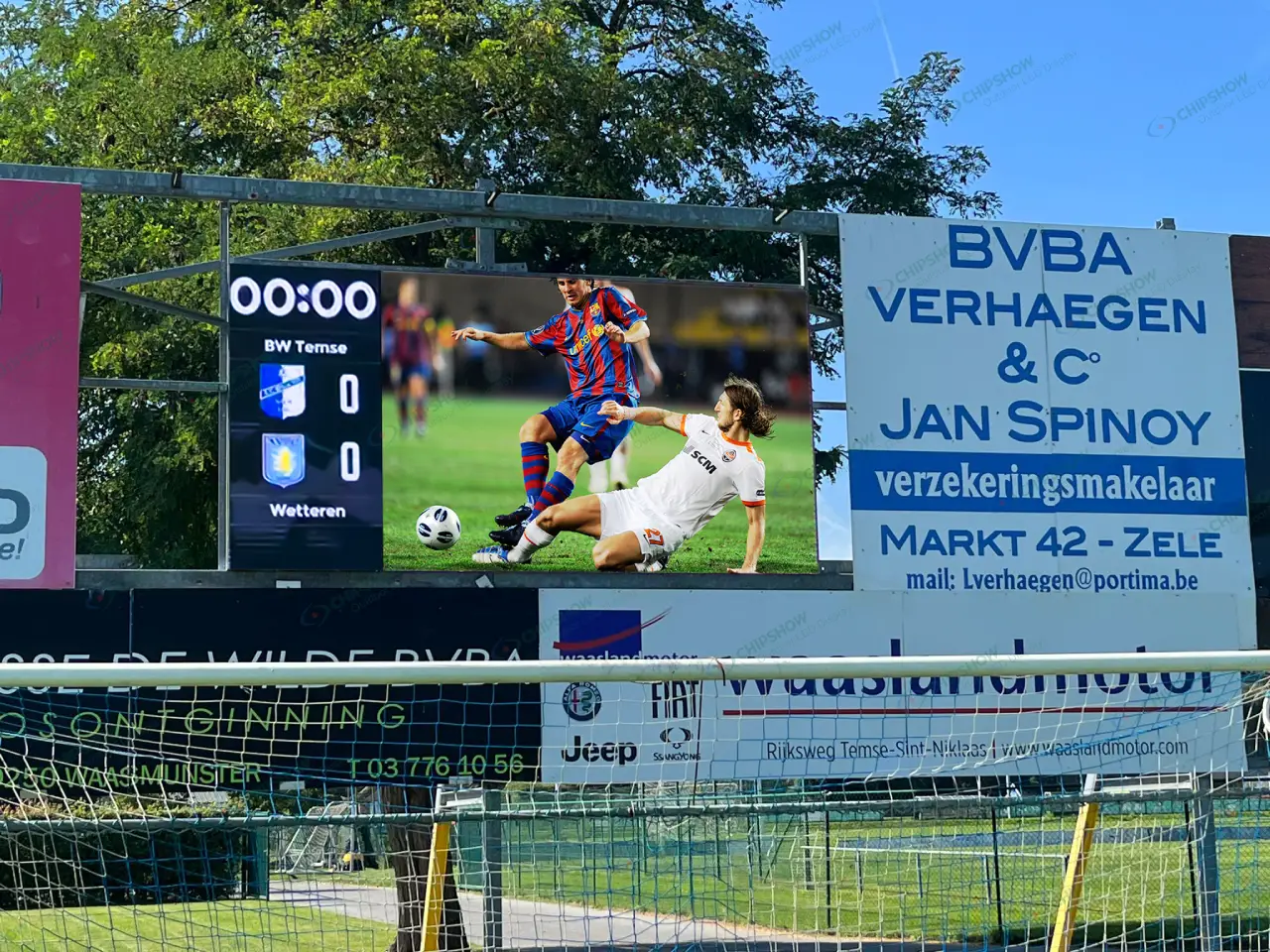
Rear-access panels are the practical choice for large-format screens on dedicated steel structures. Heavy cabinets, large modules, and existing rear maintenance platforms make rear servicing efficient. For screens installed above 6 m (20 feet), front-access maintenance requires scaffolding. That scaffolding cost often exceeds the hardware premium between front-access and rear-access panels.
Rental and Stage LED Panels
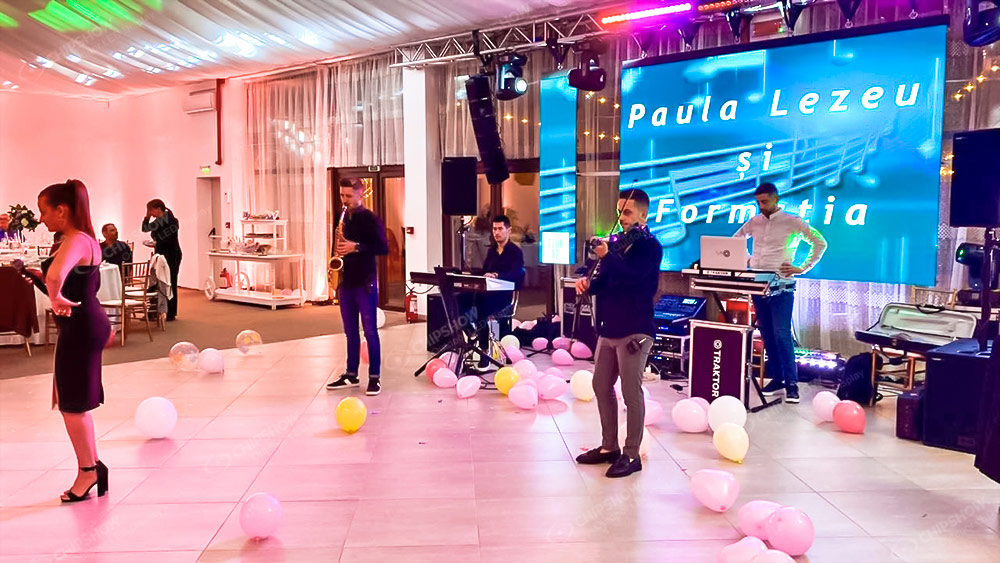
Rental companies prioritize fast load-in and load-out, single-operator handling, and resistance to repeated transport stress. Front-access panels allow technicians to swap a faulty module without accessing the rear of a hung structure.
For rental screens used in live broadcast or camera-covered events, specify a refresh rate of 3,840 Hz or above. This is widely adopted in broadcast production as the minimum threshold for eliminating moiré interference patterns on camera (visual grid artifacts caused by the interaction between the LED pixel pitch and the camera sensor’s sampling resolution). For XR (Extended Reality) virtual production stages or high-frame-rate broadcast applications, 7,680 Hz is the appropriate specification.
Lightweight cabinet materials, such as magnesium alloy or carbon fiber frames, pair directly with front-access design to reduce per-panel handling time on each event.
How Pixel Pitch Affects Your Maintenance Choice
Pixel pitch is not just an optical specification; it sets practical limits on which maintenance approach is safe, accurate, and cost-effective in the field.
Fine-Pitch Outdoor Displays
Outdoor panels in the P3.91 to P6.67 range, and indoor fine-pitch panels below P2.5, are better suited to front-access servicing. Modules in these ranges are dense and precision-aligned. Front removal allows technicians to verify surface alignment visually as they work. Rear disassembly on fine-pitch modules risks contact damage to the display face that is not detectable until the screen powers on.
Large-Pitch Modules (P8 and Above)
Larger pixel pitch modules are physically more robust. Rear-access bolt-fixed structures provide stronger resistance to sustained wind load and vibration. Natural convection cooling through a rear-vented cabinet performs better for high-brightness panels running at sustained output.
What Does Each Maintenance Design Actually Cost Over Five Years
Hardware price is one input in the cost calculation; labor, structural preparation, energy consumption, and downtime losses determine the total figure that matters for a DOOH operation.
Initial Hardware and Structural Cost
Front-access panels carry a hardware premium of approximately 5 to 10% over rear-access equivalents, based on industry pricing patterns. This reflects the engineering cost of precision locking or magnetic module systems and thinner cabinet construction. Rear-access installations require a dedicated maintenance corridor. That corridor adds construction cost that partially offsets the hardware price advantage of rear-access panels.
Five-Year Operational Cost Comparison
| Cost Factor | Front-Access | Rear-Access |
| Technician count per service visit | 1 person | Typically 2 persons |
| Estimated time per module replacement | Under 2 minutes | 5 to 10 minutes |
| Scaffolding for screens above 6 m (20 ft) | Required | Not required (rear corridor used) |
| Maintenance corridor construction | Not required | Required (80 to 120 cm clearance) |
| Thermal design complexity | Higher (thin cabinet) | Lower (rear ventilation) |
A DOOH screen typically requires 8 to 12 service visits per year. The cumulative labor saving from single-operator front access offsets the hardware premium within two to three years in most configurations.
Common Mistakes Buyers Make When Choosing a Maintenance Design
Several of these errors are recoverable early in a project and become very costly once structural or procurement work is finalized.
Confirming Maintenance Design After Construction Is Complete
The most costly error in LED installation projects is finalizing the maintenance design after structural work is done. At that stage, converting a sealed installation to the alternative design requires replacing the full cabinet set. Include maintenance design as a specification item in the structural engineering brief, not in the equipment procurement document.
Assuming All Outdoor Screens Default to Rear Access
Outdoor installations do not automatically use rear-access design. Embedded, facade-integrated, and street-furniture screens frequently require front access by physical necessity. Magnetic front-access systems carry a vibration risk in high-wind environments. For outdoor front-access installations exposed to sustained wind, specify panels with front screw-fixed modules rather than magnetic-only attachment systems.
Overlooking Technician Skill Requirements for Front-Access Panels
Front-access maintenance requires more precision than rear-access servicing. Module alignment and surface flatness tolerance are tighter. An incorrectly seated magnetic module produces visible color uniformity defects at the seam. Rear-access servicing is more forgiving and better suited to operators using third-party contractors without specialist LED experience.
Not Verifying IP Ratings Across the Full Enclosure
Front-access outdoor panels must achieve IP65 on both the display face and the sealed rear cover. Request dual-side IP65 certification documents. A front-only rating is not sufficient for outdoor deployment. For rear-access panels, confirm that the rear door seal re-engages correctly after each service visit. Incomplete re-sealing is a common source of moisture ingress in field installations.
How to Choose the Right Maintenance Design for Your Installation
Use this sequence to eliminate unsuitable options before comparing products.
Step 1: Confirm rear clearance at the installation site. Can you maintain 80 cm (32 inches) of clear working space behind the screen? If not, front-access design is required.
Step 2: Match maintenance access to pixel pitch. Panels at P6.67 and below benefit from front-access servicing. Panels at P8 and above with available rear clearance work efficiently with either design.
Step 3: Assess your maintenance operations model. Do you have a trained in-house LED technician, or will you use third-party contractors? Front-access requires higher technical precision. Rear-access is more forgiving for general maintenance staff.
Step 4: Calculate five-year total cost of ownership (TCO), not the hardware quote alone. Add hardware cost, structural construction cost, five-year labor cost, and estimated downtime revenue loss. The result often favors the option with the higher upfront price.
Step 5: Lock in the maintenance design before structural work begins on each site. For fixed outdoor installations planned for five or more years, any change to the maintenance approach after construction requires replacing the full cabinet set. Early confirmation eliminates the most expensive category of project error.
Quick Reference: Maintenance Design by Installation Type
| Installation Type | Recommended Design | Primary Reason |
| Wall-flush indoor DOOH | Front-access | No rear space available |
| Building facade or curtain wall | Front-access | Rear sealed by architectural structure |
| Street-furniture DOOH | Front-access | Compact depth; grayscale retention at low brightness required |
| Freestanding roadside billboard | Rear-access | Rear corridor available; lower hardware cost |
| Rooftop large-format screen | Rear-access | Rear maintenance platform typically present |
| Stadium or arena perimeter | Rear-access | Heavy structure; rear walkway standard |
| Rental and stage LED | Front-access | Single-operator handling required; ≥3,840 Hz for broadcast |
| High-wind gantry or highway | Rear-access | Screw-fixed rear structure more stable |
For DOOH network operators managing multiple installation types, confirm the maintenance design at the structural planning stage for each site individually.
Specify the Right Front-Access Outdoor LED Display for Your Installation
Maintenance design is a site constraint, not a product preference. Front-access panels are the correct specification for wall-flush, facade, and rental applications. Rear-access panels remain the practical choice for freestanding structures with full rear clearance. Confirm your site constraints and five-year TCO before requesting quotes.
FAQs About Front-Access LED Displays
Q1: Can a Rear-Access Outdoor LED Display Be Retrofitted for Front-Access Maintenance Later?
Not really. Inside, the front and back entry cabinets are built in different ways. They all have different ways of connecting modules, different cabinet depths, and different places for modules. You can’t switch from one type to another without changing the arrangement of the whole cabinet. This could cost even more than the price difference between the two kinds of screens in the first place. During the first phase of project design, the right maintenance design must be picked.
Q2. Does Maintenance Choice Impact the Cooling and Lifespan of the Screen?
The entry to the back panel is better for managing heat because the deeper cabinet lets natural convection currents flow more efficiently. The front panel access, on the other hand, is much smaller and more likely to get hot. In order to get a half-life of 100,000 hours, the front access panel must use the standard cathode LED driver circuit design, which only powers the LEDs.
Q3. Can Front-Access Modules Be Serviced While the Screen Is Powered On?
Yes. A lot of front-access LED units have been made so that they can be changed out without causing too much trouble for the display. Still, working on the front access panel requires a lot more precise handling than working on the back one, since if you move the modules around the wrong way, there will be obvious color consistency issues where the modules meet.
Here are three additional FAQs based on high-search-volume topics found across industry sources and forums, covering gaps not addressed in the existing article:
Q4. Can Front-Access and Rear-Access Panels Be Mixed Within the Same LED Installation?
It is not recommended to combine the two maintenance styles into a single continuous display. The two types of maintenance plans are different in how deep the cabinets are, how the modules are attached, and how the frames are made. When these two types are put together, they will cause misalignment, uneven surfaces, and bad workflow. When one display goes through both areas, it needs to be handled as two different displays using their own maintenance plans.
Q5. How Does Repeated Module Removal Affect Connector Wear in Front-Access Panels Over Time?
The links between the board and the cabinet get strained when modules are pulled out of front-access cabinets. Most front-access modules can be pulled 200 to 500 times before the connection starts to break down. The link is a big problem for rental cases that get used a lot or screens that need to be serviced once a month. You could look for panels with gold connections, and putting a logging module pull on each cabinet would make the process go more smoothly.
Q6. Is Rear-Access Maintenance Preferable in Environments Where the Screen Must Remain Visible During Servicing?
Yes. When doing repair on the power supplies or signal cards in the back of the computer, there is no need to stop the display screen from working. The front-access service involves removing modules that are mounted on the operational screen, thus exposing empty spaces while replacing faulty components. If the display needs to stay on all the time for business reasons, this method works better in places like airports, transportation hubs, and shops.