

Transparent LED screens and traditional LED displays serve different environments and different business goals. Choosing the wrong format leads to underperformance, budget overruns, and operational friction. This article gives procurement decision-makers a clear framework to evaluate both options and specify with confidence.
What Is a Transparent LED Screen
The architecture of a transparent LED screen is what separates it from every other display format on the market.
How Transparent LED Technology Works
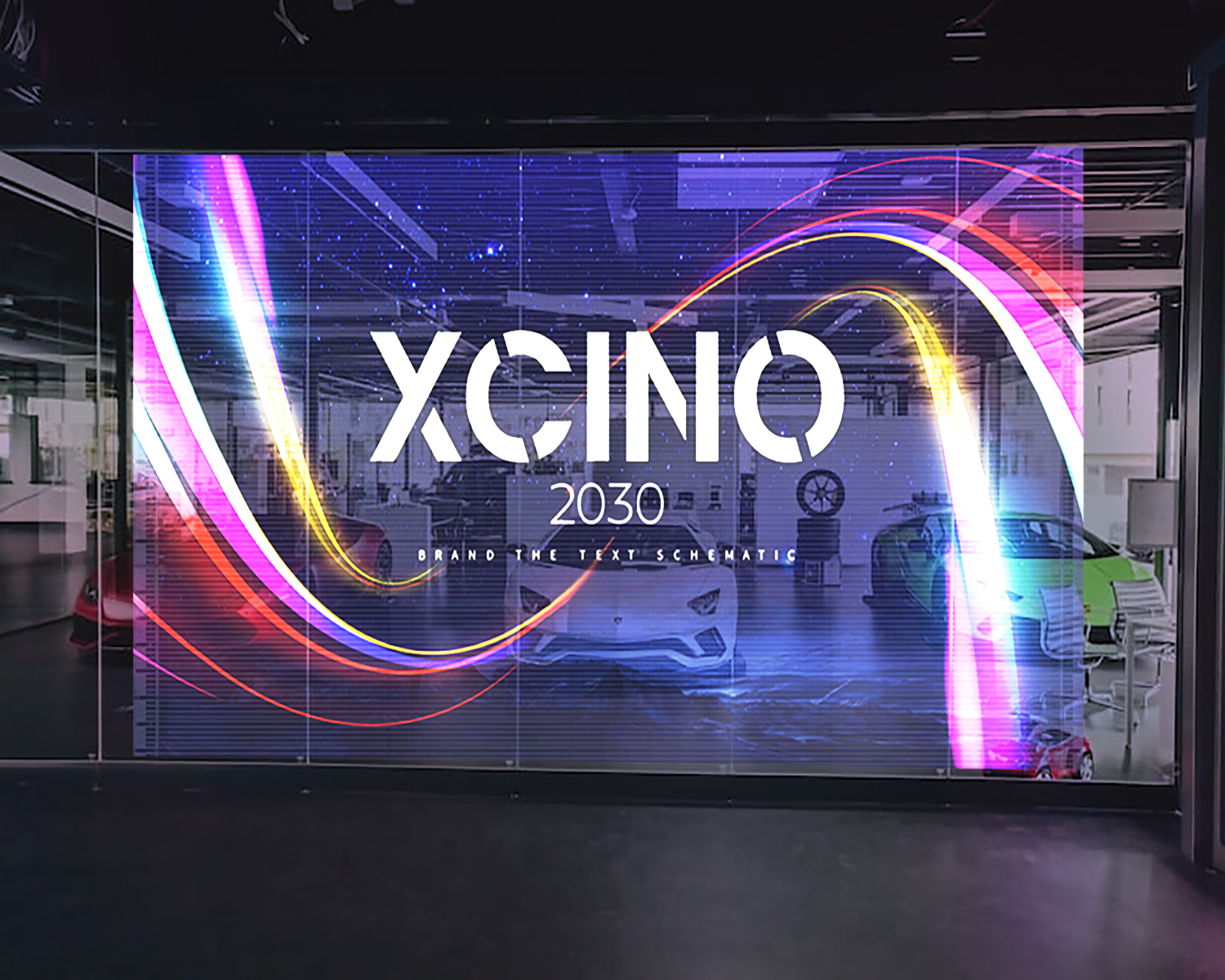
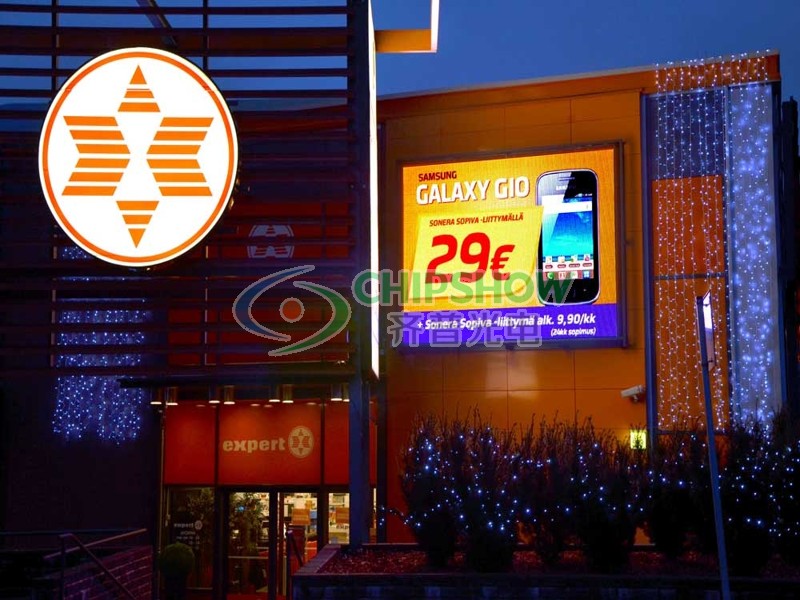
A transparent LED screen uses a strip-based module design with an open lattice structure. LED elements are mounted on thin strips with deliberate gaps between them, allowing light to pass through the panel rather than being blocked by it.
Transparency rates on commercial products typically reach up to 90%. The specific rate depends on pixel pitch: a finer pitch means more LED strips per sq ft, which reduces the open area and lowers transparency.
Because there is no black background panel, transparent screens require dark-background, high-contrast creative. Standard advertising artwork with light fills or full-bleed photography does not perform well on this format.
What Transparency Means in Practice
A screen at 70% transparency retains meaningful visibility of the background, whether that is a retail product display, a building interior, or a street-level view. A screen approaching 90% transparency is nearly invisible when switched off.
In retail and showroom environments, transparent screens also perform best at moderate brightness levels. Running above 1,500 to 2,000 nits in a controlled interior space can cause visual fatigue for close-range audiences. The more meaningful specification to evaluate is low-brightness grayscale performance: whether the screen maintains color depth and contrast when dimmed, rather than appearing flat or washed out.
What Is a Traditional LED Display
Traditional LED displays operate on a different structural logic, and that difference determines where they outperform every alternative.
Standard LED Panel Structure and Use Cases
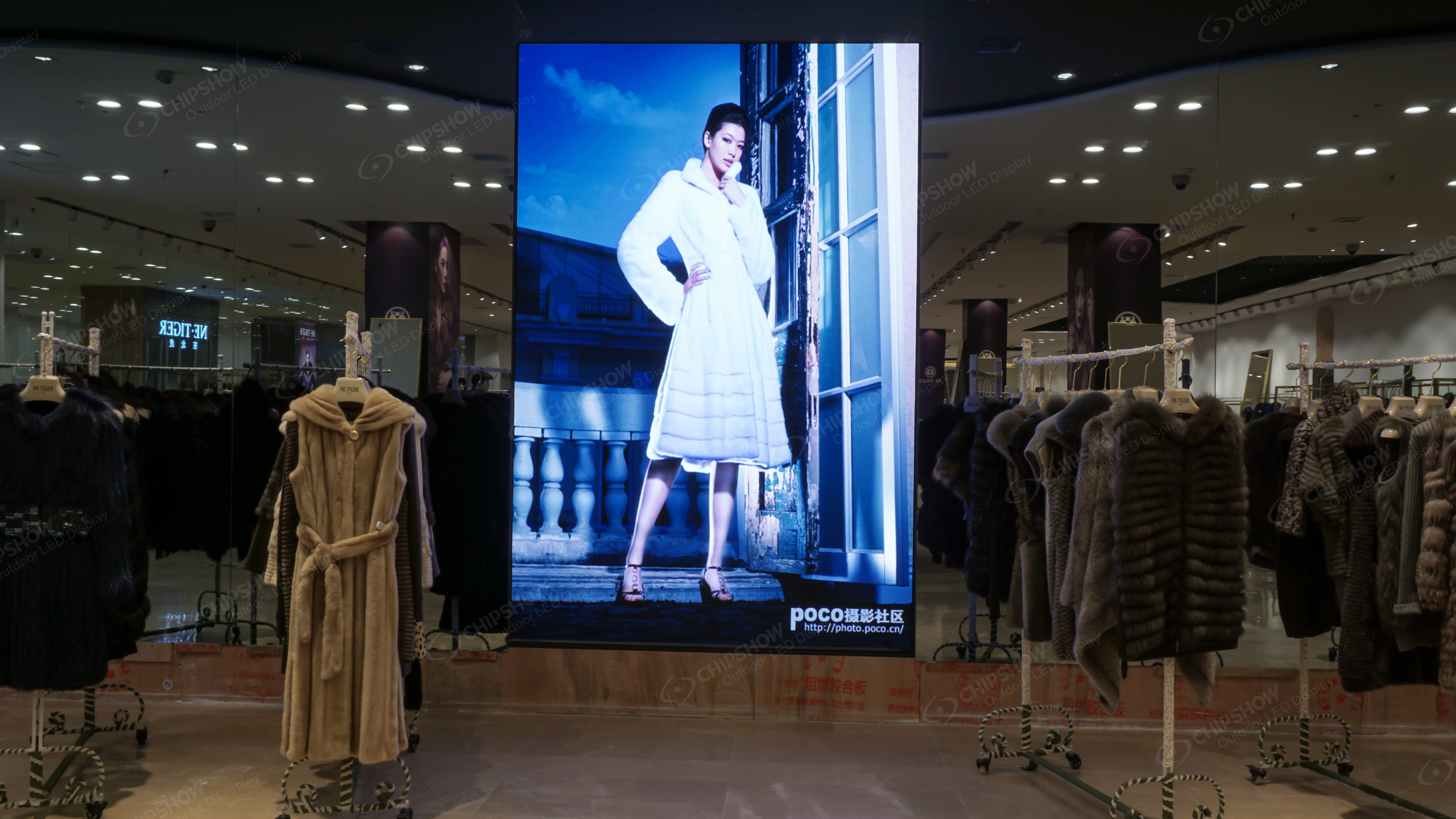
A traditional LED display uses a solid panel with a black coating between each LED cluster. This blocks ambient light transmission almost entirely, with transparency rates below 10%.
When active, the black mask layer creates the deep background that gives traditional screens their high native contrast. Common applications include outdoor billboards, roadside digital advertising, indoor commercial signage, stage backdrops, and digital out-of-home advertising (DOOH) network installations.
Why Traditional LED Is Still the Default Choice
Traditional LED displays reach outdoor brightness levels of 6,000 to 10,000 nits, making them effective even in direct sunlight. The supply chain is mature, with spare parts and service technicians widely available across markets. Standard advertising assets produced for print, social, or other out-of-home formats can run on a traditional display with minimal adaptation.
Transparent LED vs Traditional LED
Four dimensions separate these two technologies in ways that directly affect procurement decisions.
Visual Impact and Aesthetics
Transparent screens create a floating visual effect: content appears to hover in space against a visible background. This works best with dark or black backgrounds and bold, high-contrast subject matter.
Traditional screens deliver deep blacks, high contrast ratios, and color accuracy that meets broadcast and photographic reproduction standards. They are the correct choice for any application where camera capture quality matters.
Brightness and Viewing Conditions
| Condition | Transparent LED Screen | Traditional LED Display |
| Typical brightness range | 1,000 – 5,000 nits | 6,000 – 10,000 nits |
| Direct sunlight (fully exposed) | Not recommended | Strong; designed for full exposure |
| Semi-outdoor (covered atrium) | Competitive at IP54 | Suitable but oversized for condition |
| Indoor retail and showrooms | Strong; moderate brightness preferred | Effective but blocks background view |
Transparent LED screens are best suited to indoor glass facades, retail windows, atriums, and sheltered semi-outdoor environments. For fully exposed outdoor installations with direct sun exposure, traditional displays remain the technically appropriate choice.
Installation Requirements and Structural Load
| Factor | Transparent LED Screen | Traditional LED Display |
| Weight per sq ft | From approx. 5 kg | 15 – 65 kg |
| Mounting to existing glass | Compatible in most cases | Not applicable |
| Additional structural steelwork | Rarely required | Often required for large formats |
| IP protection rating | IP44 – IP54 depending on model | IP65 – IP67 |
| Rear access requirement | Often not required | approximately 2.6 ft minimum recommended |
The weight advantage of transparent screens is significant for retrofit and heritage building projects. Note that magnesium alloy cabinet technology has also reduced the weight of modern traditional fixed-install displays considerably, with some cabinets now reaching approximately 16.5 lbs per cabinet, narrowing the gap for indoor traditional deployments.
Total Cost of Ownership (TCO)
Purchase price is the starting point, not the conclusion.
| Cost Category | Transparent LED Screen | Traditional LED Display |
| Hardware (per sq ft) | Higher by 30 – 80% | Lower baseline |
| Structural installation | Often lower (no steelwork) | Higher for large formats |
| Energy consumption | Lower with dark content mix | Higher; active cooling often needed |
| Content production | Higher; custom assets required | Lower; standard formats apply |
| Spare parts availability | Developing supply chain | Mature, widely distributed |
Buyers should build a project-level TCO model rather than comparing hardware prices alone.
Which Business Scenarios Suit Transparent LED Screens
Transparent LED screens deliver their strongest ROI in environments where light transmission and architectural integration are priorities.
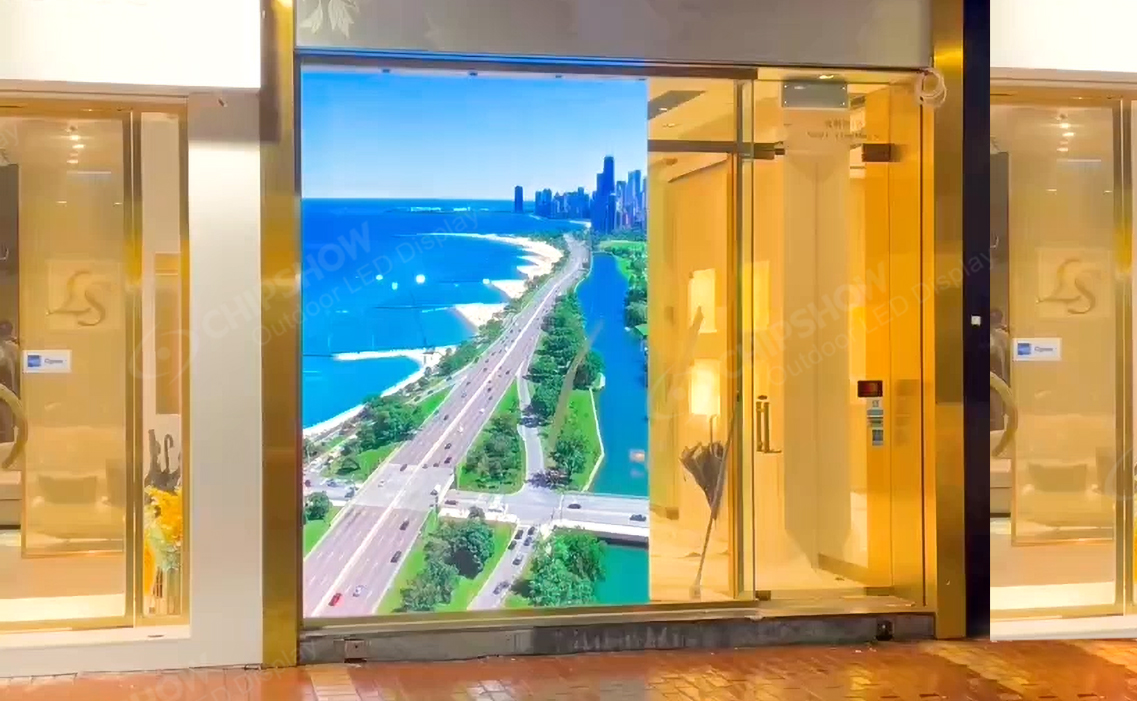
Retail storefronts and glass facades: Digital content and physical merchandise remain visible simultaneously, creating a two-layer viewing experience that a solid display cannot replicate. This format performs best for luxury goods, automotive showrooms, premium apparel, and jewelry. Installations work best on north or west-facing glazing where direct sunlight exposure is limited.
Showrooms, museums, and exhibition spaces: Controlled lighting environments remove the ambient light limitation that constrains transparent screens elsewhere. Close-range audiences with longer dwell time benefit from the immersive floating effect, and direct-mount installations are structurally straightforward in these spaces.
Commercial building facades and indoor DOOH: Transparent screens on glazed facades are largely invisible during daylight hours, preserving architectural appearance. After dark, the facade activates as a media surface. Covered mall atriums and glazed transit halls represent strong deployment conditions, where ambient light is partially controlled and audiences have longer dwell time.
Note: outdoor digital signage in European and North American markets is subject to local planning regulations governing brightness, operating hours, and proximity to residential zones. Confirm requirements with local authorities before specification.
Which Business Scenarios Suit Traditional LED Displays
Traditional LED displays remain the technically appropriate choice wherever brightness, durability, and content flexibility are the primary requirements.
High-brightness outdoor advertising: For highway-facing panels, transit shelter advertising, and large-format roadside structures, brightness ceiling, IP67 protection, and supply chain maturity are better matched to uptime demands than transparent screen products can deliver.
Stage, events, and rental applications: Traditional rental cabinet systems are engineered for repeated assembly, transport, and disassembly cycles. For high-frequency touring and event applications, they deliver lower total operating cost per cycle. Carbon fiber cabinet systems represent a meaningful advancement here, reducing cabinet weight by more than 30% compared to conventional aluminum structures while maintaining structural rigidity.
Indoor functional signage: Promotional corridors, wayfinding systems, and information display zones prioritize content flexibility and cost efficiency. For functional signage at scale, traditional displays typically produce a lower five-year TCO.
How to Decide Which Type Fits Your Project
The following five questions help narrow the decision before you contact a supplier.
Five Questions Before You Specify
Does the installation involve glass or require light transmission? If yes, a transparent LED screen is the primary candidate. If no, a traditional display will deliver better brightness and contrast for the same budget.
Will the display face direct sunlight? Transparent LED screens are not recommended for fully exposed outdoor environments. If direct sun exposure is significant, specify a traditional high-brightness display.
Does your team have the capability to produce dark-background content? If no, budget for ongoing content production support before committing to transparent LED.
Are there structural load constraints? Transparent screens at approximately 1 lb per sq ft are compatible with a wider range of heritage and glass structures than traditional cabinets.
Is this a permanent installation or a temporary application? Permanent installations justify TCO modeling across a five-year horizon. High-frequency event applications typically favor traditional rental systems.
Budget Reference Ranges for Transparent LED Screens (2025 – 2026)
| Installation Scale | Approximate Budget Range |
| Small retail window (approx. 22 sq ft) | $5,000 – $20,000 |
| Mid-size commercial facade (approx. 65 sq ft) | $20,000 – $50,000 |
| Large architectural media facade | $50,000 and above |
When requesting quotations, specify: brightness in nits, pixel pitch, IP rating, average power consumption per sq ft at typical operating load, transparency rate, and whether a content management system is included.
Choose the Right LED Display for Your Business
Transparent LED screens and traditional LED displays are purpose-built for different environments and operational models. If your site has existing glass, requires preserved light transmission, and serves a close-range audience in a controlled environment, transparent LED is the appropriate direction. If your priority is maximum brightness, all-weather reliability, or large-scale outdoor visibility, a traditional display will serve you better.
FAQs About Transparent LED Screens
Q1: What Is the Typical Transparent LED Screen Price per Sq Ft?
Depending on the pixel pitch, brightness, and IP grade, hardware equipment can cost anywhere from $1,500 to $5,000 per square foot. However, these prices are subject to change. The most important thing to keep in mind is that gear is just the start. The total cost goes up when you add up the prices of installation, integrating content management systems, and mounting hardware.
Q2: Can a Transparent LED Display Be Used Outdoors?
All of it rests on what “outdoors” means for your project. In places that are partly enclosed and safe, like covered atria or enclosed transportation hubs, displays with an IP54 rating will work great. If you don’t plan to cover your screen, though, and it will be open to rain, dust, and extreme temperatures, then an older screen with an IP65 or IP67 rating is often a better choice.
Q3: How Does a Glass LED Screen Differ From a Standard Transparent LED Display?
An LED film or LED glass screen with LEDs built into a glass base is called an LED glass screen. This makes it look better by giving it a cleaner look and a smaller footprint. It is likely to be dim, though, and there won’t be many images. If the project is big or there will be bright background lights in some places, it might be better to use a clear modular LED display system.
Q4: What Is the Typical Viewing Angle of a Transparent LED Screen?
Most clear LED displays on the market can rotate between 140 and 160 degrees horizontally, which is enough to show content in front of shop windows and even in atriums where people come in from all directions. But keep in mind that as pixel pitch goes down, sight angle can go down as well. So, if possible, it is suggested that you check this specification with the maker.
Q5: How Long Does It Take to Install a Transparent LED Screen?
It depends on how big the system is. If the shop window is only 22 to 43 square feet, the installation should be done in one or two days, as long as no structural changes need to be made and the window is just mounted on top of the existing glass floors. When a facade is put up, things are very different. There is an engineering review first, and then the installation takes one to two weeks.