


A lightweight rental LED wall can reduce structural load, but rigging approval still depends on total system weight. Venue capacity affects screen size, setup method, crew access, and safety review. Do not judge by panel weight alone. Check approved rigging points, truss limits, floor loads, venue rules, and engineering requirements before finalizing the LED wall layout.
What Load Capacity Should You Check for a Lightweight Rental LED Wall
Load capacity should be checked as a full system, not as cabinet weight alone.
Start with the venue structure. Confirm ceiling points, floor load, truss span, hoists, and rigging hardware. A point load is the weight placed on one hanging point. A working load limit, or WLL, is the rated load a component can carry under approved use.
Total suspended load = LED cabinets + rigging hardware + truss + motors + cables + safety gear.
For a limited-load venue, confirm these points early:
- Venue rigging points should show the rated point load in kg (lb).
- Truss span should match the exact load chart used for the project.
- Motors and hoists should stay within their approved WLL.
- LED cabinets should be calculated by panel weight and panel count.
- Rigging hardware should include shackles, bars, steels, and safety components.
- Site conditions should include height, movement, wind, access, and setup limits.
A lightweight rental LED wall only helps when the full load path is approved. Ask the venue or engineer to confirm both point load and total allowable load before finalizing the screen layout.
Hanging, Ground Stacking, and Fly System Limits
Choose the setup method after the venue confirms the safe load path.
| Setup Method | Best Fit | Main Limit | Key Check |
| Hanging LED wall | Venues needing clear floor space | Approved overhead capacity | Rigging points, truss, motors, and hardware |
| Ground stacked LED wall | Venues without safe ceiling points | Floor load and stage depth | Base stability, ballast, and rear clearance |
| Fly system LED wall | Theaters, schools, and auditoriums | Rated batten and operating limits | Fly system capacity and operator approval |
A lightweight rental LED wall can help all three methods. Each method still transfers load to a different structure.
Hanging LED Wall Setup
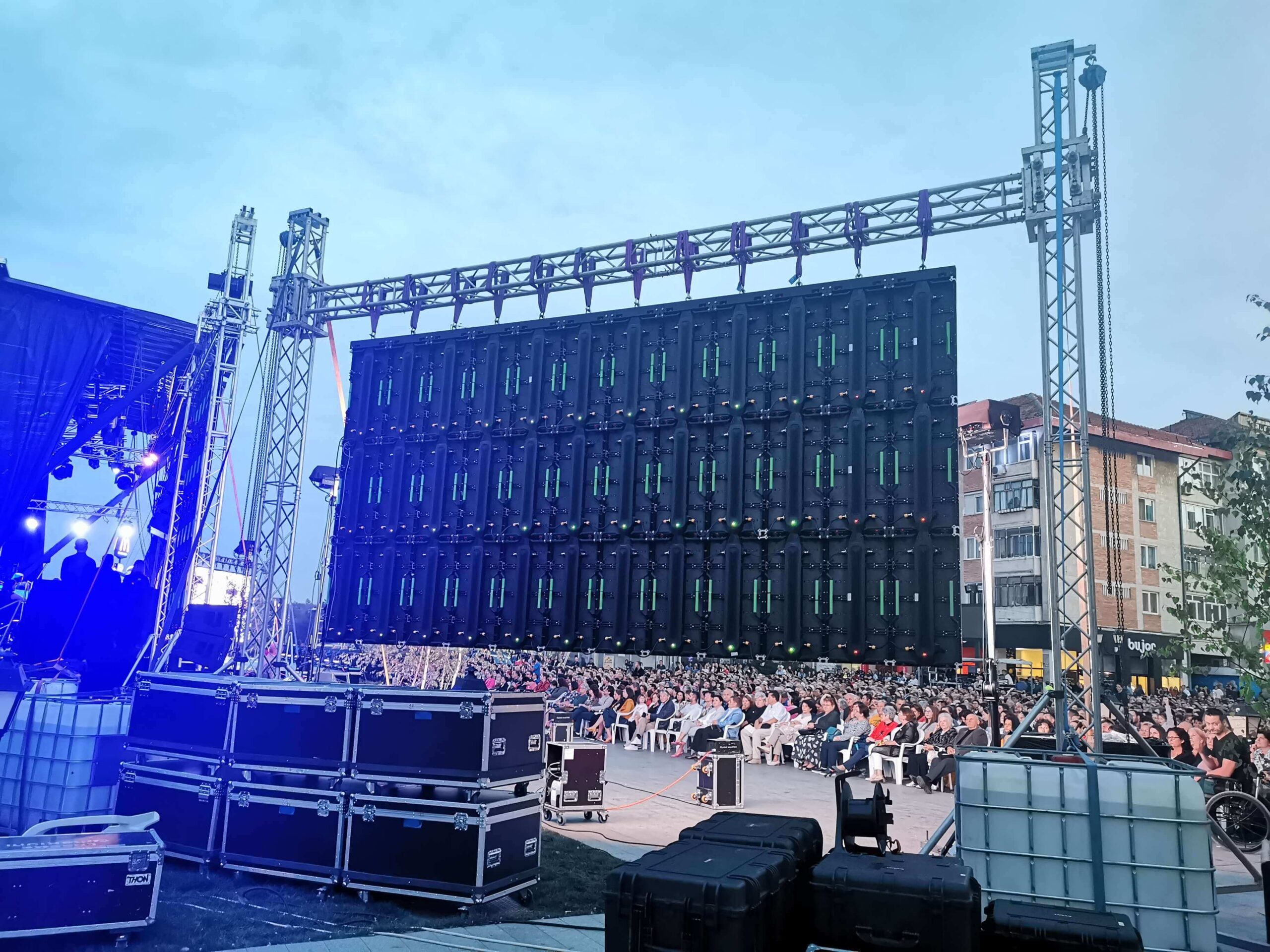
A hanging LED wall saves floor space and improves sightlines. It suits concerts, exhibitions, product launches, and touring stages.
The main limit is overhead capacity. The venue should approve each pick point, motor, truss span, and connection. A truss mounted LED wall should not be approved from a screen quote alone.
Ask for a rigging plot. It should show wall size, final hanging height, pick point spacing, and total suspended load.
Ground Stacked LED Wall Setup
Ground stacking works where ceiling points are not approved. It can also reduce overhead rigging work in venues with suitable floors.
The load moves to the floor and base system. Check floor load, base depth, rear bracing, ballast, and audience barriers. A tall stack can still tip without proper support.
Ground stacking also needs space. Check stage depth, emergency routes, backstage access, and front viewing angles. A compact venue may need a lower wall height.
Fly System LED Wall Setup
Fly systems are common in theaters, schools, and performance halls. They may support scenery, lighting, and display elements.
Do not treat a fly system like a standard truss grid. Each batten, line set, arbor, and operating rule has a limit.
Confirm rated capacity, load balance, movement speed, and operator rules. Some venues allow static display loads but restrict moving LED walls during a show.
Why Cabinet Weight Is Not Total Rental LED Wall Weight
Rental LED wall weight should be calculated as a complete system, not by cabinet weight alone.
A product sheet may list the weight of one LED cabinet. That number usually covers the display panel itself, but it may not include rigging bars, locks, corner blocks, truss, motors, chain bags, power cables, data cables, safety steels, shackles, weather covers, or wind bracing.
All of these parts can add load to the venue or support structure. The safe number is the full installed weight carried by the rigging system, floor, or fly system.
For example, a 6 m × 4 m (19.7 ft × 13.1 ft) wall uses 24 m² (258 ft²) of display area. Even a lightweight rental LED wall can become much heavier once rigging hardware, cables, motors, and safety components are added.
When Can Lightweight Panels Support Larger LED Wall Layouts
Lightweight panels help when venue limits make the planned screen size difficult to approve.
A lightweight rental LED wall can reduce suspended load, transport weight, and crew handling pressure. In restricted venues, this may make a wider wall, taller layout, or more flexible setup method easier to review.
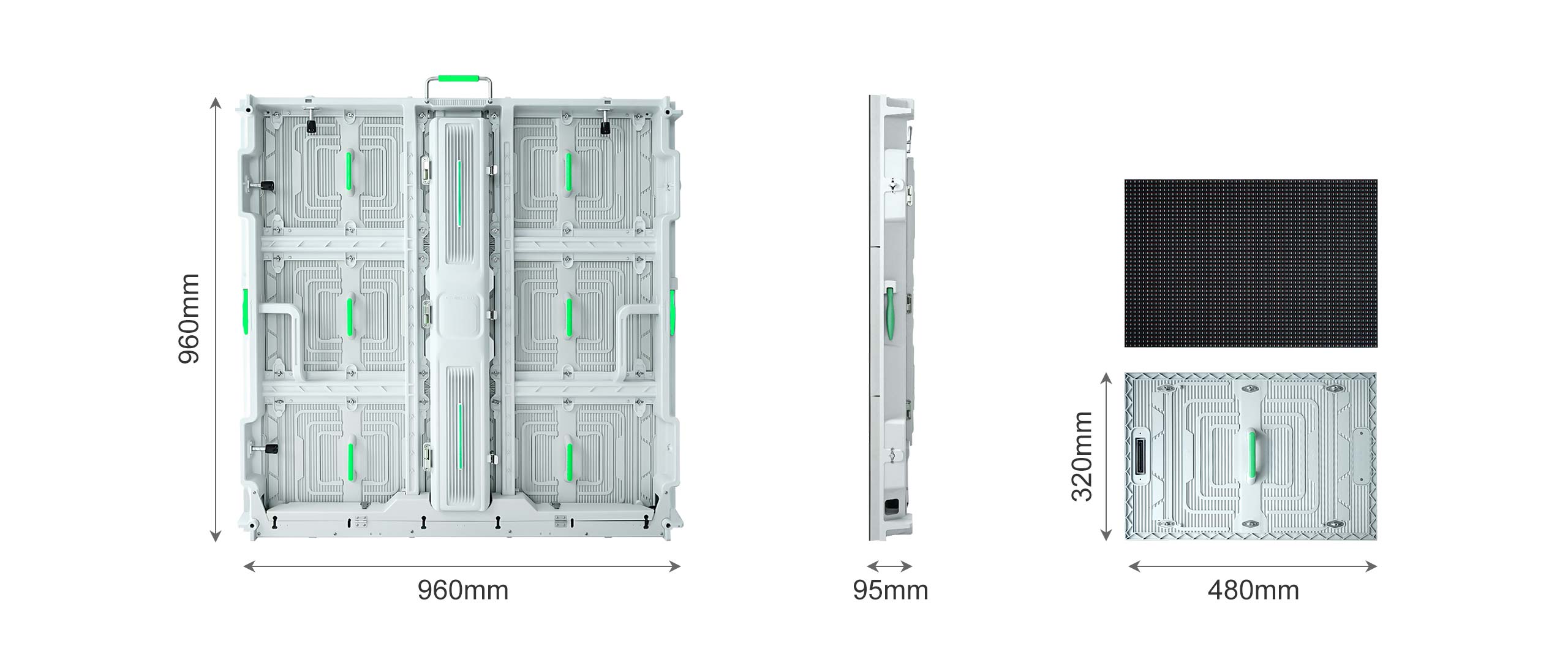
Chipshow C-Carbon P3.91 is designed for projects where load capacity affects screen layout. It uses a 1000 × 1000 × 83.75 mm (39.4 × 39.4 × 3.3 in) carbon fiber cabinet, with each cabinet weighing 20 kg (44 lb). It supports both hanging and stacking setups, with front and rear service access for rental crews.
This type of lightweight rental LED wall is especially useful when:
- Ceiling capacity is limited. A lighter cabinet can reduce point load pressure.
- Load-in time is tight. Lower handling weight can support faster crew movement.
- The venue has restricted access. Easier handling helps in theaters, schools, and event halls.
- The screen layout needs flexibility. Hanging and stacking options give the project team more installation choices.
Lightweight rental LED does not replace engineering review. It helps the project team work within venue limits while keeping screen size, setup method, and safety approval aligned.
What Documents Should You Request for LED Wall Rigging Approval
Approval should rely on project documents, not verbal estimates.
| Document | Key Information to Check | Usual Source |
| Product specification sheet | Cabinet weight, size, IP rating, and access method | LED supplier |
| Rigging drawing | Screen size, pick points, truss layout, and load path | Rigger or production team |
| Venue load report | Approved loads and restricted areas | Venue or facility manager |
| Engineering approval | Load review and structural comments | Licensed engineer |
| Insurance and safety files | Coverage, method statements, and inspection records | Vendor or contractor |
These files help buyers compare suppliers and reduce late project delays.
Product Weight and Cabinet Specification Sheet
Request the exact panel weight in kg (lb), cabinet size, pixel pitch, IP rating, service access, and approved setup methods.
Avoid using a generic rental LED wall brochure for a restricted venue. The reviewer needs model-specific data, including whether the cabinet supports front service, rear service, or dual service during fast changeovers.
Rigging Drawing or Structural Layout
The rigging drawing should show screen width, screen height, hanging height, truss layout, motor positions, pick points, load distribution, and the load path to the venue structure.
For a truss mounted LED wall, the drawing should match the actual truss type, span, and configuration used on site. This helps reviewers identify weak points before installation.
Venue Load Report or Engineering Approval
The venue should provide approved load limits or a clear review process. Some venues have fixed rigging points, while others require a fresh review for each event.
Engineering approval is especially important for large suspended walls, public venues, temporary structures, and outdoor stages that may require wind planning. If capacity cannot be confirmed, reduce the layout or use another setup method.
Insurance and Safety Compliance Documents
Insurance and safety files are common for schools, theaters, public events, and commercial venues in North America and Europe.
Request liability coverage, worker coverage, equipment inspection records, and safety method statements where required. These documents do not replace load approval, but they help confirm that the responsible parties are qualified and accountable.
Choose a Lightweight Rental LED Wall That Fits the Venue Structure
Plan the lightweight rental LED wall around the venue structure, not only the screen layout. Share the product sheet, rigging drawing, venue load data, and insurance files with the project team early. This helps confirm total system weight, rated rigging points, setup method, and approval requirements before installation.
FAQs
Q1: Does a Lightweight Rental LED Wall Always Need Less Labor?
Not always. A lightweight rental LED wall can reduce lifting strain and handling time. Labor still depends on rigging height, panel locks, access space, cabling, and local safety rules. A lighter panel helps most when it pairs with clear drawings and trained crews.
Q2: Can LED Wall Rigging Be Approved Without an Engineer?
It depends. Small ground stacked walls may only need venue approval. Large hanging walls, public venues, schools, theaters, and outdoor structures often need engineering review. If people pass under the load, document the full system weight and approval path.
Q3: How Much Weight Can a Truss Mounted LED Wall Carry?
There is no universal kg (lb) limit. Capacity depends on the approved WLL, truss span, pick points, and hardware. A 500 kg (1,102 lb) approved limit cannot support a 520 kg (1,146 lb) system unless the design is revised and approved.
Q4: Is Rental LED Wall Weight More Important Than Pixel Pitch?
It depends on the venue risk. In limited load venues, rental LED wall weight comes first. Pixel pitch affects image quality and viewing distance. Weight affects approval, rigging method, and safety. Confirm structure first, then choose pixel pitch.
Q5: Can Carbon Fiber Panels Help With Temporary Event Restrictions?
Yes. Carbon fiber panels can help when weight limits restrict screen size or rigging options. A lighter cabinet can reduce point load pressure and crew handling strain. It still needs load calculations, approved rigging points, and proper hardware for each venue.





