


LED panel weight affects touring costs through payload, handling, and rigging. Calculate cabinet mass from cabinet count × weight per cabinet, then add actual cases, hardware, cables, and spares for the shipping total. Compare route quotes and measured crew-hours to decide whether lighter panels improve your tour budget.
How Much Does a Rental LED Panel Weigh?
The weight figure on a spec sheet needs a stated boundary: cabinet mass, assembled wall mass, and packed shipping mass are different figures. Compare matching cabinet formats before calculating logistics costs.
Illustrative Weight Scenarios by Cabinet Material
| Cabinet Material | Weight per sq ft | Weight per m² | Typical Application |
|---|---|---|---|
| Standard aluminum alloy | 2.6–3.5 lbs/sq ft | 28–38 kg/m² | General rental, single-city events |
| Die-cast aluminum | 2.0–2.6 lbs/sq ft | 22–28 kg/m² | Mid-range touring rental |
| Carbon fiber frame construction | 1.3–1.9 lbs/sq ft | 14–20 kg/m² | High-frequency multi-city touring |
The ranges above are illustrative planning scenarios, not verified averages for a material class. Compare the proposed models at the same pitch and cabinet format using supplier mass data; frame design, depth, modules, power supplies, and fittings also affect weight.
Cabinet material alone does not determine weight. Compare complete fixed-install and rental designs before assuming that either class must be heavier.
For touring rental decisions, carbon fiber frame construction is a compelling lightweight option to compare with aluminum designs at matching size, service scope, and load rating.
Panel Weight vs. System Weight
Confirm what published panel weight includes. Record actual empty and loaded road-case mass rather than treating cases as a universal percentage of cabinet weight.
A complete system calculation must include panel weight, mounting hardware, signal cabling, power cabling, and road case weight combined. Vendors who quote panel-only weight are giving you an incomplete logistics figure.
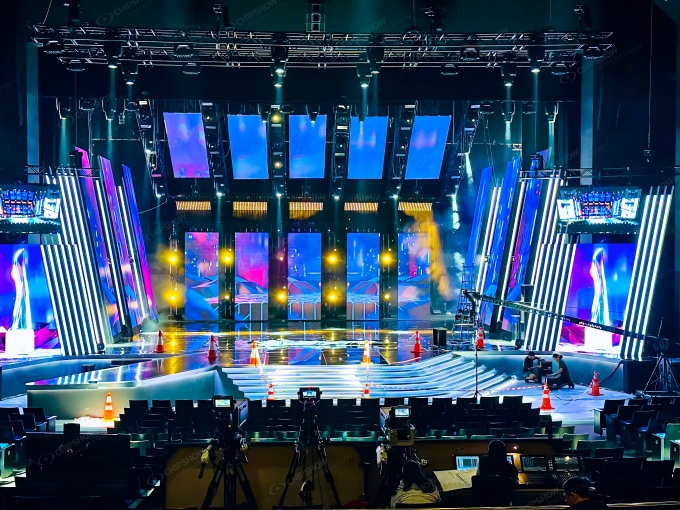
How LED Screen Weight Drives Freight Costs Per Tour
Production freight can be quoted by truck, route, pallet space, volume, or chargeable weight. Lower mass saves money when it changes the applicable quote or releases useful payload; it does not automatically lower every freight invoice.
How Panel Weight Affects Total Production Freight
Touring productions transport LED, audio, lighting, rigging, and staging together. Lower panel mass releases payload capacity; case dimensions determine occupied volume. Check both limits before assuming that lighter panels reduce the production truck count.
This worked 50 m² (approximately 540 sq ft) example assumes cabinet mass of 35, 28, and 17 kg/m², with road-case mass equal to 40% of cabinet mass for each scenario. Replace these assumptions with actual quoted model and case weights:
| Panel Type | System Net Weight | Road Cases (approx. +40%) | Total Shipping Weight | vs. Baseline |
|---|---|---|---|---|
| Heavy aluminum (3.3 lbs/sq ft / 35 kg/m²) | 3,858 lbs (1,750 kg) | 1,543 lbs (700 kg) | 5,401 lbs (2,450 kg) | Baseline |
| Standard aluminum (2.6 lbs/sq ft / 28 kg/m²) | 3,086 lbs (1,400 kg) | 1,234 lbs (560 kg) | 4,321 lbs (1,960 kg) | 20% lighter |
| Carbon fiber frame (1.6 lbs/sq ft / 17 kg/m²) | 1,874 lbs (850 kg) | 750 lbs (340 kg) | 2,624 lbs (1,190 kg) | 51% lighter |
These are illustrative calculations, not measured product results. The 40% case allowance is an explicit example assumption and excludes mounting hardware, cables, spares, and other production equipment.
Under these assumptions, the difference is 1,260 kg for 50 m². Scaling the same configurations to 160–240 m² gives a 4,032–6,048 kg panel-plus-case mass difference. Use the full loading plan and carrier quotes to calculate its financial effect.
The Tour Multiplier Effect
For an illustrative 30-city schedule, sum the freight quote differences across the actual routes. There is no universal number of annual shows at which a lightweight panel premium pays back.
How Panel Weight Multiplies Labor Hours and Crew Costs
Freight is one cost channel. Labor at each venue is the other, and panel weight affects it through two separate mechanisms simultaneously.
Assess Handling Tasks Before Assigning Crew
The NIOSH Revised Lifting Equation assesses two-handed lifting tasks using load, reach, height, travel, asymmetry, frequency, duration, and grip. 23 kg is not a universal single-person handling permission. Evaluate the actual panel and workplace procedure.
Plan team lifts or handling equipment from the task assessment and supplier instructions. Even a lighter cabinet may need two people because of its size, grip, lift height, or installation position.
| Cabinet Weight per Unit | Handling Requirement | Crew Impact for 48-Panel Wall |
|---|---|---|
| Below 50 lbs (23 kg) | Assess grip, reach, height, and repetition | Crew plan based on the assessed workflow |
| At or above 50 lbs (23 kg) | Assess team lifting or handling equipment | Measure paid crew-hours in rehearsal |
Handling capability can influence paid crew-hours when the assessed task permits a more efficient method. Measure the complete workflow rather than equating a cabinet mass threshold with half the crew.
Load-In Duration and Overtime Exposure
Crew rates, minimum calls, breaks, overtime thresholds, and multipliers depend on the venue and applicable labor agreement. Use the actual contract and measured hours in the tour budget.
Team lifts and equipment moves change coordination and task duration. A rehearsal with the proposed wall provides a useful estimate of paid crew-hours. The table below identifies costs to check:
| Cost Driver | Single-Person Panel | Two-Person Panel |
|---|---|---|
| Crew headcount per load-in | Baseline | Depends on crew plan and duration |
| Overtime exposure per stop | Lower | Use the actual contract and paid hours |
| Cumulative labor impact, 30-city tour | Baseline | Significant additional cost across all dates |
Lighter panels can reduce handling effort. Confirm their effect on paid crew-hours and overtime using the same layout, case plan, access conditions, and venue rules.
Venue Structural Limits: When Heavy Panels Restrict Design Options
Weight not only affects what happens on the truck. It affects what configurations are physically possible inside each venue.
Ceiling Load Ratings and Rigging Constraints
Obtain venue-specific structural and rigging documentation for each suspension position. Ratings depend on the structure and load path; a generic venue category or load range cannot establish capacity for a flown LED wall.
Heavy LED walls frequently approach or exceed available rigging capacity in older or lighter-rated venues, forcing a shift from flown to ground-supported installation. Ground support requires additional stage structure, increases setup time, and reduces usable floor and performance area.
Consistency Across Multiple Venues
Lighter panels can widen rigging design options, but every venue still needs its own load assessment. Include changes in hardware, access, and labor in the tour budget instead of assuming one rigging design fits all stops.
Key Specs to Check When Evaluating Lightweight LED Displays for Live Events
The spec sheet number needs context to be useful for logistics planning.
Panel Weight vs. Full System Weight: A Four-Step Calculation
Use this framework to convert a weight spec into a cost comparison between two panel options:
- Step 1: Wall area × cabinet mass per unit area = cabinet mass; add installed hardware and cables for suspended mass.
- Step 2: Add actual road-case tare mass, hardware, cables, and spares for packed shipping mass, and record shipment dimensions.
- Step 3: Obtain freight quotes for both complete loading plans on the same routes and terms to calculate the freight cost difference.
- Step 4: Sum freight savings across the tour and measured crew-hour savings × applicable labor rates; include handling equipment and venue setup cost differences.
By running the above computation for two panels prior to purchase, it becomes clear what the cost difference would be in terms of dollars.
Specs to Confirm Before Signing Any Rental Agreement
Before committing a panel system to touring use, obtain written confirmation of the following from the supplier:
- Panel weight per sq ft, cabinet only, excluding road case
- Road case weight per cabinet
- Rigging point Safe Working Load (SWL) rating, in lbs or kg
- Required front and rear IP ratings for the actual outdoor exposure and supplier operating instructions
- Whether the panel supports single-person handling without additional tools or equipment
The rigging designer must establish loads at each suspension point, including hardware, cables, load distribution, and applicable dynamic and outdoor loads. Dividing total mass by the number of points does not by itself verify a safe load rating. Obtain rated components and an installation-specific load plan.
How to Match Panel Weight Class to Your Tour Profile
Different touring profiles require different weight priorities. The correct weight class depends on show frequency, venue mix, and crew structure.
| Tour Profile | Recommended Panel Weight | Priority Spec to Verify |
|---|---|---|
| High-frequency multi-city touring | Carbon fiber frame option; compare actual model masses | Single-person handling confirmed in writing |
| Mixed indoor/outdoor festival circuit | Lightweight outdoor-rated option; confirm actual mass | IP65 front and rear; rigging SWL documented |
| Single-city corporate events or low-frequency shows | Standard aluminum option; confirm actual mass | Road case compatibility with existing inventory |
For rental companies operating at high frequency, the weight penalty of standard aluminum cabinets becomes a recurring operational cost. The break-even point between a higher-priced lightweight panel and a lower-priced heavy panel depends on show frequency, union city exposure, and freight routes. Use the four-step framework above to calculate it for your specific operation rather than applying a general estimate.
Carbon Fiber LED Panel Weight Comparison: What the Construction Delivers
Carbon fiber frames can reduce cabinet mass, but the percentage depends on the two complete designs. Compare model-specific mass alongside frame integrity, locks, transport protection, and service support.
The Chipshow® C-Carbon series offers carbon fiber frame construction for touring rental workflows. The C-Carbon P3.91 product specification lists a 20 kg, 1000×1000 mm cabinet, brightness up to 6,000 cd/m², and IP65 front and rear. Compare the matched configuration for indoor and outdoor touring applications with the venue-specific handling and rigging plan.
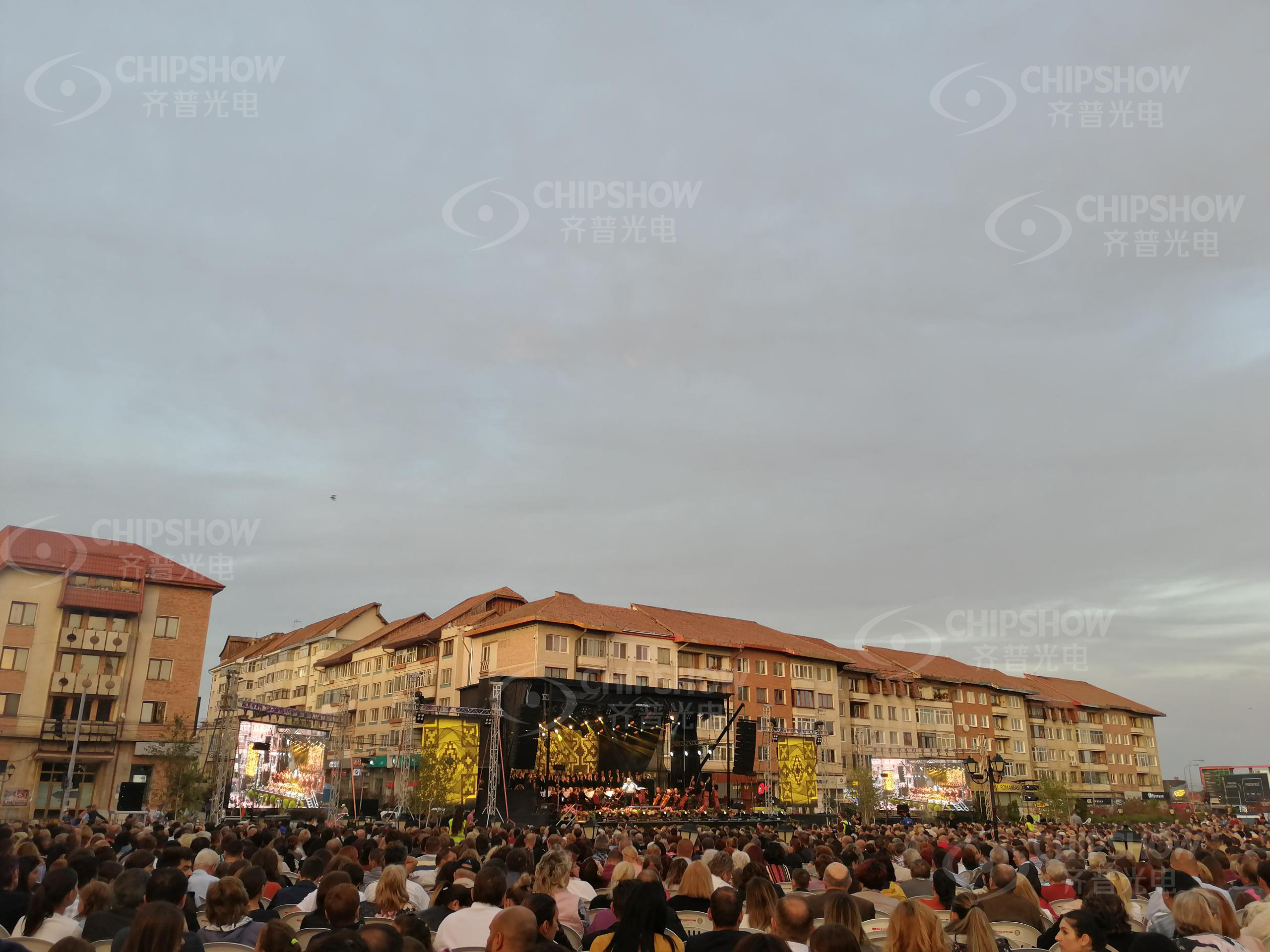
Quick Reference: LED Screen Weight and Logistics Cost Per Tour
The table summarizes cost questions by scenario. Establish amounts from route quotes, venue conditions, labor agreements, and a rehearsed handling plan.
Freight and System Weight
| Scenario | Approximate Cost Impact |
|---|---|
| Large production, 30-city tour, heavy vs. lightweight panels | Per-leg freight difference multiplies across all stops; cumulative savings can recover the lightweight panel price premium |
Labor and Handling
| Scenario | Approximate Cost Impact |
|---|---|
| Load-in requiring team lifting or handling equipment | Check paid crew-hours, minimum calls, and overtime terms |
| High-frequency touring with repeated load-ins | Weight-driven labor cost repeats at every show date; gap widens with show count |
Venue Compatibility
| Scenario | Approximate Cost Impact |
|---|---|
| Historic venue or hotel ballroom, limited certified rigging capacity | Assess ground support if the flown design cannot meet the venue rating |
| Multi-city tour with mixed venue types | Lighter panels may widen design options; each venue still needs a load plan |
Return on Investment
| Scenario | Approximate Cost Impact |
|---|---|
| Lightweight panel price premium vs. standard aluminum | Break-even point depends on show frequency, venue mix, and freight routes; use the four-step framework to calculate |
Panel weight selection is a procurement decision with cost implications across the full operational life of that inventory. The cost difference repeats at every show date on the calendar.
Evaluate Your Lightweight Rental LED Panel Options Before the Next Tour Contract
Panel weight influences freight planning, crew handling, and venue compatibility. Evaluate these costs across the actual tour schedule before choosing the rental system.
The four-step framework above gives rental companies and production teams a concrete basis for comparing lightweight rental LED panel touring options before any purchase or rental commitment. For technical specifications and system configuration support across the C-Carbon and C-Rock touring series, visit the Chipshow® Rental and Stage LED Display.
FAQs About Lightweight Rental LED Panels for Touring
Q1. Does a Heavier LED Panel Mean It Is More Durable for Touring Use?
Cabinet mass alone does not establish durability. Compare frame and lock construction, transport protection, service records, spare parts, and relevant test conditions. Lightweight construction is valuable when the complete design meets the touring requirements.
Q2. How Does Wind Load Affect Rigging Requirements for Outdoor LED Touring Panels?
Outdoor LED walls create gravity and wind loads. Extra panel weight does not cancel wind force. The engineered support plan must account for screen area, exposure, attachment loads, and defined operating and action limits in the event wind-management procedure.
Q3. Are Carbon Fiber LED Panels Durable Enough for Repeated Touring Use?
Carbon fiber panels can suit repeated touring when the cabinet, locks, connections, cases, and service plan are designed for that use. Ask for handling instructions and durability evidence for the proposed model.
Q4. What Is the Difference Between a Flown and a Ground-Supported LED Wall Installation?
The LED wall is suspended using rigging points mounted either on a truss structure or on a ceiling frame in a flown arrangement. The vertical frame that supports the LED wall when installed on the ground is designed relative to the floor. Flown arrangements are preferred where possible since they leave the stage floor free provided that the roof structure is strong enough.
Q5. Does Panel Weight Affect What Motors or Hoists Are Required for a Flown LED Wall?
Yes. Select hoists from the engineered load at each point, including panels, hardware, cables, load distribution, and relevant dynamic loads. Confirm rated capacity and the full design rather than selecting motors from cabinet weight alone.
Q6. How Much Does Road Case Design Add to the Total Shipping Weight of an LED System?
Ask for empty and loaded case weights for the exact packing arrangement. The freight example uses 40% only as an explicit calculation assumption; use actual case mass for the shipping quotation.





