Neither fanless nor active cooling is universally better for outdoor LED display screens. The appropriate design depends on electrical consumption, solar heat gain, ambient temperature, cabinet sealing, natural airflow, and daily operating hours. Buyers should compare sustained temperature performance, maintenance requirements, and operating costs under documented site conditions. The purchasing priority is a cooling system that maintains required brightness while keeping components within their approved operating limits.
Calculate the Real Thermal Load First
Cooling selection begins with internal heat generation and the additional load imposed by the installation environment.
Display and Power Supply Heat
For outdoor LED display screens, request average and maximum input power with clearly stated measurement conditions. Average consumption supports energy budgeting and representative thermal assessments. Maximum consumption helps assess demanding content and sustained high-load operation.
Specify brightness, content pattern, ambient temperature, and the equipment included in each measurement. A typical-content average may understate consumption during bright, predominantly white advertising.
Electrical input becomes emitted light and heat. Treating total input power as heat provides a conservative preliminary assumption for the display assembly. Detailed analysis should account for optical energy leaving the screen and the location of individual heat sources.
Avoid double counting. If measured AC input already includes power-supply losses, adding those losses again overstates the load.
Power supplies, driver circuits, receiving cards, and electrical connections can create localized hotspots. An acceptable cabinet-air temperature does not establish that every component operates safely.
Check the exact power supply’s temperature derating curve, mounting orientation, and cooling requirements. A power-supply thermal application note illustrates how available output depends on the cooling arrangement. Its model-specific limits should remain separate from the display’s specifications.
Record daily operating hours separately. Longer operation increases energy consumption and can allow temperatures to stabilize at sustained levels. At an unchanged electrical load, operating duration alone does not increase instantaneous heat generation.
Solar Heat Gain and Enclosed Spaces
Sunlight adds heat to outdoor LED display screens independently of their electrical consumption.
Assess screen orientation, exposure duration, surface finish, surrounding reflections, and rear installation space. Ambient air, sunlit cabinet surfaces, and internal components require separate temperature measurements.
For an initial assessment:
Absorbed solar power ≈ incident solar irradiance × exposed area × solar absorptivity.
Use irradiance on each relevant surface and absorptivity appropriate to its finish. The result estimates absorbed solar energy, rather than the portion reaching a particular component.
Rear cavities, decorative surrounds, and enclosed support structures can retain heated air. Include these features in the thermal model and installation drawings.
Published outdoor enclosure thermal guidance identifies solar exposure, surface finish, ambient temperature, and internal load as relevant inputs. It also cautions against relying on wind during worst-case assessment.
When Does Fanless Cooling Fit the Project?
A fanless LED display suits installations where passive heat transfer maintains acceptable temperatures throughout the specified operating conditions.
Conductive and Ventilated Cabinet Design
Effective LED screen heat dissipation requires a continuous path from heat-producing components to the surrounding environment.
Conductive designs transfer heat through mounting interfaces, heat spreaders, and cabinet structures. Exposed surfaces then release heat through convection and radiation.
Performance depends on contact quality, surface area, orientation, and available clearance. A metal cabinet provides limited value if heat cannot reach its exposed surfaces effectively.
Ventilated designs can support buoyancy-driven airflow through defined passages. Those passages must remain open after cabinets, structural members, and architectural covers are installed.
For outdoor LED display screens, distinguish airflow around protected assemblies from airflow through an electronics compartment. These arrangements create different contamination and enclosure-protection requirements.
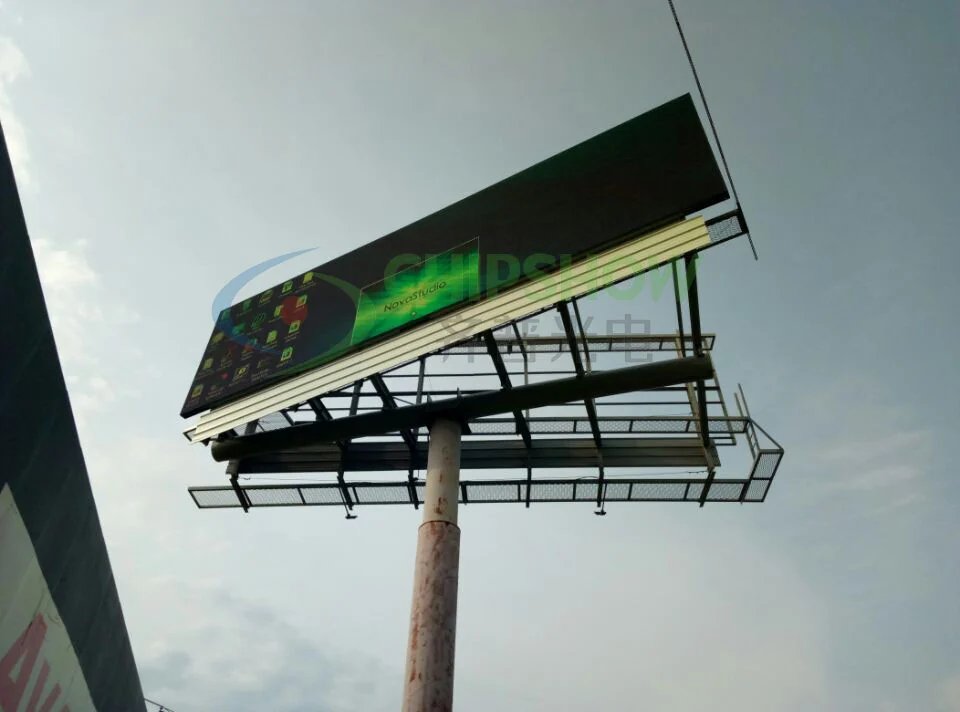
Chipshow’s C-Vent P16 lists fanless self-cooling as a product feature. For an exposed billboard project seeking fewer cooling components, it offers a relevant option for technical evaluation. Confirm the proposed configuration’s temperature performance and installation clearances against the actual site conditions.
A fanless design still needs thermal evidence. Cabinet material and ventilation openings alone cannot establish cooling capacity.
Low Maintenance Locations
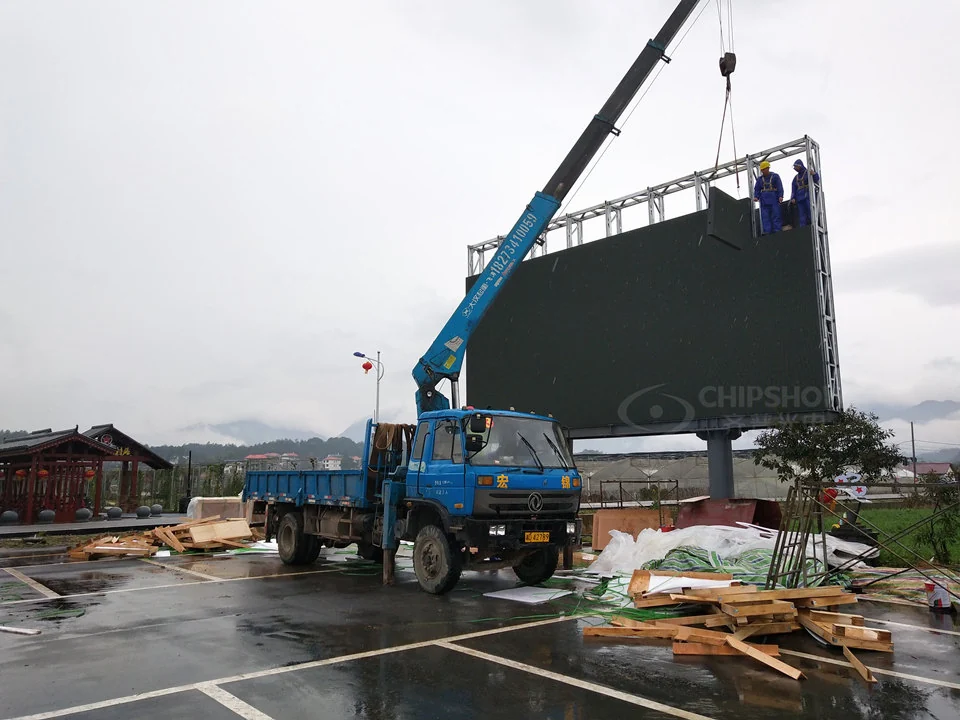
Elevated billboards and remote roadside installations can make routine servicing expensive. Access may require lifting equipment, traffic management, or coordinated shutdowns.
A validated fanless design removes cooling-fan replacement from that service scope. Filter replacement also disappears where the approved design uses no filters.
Outdoor LED display screens still require inspection. Debris, damaged seals, corrosion, and degraded thermal interfaces can affect heat transfer.
Ask the supplier to define the scope of “fanless.” Cabinet ventilation may be passive while a power supply or separate control enclosure contains a fan.
Compare access costs over the planned service period. Reduced cooling-component maintenance has commercial value when the display also sustains the required brightness and temperature margin.
When Is Active Cooling Needed?
Active cooling becomes relevant when passive heat transfer cannot maintain acceptable component temperatures at the required operating load.
High Temperature and Long Operating Hours
High ambient temperatures reduce the temperature difference available for heat rejection. Sustained high-brightness content can increase internal heat at the same time.
An active cooling LED display uses powered equipment to improve heat removal. Fan-based systems direct airflow across heat-producing components or exchange heated enclosure air with outside air.
Require the supplier to document inlet temperature, airflow direction, fan-control logic, and cooling coverage. Fan quantity alone offers little basis for selection.
Ordinary fan ventilation cannot cool equipment below the incoming air temperature.
If the surrounding air leaves inadequate thermal margin, evaluate shading, lower electrical load, revised cabinet design, or another engineered cooling method. Refrigeration may be necessary where the required internal temperature is below ambient.
A sealed enclosure can use internal fans with an external heat-rejection path, such as a suitable heat exchanger. Internal circulation alone does not remove heat from the enclosure.
For continuously operated outdoor LED display screens, request sustained-load results. A brief demonstration may finish while component temperatures are still rising.
Restricted Natural Airflow
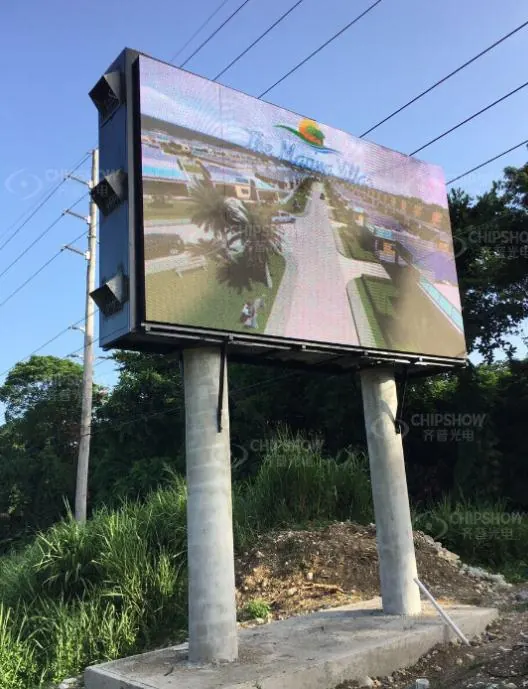
Wall recesses, closely spaced double-sided displays, and architectural surrounds can restrict natural circulation. Nearby equipment may discharge warm air toward the screen.
Forced airflow helps only when it follows a suitable route between the intake, heat sources, and exhaust. Exhaust air returning to the intake reduces cooling effectiveness.
Assess airflow resistance from grilles, filters, bends, and narrow cavities. Select fans using their performance curves at the expected system resistance.
Free-air airflow ratings do not represent installed airflow through a restrictive cabinet. Filter loading can further reduce delivery during service.
Outdoor LED display thermal management should address the assembled installation. Evaluate airflow distribution across upper cabinets, corners, and obstructed sections rather than relying on an isolated cabinet test.
Compare Maintenance, Energy, and Enclosure Protection
Compare cooling approaches at equivalent brightness, environmental conditions, protection requirements, and service assumptions.
| Purchasing Factor | Fanless Cooling | Fan-Based Active Cooling |
|---|---|---|
| Heat removal | Relies on conductive paths, exposed surfaces, and natural airflow. | Adds forced airflow and still requires an effective heat-rejection path. |
| Scheduled service | Includes inspection of surfaces, passages, seals, and thermal interfaces. | Adds fan inspection and filter servicing where filters are fitted. |
| Cooling electricity | Avoids cooling-fan electricity within the stated system scope. | Adds electricity use according to fan power and operating duty. |
| Noise | Removes fan-generated noise within that scope. | Requires assessment of fan noise and vibration. |
| Environmental protection | Depends on the protected assembly and ventilation arrangement. | Requires compatible sealing, airflow openings, and contamination controls. |
| Failure exposure | Includes obstructed passages and degraded thermal interfaces. | Adds fan, control, connection, and possible filter-related failures. |
Compare complete outdoor LED display screens at the required output. Total consumption and service cost depend on the whole system, including any separate cooling equipment.
Fan and Filter Maintenance
Include LED display fan maintenance in the procurement specification. Define service access, replacement procedures, spare-part availability, and methods for detecting cooling faults.
Where filters are fitted, use an inspection plan suited to local exposure. Construction dust, roadside pollution, and seasonal debris can change cleaning requirements.
Replacement fans must match airflow, static-pressure capability, electrical characteristics, and environmental suitability. Matching physical dimensions alone does not establish compatibility.
Estimate cooling electricity using:
Annual cooling energy (kWh) = average cooling power (kW) × annual operating hours.
For variable-speed fans, use a measured or justified average. Include cooling-related technician time, access equipment, and service interruptions in the financial comparison.
Dust, Moisture, and Downtime Risk
Outside-air ventilation can carry contaminants toward internal components. The design must control that exposure while delivering sufficient airflow.
Confirm which faces, compartments, and assembled conditions the stated ingress rating covers. Cable entries, cabinet joints, and service closures also affect protection.
An ingress rating does not establish protection against internal condensation. Evaluate moisture risks during shutdowns, temperature changes, and servicing.
For outdoor LED display screens, document the response to deteriorating cooling performance. Depending on the verified design, responses may include alarms, controlled brightness reduction, or protective shutdown.
Compare the operational consequences. Reduced advertising visibility, emergency servicing, and lost screen availability can outweigh small differences in cooling electricity.
Validate the Cooling Design With Temperature Testing
Accept the cooling design against measured temperatures under representative and demanding installation conditions.
Define the test configuration in the purchase specification. Record cabinet arrangement, rear clearance, power-supply model, cooling controls, and surrounding structures.
Test outdoor LED display screens with typical advertising and a defined high-load pattern at the required maximum operating brightness. Include adverse ambient conditions, solar exposure, and low natural airflow where applicable.
Log ambient and intake-air temperatures alongside module, power-supply, receiving-card, and cabinet hotspot temperatures. Use manufacturer-designated measurement points where available.
Thermal imaging can help identify hotspots. Confirm acceptance readings with suitable sensors, accounting for surface emissivity and measurement uncertainty. Reflective metal surfaces can produce misleading infrared readings.
Continue testing until temperatures stabilize under an agreed criterion. Record brightness changes, fan-speed changes, alarms, and protective actions.
A display that remains cool through automatic brightness reduction may fail the project’s visibility requirement. Record both temperature performance and sustained light output.
Evaluate restricted airflow and cooling-component failure through supplier-approved procedures. Establish the expected response to a failed fan or loaded filter where applicable.
Set warning and protection thresholds from exact component limits, sensor locations, and the agreed engineering margin. Distinguish ambient, case, and junction temperature limits. A universal cabinet-air threshold cannot represent every component.
The acceptance record should contain temperature plots, operating settings, sensor locations, environmental conditions, and pass criteria.
Cooling Requirements for Outdoor LED Display Screens
Cooling requirements depend on site temperatures, solar exposure, mounting conditions, operating hours, and required brightness. A suitable proposal defines thermal limits, maintenance responsibilities, and acceptance criteria for the specified installation. Verified temperature and brightness data, together with service access and fault-response procedures, support an informed procurement decision.
FAQs
Q1. Does Installation Altitude Affect Cooling Selection?
Yes. Lower air density at higher elevations can reduce convective heat removal. Ask the supplier to confirm the display and power-supply altitude limits, applicable derating, and cooling capacity at the installation elevation.
Q2. Can Cooling Hardware Be Retrofitted to an Existing Display?
A retrofit requires manufacturer review. Added fans, openings, or cooling units can change electrical loading, airflow, enclosure protection, and warranty conditions. Request an approved modification plan and repeat the relevant thermal and protection checks.
Q3. Can a Cabinet’s Operating Temperature Rating Prove Its Service Life?
No. An operating temperature rating defines stated operating conditions, rather than a service-life guarantee. Ask for component reliability assumptions, thermal test conditions, and warranty commitments separately. Distinguish LED lumen maintenance from complete-system reliability.
Q4. What Thermal Data Should Remote Monitoring Retain?
Retain timestamped temperatures, brightness settings, cooling status, alarms, and protective actions where supported. Confirm sensor locations, export access, and retention requirements in the controls specification. These records help investigate seasonal behavior and service incidents.
Q5. What Should a Cold-Weather Startup Specification Include?
Specify minimum startup temperature separately from continuous operating temperature. Ask the supplier to confirm startup procedures, any heater requirements, and component limitations after a prolonged shutdown. Heating controls should follow the approved system design.