


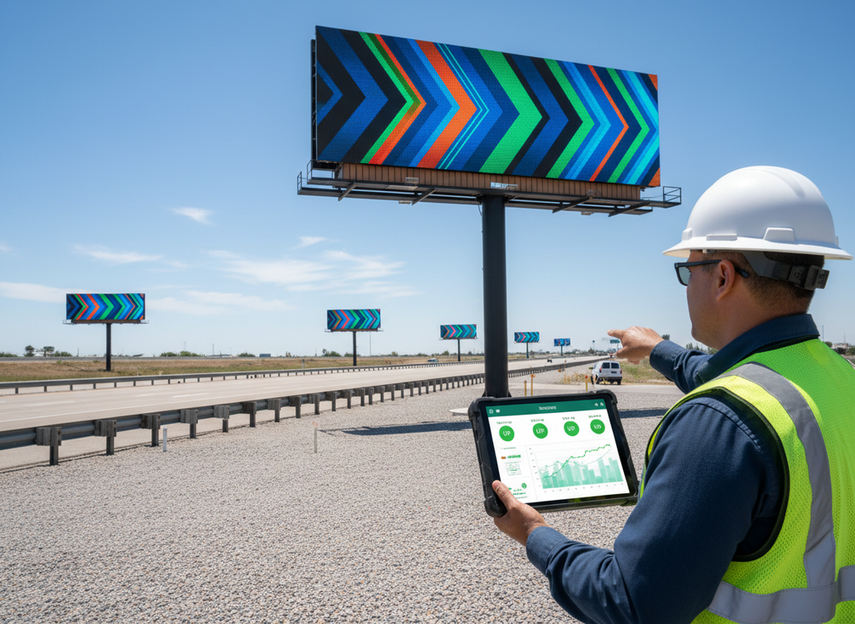
Outdoor DOOH LED uptime and service planning is about revenue continuity: when a roadside screen goes offline, you lose delivery time, weaken campaign pacing, and create extra work for the operations team. For an outdoor DOOH LED display, the first question is not just how bright it can get, but how it will stay online, stay cool, and stay serviceable in field conditions. Standardized display-health monitoring helps make that continuity visible across a network.
Why Uptime Drives Roadside Revenue
For roadside fleets, downtime is not an abstract reliability issue. It can interrupt billable inventory, create gaps in proof-of-performance reporting, and force the team to explain missing deliveries to advertisers. The OAAA’s digital display monitoring framework reflects that reality by treating display health as something operators should track consistently, not only after a failure.
Roadside placements also face weather, heat, traffic timing, and visibility pressure all at once. That makes outdoor DOOH LED uptime and service planning an operating discipline, not just a hardware decision. If the network is spread across multiple corridors, the practical goal is fewer blind spots, faster diagnosis, and less time spent guessing whether a screen is live.
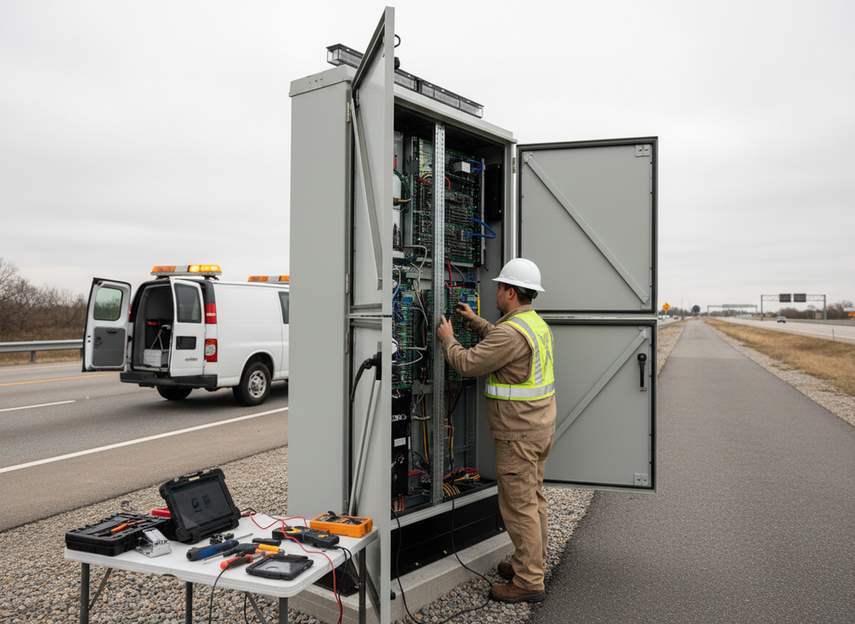
A useful rule is simple: if you cannot monitor it, you cannot manage it well. Uptime planning should begin with remote visibility, alarm handling, and a service process that is clear before the first truck roll.
Energy and Heat the System Together
High-brightness roadside LED displays can improve daytime visibility, but brightness is never free. More light output usually means more energy demand, more internal heat, and more stress on the cabinet and components. That trade-off is why roadside LED thermal management belongs in the same conversation as brightness targets and media performance.
The U.S. ENERGY STAR signage power limits are useful here because they show that energy efficiency is not just a marketing phrase. For eligible display classes, power behavior is constrained across operating states, which gives operators a more disciplined way to compare options and estimate operating cost. It also reminds teams to check whether a vendor’s efficiency story applies to the actual product category they are buying.
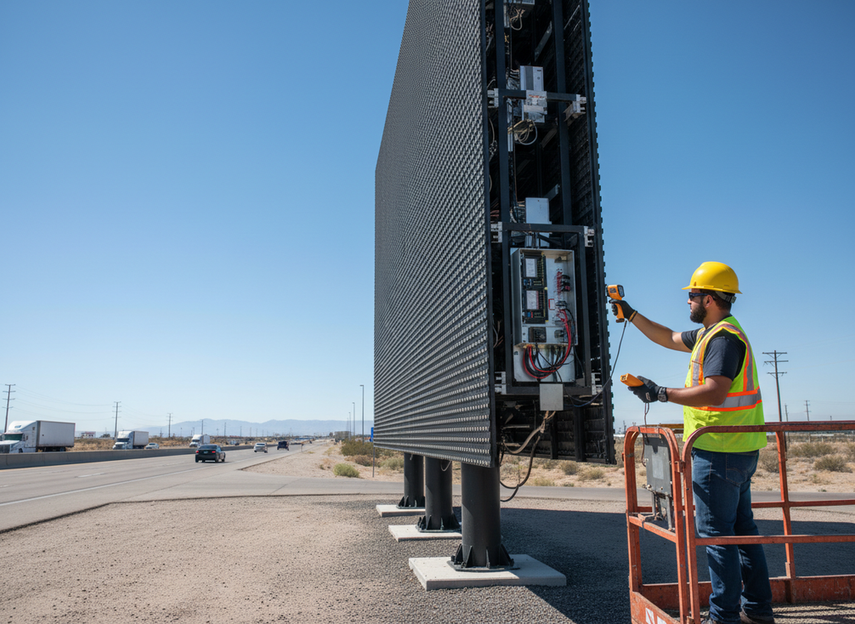
Temperature matters just as much as wattage. The DOE’s guidance on junction temperature and useful life makes the key point plainly: as LED junction temperature rises, useful life can fall sharply. In practical terms, heat is not only a comfort or enclosure issue. It is a reliability issue that can shorten service life, increase maintenance work, and create more unplanned outages.
What this means for buyers is that energy savings only count if visibility stays adequate and thermal load stays under control. A design that looks efficient on paper but runs hot in sun-exposed roadside conditions can cost more over time because of earlier wear, more service calls, and more time offline.
Brightness, Power, and Visibility
For most operators, brightness should be treated as one control in a larger operating strategy. A high-nit screen may be necessary for a long-view roadside install, but the brightness target should still be balanced against utility cost, heat load, and the time of day the screen is actually used hardest. In daylight-heavy use, the question is not just "Can it be seen?" but "Can it stay visible without creating avoidable operating burden?"
Thermal Design Choices That Matter
Cabinet airflow, component placement, sealing, and heat path design all influence how much thermal stress the display accumulates in real use. That matters more in direct sun, in hot climates, or where roadside access makes service windows short. An outdoor DOOH LED display can have good image quality and still be a poor fit if the thermal design is asking the maintenance team to compensate later.
Passive Versus Active Cooling Trade-Offs
Passive or fanless cooling can reduce moving parts and remove one common maintenance point, which is appealing for roadside deployments. But the right choice depends on climate, brightness target, cabinet design, and how much heat the installation will face during the hottest part of the day. Active cooling may add service complexity, yet it can be the better fit when the site conditions are harsher and the display must sustain high output for long periods.
Use this decision lens: if the site is hot, exposed, and bright, the cooling strategy needs to be proven for that environment before you buy. If the site is milder or the brightness target is more modest, a simpler thermal path may be enough and easier to maintain.
The practical takeaway is that energy and heat should be validated together. An outdoor DOOH LED display that saves watts but cannot hold stable performance in the field is not an efficiency win for an operator.
Service Models That Reduce Downtime
The best roadside service model is the one that shortens diagnosis, simplifies access, and makes escalation obvious. The OAAA’s pre-confirmed SLA planning guidance is important because it puts service design in the pre-deployment phase, where it belongs. Waiting until the first outage usually means you are already negotiating under pressure.
A strong service model usually includes three things: clear response expectations, a defined parts process, and a documented escalation path. Those details matter because they reduce the chance that a simple failure becomes a long offline window. Published uptime SLAs and proof-of-play reporting also improve accountability, especially when multiple stakeholders need to confirm that the network is actually delivering.
For operators with limited field staff, workflow matters as much as warranty wording. Front-service access, remote diagnostics, and part replacement that does not require a long site shutdown can materially reduce truck rolls. The buyer question is not "Does the vendor promise fast service?" but "Can the service process actually move fast when a panel fails on a roadside route?"
- Verify the SLA scope before deployment, including what is covered, how severity is classified, and who owns escalation.
- Check whether monitoring is tied to display health, not just scheduling.
- Ask how the vendor handles parts access, replacement steps, and return-to-service workflow.
- Confirm whether remote diagnostics can narrow the issue before a technician is dispatched.
- Make sure the service model matches your network geography and staffing level.
If you are comparing broader outdoor options, browse outdoor DOOH hardware paths only after you know what service workflow your network can support.
What to Check Before You Specify a Roadside Display
| Check Area | Why It Matters for Uptime | What to Ask Vendors | What a Weak Answer May Signal |
|---|---|---|---|
| Uptime plan and SLA | Sets expectations before the first outage | Who responds, how quickly, and through what escalation path? | Vague ownership and slower recovery |
| Standardized monitoring | Makes fleet health visible in the same way across sites | What alerts, logs, and remote status data are included? | Blind spots and inconsistent reporting |
| Proof-of-display telemetry | Helps confirm the screen is active and reachable | How do you verify that a panel is actually online and visible? | Confusion between scheduled content and real delivery |
| Heat and junction temperature control | Heat stress can shorten useful life | How is thermal load managed in sun-exposed roadside conditions? | Hidden wear and more unplanned downtime |
| Energy behavior in operating states | Helps estimate long-term operating cost | What power limits or efficiency data apply to this product class? | Efficiency claims that do not match the real use case |
| Front-service and maintenance access | Reduces service friction and repair time | What parts can be accessed or replaced from the service side? | Longer truck rolls and more outage time |
Use this table to compare vendors on the factors that affect roadside reliability, not just on image quality or headline brightness. If a proposal cannot answer the service, monitoring, energy, and heat questions clearly, treat that as a signal to keep digging.
For a shorter browsing path, compare fixed outdoor LED options only after those checks are clear, not before. In roadside work, the best-looking spec sheet is not always the easiest network to keep online.
A Practical Uptime and Energy Checklist
- Audit where downtime hurts most, including billable inventory, route coverage, and proof-of-performance gaps.
- Write the uptime and service SLA before deployment, not after the first failure.
- Check whether the monitoring system tracks display health across the network.
- Validate the thermal plan for your climate, sun exposure, and brightness target.
- Compare energy behavior in real operating states, not just headline claims.
- Confirm front-service access, parts handling, and escalation workflow before you request a quote.
If you are narrowing the field, our roadside LED solution paths can help you compare outdoor configurations against your uptime, thermal, and service requirements. Choose the system that fits your operating conditions first, then your budget, then your rollout schedule.
FAQs
How Do Operators Estimate the Energy Cost of a Roadside DOOH LED Display?
Start with operating hours, brightness target, cabinet design, and local electricity rates, then check how the vendor defines power use in each operating state. The right estimate depends on whether the screen runs full-time, how often it dims, and whether the environment forces the system to work harder in heat.
What Cooling Approach Is Best for High-Brightness Outdoor LED Displays?
There is no universal best choice. Passive cooling can reduce moving parts and service burden, while active cooling may fit hotter sites or higher brightness targets better. The right answer depends on climate, access for maintenance, and whether the cabinet can hold stable thermal performance during peak conditions.
Why Does Front-Service Access Matter for Roadside LED Uptime?
Front-service access can shorten repair time when the screen is mounted in a location that is hard to reach from behind. That matters because a faster parts swap or diagnosis window can reduce the time the site stays offline. It is especially useful when roadside access is limited or service windows are narrow.
Can Energy-Saving Settings Reduce Visibility on Roadside DOOH Screens?
Yes, if they are set too aggressively. Energy-saving controls should lower waste without creating a screen that is hard to read in daylight or from the intended viewing distance. For roadside work, the test is whether the image stays legible enough to protect campaign delivery, not whether the power number looks good in isolation.
What Should Be in an Outdoor DOOH LED Service SLA?
At minimum, check response expectations, severity handling, parts process, escalation paths, monitoring coverage, and who owns each step when a failure occurs. A useful SLA makes service obligations specific enough that your team can plan around them, but it should not be treated as a guarantee that every outage will resolve in the same way.





