


The cheapest LED wall to buy is not always the cheapest wall to run. For a 24/7 command center, compare five-year installed cost, electricity, cooling, service, spares and disruption risk on the same operating assumptions. This guide turns those inputs into a worksheet that finance, facilities and operations can use together.
What Five-Year TCO Actually Includes
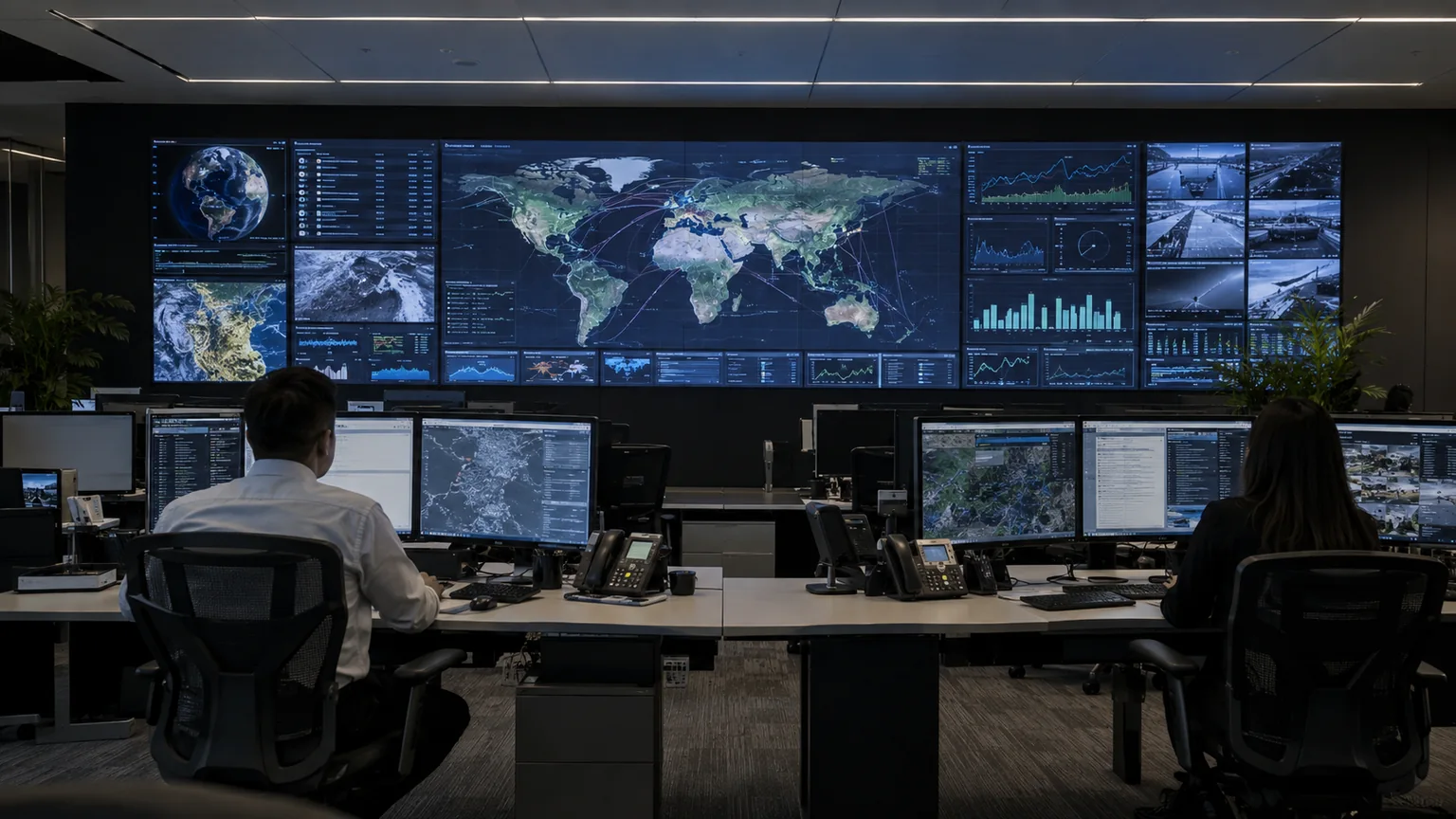
Five-year TCO is the full ownership cost of a command center LED wall across the budget window, not just the invoice for panels or cabinets. In practice, that means purchase price, installation, commissioning, energy, cooling impact, maintenance, spare parts, service labor, downtime exposure, and end-of-period replacement or refresh costs.
For CFOs and facility managers, the key is to separate direct spend from indirect risk. A lower sticker price can still lead to a higher total cost if it needs more service visits, carries more spare-part risk, or creates more heat for the room to remove. In mission-critical environments, even short outages can be expensive enough to justify a separate risk line in the model, as the hidden costs of downtime show for enterprise operations.
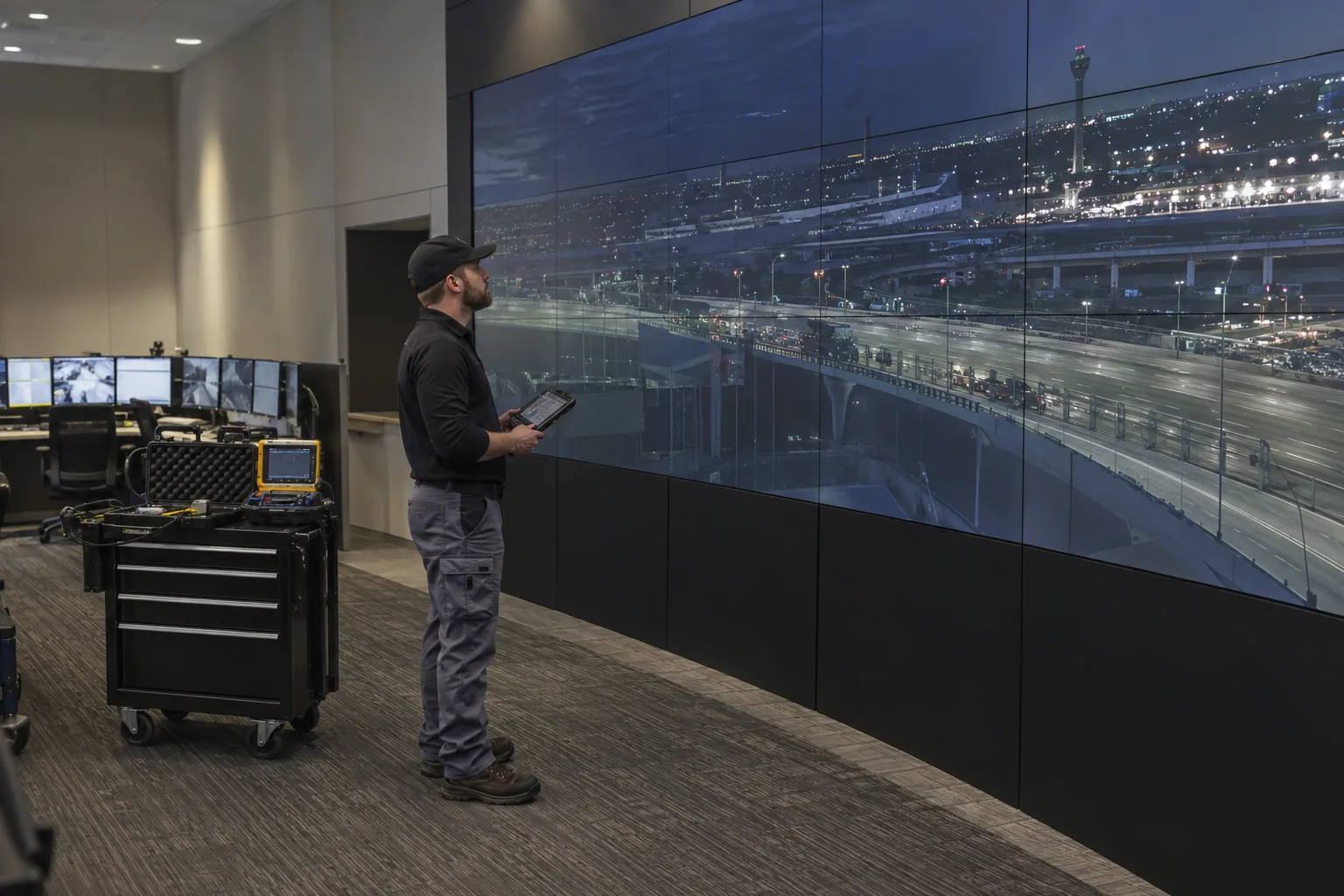
The cleanest baseline is simple: use the same operating hours, the same service scope, and the same cooling assumptions for every proposal. If one quote includes commissioning, spares, and on-site support while another only includes hardware, the comparison is not apples to apples.
The Main Cost Buckets to Model
A defensible command center LED wall TCO model usually starts with five buckets: installed system cost, maintenance and service, spares, downtime risk, and energy plus facility cooling. The table below shows how those buckets usually behave in a procurement review.
| Cost bucket | Direct or indirect | What drives it | Who should provide the input | Common modeling mistake |
|---|---|---|---|---|
| Installed system cost | Direct | Hardware, controllers, mounting, cabling, integration, commissioning | Vendor and integrator | Comparing cabinet price instead of installed scope |
| Maintenance and service | Direct | Planned inspections, corrective visits, access labor, response terms | Vendor and service team | Assuming reactive service will cover everything |
| Mission-critical spares | Direct | Power supplies, drivers, LED modules, swap parts, local inventory | Vendor and operations team | Budgeting no spares because failures are "unlikely" |
| Downtime risk | Indirect | Outage cost, process disruption, workaround labor, delayed decisions | Finance and operations | Leaving outages as a vague concern instead of a line item |
| Energy and HVAC | Direct plus facility load | Display electricity, room heat gain, cooling strategy, operating hours | Vendor and facilities team | Double counting cooling or ignoring it entirely |
The biggest mistake is to treat maintenance, spares, and downtime as one vague service line. They are different risks with different owners. Industry references such as AVIXA’s mission-critical discussions highlight that visual system compromises directly impact operational TCO; planning models often reserve a dedicated spare-parts buffer for power supplies, receiving cards, and batch-matched LED modules, but the exact inventory percentage must be verified against the project SLA, uptime requirements, and vendor batch-matching commitments rather than assumed from a generic formula.
That does not mean every project needs the same percentage. It means the model should show why a 24/7 room cannot rely on reactive fixes alone. If a vendor’s proposal does not say how service access, swap time, and spare coverage are handled, the quote is incomplete even if the hardware price looks attractive.
Upfront System and Integration Costs
Start with the cost of the display system itself, then add what it takes to make it usable in the room. That usually includes controllers, mounting structure, cabling, installation labor, configuration, and commissioning.
For a command center LED wall, the installed scope matters more than the line item on the cabinet sheet. A cheaper hardware quote can grow quickly once you add room-specific constraints, signal routing, and integration work. Buyers should ask for one number that includes the full installed scope, not separate fragments that are hard to reconcile later.
Maintenance, Spares, and Service
For 24/7 command rooms, maintenance is not just repair work after something fails. It also includes routine checks, access labor, replacement parts, and the spare inventory that keeps downtime from spreading. A practical budgeting heuristic is to think in terms of annual maintenance as a share of the original hardware cost, but use that only as a planning guide, not a universal rule.
The AVIXA guidance above is useful because it forces the right question: what parts are most likely to stop the wall from performing, and how fast can they be replaced? For mission-critical spaces, the answer is usually more about response time and spare availability than about one generic service percentage.
If you want a tighter internal comparison path, the mission-critical LED wall range is a useful navigation point while you validate service coverage and access needs. For structured turnaround budgeting, our spare parts planning guide details batch retention policies, critical component stocking, and swap logistics for continuous operations.
Downtime and Operational Disruption
Downtime matters when losing the wall slows dispatch, decisions or coordination. Build the estimate around the room: which tasks stop, which continue on backup displays, and what extra labor is needed? Enterprise IT outage averages are not a substitute for that calculation. Keep disruption scenarios separate from contracted service charges so the same loss is not counted twice.
What this means in practice is simple: if the wall supports safety, dispatch, security, trading, or operations, a short outage may cost more than a lower upfront price saves. If the wall is used for lower-stakes collaboration, the downtime bucket may be much smaller. That is why the model should be tied to the room’s actual workflow, not to a generic benchmark.
Do not double count downtime if another line already assumes missed work or backup staffing. Put the loss where it belongs once, define the assumption, and keep the model auditable.
How Energy and HVAC Shape Five-Year Costs
For most buyers, electricity and HVAC are related but not interchangeable. Display power is a direct operating cost. HVAC is the facility response to the heat that display systems add to the room. If you blur them together, you can easily count the same heat effect twice.
The ASHRAE load-calculation framing is a good starting point because it accounts for internal gains at maximum capacity, including displays, lighting, and occupants. That matters in a 24/7 control room, where the room load is not just the LED wall but the whole operating environment.
| Cost driver | What to ask the vendor | What to ask facilities | Why it matters to TCO | Common mistake |
|---|---|---|---|---|
| Display power draw | What is the expected operating wattage under the room’s normal brightness and content mix? | What electricity rate should the model use? | Sets the direct energy line | Using a generic wattage with no room context |
| Heat load | What thermal assumptions are used at full operating load? | What cooling method and spare HVAC capacity already exist? | Determines whether the room needs more cooling | Treating display heat as identical to electric spend |
| Operating hours | What duty cycle is assumed in the quote? | Are there scheduled shutoff windows or always-on requirements? | Longer hours increase both power and cooling cost | Modeling a 24/7 room as if it were business-hours only |
| Room design | What cabinet layout and front-service access are expected? | What airflow path, return air, or local hot spots already exist? | Room design changes the cooling response | Ignoring the room and only pricing the wall |
| TCO impact | Which numbers are estimates versus committed values? | Which cost lines belong in facility budget, not vendor budget? | Prevents double counting | Blending electrical and HVAC costs into one opaque figure |
Start with a worked electricity line. An illustrative wall averaging 3 kW for 8,760 hours a year uses 26,280 kWh annually. At $0.15/kWh, that is $3,942 a year or $19,710 over five years, holding hours, tariff and average draw constant. This is a calculation example, not a Chipshow product measurement. Add controllers separately if the quoted draw excludes them.
Cooling capacity and cooling electricity are different inputs. Facilities should estimate the heat retained in the room and the incremental HVAC electricity needed to remove it; existing spare cooling capacity does not make that electricity free. Keep any HVAC upgrade, its service cost and its operating electricity on separate lines. For product options, compare the C-Max indoor LED platform under the same room assumptions.
A Practical Five-Year TCO Worksheet
Use this sequence when you build the worksheet. It keeps the model readable enough for finance and detailed enough for facilities.
-
Define the operating scenario. Write down whether the wall runs 24/7, the room’s criticality, and the expected content or control workflow. This step sets the rest of the model.
-
Collect installed-cost inputs. Ask for hardware, integration, mounting, commissioning, and any site-specific work as one installed figure. Do not let quote fragments hide the real base cost.
-
Estimate energy and HVAC inputs. Use the same operating hours and electricity rate across proposals, then let facilities handle cooling assumptions. Keep the electrical line and the cooling line separate.
-
Add maintenance and spares. Document planned maintenance, corrective service, spare inventory, and the expected response path. If the proposal does not spell out access and swap terms, mark the assumption as open.
-
Value downtime risk. Use an internal estimate tied to workflow disruption, alternate staffing, or delayed decisions. For mission-critical environments, this line should be explicit even if the value is conservative.
-
Run a sensitivity check. Test what happens if service frequency rises, the room runs longer, or cooling demand changes. A good TCO model should still make sense when you change one assumption at a time.
This is also where the model becomes auditable. Every number should have an owner, whether that owner is finance, facilities, the vendor, or the project team. If a line cannot be traced back to a written assumption, it is not ready for approval.
For buyers who need supporting documentation beyond the worksheet, our compliance documentation reference can help when the procurement audit requires reviewing sample test files and certification records for indoor display series; compliance status must always be verified per exact model number and active laboratory test report.
How to Use TCO in Vendor Comparison
TCO only helps if every vendor is answering the same question. Before you shortlist a proposal, ask how the quote defines installed scope, service scope, support response time, spare coverage, and the assumptions behind energy and downtime.
A good comparison request should include one side-by-side worksheet, one time horizon, and one operating scenario. If one supplier assumes business-hours use and another assumes 24/7 operation, the numbers are not comparable. If one includes spares and the other does not, the cheaper bid may be the more expensive one over five years.
Ask for written assumptions on operating hours, maintenance access, and facility cooling before the decision moves to approval. That gives finance a cleaner model and gives facilities a chance to catch double counting or hidden dependencies early.
If you are narrowing the field to a mission-critical option set, command center solutions is an appropriate starting path once ownership cost parameters are aligned. If your team is deciding between packaging architectures, our MicroLED vs COB command center comparison examines how surface protection, repair workflow, and procurement risk influence long-term operational expense.
Final TCO Validation Checklist
Before final approval, verify the installed scope, the five-year operating assumptions, the spare-parts plan, the maintenance response model, and the cooling inputs. Confirm that downtime is counted once, not twice, and that the vendor’s worksheet matches the room’s real operating pattern. If any of those items is still vague, the quote is not ready for a decision. For a clean approval path, request the side-by-side five-year worksheet, compare energy assumptions, maintenance scope, spares, and downtime risk, then shortlist only the proposals that can defend their numbers in writing.
FAQs
How Much Does a Command Center LED Wall Cost Over Five Years?
It depends on installed scope, energy use, HVAC impact, maintenance coverage, spare parts, and downtime assumptions. A useful answer is not one sticker price, but a worksheet that applies the same horizon and usage pattern to every bid.
Is LED Cheaper Than LCD Over Five Years in a Control Room?
Sometimes, but the answer changes with refresh timing, service model, energy assumptions, and how much uptime the room needs. Compare total ownership cost, not just category labels, because the cheapest purchase price can still produce a higher five-year bill.
What Drives Command Center LED Wall TCO the Most?
The biggest variables are usually installed scope, maintenance strategy, cooling load, and downtime exposure. Which one dominates depends on the room, the service model, and whether the wall is supporting mission-critical operations or lower-stakes collaboration.
Can HVAC Cost Be Included in an LED Wall Budget?
Yes. Include any additional cooling equipment, maintenance and incremental cooling electricity. Keep these separate from display electricity, and ask facilities to distinguish cooling capacity from annual energy consumption. Count each cost once.
What Should I Request From a Vendor Before Approving the Project?
Ask for the installed scope, the assumptions behind energy and maintenance, the spare-parts plan, the downtime basis, warranty terms, and a side-by-side five-year TCO worksheet. If a proposal cannot show its assumptions in writing, it is not ready for shortlist approval.





