A VMS cabinet can keep rain out and still collect condensation inside. For a cold or coastal corridor, compare how the enclosure manages humid air, cold internal surfaces and the openings disturbed during service. A well-matched thermal and sealing design helps the sign stay ready through overnight freezes, daytime thaw and routine maintenance.
Why Cold-Weather VMS Failures Start Inside the Cabinet
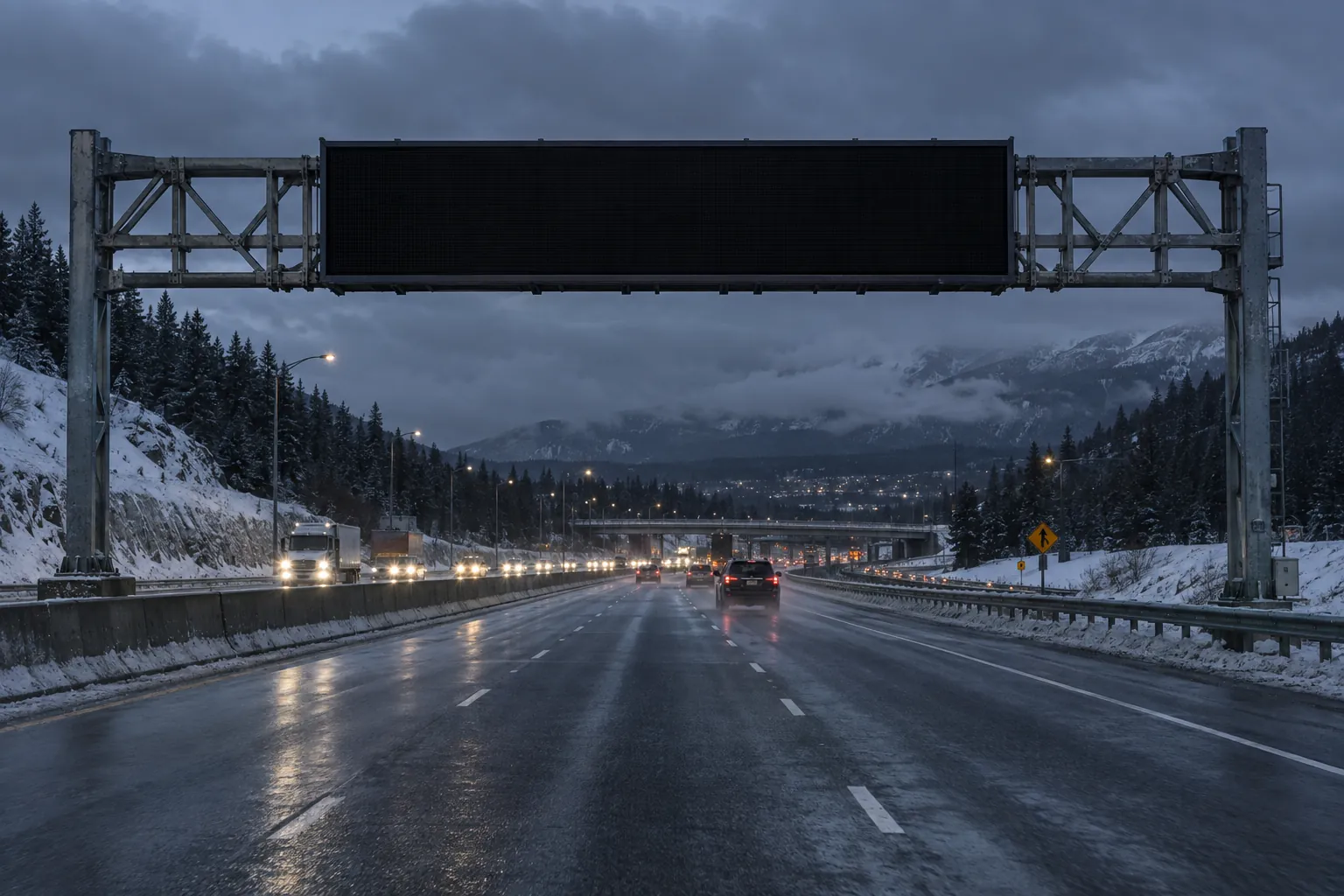
A highway variable message sign can look weather-tight on the outside and still fail from the inside. Warm, humid air trapped in the cabinet can condense on colder internal surfaces when temperatures drop, especially during overnight freezes followed by daytime thaw. That moisture does not need a dramatic leak to cause trouble.
Repeated thermal cycling can also fatigue seals, loosen gasket compression, and stress connectors or access points over time. In coastal locations, salt-laden air and road residue can turn those small weaknesses into corrosion and uptime problems. NEMA TS 4 cabinet environmental benchmarks for DMS control equipment are useful here because they frame environmental expectations for highway DMS hardware, not just a simple outdoor-rain test.
Specify the evidence the same way: climate notes, test records and the maintenance procedure should all name the exact cabinet model being bid. Ingress and thermal claims must be matched to current model-level documentation before approval; a product-family statement or a prior install is not a substitute.
When moisture-related faults recur, inspect the enclosure before assuming the LED module is the cause. Look for condensation marks, damaged seals, blocked drainage and the conditions when the fault appears. Recording temperature, weather and recent service work makes the troubleshooting discussion much more useful.
What IP Ratings Do and Do Not Tell Buyers
An IP rating tells you how an enclosure resists ingress under defined test conditions. It does not tell you everything about winter condensation prevention in variable message sign performance in the field. A cabinet can pass ingress testing and still collect internal moisture when humid air, service openings, and temperature swings are part of normal operation.
That is why the rating should be treated as a baseline, not a winter verdict. NEMA TS 4 helps set the environmental expectation for DMS control equipment cabinets, but buyers still need to ask how the cabinet handles the conditions that ratings do not fully describe: repeated freeze-thaw, service access, and climate-driven moisture cycling.
Carry these enclosure requirements into the highway VMS procurement brief, alongside the controller, power and acceptance requirements. The operating team should know how the cabinet is intended to stay dry and how that condition is checked after service.
For procurement teams, the useful next step is to compare the rating with the rest of the enclosure system. Ask whether the cabinet depends on sealing alone, or whether it also uses controlled airflow, drainage, heating, or documented maintenance steps to manage moisture. The FDOT Section 700 dynamic message sign requirements are a good example of why public procurement specs often look beyond a single ingress label and into materials, moisture resistance, and environmental fit.
A useful decision sentence for buyers is this: if the cabinet spec only lists an IP rating and says little about thermal control or service practice, it is not yet a complete answer for winter roadside use.
Enclosure Design Choices That Help Control Moisture
The best variable message sign enclosure design is usually a balance, not a single magic feature. Tighter sealing reduces humid air entry, but a sealed cabinet still needs a plan for temperature swings and internal moisture. That is where thermal management comes in.
Technical enclosure guidance from AutomationDirect’s thermal management overview is helpful because it shows the basic trade-off: insulation, heating, and ventilation must be balanced to control condensation and overheating. For highway VMS, that means the enclosure should be evaluated as a system, not as a box with one nice-sounding feature.
Seals, Gaskets, and Cabinet Fit
For cold-weather VMS, the first line of defense is still basic fit. Gaskets need consistent compression, doors need repeatable closure, and cable entries need to stay aligned after maintenance. The weak points are usually service doors, panel edges, and any opening that gets disturbed during field work.
If a cabinet needs frequent access, the seal has to survive that routine without becoming the new moisture path. A maintenance-friendly design is only an advantage if the cabinet can be resealed correctly after the job is done.
Ventilation, Heating, and Airflow Balance
In practice, moisture control often depends on whether the cabinet can manage the air inside it, not just block the air outside it. Controlled heating can reduce condensation risk by keeping internal surfaces above the dew point, while ventilation or closed-loop thermal management can keep humidity and temperature from drifting in the wrong direction.
Compare the thermal approach with the climate. Heating can keep surfaces above the dew point, while an airflow path must account for the humidity and contaminants it brings in. A closed-loop cooling system is not automatically a dehumidifier. Ask which variable the proposed controls measure and what changes when temperature or humidity rises.
Materials, Coatings, and Corrosion Control
Coastal highway VMS should be treated as a materials system, not a single-material purchase. Cabinet metal, surface coatings, connectors, and fasteners all affect corrosion resistance. If one of those parts is weak, salt exposure can shorten service life even when the rest of the cabinet looks well built.
Ask the supplier to identify the cabinet metal, coating, exposed edges, connector finish and fasteners as one materials package. For the broader site review, the extreme-weather specification guide separates corrosion, sealing, temperature and structural questions.
This is where the choice between a heavy-duty gantry unit and a lighter retrofit cabinet can matter. If the deployment is a large-span mainline installation, heavy-duty gantry VMS options are more relevant than a general-purpose cabinet. If the site is a retrofit or frame-limited project, lightweight VMS options may fit the structure better, but the buyer still needs to verify the climate-fit details before assuming the lighter build is enough for salt-heavy exposure.
Service Access Without Creating Moisture Paths
Front-service access can improve maintenance, but only if the cabinet closes back up properly after every visit. Frequent access increases the chance of damaged gaskets, rushed resealing, or a door that no longer compresses evenly. That is not a small detail in winter.
A cabinet that is easy to service but hard to reseal can become less reliable than a less convenient one that closes consistently. For procurement reviews, that trade-off matters as much as the headline feature list.
Maintenance Routines That Reduce Winter Risk
- Inspect before winter. Check gaskets, hinges, cable entries, drain paths, and vent openings before the first freeze. Look for flattened seals, cracked corners, and debris that could trap water.
- Verify the closure after service. After any field work, confirm that doors, panels, and access covers seat evenly and that the reseal step is part of the job, not a guess.
- Monitor through the season. During winter, watch for condensation traces, fogging, corrosion marks, or unexplained display faults. Small changes often show up before a full failure.
- Review after storms or thaw cycles. Heavy snow, road spray, and rapid thaw can expose weak points. Recheck drains, vents, and hardware after severe weather rather than waiting for the next scheduled visit.
- Keep a maintenance log. Track repeat faults, resealing work, and any location where moisture keeps returning. If the same cabinet keeps needing attention, the problem may be in the design or the access routine, not just the weather.
Keep inspection findings with the cabinet identifier and service date. Photograph recurring moisture paths and record resealing or drainage work so the next technician can see what changed. If a fault follows the same weather or access pattern, use that record to review the design or service routine.
How to Specify a Cabinet for Cold and Coastal Sites
Use the comparison below as a procurement worksheet. It is not a universal compliance standard, but it helps teams compare whether a cabinet spec actually fits the worst expected site conditions.
The fastest way to use that worksheet is to compare the cabinet against the worst expected site, not the average day. If the project is a freezing inland route, thermal control and resealing discipline carry more weight. If it is a coastal corridor, materials and coatings move up the list. The traffic and VMS solutions category is a sensible place to browse broader options, while the highway VMS gantry sign solution is the more direct path when the project already calls for overhead highway deployment.
| Factor | Evidence to compare | Operating question |
|---|---|---|
| Sealing | Gasket fit, door alignment and resealing procedure | Does the enclosure close consistently after service? |
| Thermal control | Heating, airflow or closed-loop strategy and control settings | How are condensation and overheating managed? |
| Materials | Cabinet, coating, connectors and fasteners | Does the package suit salt exposure? |
| Maintenance | Access drawings, inspection tasks and replacement parts | Can the team service it without creating a moisture path? |
| Test scope | Tested model, conditions and results | Does the evidence match the proposed cabinet and climate? |
Final Takeaway
Highway VMS enclosure thermal management is mostly a decision about moisture control, thermal balance, and maintenance discipline. IP ratings matter, but they do not answer every winter or coastal question on their own. If you are comparing cabinets now, verify the thermal strategy, resealing process, corrosion protection, and service documentation before you approve the spec. We recommend using the worst expected site conditions as your baseline, then checking whether the enclosure design and maintenance plan really match them.
FAQs
How Do You Prevent Condensation in Outdoor LED Signs?
You reduce the risk by combining sealing, controlled airflow or heating, and a maintenance routine that keeps drains, vents, and gaskets in good shape. There is no universal fix for every cabinet, so the real check is whether the enclosure has a moisture-control plan that fits the local climate and access schedule.
Are LED Message Signs Reliable in Winter?
They can be, but winter reliability depends on the enclosure design as much as the display hardware. The useful check is whether the cabinet can handle freeze-thaw cycles without repeated resealing, fogging, or corrosion. If winter access is frequent, maintenance readiness becomes part of the reliability answer.
What Should Buyers Check Beyond an IP Rating?
Look at thermal control, gasket quality, drainage, access and resealing steps, corrosion-resistant materials, and whether the documentation matches the actual deployment climate. If a spec only lists ingress protection and says little about the rest, it is incomplete for cold or coastal highway use.
Do Coastal Highway Installations Need Different Enclosure Features?
Yes. Salt exposure changes the risk profile, so coastal sites often need stronger attention to coatings, fasteners, connectors, and inspection frequency. The practical boundary is simple: if the site sees salt spray or road residue often, corrosion control should be specified as a system, not as one feature.
Why Does Thermal Cycling Matter for VMS Cabinets?
Thermal cycling matters because repeated warm-up and cool-down can stress seals, connectors, and access points over time. The key signal is not one cold night; it is repeated swings that keep opening small moisture pathways. If the cabinet design and service routine are weak, those swings can become recurring faults.
What Should Buyers Verify Before a 2026 Winter VMS Deployment?
Confirm three things for the exact cabinet model: the current ingress and climate documentation, the resealing procedure after field service, and the corrosion-protection details for salt-exposed routes. If any of these appear only as general marketing language, treat the spec as incomplete until model-level documents are provided.