

When an LED wall goes on tour, its weight shows up in the freight bill, the load-in schedule and the rigging plan. Carbon fibre can make all three easier. Whether it earns back the purchase premium depends on how often you use it and what it replaces. Start with the complete system: cabinets, cases, support hardware and the crew needed to deploy it. Then compare those costs across your actual tour calendar.
Cabinet size matters alongside weight. A 1000×1000 mm cabinet covers the same area as four 500×500 mm cabinets, so the crew handles fewer individual units. That can be attractive on a tight load-in, but cases, access and the approved lifting method still shape the job. When comparing lightweight rental LED panels, ask the supplier to show how the proposed system would be packed, moved and assembled at your typical venue.
At a Glance
- ~30–64% lighter than die-cast aluminum at the same 1000×1000 mm format
- 1×1 m panels replace four standard 500 mm cabinets; planners commonly estimate load-in savings of up to 40% on large walls — validate against your own timed builds before quoting it
- Lighter rigs create more options for payload, hoist planning and venue selection
- IP65 front and rear is listed for the C-Carbon configurations — confirm the current protection rating per model and production lot when ordering.
- Tool-free module service in tens of seconds per the design claim — confirm the service procedure and timing against the current documentation.
How Does Carbon Fiber Compare to Die-Cast Aluminum in a Rental LED Panel?
Carbon fiber entered the rental LED market for one reason: it delivers one of the highest strength-to-weight ratios of any structural material available at manufacturing scale.
The Numbers Side by Side
| Property | Die-Cast Aluminum | Carbon Fiber Composite |
| Tensile strength | 200–320 MPa | ~3,500 MPa for a carbon-fibre grade; not an assembled-cabinet rating |
| Density | 2.7 g/cm³ | ~1.6 g/cm³ |
| Weight at 1000×1000 mm | 28–35 kg | 12.5–20 kg |
| Corrosion resistance | Moderate | Excellent |
| Upfront cost | Lower | Higher |
Material figures help explain the appeal of lightweight construction. For example, Toray’s T300 fibre data sheet lists 3,530 MPa tensile strength. That is a fibre-grade example, not identification of the fibre used in C-Carbon or a certified strength for its finished cabinet. Use the quoted cabinet, laminate and connection data for engineering decisions, and the complete packed weight for freight comparisons.
Why “Lighter” Doesn’t Mean “Less Durable”
The instinct to equate light with fragile makes sense for most materials. Carbon fiber breaks that rule.
Aluminum panels under repeated thermal cycling and mechanical load gradually develop stress relaxation at fastener points, widening seam gaps over time. Carbon fiber composites resist this creep, maintaining cabinet flatness across hundreds of rigging cycles.
A flat cabinet mates accurately with adjacent panels. This directly affects image uniformity on large suspended screens.
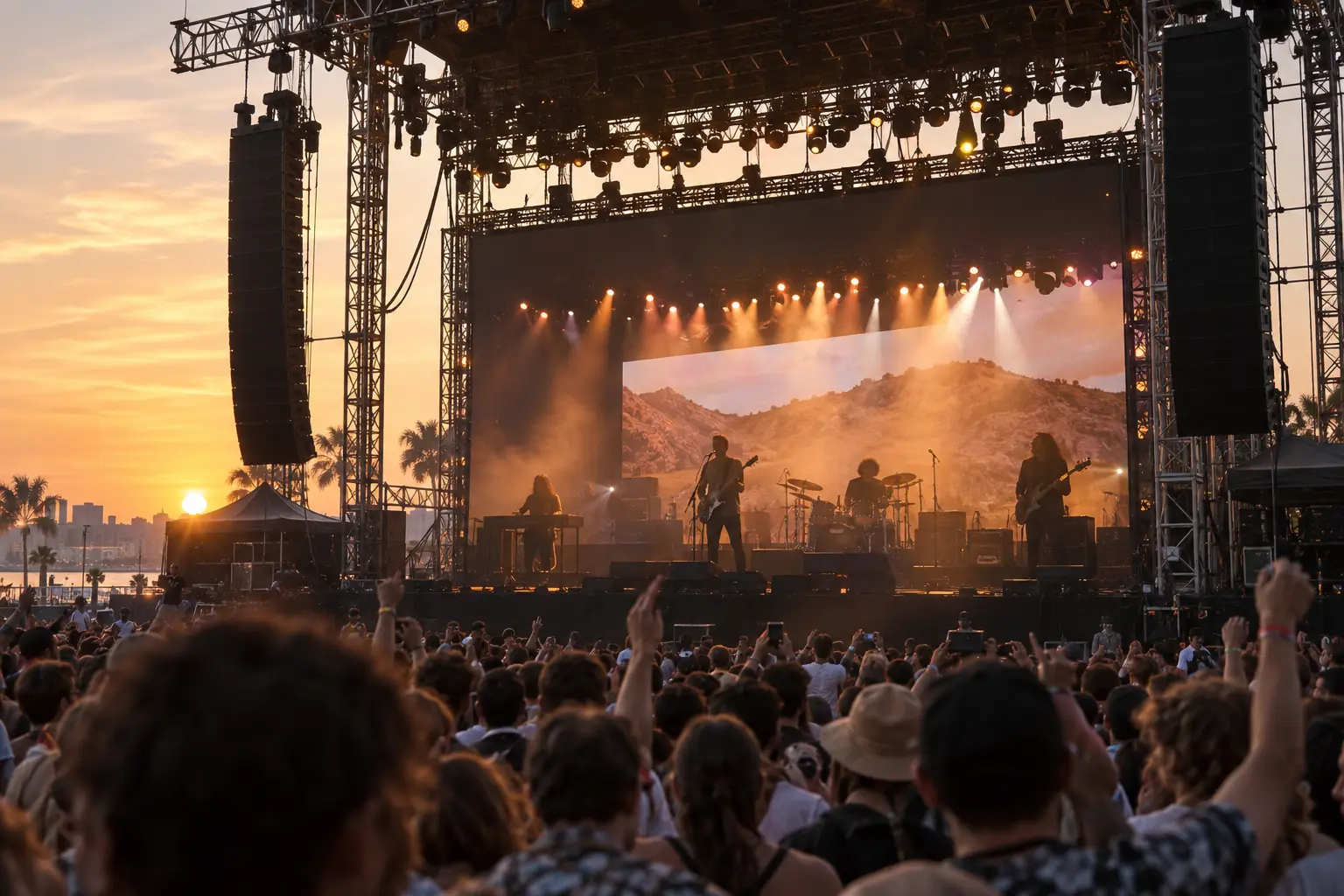
Carbon fiber does not corrode. In humid or coastal touring environments, aluminum requires periodic protective maintenance. The carbon fiber itself does not corrode; the surface finish and resin system follow the manufacturer’s coating specification for UV service.
How Much Can Carbon Fiber Panels Cut Your Event Operating Costs?
Labor: Where Weight Reduction Hits the Budget Directly
In markets where crew is billed at union rates, setup time is a direct line item on the production budget. Reducing panel weight from 35 kg to 20 kg per cabinet moves many tasks from a two-person lift to a single-person operation, cutting the crew headcount required during the rigging phase.
The 1000×1000 mm format amplifies this. Four standard 500×500 mm cabinets cover the same area as one 1×1 m panel, but require four times the moves, four times the cable connections, and four times the alignment checks.
Operators moving to the 1×1 m format commonly estimate load-in savings up to about 40% on large walls; validate that percentage with your own stopwatched builds before putting it in a bid. Stage LED display weight and shipping costs follow the same curve: the lighter the rig, the lower the freight bill on every leg of the tour.
Freight: Weight Savings That Add Up Across Every Tour Date
Run a cabinet-weight comparison for a 300 sqm wall using 1000×1000 mm panels: 300 cabinets in total. This example uses a 35 kg comparison cabinet and the manufacturer-listed C-Carbon weights of 20 kg for P3.91 and 12.5 kg for P8.93 Mesh. Add the actual frames, cables, power equipment and packed cases when calculating suspended loads or freight; the table is cabinet-only arithmetic.
| Configuration | Per-Cabinet Weight | Cabinet-Only Weight |
| Die-cast aluminum | 35 kg | 10,500 kg |
| Carbon fiber hybrid (C-Carbon P3.91) | 20 kg | 6,000 kg |
| Carbon fiber mesh (C-Carbon P8.93) | 12.5 kg | 3,750 kg |
The difference between 10,500 kg and 6,000 kg can determine whether a rig ships on standard freight vehicles or requires specialized heavy cargo logistics across a multi-city routing. For concert LED screen touring costs, that gap compounds on every date of the run. On a 40-date tour, that freight decision repeats 40 times.
Rigging: Fewer Points, Lower Costs, More Venues
A lighter cabinet package can open up venues that are difficult to serve with a heavier system. The 10,500 kg and 6,000 kg examples above compare cabinet mass, not the full suspended rig. The venue and rigging designer still need the complete load, point loads and approved connection limits before confirming the hang.
For rental companies, lighter panels open venues that were previously off-limits, turning a rigging constraint into a booking opportunity.
Can One Person Really Install a Carbon Fiber LED Wall?
For 1×1 m carbon fiber panels, a 10 sqm build takes one to two technicians.
The 1×1 m Size Advantage in Practice
A standard 500×500 mm aluminum cabinet weighs about 7–9 kg for the same build class (derive from the per-square-metre figures above; verify per model). A 1×1 m carbon fiber panel weighs 20 kg, heavier per cabinet, but covering four times the area in a single move.
For a 10 sqm wall:
- Standard 500 mm panels: 40 individual cabinets to carry, position, align, and lock
- 1×1 m panels: 10 cabinets to complete the same area
The labor saving comes from fewer total moves. Panel size and locking system design make that possible, not the material weight alone.
Step-by-Step: Building a 10 sqm Wall With Two Technicians
The walkthrough below is an illustrative sequence with typical figures — venue, rigging method and crew experience move every line.
- Deploy rigging frame or ground support structure: ~5 minutes
- Hang and lock 10 panels in sequence: ~8–10 minutes (magnetic alignment guides positioning; quick-lock latches secure each cabinet)
- Connect signal and power cables: ~5 minutes
- Power on and verify: ~5 minutes
Total: approximately 20–25 minutes for two technicians. On a compressed load-in schedule, that is a significant difference compared to the setup window required for the same area using standard 500 mm panels.
One-person LED screen installation is achievable for smaller builds using the same 1×1 m format.
Ergonomic Handle Design: Engineering, Not Marketing
A 20 kg panel is manageable for one person, but only if the handle placement allows a secure grip while the other hand operates the locking mechanism. The ergonomic handle position on carbon fiber rental panels is not an aesthetic feature. It allows a single person to carry and position each panel with control, reducing the need for a second technician to stabilize during installation.
What Makes the C-Carbon Series Right for Professional Rental Use?
The Chipshow C-Carbon series applies carbon fiber and magnesium alloy hybrid construction to two distinct touring use cases.
C-Carbon P3.91: The 20 kg Touring Workhorse
The C-Carbon P3.91 uses a 1000×1000 mm cabinet at 20 kg per panel. Key specs for rental operators:
- 6,000 nits — covers indoor touring and semi-outdoor festival applications without swapping hardware
- IP65 front and rear — the same cabinet handles an indoor arena and an open-air festival without reconfiguration
- 3840 Hz refresh rate listed — greatly reduces camera-flicker risk at typical broadcast shutter speeds, relevant for broadcast, streaming, and social capture; confirm the refresh spec for the exact build and lot
C-Carbon P8.93 Mesh: 12.5 kg for High-Altitude Hangs
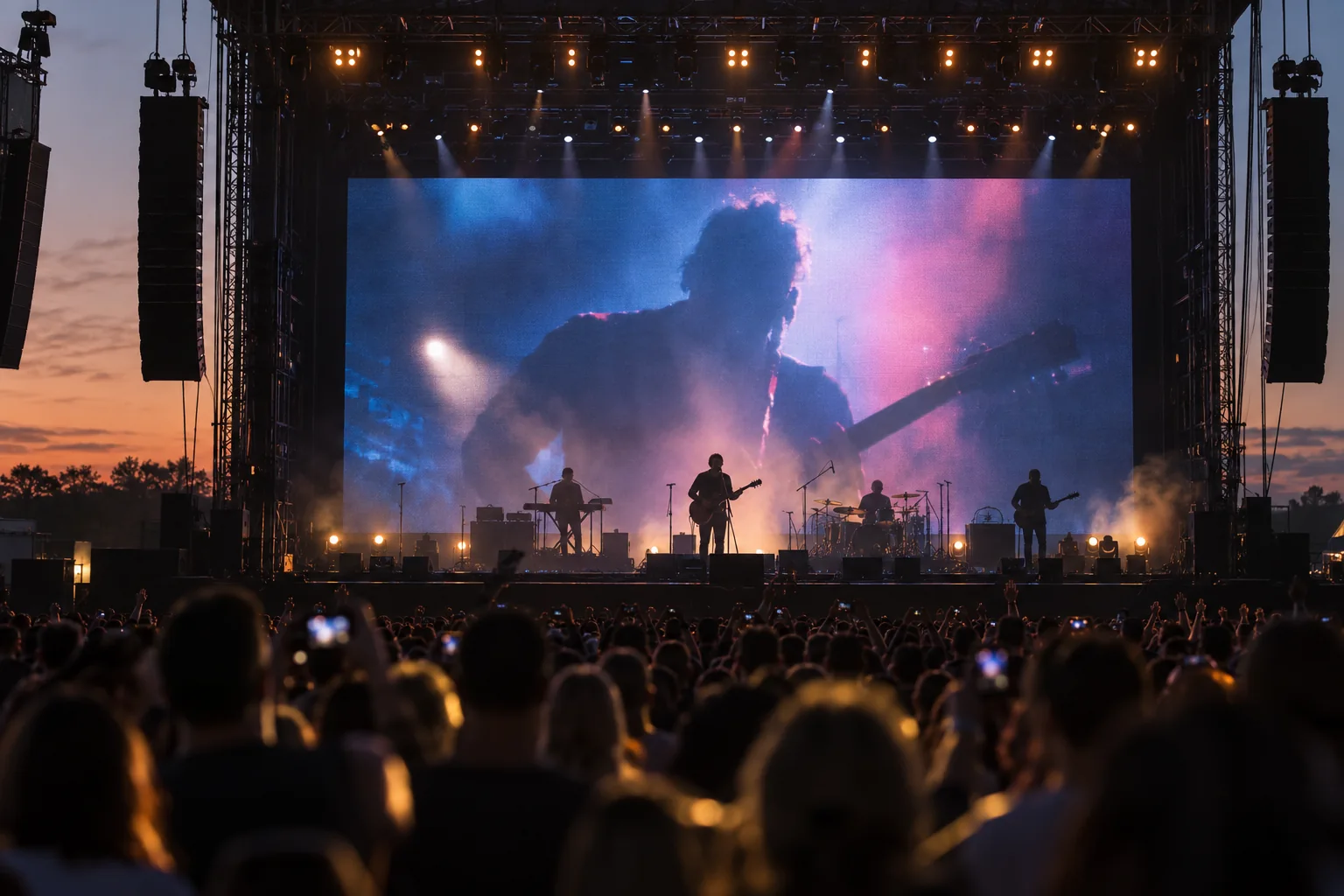
The P8.93 Mesh listing gives 12.5 kg per 1000×1000 mm cabinet and 65% transparency. Its open structure allows airflow and is positioned for wind-sensitive stage-side applications. Optical transparency is not a wind-load coefficient: use the supplier’s aerodynamic data and the actual screen/support layout to assess the permitted outdoor configuration.
Why the HUB Board Architecture Matters on Tour
When a carbon fiber LED wall is suspended approximately 9 meters in the air, stage subwoofer vibrations and wind load place sustained mechanical stress on internal components. Traditional panels use soft ribbon cables and flat data cables internally. Under persistent touring vibration, these cables work loose, causing localized module blackouts that require on-site cable reseating to diagnose and fix.
The C-Carbon series addresses this with a direct HUB board connection architecture, which removes the loose ribbon-cable failure mode described above as a design choice rather than an absolute guarantee.
If a module does need replacing under extreme conditions, the one-touch rotary unlock is specified for tool-free access from the front or rear, with module swaps quoted in seconds rather than minutes — confirm the figure in the current service documentation.
For a panel hanging 10 meters in the air mid-show, a cable-reseat problem is visible to the audience. A 5-second module swap is not.
Can Carbon Fiber Panels Survive a 40-Date Tour?
Durable LED panels for event rental need to survive the performance itself and repeated loading, transit, and unloading across a full touring season. Carbon fiber performs well under the sustained cyclic loading of touring, but with one specific vulnerability that aluminum does not share.
Where Carbon Fiber Outperforms Aluminum
Aluminum dents and deforms under repeated impact, and those deformations are visible. Carbon fiber resists surface deformation. Under rigging tension, carbon fiber’s high stiffness prevents the micro-elongation at fastener points that widens seam gaps in aluminum panels over time.
Carbon fibre resists rust, an attractive property for coastal and humid touring. The assembled cabinet still includes resin, coatings, metal connections and electrical components; keep their specified inspection and protective-maintenance requirements in the service plan.
The One Vulnerability to Plan For
Carbon fiber can develop internal delamination from localized sharp impact, such as a corner strike from a flight case edge or loading dock contact, without showing visible external damage. Aluminum dents visibly; carbon fiber may look intact while structurally compromised.
Operators transitioning to carbon fiber cabinets should audit their flight case inventory at the same time. After each load-out:
- Check all corners by hand and visually
- Dedicated corner protection inserts are more critical for carbon fiber than aluminum
- If a cabinet flexes or clicks under hand pressure, pull it from the rig for structural assessment
Modular Maintenance: On-Site Repairs Without Taking the Rig Down
The magnetic front and rear access system lets a technician identify, pull, and replace a failed module in under 30 seconds during a production window. Maintaining uptime on a touring schedule depends as much on access system design as on cabinet durability.
Carrying a small inventory of spare modules eliminates the risk of a single failed component taking a panel offline.
Does Switching to Carbon Fiber LED Panels Actually Pay Off?
Carbon fiber cabinets carry a higher unit cost than aluminum. The premium pays off under specific operating conditions, and does not under others.
Where the ROI Is Clearest
High-frequency touring productions in markets with union labor requirements recover the carbon fiber premium fastest. The reduction in crew hours per setup, combined with freight savings on multi-city routing, produces measurable cost reduction within the first full touring season.
Use the following illustrative inputs to see how the calculation works, then replace them with your own timed builds, crew rates, packed weights and freight quotes. They are planning examples, not recorded Chipshow customer results. A practical payback test is the incremental purchase cost divided by the verified annual operating-cost saving; a positive saving must remain after service and finance costs.
| Cost Category | Aluminum Baseline | Carbon Fiber | Saving Per Event |
| Rigging crew (large rig) | 6 people × 3 hrs | 3–4 people × 1.5 hrs | ~67–75% crew hours in this example |
| Freight (300 sqm rig) | 10,500 kg | 6,000 kg | ~43% weight reduction |
| Venue access (restricted load) | May require engineering cert | Assess against the venue’s approved load limits | Avoided cost + new revenue |
Indoor and Outdoor in One Kit
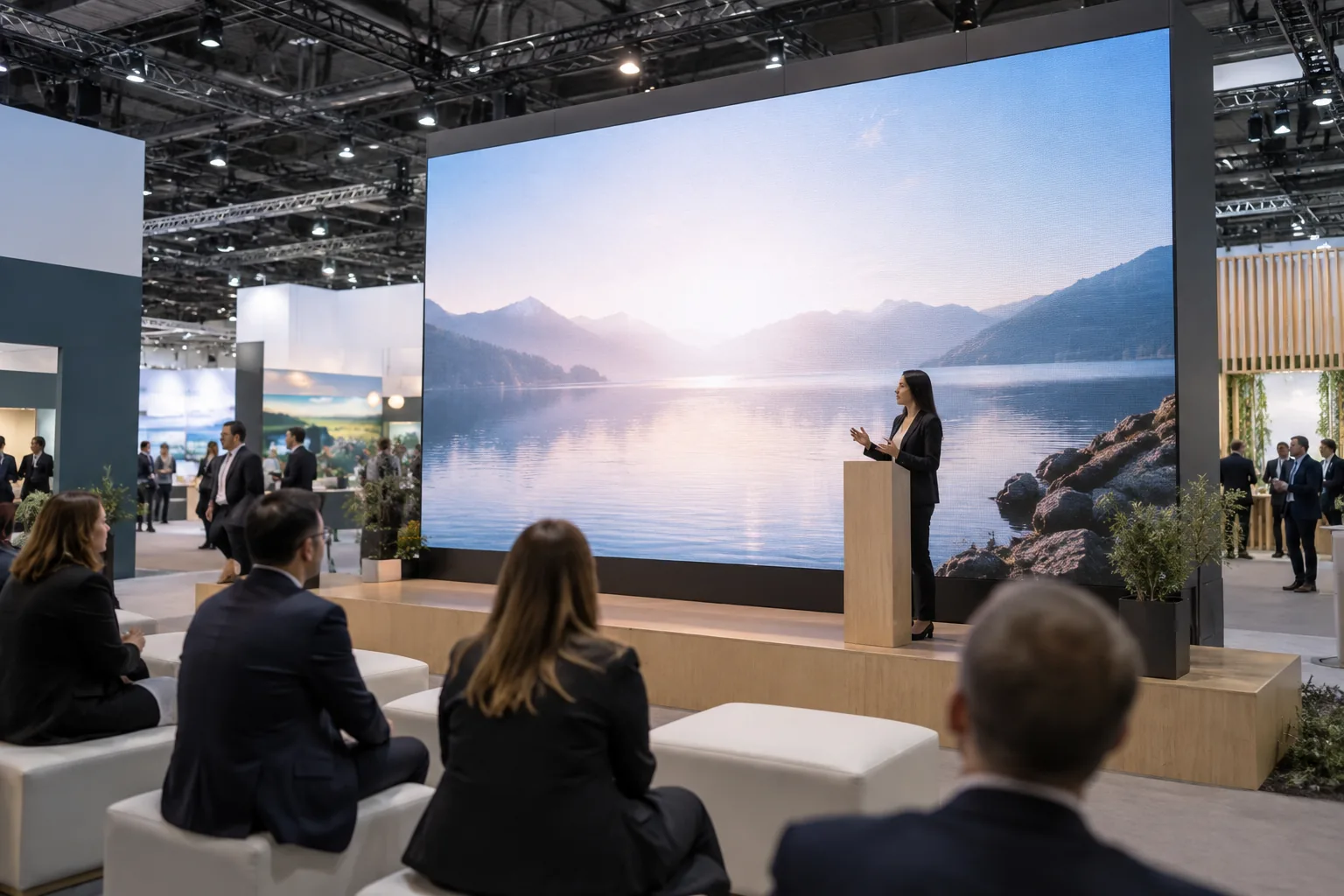
The IP65 rating on both C-Carbon configurations means one fleet covers indoor arenas, outdoor festivals, and corporate events. A single kit that earns revenue across all three formats has a shorter payback cycle than one that requires supplementary hardware for outdoor use.
When Carbon Fiber May Not Be the Right Call
Not every rental operation benefits equally. Lower event frequency, non-union labor markets, or fixed installation work reduce the financial case for carbon fiber. For occasional-use operators, magnesium alloy cabinets often offer a better balance of cost and performance.
Run the numbers against your own event count, freight distance, and crew rate before committing.
Ready to Run Leaner Events Without Sacrificing the Screen?
Carbon fiber rental LED panels cut costs in three specific places: freight weight, rigging load capacity, and crew labor. The technology is not universally superior to aluminum, but for high-frequency touring operations in weight-constrained venues, the operating cost reduction is real and compounds across events.
The Chipshow C-Carbon series covers two touring configurations:
- C-Carbon P3.91 — 20 kg, 6,000 nits, IP65, for high-brightness solid installations
- C-Carbon P8.93 Mesh — 12.5 kg, 65% transparency, IP65, for high-altitude wind-sensitive hangs
Both are listed on 1000×1000 mm frames with 3840 Hz refresh; confirm the refresh value for the exact build. Find the right fit for your next touring season and see how the numbers stack up for your operation, or weigh ownership against per-event renting in the rent-versus-buy guide and contact our team.
FAQs
Q1: How Much Does a Carbon Fiber LED Cabinet Weigh Compared to Aluminum?
At the 1000×1000 mm format, a carbon fiber hybrid cabinet weighs approximately 20 kg, compared to 28–35 kg for die-cast aluminum, a reduction of 30–43%. Carbon fiber mesh configurations reach 12.5 kg at the same format, up to 64% lighter than the aluminum baseline. For standard 500×500 mm aluminum cabinets, typical weight is 8–10 kg per panel.
Q2: Is Carbon Fiber Strong Enough for Large Hanging LED Walls?
Carbon fibre can provide high strength at low weight, but material strength alone cannot qualify a hanging LED wall. The T300 fibre example lists 3,530 MPa; the finished laminate, cabinet joints, locks and rigging determine the assembly’s rating. Ask for the selected C-Carbon build’s allowable configuration and connection data when planning a large hang.
Q3: What Is the Practical Advantage of a 1×1 m Cabinet Over 500 mm Panels?
One 1000×1000 mm panel covers the same area as four 500×500 mm panels, with one set of cable connections, one locking operation, and one alignment check instead of four. For a 10 sqm wall, that reduces the panel count from 40 to 10. Operators who have switched to the 1×1 m format commonly estimate load-in savings of up to about 40% on large walls, directly cutting crew hours on compressed setup schedules — verify against your own timed builds.
Q4: Do Carbon Fiber LED Displays Work in Outdoor Festival Conditions?
Yes, when the build is rated for it. IP65 as a rating class covers full dust protection and resistance to water jets from any direction. The C-Carbon product pages list IP65 protection on the front and rear of each cabinet, covering the power box and modules; verify the current rating per model and production lot rather than assuming it series-wide. The P8.93 mesh operates across a temperature range of −40°C to 55°C. Carbon fibre’s resistance to rust is useful at coastal and humid venues; follow the specified care for the cabinet’s coatings, metal connections and electrical parts.
Q5: How Long Does It Take to Install a Carbon Fiber LED Wall for a Live Event?
With two technicians and 1×1 m carbon fiber panels, a 10 sqm wall can be built in approximately 20–25 minutes from ground-supported structure to powered-on verification. The 1×1 m format reduces panel count by 75% versus 500 mm panels for the same area, and the magnetic alignment system reduces positioning time per panel. Build time scales with rig size and rigging method, but the per-square-meter installation time is significantly lower than standard 500 mm aluminum configurations.