A Mobile LED screen puts your ad on a route you choose instead of a fixed pole. The truck goes to the crowd: a stadium on game day, a busy downtown at lunch, a store launch across town. This page covers the hardware, the build, the legal steps, and the ROI math for running a mobile billboard operation in the U.S.
Quick Summary
- Mobile LED advertising is a bright LED screen mounted on a truck or trailer that runs a planned route.
- Hardware priorities: daylight brightness (about 5,000 to 7,000 nits), a vibration proof cabinet, IP65 sealing, and vehicle power.
- Cost has three capital parts: screen, vehicle work, and power system, plus running costs like insurance, permits, and upkeep.
- U.S. rules: no federal ban on ads on a moving vehicle, but city rules vary, and a few cities restrict or block digital billboard trucks.
- ROI runs on CPM, route impressions, and your pricing model.
What Is Mobile LED Truck Advertising, and Why Is Demand Rising?
In one line, it is an LED billboard on wheels. A truck or trailer carries a digital screen that delivers ads along a chosen path, so the audience does not have to pass one fixed sign.
The strength is targeting. A fixed board reaches whoever drives by that spot. An ad truck drives to the audience: parking outside an arena as doors open, looping a city center during peak hours, or covering a neighborhood during a launch. The screen is digital, so content swaps in seconds, schedules follow the time of day, and one truck can rotate several advertisers.
Out-of-home advertising stays valuable because a billboard impression is a real person with a real chance to see the ad, not a view that an ad blocker can hide or a bot can fake. An LED truck adds movement and route control on top of that.
Mobile Billboard vs Static Billboard
| Factor | Static billboard | Mobile LED truck |
| Location | Fixed | Route based, follows the audience |
| Content change | Slow or scheduled | Instant, on demand |
| Targeting | Whoever passes the site | Chosen areas, events, time slots |
| Best for | Steady presence on a known road | Events, launches, geo targeted bursts |
A short way to frame it. A static board is real estate, and a moving screen is logistics. The fixed board wins on always on presence at a proven spot. The truck wins when timing and place are the whole point.
What Is Driving LED Truck Advertising in 2026
A few forces push demand:
- Ad spend moving to out-of-home. As online ads deal with blocking and fraud, marketers shift budget to out-of-home, which stays in front of people in the real community without those problems.
- Brighter, more efficient panels. Daylight ready LED is now standard, and energy saving designs cut the heat and running cost that once made mobile screens hard to operate.
- GPS and cloud control. Location aware scheduling lets an operator sync messages across several vehicles, which opens multi city campaigns from one dashboard.
The same LED hardware serves two close uses: commercial advertising and traffic guidance for city, police, and roadwork fleets. The engineering is shared, so a smart operator checks the hardware spec first and the use case second.
How to Choose the Right LED Screen for an Ad Truck
Choose for daylight brightness, road grade durability, and the right pixel pitch for your viewing distance, in that order.
Screen Size, Pixel Pitch, and Brightness
Three specs do most of the work.
Brightness is the one you cannot cut. Published signage research treats outdoor advertising signs in the 5,000 to 7,000 nits range as acceptable, set against a daytime sun brightness near 6,500 nits. Direct sun and highway routes push toward the high end. The screen should also dim at night so it stays readable without glaring at drivers.
Pixel pitch is the millimeter gap between LEDs. It sets how close a viewer can stand until the picture breaks into dots. Mobile screens are usually read from across a street or parking lot, so a mid range outdoor pitch fits well. Common outdoor pitches range from P4 to P10, so you can match resolution to viewing distance.
Size is capped by your vehicle. A box truck side, a trailer face, or a roof rack each limit width, height, and weight, which feeds the structure and power choices below.
Shock Proof Cabinet and IP Rating for the Road
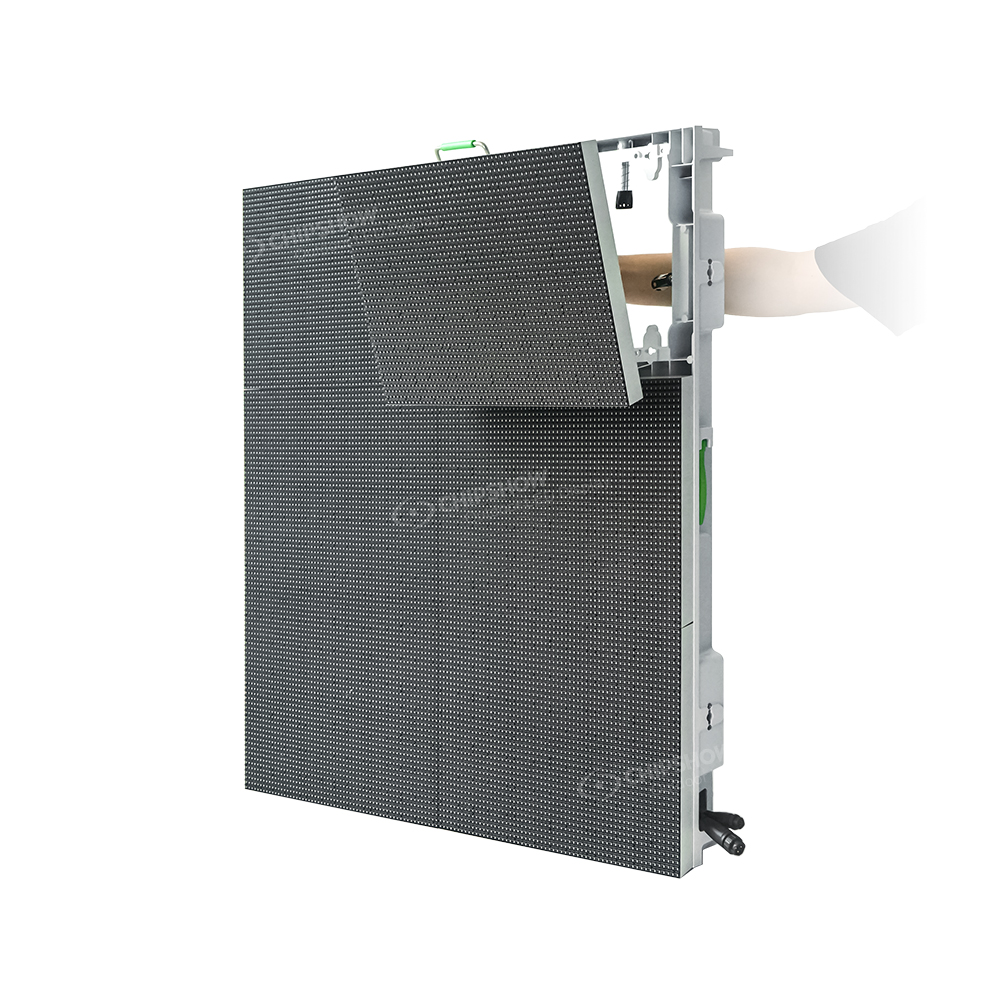
A mobile screen takes punishment a fixed board never feels: constant vibration, engine shake, potholes, pressure washing, and road salt. Check these at purchase:
- IP rating of at least IP65 on the display face, higher for coastal or salt heavy routes.
- Vibration handling with automotive grade connectors, reinforced soldering, and damping, not a fixed install cabinet put on a truck.
- Weight and balance. A lighter aluminum alloy cabinet lowers top heaviness and keeps the vehicle stable.
Mounting Options: Roof, Rear, and Lift Gate
Vehicle mounted LED is a custom fit to the chassis, not a fixed set of stock rigs. Mounting positions typically include roof, rear, or lift gate, with modular mounts that suit roof racks, truck beds, or lift gates on different service vehicles. Decide which faces of the vehicle need a screen based on how traffic will see you, a rear screen for follow traffic or side screens for foot traffic, then have the cabinet built to that plan.

What Does a Full LED Truck Setup Cost?
There is no single price. Total cost is the sum of a few separate parts, and it moves with screen size, pixel pitch, vehicle, and region. Here is the cost structure to budget against. Confirm component prices with quotes rather than fixed assumptions.
Screen, Vehicle Work, and Power System
Three capital buckets:
- The LED screen. The biggest variable, driven by total area, pixel pitch (finer costs more), and brightness grade. Check measured brightness on an independent report, not the headline maximum. LED output fades gradually over years of outdoor use, so building in brightness headroom keeps a screen readable for longer.
- Vehicle and structure. The chassis plus the mounting frame, reinforcement, and bodywork to carry the screen safely. A slim, aerodynamic housing is not for looks, it cuts wind resistance and fuel use at highway speed.
- Power system. How the screen is fed. A vehicle native design that ties straight into a standard 12V or 24V onboard system skips bulky inverters. Some vehicle-mounted units run on DC 12V/24V input directly for this reason. Trailer or off grid builds may need solar with batteries or a generator.
Insurance, Licensing, and Upkeep
Running costs to plan for:
- Commercial vehicle insurance, which reflects fleet advertising use, not a private car.
- Permits, which are per jurisdiction and can repeat per campaign.
- Maintenance, including module replacement as pixels age, recalibration, cleaning, and normal vehicle service.
- Operations, including drivers, scheduling software, and creative.
- Power, the screen’s biggest lifetime cost, because an LED truck runs its display all day. Energy saving designs such as common-cathode driving lower the draw and the heat.
Build a monthly operating number from all of these, then model revenue against it.
Legal Requirements for a Mobile LED Billboard in the U.S.
There is no federal ban on advertising from a moving vehicle, but cities set their own rules, and they run from fine to blocked. Do a per city check ahead of routing a campaign.
DOT Rules, Brightness Limits, and City Permits
At the federal level, an LED truck is a motor vehicle. As long as the truck meets Department of Transportation requirements such as weight limits, safety features, and vehicle classifications, it can operate, and the federal government does not regulate advertising on vehicles, so most rules come from state and local level.
The federal Highway Beautification Act governs fixed billboards along interstates. Mobile billboards use moving vehicles, not fixed structures, so that Act generally does not restrict campaigns that keep lawful movement. The catch is local. There is no national mobile billboard permit, and cities define their own rules.
In practice:
- Moving vs parking. A moving truck usually needs no special permit. A truck that parks to display for long stretches may need city permission, and some cities limit parking in crowded or government districts.
- Night brightness. Some cities cap nighttime light output, which is why auto dimming is a compliance feature.
- Sound. If the rig plays audio, local noise rules apply. Many campaigns run silent to skip this.
- Outright limits exist. Some places restrict digital billboard trucks, so read the local code’s sign and vehicle sections first.
The above is general information, not legal advice. Confirm each jurisdiction with the city or a qualified attorney.
A Note for European Routes
For vehicle mounted screens used in a traffic or guidance role in Europe, EN 12966 (“Road vertical signs, Variable message traffic signs”) is the governing standard. It covers mobile, temporary, and permanently installed signs, and sets graded classes for luminance, beam width, and color so buyers compare products on one scale. Commercial advertising in Europe also follows national and city rules on top.
How to Calculate ROI for LED Truck Advertising
Turn route exposure into impressions, price those impressions, subtract operating cost, and check what is left.
Pricing Models
Operators usually sell mobile LED three ways:
- Hourly rate. The truck runs an agreed route for set hours. Simple to quote, good for awareness bursts.
- Route based. Priced on a defined loop or area, often with guaranteed mileage or dwell time.
- Event contracts. A fixed fee for a set event window, where timing and place carry the value.
The unit under all three is CPM, the cost per thousand impressions. The formula is standard: CPM = (total campaign cost / total impressions) x 1,000. In the U.S., out-of-home impressions are measured by Geopath, a not for profit that provides standardized audience measurement using GPS, mobile device, and census data. The OAAA publishes impression guidelines for out-of-home formats. Pricing your inventory against a recognized source is what lets advertisers compare you to other media.
Sample ROI Projection
Use the four steps below with your own numbers. Get your CPM rate from a local media buyer or a measurement provider, and pull your true cost from your own books. No single national rate fits every market, so the formula matters far past any sample figure.
- Step 1, estimate impressions. Confirm a daily impression count for your route with a measurement provider rather than a guess. Call it I.
- Step 2, set your rate. Use your verified local CPM. Call it R.
- Step 3, find daily revenue. Revenue = (I / 1,000) x R.
- Step 4, subtract daily cost. Driver, fuel, amortized screen and vehicle, insurance, permits, and content give your cost floor. Revenue minus cost is your daily contribution.
Repeat across booked days for a monthly figure, then subtract fixed overhead. Two real inputs decide the result: audited impressions and your true cost. Because out-of-home carries a low CPM next to other media, utilization, the booked days per month, shapes results well past the headline rate.
Where to Buy Reliable LED Screens for Mobile Billboards
Buy from a maker that proves durability, backs it with certification and service, and builds the screen to your vehicle.
What to Look for in a Supplier
- Documented road durability: vibration testing, automotive grade parts, and a real IP rating on the display face.
- Independent brightness checks, with measured output and lab reports rather than headline maximums.
- Vehicle power and safe build: direct 12V/24V input where possible, a low center of gravity, and an aerodynamic housing.
- Low weight that lowers cost. A lighter cabinet cuts freight and lets fewer hands install it, which trims the total cost of ownership on every deployment.
- Certification for your use case: EN 12966 for European traffic deployments, and CE, FCC, or ETL for market access.
- End to end service and a track record: design help, customization to your chassis, spare parts, fast support, and a real history of projects and patents.
Chipshow LED Solutions for Mobile Builds
Chipshow offers the C-Tra-VMS Vehicle-Mounted series for traffic and fleet applications, and provides custom vehicle-mounted LED configurations to match different chassis, mounting positions, and power setups. Share your dimensions and use case with the Chipshow team for a tailored configuration.
Chipshow has been building LED display hardware since 2001 and holds certifications including CE, FCC, and ETL. For vehicle-mounted builds, contact the Chipshow team to discuss your chassis and route requirements.
Show Your Brand on the Road With Chipshow
Ready to build a mobile LED operation? Start with the four steps above: hardware selection, safe vehicle integration, route compliance, and impression-based pricing. For vehicle-mounted LED options including traffic-grade and custom configurations, Chipshow is one supplier worth contacting.
Sources: published digital sign brightness research; EN 12966 product standard (CEN); U.S. DOT and Highway Beautification Act framework; Geopath and OAAA on out-of-home measurement and the standard CPM formula. Cost and ROI inputs are illustrative and should be confirmed with supplier quotes and audited data.