3D DOOH project economics starts with the screen, but the screen is rarely the whole budget. In most real plans, creative production, structural engineering, permits, installation, and ongoing operating costs can move the total far more than buyers expect. The better approach is to separate one-time build costs from recurring costs, then test payback with conservative revenue assumptions.
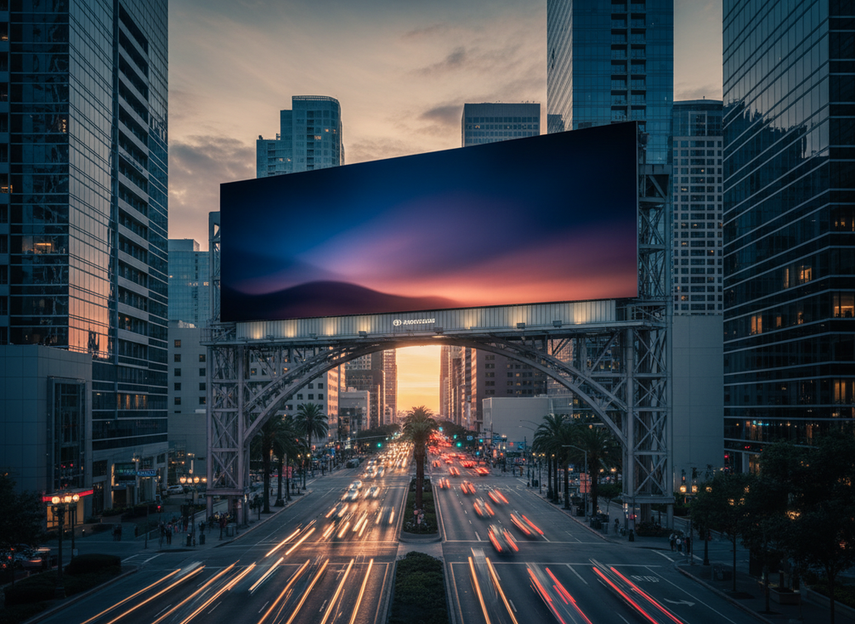
Why Screen Price Is Only the Starting Point
A headline display quote can be useful, but it is not a full project budget. For 3D DOOH, the purchase price only covers the visible hardware piece of a larger plan that also includes content production, site work, approvals, and long-term operation.
That matters because a project can look affordable at the screen stage and become much more expensive once the creative and compliance work is added. If you are comparing proposals, start by asking which line items are included, which are excluded, and which ones will change with the site.

The clearest rule is simple: if the quote does not separate hardware, creative, engineering, permits, installation, and operating costs, it is not yet a complete 3D DOOH project budget. For buyers who need a starting point for outdoor deployments, the Outdoor DOOH category is a useful navigation path, but it should come after you scope the full economics.
What Drives the Total Project Budget
A credible 3D DOOH estimate should group costs by what you buy once, what you repeat, and what depends on the site. That separation is what keeps a budget from drifting into optimism.
Hardware and Control Systems
The display itself is still the largest visible line item, but it should be judged as part of the site, not in isolation. Cabinet size, brightness, control hardware, and the way the screen sits in the viewing geometry all affect the project economics. A screen that looks competitive on paper can become a weaker value if it needs more support work, a different mounting approach, or a tighter installation plan.
For buyers comparing formats, a 3D Billboard is not interchangeable with every other outdoor LED setup. The economic question is not only whether it can display 3D content, but whether the site, viewing angle, and operational plan make the hardware spend worthwhile.
Creative Production and Versioning
This is where many budgets break. 3D outdoor LED billboard content costs can range widely by complexity, from about $10,000 for simpler assets to more than $200,000 for cinematic executions, and that range is quoted per asset rather than per second. In practice, the more complex the illusion, the more time the team spends on modeling, motion design, testing, and revisions.
That makes creative a core project cost, not a finishing touch. If the campaign needs multiple aspect ratios, angle-specific versions, or refreshes for new flights, the content line can grow quickly. A useful budget rule is to treat initial production and later versioning as separate buckets instead of rolling them into one vague creative allowance.
For budget planning, our 3D outdoor LED billboard cost and ROI guide gives a more detailed look at creative tiers, and it is best read as a per-asset benchmark rather than a per-second price list.
Structural Engineering and Installation
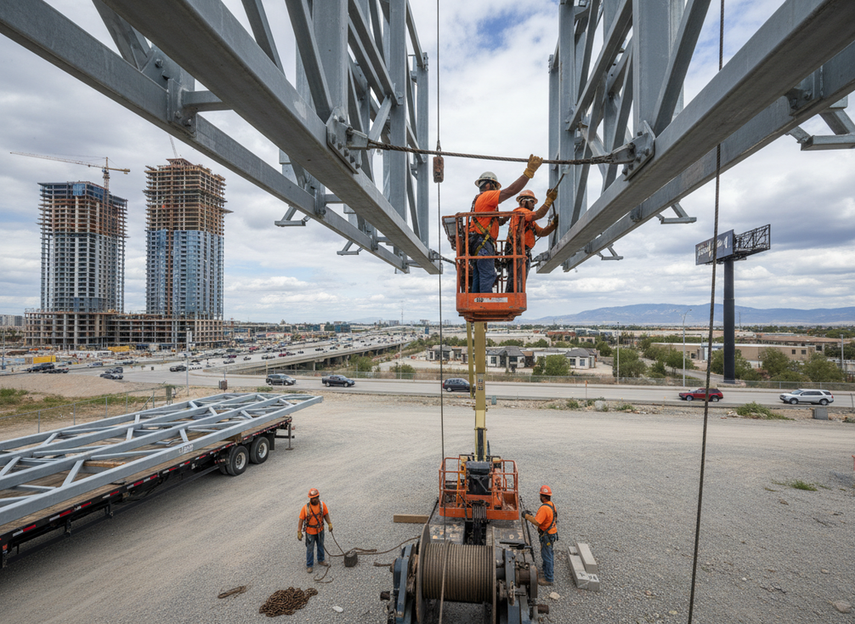
Engineering and installation are often where the hidden work shows up. Independent structural benchmarks put engineering fees for large billboard projects in a broad range, around $8,750 to $87,500, with the exact amount depending on the structure and scope. That is a contextual benchmark, not a universal fee schedule, but it is enough to show that engineering can be a material line item.
The practical reason is simple: load, access, mounting, electrical coordination, and site constraints all affect the build. For a 3D DOOH project, those issues can be more demanding than they look in the render. If the site is difficult to access or the structure needs more review, installation can become a project of its own instead of a routine delivery step.
Permits, Reviews, and Local Fees
U.S. billboard permitting is jurisdiction-dependent. In some places, the path may involve zoning, sign review, electrical review, and inspections; in others, the review stack can be different again. Federal outdoor advertising law also leaves states and local authorities room to set controls on size, lighting, and spacing near highways, which is why the approval path is not the same everywhere.
A concrete example is Nevada, where digital billboard rules can require messages to remain static for 6 to 8 seconds. That kind of rule changes the creative brief, not just the permit file. If your 3D concept depends on rapid motion or frequent transitions, the permit question becomes a design question as well.
The decision takeaway is this: treat permitting as a schedule and content constraint, not only an admin task. If the site is in a tightly regulated area, the review path may affect when the board goes live and how quickly it can start generating revenue.
How Permits and Engineering Change the Timeline
Permitting and engineering affect economics because they affect time. Every month a project sits in review is a month the board is not earning, and every extra revision round can push creative, contractor, or stakeholder costs higher.
- A stricter review path can force more documentation, which adds consultant time and coordination work.
- A difficult mounting or electrical scope can push engineering before installation can even be scheduled.
- A motion restriction can require the creative team to redesign the 3D illusion so the campaign still works within local rules.
- A delayed launch can shift the revenue start date, which weakens payback even if the final board performs well.
For project owners, the key question is not just “Can we get approval?” but “How much time and rework should we budget for approval?” That is the difference between a realistic launch plan and a speculative one.
How Creative Costs Affect ROI
Creative spending changes ROI in two ways. First, it raises the upfront investment. Second, it changes how believable the revenue plan is, because a more ambitious creative concept usually requires more production, more review time, and more revisions.
A conservative way to think about 3D DOOH content production costs and ROI is to split creative into three parts: initial concept and build, campaign-specific versions, and later refreshes. The first round is usually the largest. Later changes can be cheaper, but they are still part of the real cost of keeping the board fresh.
Revenue assumptions should be modeled in scenarios, not as a single promise. A useful payback case compares a cautious base case, a stronger occupancy case, and a better-case premium placement case. Marketplace guides note that premium placements can command higher CPMs than standard digital bulletins, but that premium depends on site quality, audience demand, and the market’s willingness to pay. In other words, stronger creative can help the value story, but it does not guarantee the revenue result.
Here is the practical filter: if the project only works when you assume premium pricing and near-perfect occupancy, the payback case is too fragile. If it still looks workable under conservative assumptions, the project has a stronger chance of surviving real-world friction.
Payback Assumptions to Model
| Cost / assumption bucket | Supported range or rule | How it affects payback case | Reader caution |
|---|---|---|---|
| Content production | Roughly $10,000 to $200,000+ depending on complexity | Major upfront spend that can dominate campaign economics | Do not collapse all creative into one average number |
| Structural engineering | About $8,750 to $87,500 for large billboard projects | Adds site-specific project cost and can delay launch | Treat as a benchmark, not a universal fee |
| Permit and review path | Jurisdiction-dependent, with zoning, sign, electrical, and inspection steps possible | Changes both budget and schedule | Local rules can be stricter than expected |
| Motion timing rule | Nevada can require static dwell time of 6 to 8 seconds | Limits animation pace and may affect creative design | Not a universal U.S. rule |
| Revenue forecast | Scenario-based and conservative | Keeps payback from relying on one optimistic outcome | Use low, base, and strong cases |
How to Build a Payback Case
The cleanest payback case starts with a simple split: capex, operating costs, and projected revenue. Capex should include hardware, creative, engineering, permits, and installation. Operating costs should cover the ongoing items that keep the board live, while revenue should be tested under more than one occupancy or booking scenario.
A useful model for 3D DOOH project economics asks four questions:
- What gets spent before launch?
- What repeats after launch?
- What assumptions make revenue look strong enough to justify the build?
- What local rule or site constraint could change the answer?
That framework works for media owners and agencies because it keeps the discussion grounded in decision variables rather than vague optimism. If a board only looks profitable under idealized assumptions, the model needs to be tightened before anyone approves the build. If it still works after creative, permit, and engineering costs are added, the case is more credible.
What to Check Before You Commit
- Confirm whether the quote covers hardware only or the full project scope.
- Separate initial creative costs from later versioning or refresh costs.
- Ask what engineering work is needed for the specific site and structure.
- Check whether local permitting could change the animation format or launch date.
- Test payback with conservative, base, and stronger revenue cases.
- Verify who owns each step, from creative to approvals to installation.
Before you approve a 3D DOOH build, compare the full scope first and the screen price second. If the budget, permit path, and creative plan all line up, the project is easier to defend and easier to launch. If one of those pieces is still vague, pause and close that gap before signing.
FAQs
How Much Does a 3D LED Billboard Cost?
The real cost is broader than the display itself. Buyers should budget for hardware, creative, engineering, permitting, installation, and ongoing operating costs, because the site and the approval path can materially change the total. A screen-only quote is a starting point, not a final project number.
How Much Does 3D Content Production Cost?
3D content production cost depends on complexity, number of versions, and revision rounds. Simple assets are much cheaper than cinematic executions, and campaign refreshes can add more spend later. The safest way to budget is to separate initial production from later updates instead of treating creative as a single fixed line.
What Permits Are Usually Needed for Outdoor LED Billboards in the USA?
Requirements vary by city and site, but buyers should expect local review around zoning, sign rules, electrical work, and inspections. In some jurisdictions, motion timing rules can also affect the creative brief. The practical move is to verify the local path before you lock the animation concept.
Can a 3D DOOH Campaign Pay for Itself?
It can, but only when the revenue case survives conservative assumptions. The strongest payback models test multiple occupancy and pricing scenarios and include creative, permit, engineering, and operating costs. If the project only works in the best-case scenario, the economics are too thin.
Why Do Engineering and Permitting Add So Much to the Budget?
They add cost because they add labor, documentation, and schedule risk. Structural review, mounting access, local approvals, and site-specific coordination can be more complex than the display purchase itself. In many projects, the delay risk is as important as the dollar cost because it postpones revenue.