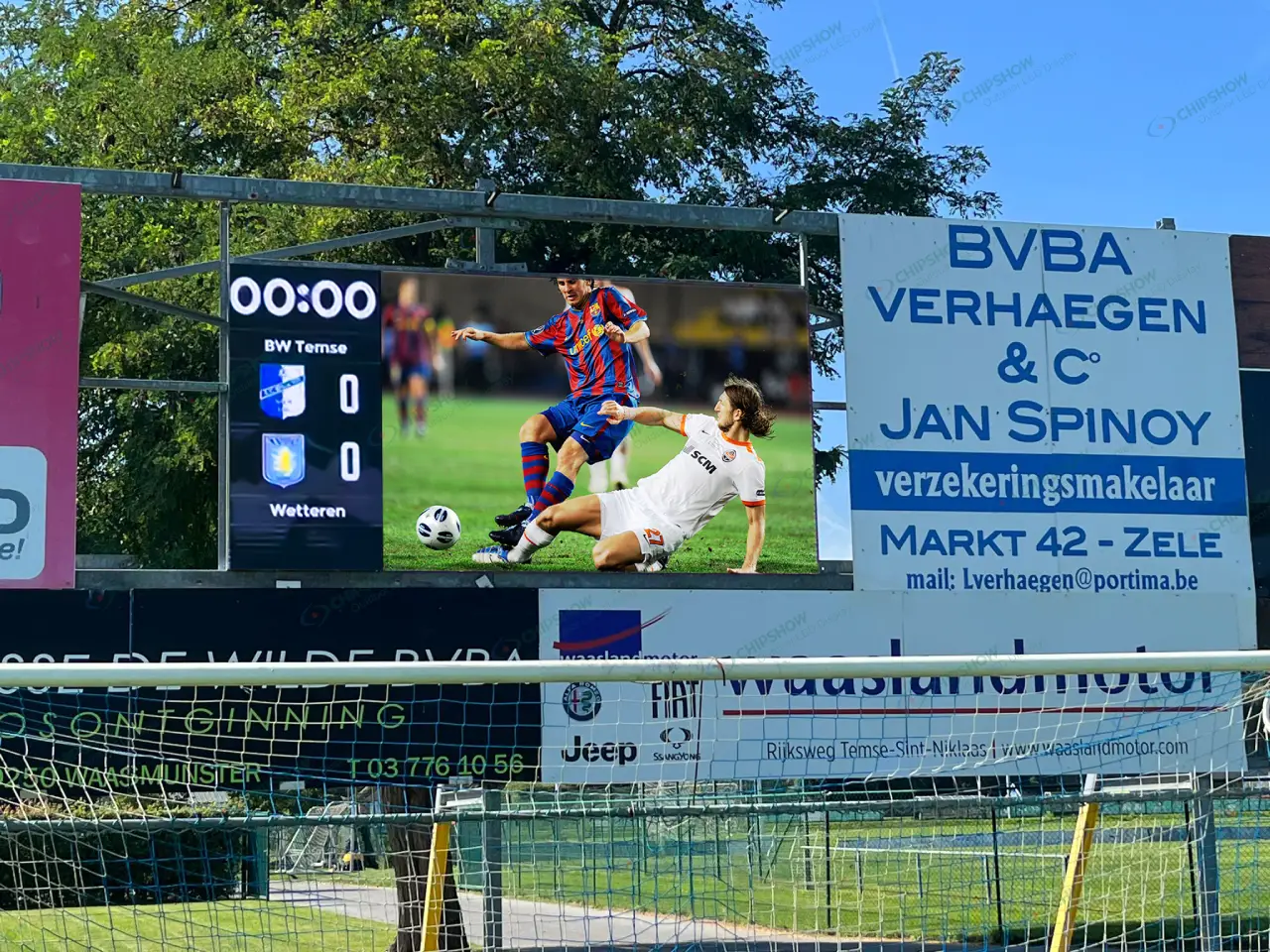
Stadium perimeter LED displays can be a business opportunity when venue rights, sponsor demand, match schedules, installed costs, and operating responsibilities fit one plan. This guide explains venue revenue sharing, sponsorship inventory, and the display checks needed before an operator invests.
Why Stadium Perimeters Are the Next Adjacent Play
For an outdoor advertising operator, a stadium perimeter project can add sponsorship inventory alongside roadside, transit, and retail placements. Evaluate the venue rights, sales effort, sponsor demand, and full installed budget before treating it as a scalable addition to the portfolio.
Stadium perimeter LED displays address that question. First, venues at every level—from professional football clubs to university stadiums—benefit from digital perimeters because they boost matchday atmosphere and create sponsorship inventory, but the upfront cost of a perimeter system is beyond the equipment budget of all but the wealthiest clubs. Second, the operator already owns the core competency: selling sponsorship packages to local and national brands is what outdoor ad companies do every day. The product is different; the sales motion is familiar. Third, the barrier to entry is not technical complexity or lack of sponsor demand—it is capital. The venue needs the display. The ad operator has the capital and the advertiser relationships. The deal is straightforward: the operator funds the hardware, collects the sponsorship revenue, and shares a negotiated percentage with the venue over a multi-year contract.
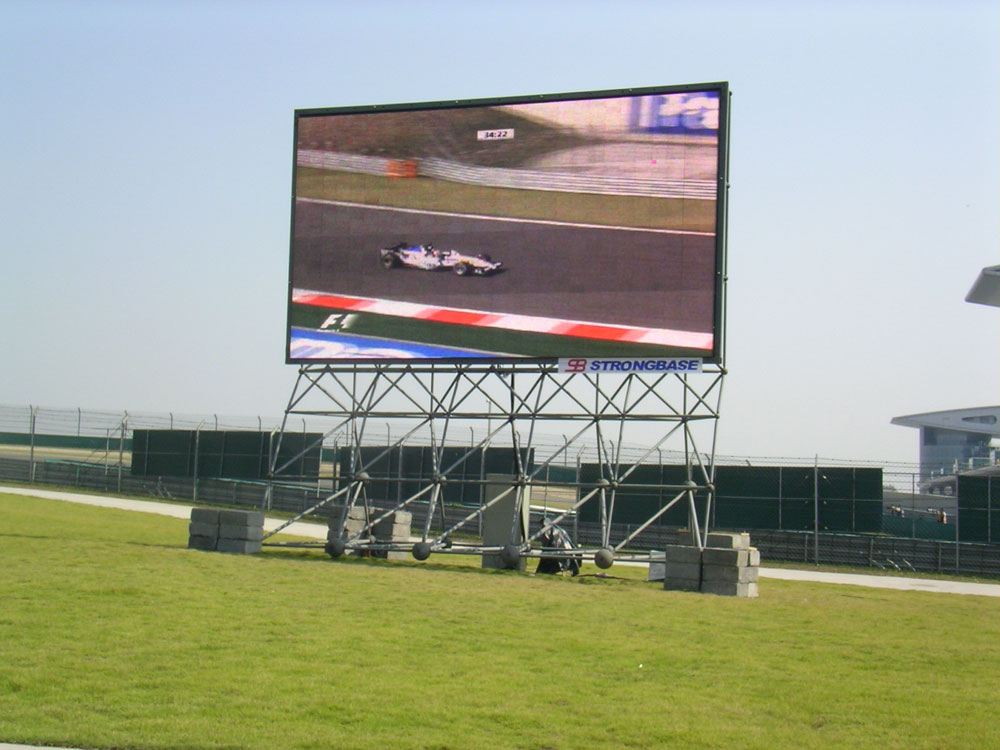
How the Business Model Works — Who Pays, Who Owns, Who Collects
The stadium perimeter LED advertising model involves three parties, each with a distinct role in the value chain.
The venue owner provides the real estate and the audience. This could be a professional football club, a university athletic department with a multi-sport arena, or a municipally owned events centre that hosts concerts and trade shows alongside local league matches. The venue contributes the physical site, the matchday footfall, and—critically—the broadcast exposure that gives perimeter advertising its commercial value. For a club with regular television coverage, the broadcast audience typically multiplies the in-stadium attendance several times over.
The advertising operator provides the capital and the sales infrastructure. This is the outdoor advertising company, the DOOH network operator, or the media investment group. The operator funds the purchase and installation of the perimeter LED display system, pays for ongoing maintenance and module replacements, and deploys a sales team to sell advertising slots to sponsors. The operator is the commercial engine of the arrangement.
The sponsors pay for exposure. Local businesses, regional brands, and national advertisers buy visibility on the perimeter boards—either as season-long contracts, per-match slots, or rotating share of the total display time. The price they pay depends on the league level, the broadcast reach, and the exclusivity of the placement. A perimeter section that appears behind the goal during every televised corner kick commands a different rate than a section on the far sideline that cameras rarely capture.
Sponsor fees are revenue. Estimate operating profit separately by deducting depreciation, maintenance, venue revenue share, and other operating costs. Assess cash payback using the installed investment and net cash flow, with financing and depreciation treated consistently. What makes the model work is that once the equipment is paid off—typically within a negotiated multi-year window—the operator retains a hard asset that can stay in place generating margin, or be redeployed to another venue if the original contract is not renewed.
How Much Revenue Can One Stadium Generate
Estimate stadium perimeter advertising revenue from the specific venue’s rights, match schedule, broadcast exposure, available sponsorship slots, local rate cards, and advertiser commitments. Keep quoted prices, planning assumptions, and contracted revenue separate in the forecast.
Request the venue’s current sponsorship rate card, slot duration and rotation schedule, sales terms, and broadcast-position plan. Use actual signed or prospective sponsor commitments to build the revenue case for each section.
Compare venues only when league level, broadcast reach, match schedules, section visibility, and sponsorship rights are comparable. A larger or internationally broadcast venue may offer a different sales opportunity, while competition for the rights and operating obligations must also enter the business case.
Reference model, not guarantee: every market is different. A stadium in a city of 100,000 with no broadcast coverage is not comparable to a stadium in a city of two million with weekly televised fixtures. The operator’s job is to evaluate the specific venue—not to apply a generic formula.
| Revenue factor | Venue evidence or input | Forecast check |
| Single sponsor, shared slot / season | Dated shared-slot rate card | Contracted fees and unsold slots |
| Single sponsor, exclusive slot / season | Dated exclusive-slot rate card | Exclusivity terms and sponsor commitments |
| Rotating sponsors per section | Available rotation schedule | Actual contracted sponsor count |
| Annual revenue per section | Section contracts and saleable match inventory | Sum contracted section fees; test occupancy |
| Full-perimeter annual revenue (200 m) | — | Sum the actual section forecasts and avoid counting a sponsor twice |
Use the table as a list of forecast inputs. Calculate annual revenue from contracted sponsor fees and timing, test unsold inventory, and compare the result with the installed investment and operating cash-flow budget.
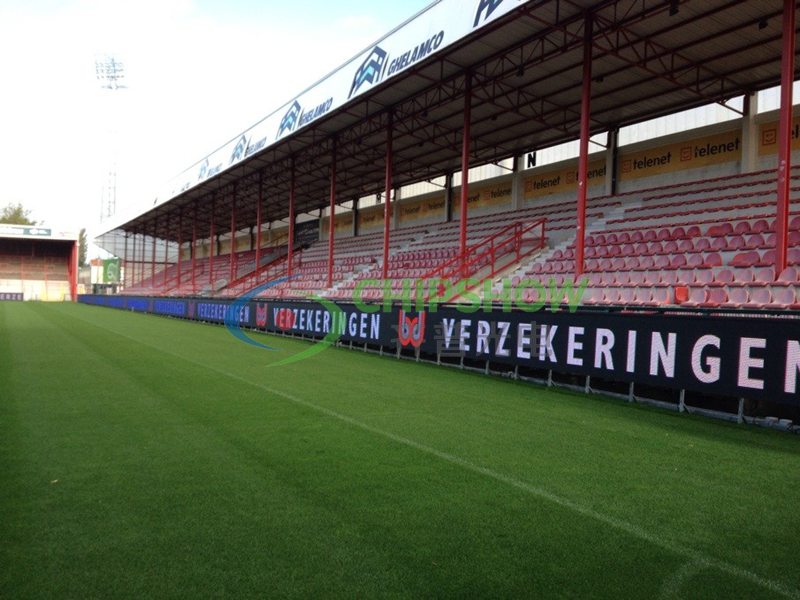
What Makes a Perimeter System Actually Rentable to Sponsors
The advertising operator’s ability to sell sponsorship slots depends on whether the display delivers on screen. Sponsors evaluate how their brand renders during a live broadcast. If the result is not acceptable, they will not renew. A purpose-built sports perimeter system such as Chipshow’s C-Sport series is engineered specifically for these requirements.
Broadcast-Grade Refresh Rate
A perimeter LED display that looks fine to the naked eye in the stadium can appear as a flickering, unreadable mess on television. Specify refresh and scan behavior together with the broadcaster’s cameras, shutter settings, frame rates, brightness, and slow-motion requirements. Accept the configuration using the actual camera tests. Use the agreed camera acceptance results and sponsor-content tests to determine whether the system meets the broadcast brief.
Modular Quick-Swap Maintenance
In-stadium maintenance cannot follow the same rhythm as roadside billboard maintenance. If a module fails during a match, the repair window is halftime—not the following week. Front-access magnetic module designs allow a technician to swap a faulty panel without accessing the rear of the display, minimising the time a sponsor’s logo is absent from the broadcast feed. This reduces sponsor-facing downtime during live events and lowers per-event maintenance labour cost.
Weather Resilience
Outdoor stadiums do not pause for weather. Confirm front and rear ingress ratings, connectors, operating-temperature limits, and the site’s rain, dust, snow, and condensation exposure for the exact configuration. A display that goes dark during a rain delay is a display whose sponsors are not getting what they paid for.
Athlete Collision Protection
Review athlete contact, cabinet edges, soft protection, support stability, and placement with the venue safety officer and the applicable competition requirements. For C-Sport, request the exact cabinet’s protection specification and the installation drawing before acceptance.
Conclusion
Stadium perimeter LED advertising is an inventory category with demand from both venues and sponsors, a supply side constrained by capital requirements that many venues cannot fund from their equipment budgets, and a business model—advertising-funded hardware—that outdoor operators already understand from their roadside billboard operations. Chipshow manufactures outdoor LED display systems for fixed-installation sports venue and outdoor advertising applications worldwide, including the C-Sport series for stadium perimeter advertising and the C-Fit Easy and C-Slim series for roadside and building-mounted DOOH. For a project-specific perimeter LED evaluation, contact Chipshow’s engineering team.
Frequently Asked Questions
Q1: What refresh rate does a stadium perimeter LED display need?
Review 3,840 Hz and other offered refresh options against the broadcaster’s actual camera and scan requirements. Frame rate, shutter, brightness, processor settings, and slow-motion recording all affect the result; accept the system after an on-site camera test.
Q2: How much does a stadium perimeter LED display cost?
The cost of a stadium perimeter LED system depends on pixel pitch, total perimeter length, cabinet material, and whether the installation is permanent or relocatable. Request an itemized quotation for the actual active area, cabinet layout, controls, power, installation, and service scope. The installed cost includes LED cabinets, control system, power distribution, cabling, and mounting hardware. The advertising operator typically finances this through a multi-year venue contract, recovering the investment from sponsorship revenue over the contract term.
Q3: Do stadium perimeter LED displays require athlete collision protection?
Athlete contact protection needs review for the exact cabinet and placement. Check the venue and competition requirements and request supporting configuration documents. Have the venue safety officer review the exact cabinet, impact protection, supports, and installation plan against the venue and competition requirements.
Q4: Can a stadium perimeter LED display be used for non-sports events?
Yes. Multi-use venues that host concerts, trade exhibitions, community events, and other non-sports programming alongside league fixtures can use the same perimeter system across all event types. This increases the operator’s saleable inventory and reduces dependence on a single sport’s seasonal calendar. The key requirement is that the display remains securely mounted and weather-protected between event types.