


Solar VMS winter performance drops for a few reasons at once: snow can block charging, cold weather can shrink usable battery capacity, short days reduce recharge time, and controller protection can shut the system down before the battery is truly empty. For northern agencies, winter runtime is a derating problem, not a summer-nameplate problem. If you are planning unattended operation, check snow exposure, battery cold behavior, and controller logic first.
What Actually Reduces Winter Runtime
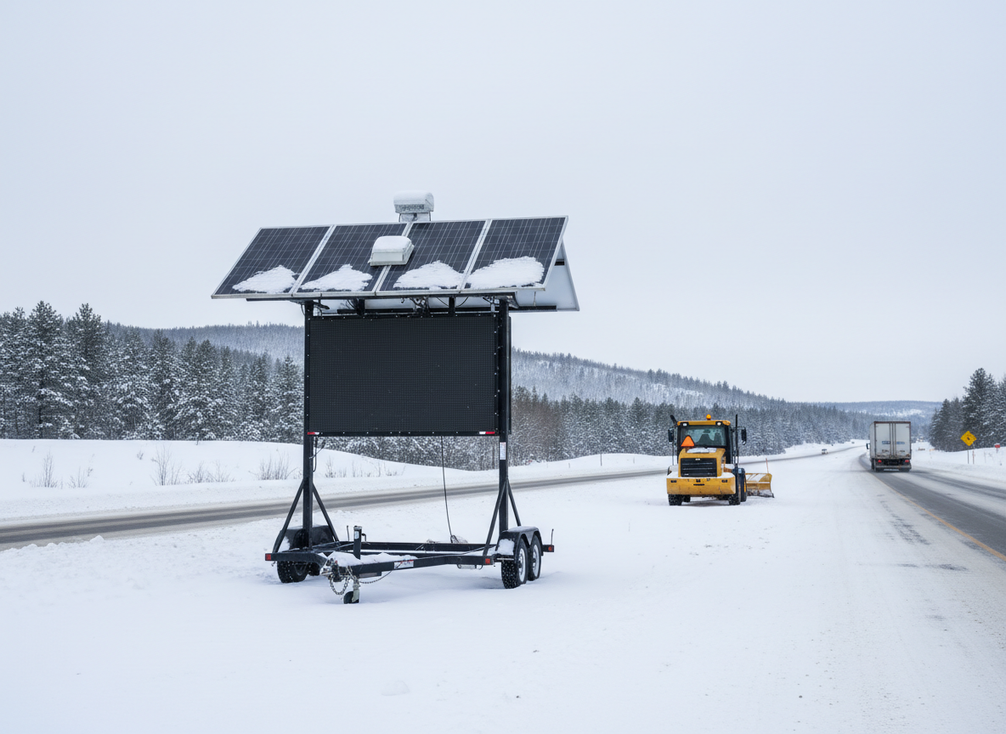
A solar message sign can look fine in the field and still underperform in winter because the weak point is often the whole power stack, not one failed part. The portable VMS autonomy benchmark used by NYSDOT points agencies toward long unattended duty, not just whether the sign powers on today. In practice, winter runtime usually falls when harvest, storage, and protective cutoffs all tighten at the same time.
Snow cover is the most obvious blocker. Panels can be present, wired correctly, and still stop charging if snow or ice stays on the modules. Cold temperatures can also reduce how much of the battery is usable, and the controller may react to low voltage or temperature limits before the battery is fully drained. That is why a roadside sign can show the same symptom, a low-runtime alert, for very different reasons.
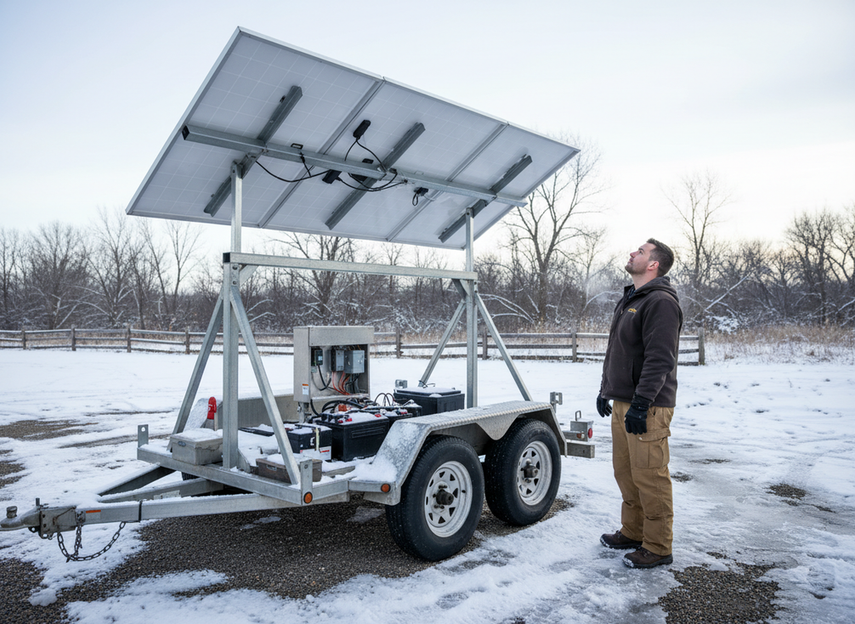
The practical question is not, “Does solar VMS work in winter?” It is, “Which part of the system is failing first under winter load?” When you answer that, you can decide whether the fix is site cleanup, reserve capacity, battery strategy, or a different deployment model.
How Winter Derating Changes Solar Output
Winter derating is the gap between nameplate expectation and what the system can really harvest in cold, low-sun conditions. A useful rule of thumb from the winter solar derating literature is that winter production in northern latitudes can fall sharply from summer peak output. For a solar VMS, that matters because the sign needs enough daily generation to run the load and enough extra energy to refill the battery after cloudy or snowy periods.
Snow Cover and Panel Recovery
Snow and ice are not just temporary weather events. They can stop charging until the array sheds, is cleared, or reorients enough to recover. The Department of Energy’s guidance on snow and ice recovery makes the important point that cold itself is not always the problem; coverage is. A cold panel can still produce well when it is clear. A snow-covered panel cannot.
That distinction matters in the field. If runtime drops right after a storm, the issue may be harvest blockage, not battery failure. If recovery stays slow after the pavement clears, the system may still be dealing with low-angle sun and a shorter recharge window.
Cold Weather Battery Behavior
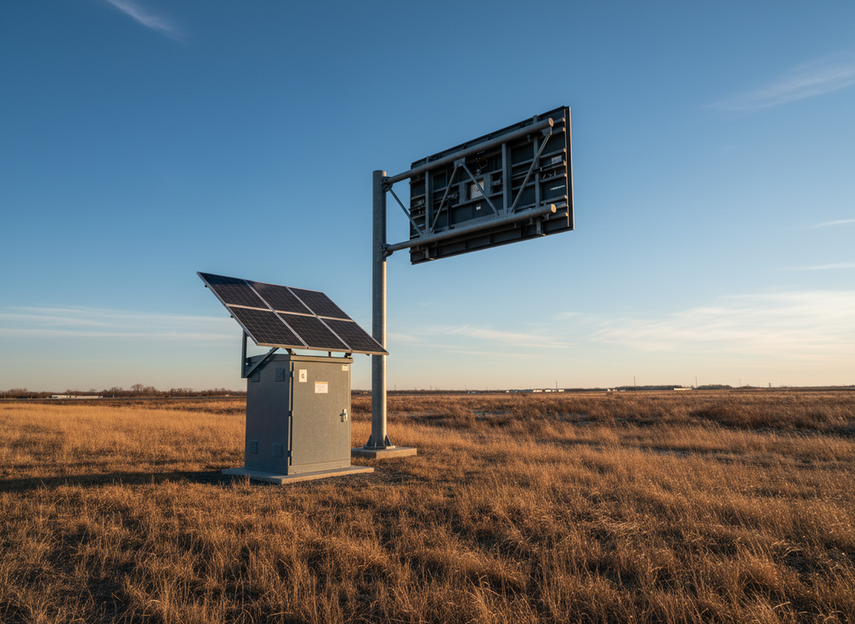
Cold weather can reduce usable battery capacity and slow charging acceptance. That is why a battery bank that seems adequate in shoulder seasons can feel undersized in January. The cold-weather battery capacity loss source also notes a chemistry-specific caution: lithium systems and lead-acid systems do not fail the same way in the cold.
For planners, the key decision is simple. If the battery cannot charge safely in the expected low-temperature range, more reserve alone does not solve the problem. You may still have enough nominal capacity on paper, but the controller may prevent charging, or the battery may not deliver its full usable output when the temperature falls.
Short Days and Low Sun Angle
Winter also shrinks the recharge window. Even if the panels stay clear, there are fewer productive hours to refill the battery between message cycles. In a setup that works well in spring and fall, that lost daily recharge time can be the difference between steady operation and a slow drift toward cutoff.
For most buyers, this is where winter planning goes wrong. They size for average daily use, then discover the system only fails after several low-light days in a row. The real question is not whether the sign runs for one sunny afternoon. It is whether it can recover after repeated winter hits.
Controller Cutoffs and Load Shed
Controller cutoffs are a separate constraint from battery chemistry. A shutdown can be a protection response, not a hardware failure. That is why a cold-weather outage may mean the controller is doing its job by limiting discharge or blocking charging below a safe threshold.
If you see repeated cutoffs, do not treat them as random noise. They may indicate that the winter control settings, battery operating range, or reserve margin are too tight for unattended duty. In that case, the right fix is not just a bigger panel. It may be a revised temperature strategy or a different winter operating assumption.
Which Battery Strategy Fits Your Climate
The best battery strategy depends on how cold the site gets, how often the system is unattended, and how much recovery time you have after storms. The cold-weather battery capacity loss reference is useful here because it shows why chemistry choice and temperature range matter as much as nominal amp-hours. For a solar VMS winter setup, reserve helps only if the battery can still charge and discharge within the controller’s limits.
| Battery Strategy | Cold-Weather Tolerance | Usable Reserve in Winter | Maintenance Burden | Best Fit | Watch-Out |
|---|---|---|---|---|---|
| Higher reserve within the same chemistry | Moderate, depends on model and temperature range | Better than a minimal pack, but still derates in cold | Lower day to day, higher capital cost | Sites with occasional snow and limited service access | Reserve does not fix low-temperature charge limits |
| Lithium with proper low-temp protection | Can be strong if the system is designed for cold charging rules | Good when the BMS and controller are matched correctly | Lower routine maintenance, more design sensitivity | Sites that need lighter weight and consistent monitoring | Do not assume every lithium pack can charge below freezing |
| Lead-acid with conservative autonomy assumptions | Can remain usable, but capacity falls faster in cold | Often more forgiving in basic winter planning, but less efficient | Higher maintenance and more replacement planning | Sites where simplicity matters more than density | Weight and cold capacity loss can still be significant |
| Larger system margin plus winter checks | Depends on the full package | Best when the site has variable snow exposure | Moderate, because it adds inspection steps | Agencies that can verify performance before snow season | More margin still needs snow management and controller validation |
The right choice is usually the one that matches your winter recovery pattern. If storms are frequent and field access is slow, choose more reserve and stricter winter verification. If your setup uses lithium, make sure the battery strategy and controller logic agree on low-temperature charging. If they do not, the extra capacity may sit unused when you need it most.
For a broader category view, you can also browse winter reserve strategy options in the C-Tra-VMS line, but treat any specific model as a check-current-specs decision unless its temperature range and battery behavior are documented for your climate.
What to Check Before Winter Deployment
Pre-winter work should focus on the things that most often fail first: panel access, snow shedding, battery condition, controller settings, and actual output. The US DOT maintenance guidance on pre-winter panel cleaning and output testing is a good reminder that winter reliability starts before the first storm.
- Review the site for snow exposure, shade, and drifting risk.
- Check panel angle and any mounting details that could trap snow.
- Clean the array and confirm that output is still rising as expected.
- Verify battery health and note any weak strings or aging cells.
- Review controller temperature settings and low-voltage behavior.
- Inspect wiring, enclosure seals, and corrosion points.
- Run a short runtime validation test under the expected winter load.
The most useful test is the one that mirrors field duty. If the sign is meant to stay up through unattended snow events, do not stop at a basic power-on check. Confirm that the system can hold its load, recover after discharge, and restart without surprises after cold exposure. If that test fails, the issue is usually not cosmetic.
When to Escalate to a Different VMS Approach
Repeated low-runtime alerts, slow recovery after storms, and recurring cutoffs are the clearest signs that the current setup is under-sized for winter duty. One bad week does not always justify a redesign. A pattern does. If the sign keeps missing its autonomy target after snow events, you should re-spec before the next season.
That may mean reviewing vehicle-mounted VMS options or gantry VMS options if site access, mobility, or power availability make the current approach too fragile. The right form factor depends on winter duty cycle, not branding.
Before you respec, document the controller temperature limits, battery operating range, snow-management assumptions, and the minimum unattended runtime you actually need. If those inputs are vague, the new spec will probably be vague too. That is how winter problems repeat.
FAQs
How Long Do Solar VMS Signs Last in Winter?
There is no universal winter runtime answer. Runtime depends on snow cover, sunlight, battery age, controller settings, and how often the sign must stay active without service. In practice, winter performance should be judged against unattended duty expectations, not a single day of good weather.
Do Solar Message Signs Work in Snow?
Yes, but snow can make them unreliable if it blocks the panels or delays recharge after storms. A sign may still appear functional while its charging side is struggling. That is why snow shedding, site exposure, and post-storm recovery time matter as much as the sign’s electronics.
What Batteries Are Best for Solar VMS?
The best battery is the one that matches your cold-weather operating range, reserve target, and maintenance plan. Some lithium systems need careful low-temperature charging protection, while lead-acid systems may tolerate different winter trade-offs. The right choice depends on the controller and the actual climate, not just the chemistry label.
Why Do Solar VMS Controllers Shut Off in Cold Weather?
A shutdown can happen because the controller is protecting the battery from low voltage or unsafe temperature conditions. That does not always mean the battery has failed. It may mean the control logic is doing exactly what it was designed to do, but the winter set points are too tight for the job.
Can You Improve Winter Runtime Without Replacing the Whole System?
Often, yes. Start with snow clearing, panel access, battery checks, and controller verification before you jump to a full redesign. If those checks do not fix repeated cutoffs or slow recovery, the better move is usually a respec rather than another season of trial and error.





