

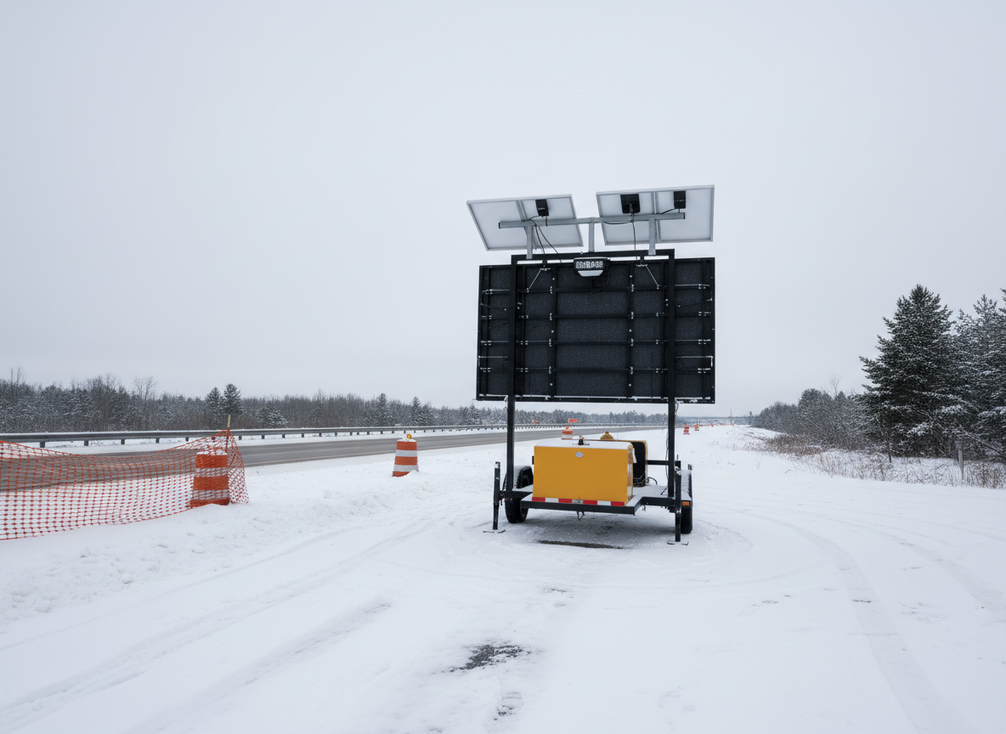
Solar VMS battery sizing is a deployment-risk decision, not just a hardware spec. For winter work, the safest starting point for a solar VMS trailer is to size around the project’s autonomy target, then adjust for shorter daylight, snow cover, cold battery behavior, and the cost of a missed message. The Caltrans autonomy baseline is a useful anchor, but winter conditions often require more reserve than a summer-only estimate suggests.
What Drives Solar VMS Battery Sizing
For most DOT buyers, solar VMS battery sizing starts with the load, not the trailer. The main inputs are sign duty cycle, message-change frequency, controller and communications draw, idle draw, and how long the unit must stay up without reliable solar recharge. That is why the same trailer can look adequate on paper and still be a weak fit for a winter detour job.
A practical way to frame the decision is to separate average daily use from worst-case overnight use. Average load helps with normal planning, but the winter buying decision is usually set by the longest low-sun stretch you need to survive. The portable message sign autonomy baseline is commonly 21 to 30 days without solar charging, so buyers should treat that as the procurement floor, then check how much winter margin their site really has.
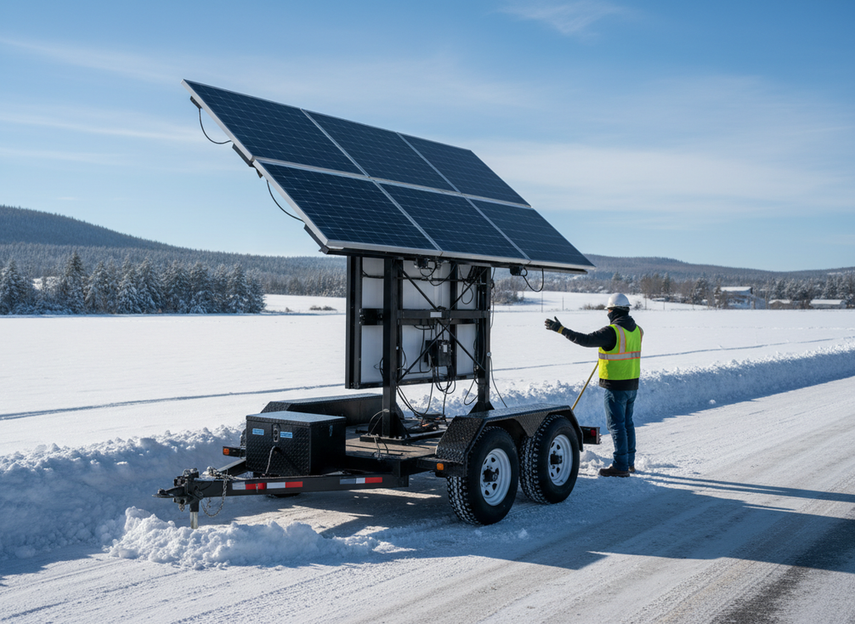
Before you compare a solar trailer fit or browse the broader C-Tra VMS line, confirm three things: the load profile, the winter recharge window, and the level of service access if the unit needs attention in bad weather. If those are unclear, the quote conversation will be guesswork.
How Winter Conditions Change Autonomy
Winter reduces autonomy in layers, not one clean step. The biggest pressure points are shorter daylight, lower sun angle, snow-covered panels, and colder battery behavior. The DOE winter solar guidance notes that solar production can drop sharply in winter because each of those factors cuts available harvest.
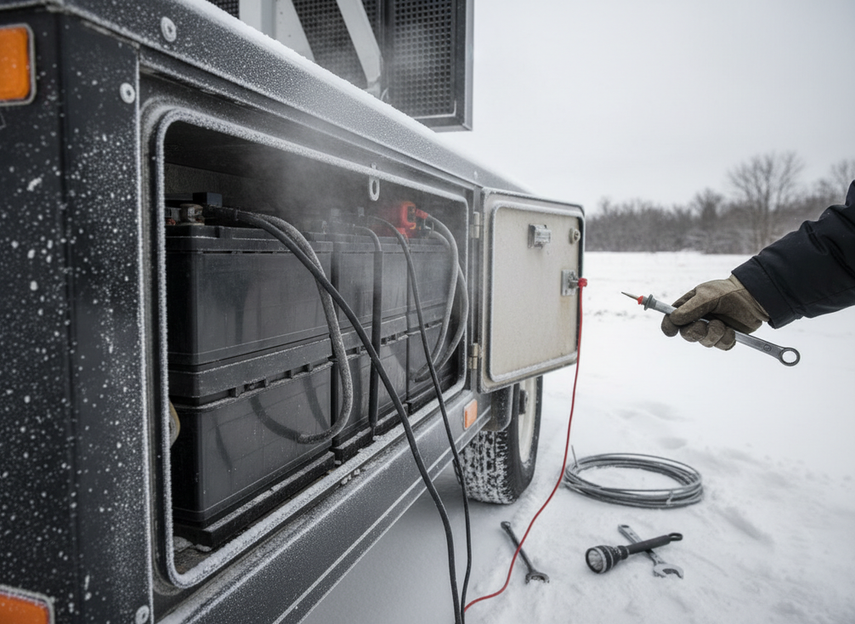
Cold weather matters because the battery may not deliver the same usable capacity you see in mild conditions. Battery University notes that capacity can fall materially in freezing temperatures, especially for lead-acid systems, which means the same pack has less practical runway just when recharge opportunities are also weaker. In plain terms, winter can hit both sides of the equation: less energy in, less energy out.
| Winter factor | What it does to the deployment | What the buyer should check first |
|---|---|---|
| Shorter daylight | Shrinks the daily solar recharge window | How many usable sun hours the site really gets in winter |
| Low sun angle | Reduces panel harvest and increases shading sensitivity | Whether the trailer face has an open southern exposure |
| Snow coverage | Can block charging until the array is cleared | Who clears snow and how often that happens |
| Cold battery behavior | Lowers usable capacity and slows recovery | Whether the reserve margin still holds in freezing weather |
| Site exposure | Can improve or weaken daily recharge | Whether the trailer gets enough winter sun to recover after overnight use |
| Winter risk stacking | Combines the above into longer low-charge periods | Whether the project can tolerate a missed recharge cycle |
That is why siting is a real reliability lever. A trailer placed where snow piles, shade, or plow spray regularly hit the array may need more battery than a similar trailer in a cleaner, sunnier location. A winter-ready solar trailer choice is not just about capacity; it is also about whether the site can help the system recover.
How to Size for Overnight and Low-Sun Use
The practical sizing sequence is simple: estimate load, set the winter autonomy target, then choose the amount of reserve that matches the site. Start with peak and average use separately. A trailer that looks fine on average can still fail if the overnight load is high or if the project has back-to-back low-sun days.
Next, decide how much operational buffer the deployment needs. For routine work with good service access, a standard configuration may be enough if the winter recharge window is documented. For remote or high-impact winter deployments, the better choice is usually more reserve, a more conservative message schedule, or a better site. The right answer depends less on the label on the battery and more on how much downtime your contract can absorb.
A useful rule is to treat autonomy as a winter promise you have to protect, not a summer estimate you hope still holds. If a unit must stay up through long nights and short recharge windows, then the battery reserve should be sized for the worst credible stretch, not the average day.
The plan changes again if the site is hard to service. In that case, remobilization and outage recovery matter almost as much as the battery size itself. A smaller pack can be acceptable when access is easy and downtime is low-impact; it is a weaker choice when a service call would take time, money, and traffic-control effort to recover.
For buyers comparing traffic VMS options or evaluating a winter fit, the key question is not "How big is the battery?" but "How much winter risk does this deployment need to absorb before the next recharge opportunity?" That is the core issue behind solar VMS battery sizing.
Winter Reliability Versus Deployment TCO
Winter deployment TCO is usually driven by the costs of fixing a problem, not just buying the unit. That includes remobilization, service calls, seasonal monitoring, and the cost of a missed or unreadable message. The MUTCD portable message sign requirement makes reliability more than a convenience issue, because the sign must remain operational and legible in roadway use.
| Decision factor | Lower-cost approach | Higher-reliability approach | Planning implication |
|---|---|---|---|
| Battery capacity | Smaller reserve sized to average use | More reserve for low-sun days | Lower upfront spend, but higher winter outage risk |
| Site preparation | Basic placement with limited checks | Better orientation, snow awareness, and service access | Often the cheapest way to improve winter performance |
| Winter monitoring | Minimal oversight | Regular status checks and contingency planning | Adds effort, but can prevent surprise failures |
| Downtime risk | Accept longer recovery if a failure happens | Pay more to reduce the chance of remobilization | Matters most on remote or high-impact routes |
That comparison is why the cheapest trailer is not always the lowest-cost deployment. If a winter failure triggers a service call, a battery swap, or a detour-messaging gap, the total cost can rise quickly. The life-cycle cost framing is useful here: purchase price is only one part of the decision.
For high-impact lane closures, winter detours, or remote sites, a more conservative battery choice often makes more sense than trying to save a small amount upfront. For routine short-duration work with strong sun access, a tighter configuration can still be reasonable if the autonomy target is documented and the site is easy to service.
Winter Deployment Checklist
Before you order or deploy, check the winter load profile, the autonomy target, the recharge window, and the level of site exposure. Then verify the practical issues that create winter regret: shade, snow clearing, orientation, maintenance access, and what happens if the unit loses charge during a storm week.
- Confirm the operating load, including sign duty cycle and communications draw.
- Set the winter autonomy target using the project’s downtime tolerance, not summer expectations.
- Check whether the site gets enough winter sun to recover after overnight use.
- Verify who clears snow and how often the array can be reached.
- Make sure service access is realistic if a battery swap or trailer move is needed.
- Review the spec sheet and documentation against the procurement requirement before you commit.
- Compare remobilization risk against the cost of adding reserve now.
If the site has poor winter sun, weak service access, or a high consequence for downtime, the safer next step is to review the solar VMS trailer fit and request a quote against the project’s winter load and autonomy target. If those conditions are mild, the C-Tra VMS line may still be a practical path, but only after the winter checks are done.
Final Takeaway
Winter solar VMS planning works best when you size for the project, not the brochure. If your site has short winter days, limited service access, or a high consequence for downtime, lean toward more reserve and better site planning before you lean on price alone. If you want to review the fit for your route, we can help you check the winter load, autonomy target, and site exposure before you request a quote.
FAQs
How Do You Size Batteries for Solar VMS in Winter?
Start with the winter load estimate, then set the autonomy target for the longest low-sun stretch the project must survive. After that, add reserve for cold-weather capacity loss and slower recharge. If the site is remote or hard to service, size more conservatively because remobilization cost matters more when recovery is slow.
What Reduces Solar VMS Runtime the Most in Cold Weather?
The biggest winter runtime reducers are usually shorter daylight, snow cover, low sun angle, and colder battery behavior. The practical signal is not one single loss factor, but whether the site still has enough winter sun to recover after overnight use. If recharge is uncertain for several days in a row, the deployment needs more reserve or better siting.
Can a Solar VMS Trailer Work Through a Full Winter Deployment?
Yes, it can, but only when the autonomy target, site exposure, and service access line up with the project. A site with good winter sun and easy access may be fine with a standard setup. A remote or high-impact winter job usually needs more reserve and a stricter monitoring plan.
What Is the Best Way to Compare Solar VMS Deployment TCO?
Compare the trailer quote against remobilization, service effort, monitoring, and downtime risk. The right question is not only what the unit costs, but what a failure would cost if the sign drops offline during a detour or lane closure. If downtime is expensive, the higher-reliability option often wins.
What Should DOT Contractors Verify Before Ordering a Solar Mobile VMS?
Verify the load profile, winter autonomy target, recharge window, snow management plan, and maintenance access. Then compare the spec sheet to the project requirement and make sure the deployment plan still works if winter harvest is weaker than expected. If any of those are uncertain, pause before buying and recheck the site fit.