

Municipal smart pole LED projects are easiest to justify when one asset truly replaces several separate installs, reduces service trips, and fits the city’s staffing model. If the project mainly adds features without removing duplication, payback gets harder to defend and maintenance burden usually rises.
Why Municipalities Question Smart Pole ROI
Cities do not buy smart poles like retail hardware. They are judging a long-lived public asset, so the real question is whether the bundle improves total lifecycle cost, not just first price. That is why the DOE’s municipal street lighting resources are best used as a screening frame, not a promise.
ROI skepticism usually starts when lighting, cameras, signage, and connectivity are all folded into one project. The capital stack gets larger, the approval path gets longer, and ownership roles can become unclear before the first pole is installed. In practice, a project can look attractive on paper and still stall if no one has defined who maintains each function.
A good rule is simple: if the smart pole only adds capabilities, the case is weak; if it replaces separate assets and service calls, the case gets stronger. That is the decision layer most municipal buyers need before they move into RFP drafting or budget review.
What Drives the Upfront Cost Stack
The upfront cost of a smart pole is not just the pole itself. Municipal teams usually need to compare hardware, integration, installation, utility tie-ins, and project management. The key is to separate cost items that are unique to the bundled design from costs that would exist in any corridor upgrade.
Hardware and Integration Costs
A basic lighting pole is not the same as a multi-function smart pole. Once cameras, signage, and connectivity are added, engineering coordination expands, because the project has more interfaces, more component choices, and more bid scope. That does not automatically make the project bad, but it does mean the city should expect more design review and more questions during procurement.
Site Work and Installation
Foundation work, conduit, staging, and traffic control can matter as much as the device hardware. On harder-to-reach corridors, labor and access planning often shape cost more than the pole model itself. For that reason, installation should be compared as a project package, not as a single line item.
Permitting and Project Management
More functions on one pole often mean more reviewers, more utility coordination, and more documentation. That is one reason a bundled project can look simpler from a public-facing standpoint but still require more staff time behind the scenes. The MIT lifecycle cost analysis framework is useful here because it pushes the comparison toward cradle-to-grave cost, not just purchase price.
Bundled Versus Standalone Cost Logic
Bundled poles can reduce redundant standalone infrastructure when the city truly needs the same corridor to carry several services. The National League of Cities describes smart infrastructure as a digital backbone, but that advantage only appears when the consolidation is real. If a city still needs separate mounts, cabinets, or visits, the bundled case weakens quickly.
How Multi-Function Poles Change Maintenance
More functions mean more failure points. A lighting pole that also carries a display, sensors, or cameras is more likely to need specialized troubleshooting than a single-purpose asset, especially when the parts are sourced from different vendors. That is the central hidden maintenance burden in many smart pole projects.
A public reminder comes from St. Paul’s wire theft report, which shows how one infrastructure issue can create large repair costs and repeated field work.hidden maintenance burden The exact risk will vary by city, but the lesson is stable: maintenance planning should include access, tamper resistance, and replacement logistics, not just routine lamp service.
More Functions, More Failure Points
Each added module creates another component that can drift, fail, or need firmware attention. For municipalities, that matters because troubleshooting time often grows faster than the asset count. If the pole mixes lighting, camera, and signage uptime requirements, the city also has to decide which failure gets priority first.
Access, Parts, and Diagnostics
Front access, rear access, and modular replacement can produce very different service times. So can parts stocking and model variation across a city. Remote diagnostics can help, but only if the city’s maintenance process can actually use the alerts to shorten field work. Otherwise, the system may still need a truck roll for basic triage.
Routine Service Versus Break-Fix Work
Routine inspection, controller checks, cleaning, and emergency repair are not the same workload. Smart pole programs should separate those tasks in their maintenance plan so the city can tell which visits are predictable and which are break-fix events. That separation matters because routine work can often be scheduled, while break-fix work can disrupt traffic and staff availability.
Uptime Priorities Across Uses
A failed light is not the same as a dark display or an offline camera. Cities should decide which function is mission critical before procurement, because that answer affects spare parts, service times, and escalation rules. If every function is treated as equally urgent, the maintenance plan usually becomes more expensive than expected.
Can One Crew Service a Smart Pole?
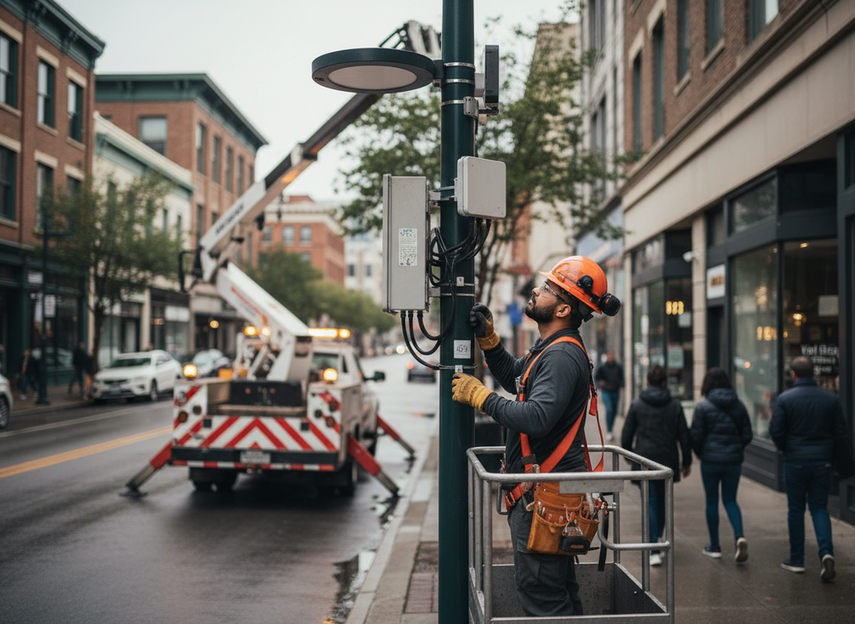
A single-crew model can work for some routine smart pole service, but it should be treated as a planning hypothesis, not a universal rule. In the right setup, it can reduce field-visit costs, and one industry comparison suggests a single-technician model can cut visits by about 50% versus multi-person workflows.single-crew service model That is useful, but it is not a citywide guarantee.
- Start with dispatch and triage. Confirm whether the issue is lighting, connectivity, signage, or camera-related, because that determines whether one crew can solve it or only inspect it.
- Isolate the fault. The crew should know which module is affected and whether the problem is electrical, mechanical, or communications-related.
- Check access and safety. Some poles are technically serviceable by one crew but still need extra support because of traffic control, lift requirements, or site hazards.
- Repair or swap the affected part. A modular design helps here, but only if spare parts are on hand and the replacement process is documented.
- Close out with documentation. The city should log the fault, the labor time, and any follow-up needed so the next service estimate is based on reality.
If the city cannot isolate faults quickly or has to wait on specialty parts, the one-crew model breaks down. In that case, a phased deployment or simpler standalone setup may be easier to service over time.
How Procurement Teams Should Compare Options
The best comparison is a lifecycle matrix, not a feature checklist. Municipal buyers should compare integrated bundles, standalone infrastructure, and phased deployment across the same time horizon, then ask which option lowers total service burden without creating new ownership problems. Chicago’s performance-based smart lighting procurement is a useful model because it puts uptime and diagnostics into the contract instead of focusing only on hardware.
| Decision Factor | Integrated Bundle | Standalone Infrastructure | Phased Deployment |
|---|---|---|---|
| Lifecycle cost pressure | Higher upfront, possible savings if duplication is removed | Often more physical duplication | Moderate, because costs are staged |
| Maintenance burden | Higher complexity if several modules share one asset | Easier to isolate repairs | Lower at first, but future work must be planned |
| Service isolation | Lowest | Highest | Middle ground |
| Procurement complexity | Highest | Usually simpler | Moderate |
| Staffing risk | Highest if parts and access are not standardized | Lower if work is separated | Lower early, then depends on expansion plan |
The matrix below is the one to use in budget review: if bundled poles reduce duplicate assets and service trips, they may win. If the city mainly wants flexibility, fault isolation, or simpler staffing, standalone or phased deployment can be the better choice. That is especially true when the procurement team wants to control warranty terms, spare parts, and documentation in the RFP.
What a Municipal Decision Checklist Should Include
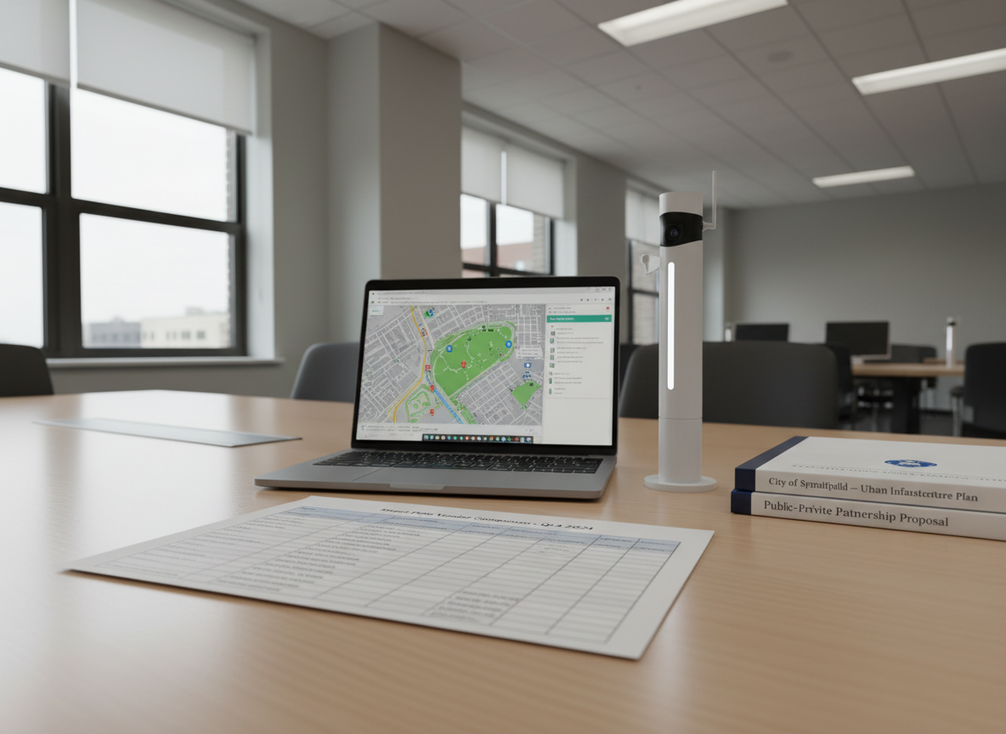
Before approval, cities should confirm service access, parts support, utility coordination, ownership roles, and replacement lead times. If any of those are vague, the project is not ready for a confident ROI claim.
A practical checklist should also answer one more question: what is standard and what is optional in the proposed build? Cities often compare bids as if every pole includes the same package, but that assumption can hide major cost differences. When the proposal is clear, the next step is usually a corridor pilot, an RFP revision, or a tighter budget review.
Final Takeaway
Smart pole ROI improves when a city can prove it is removing duplication, not just adding features. The more functions that share one pole, the more important maintenance access, parts planning, and staffing assumptions become. If you are comparing options now, start with lifecycle cost, then test serviceability, then write the RFP around the operating model you can actually support. For many cities, that sequence helps avoid a project that looks efficient until the first repair cycle.
FAQs
Are Smart Poles Worth It for Cities?
They can be, but only when the bundled design replaces real standalone infrastructure and the city can service the asset without excessive truck rolls. If the project mainly adds features, the lifecycle case is usually weaker. Cities should compare ownership cost, service burden, and staffing impact before they compare aesthetics or first price.
What Drives Smart Pole Maintenance Burden Most?
Access, number of modules, parts logistics, and crew skill requirements usually matter more than the pole itself. A simple lighting pole with one controller is easier to service than a multi-function pole with cameras and signage. Cities should also check whether the vendor standardizes parts across projects, because variation increases downtime.
How Do Cities Estimate Smart Pole Payback?
Use a conservative lifecycle model. Compare avoided standalone assets, expected energy savings, service labor, and replacement costs over the same period, then test the result against local labor and utility assumptions. If the business case only works with optimistic savings or perfect uptime, it is too fragile for procurement approval.
Can One Crew Maintain a Multi-Function Smart Pole?
Sometimes, for routine work. But once the job involves specialty modules, electrical faults, access constraints, or parts swaps, one crew may not be enough. Cities should treat single-crew serviceability as a workflow question, not a marketing claim, and should document when escalation to specialty support is required.
What Should Be in a Municipal Smart Pole RFP?
Ask for service access details, spare parts support, documentation, warranty terms, diagnostics, and clear ownership roles. It also helps to define who handles commissioning, routine inspection, and break-fix response. The more precise the RFP, the easier it is to compare bids on lifecycle cost instead of headline price.
Municipalities evaluating a smart pole LED rollout can use this same checklist to separate real operating savings from added complexity before they approve the project.