Portable VMS selection for highway work zone safety starts with two checks at once: the sign has to be readable at speed, and it has to stay powered for the whole job window. If either part is weak, the board can look fine on paper and still fail in the field. For most contractors, highway VMS selection works best when visibility comes first, then duty cycle, then trailer fit.
Start With the Work Zone and Duty Cycle
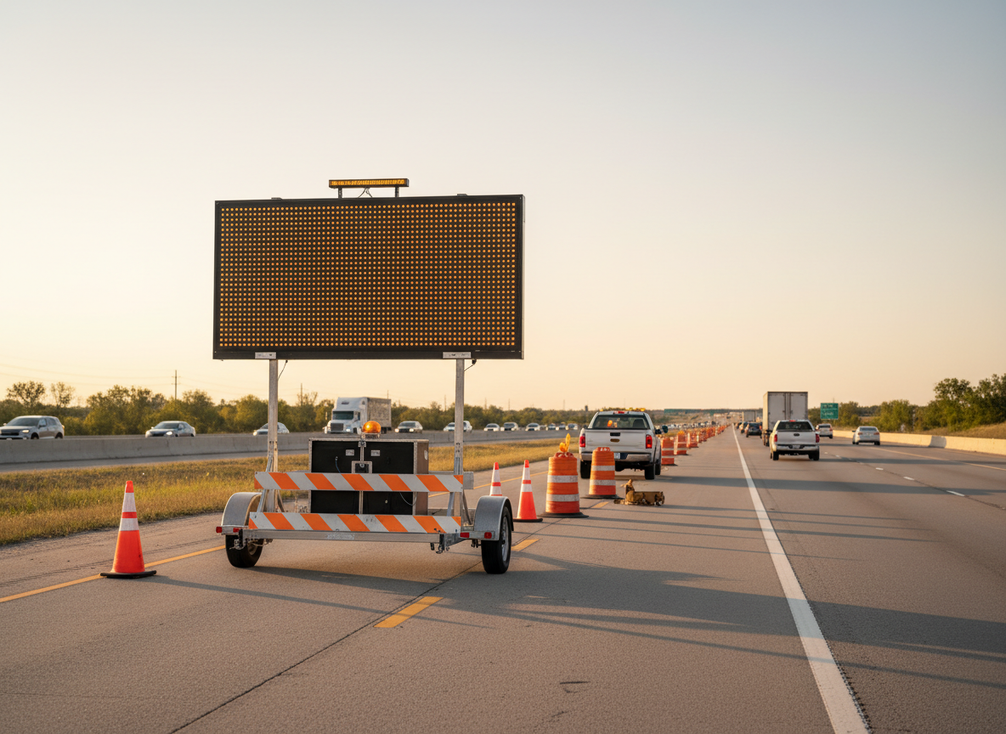
The fastest way to narrow highway VMS selection for highway work zone safety is to define the job window before you compare hardware. An overnight lane closure, a short rolling maintenance job, and a multi-day shoulder project put very different demands on the trailer and power system. A unit that is easy to tow but runs short of power is not a good fit for a long closure.
Think of the first decision as a filter: if the sign cannot stay visible through the work window, it is not ready for the job. If the work zone has limited charging access or frequent repositioning, duty cycle becomes as important as display size. That is why buying decisions for highway VMS in work zones should start with operating hours, setup buffers, and recharge conditions, not with the trailer brochure.
Check Visibility Requirements First
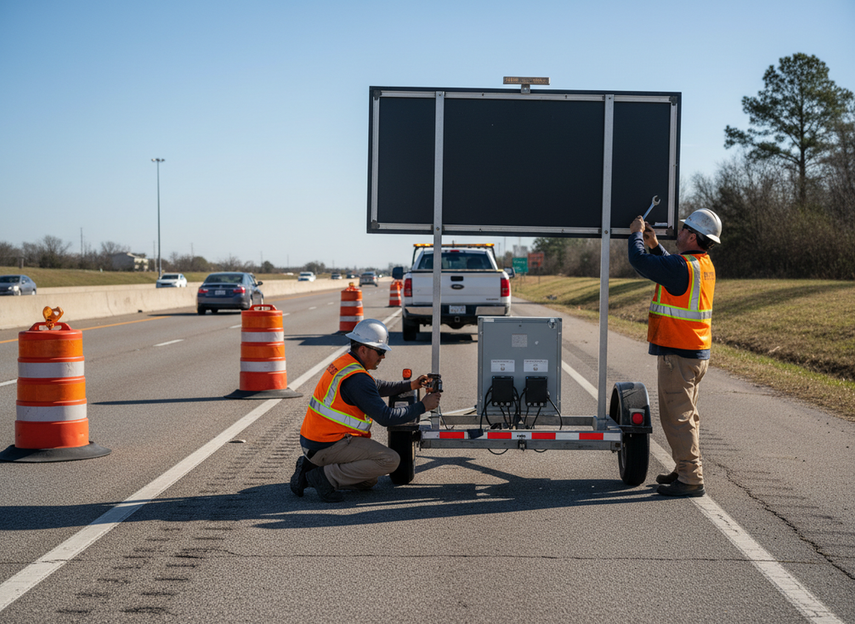
For highway PCMS units, visibility is the baseline requirement, not an upgrade. The current MUTCD guidance says portable changeable message signs should be visible from at least 1/2 mile and legible from at least 650 feet on high-speed highways. The MUTCD 2023 Section 6L.05: Portable Changeable Message Signs is the first pass/fail check for portable changeable message sign MUTCD requirements.
Message layout matters just as much as raw size. Florida DOT training materials summarize the common field rule as three lines with a maximum of eight characters per line, and no more than two phases per message. Advanced Temporary Traffic Control Refresher guidance points to shorter messages that are easier for drivers to read in motion.
Character height is another hardware check that changes the buying decision. California MUTCD Chapter 2L guidance calls for 18-inch characters on high-speed facilities, which means the display size is not a cosmetic spec on those roads. If your site is fast-moving, a smaller panel may be easier to tow but harder to justify.
For message design, keep the controller simple and the text controlled. TTI field guidance recommends pre-approved abbreviations and avoiding distracting effects such as moving or exploding text. If the sign is being used to simulate an arrow board, verify that use separately because arrow-board-style display behavior can trigger different standards. Missouri Engineering Policy Guide 903.12 is useful for that check.
Size the Power System for the Shift
Once visibility is acceptable, size the power system around the actual shift, not a generic runtime claim. Duty-cycle planning for solar VMS trailer battery sizing work zone needs should include total operating hours, setup and teardown time, and the chance that recharge conditions will be worse than average. That matters because a sign that is readable for 10 minutes is not useful if it dies before the closure ends.
Battery capacity should be judged against the longest realistic operating window, plus a reserve margin. That reserve is what protects you when the job runs long, traffic control changes, or the trailer gets less sun than expected. The practical question is not "how long does the battery last?" but "how much margin do we have if the day goes sideways?"
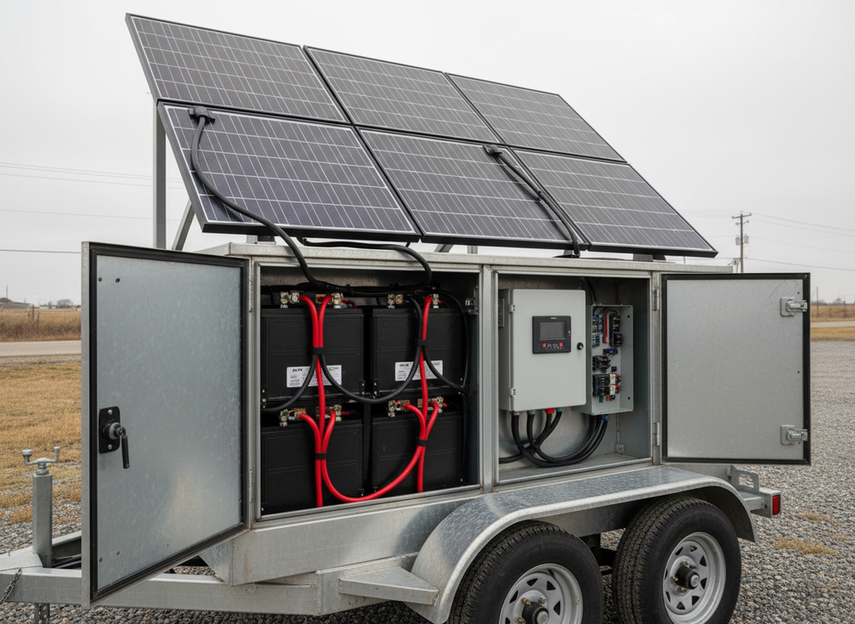
Solar helps, but it should be treated as an input, not a promise. Exposure, season, cloud cover, shade, dirt, and angle all affect recharge, so a solar setup can perform well on one site and struggle on another. That is why portable VMS selection for highway work zone safety should use worst-case conditions when comparing battery-plus-solar packages.
A good buyer rule is simple: if the project depends on overnight continuity, plan for the least forgiving stretch of weather and sunlight, not the best one. If the site has regular repositioning or limited sunlight, battery-only or a larger reserve may be the safer procurement path. The right answer is the one that survives the full work window with margin left over.
Portable VMS Power Planning Inputs
The safest sizing approach is to match the operating window, reserve margin, and recharge conditions before comparing trailer options.
Show planning table
| Input | Why it matters | Buyer check |
|---|---|---|
| Operating window | Sets the minimum runtime target | Count the full shift, not just display time |
| Reserve margin | Protects against delay and low-charge conditions | Ask how much extra runtime is built in |
| Solar exposure | Controls how reliably the system can recharge | Check shade, angle, and placement |
| Weather/season | Changes available charging and output | Plan for winter, cloud cover, and storms |
| Setup buffer | Adds time before and after the job runs | Include mobilization and teardown in the estimate |
Match Trailer Setup to Site Conditions
Trailer choice is mostly a site-constraint decision. A trailer-mounted VMS makes more sense when the sign needs to stay in place for longer periods, while a vehicle-mounted option can be a better fit when the work zone moves often and quick repositioning matters more. In other words, the best mounting style flips when mobility becomes the main constraint.
Trailer-mounted systems usually give you more independence from the tow vehicle, but they can take more room to stage and may add setup steps. Vehicle-mounted options can be easier to move from one location to another, but they may depend more on the vehicle schedule and available power path. If shoulder space is tight, the setup that looks simpler in a catalog may be harder to live with on the job.
Maintenance access also belongs in the selection decision. If the board needs frequent servicing, front-service access and easier inspection can save time over the life of the unit. If the deployment is short and the site is easy to reach, that factor matters less than towability and rapid setup.
For browsing, keep the destination tied to the way you work. A solar trailer VMS option makes sense to review when the job leans toward stationary, self-powered use, while a vehicle-mounted VMS option is the better path to compare when mobility and shorter deployments matter more.
| Site Condition | Trailer-Mounted VMS | Vehicle-Mounted VMS |
|---|---|---|
| Long stationary work | Usually easier to leave in place | Usually less convenient |
| Short or rolling work | Can be more hardware than needed | Often a better mobility fit |
| Limited shore power | Better when paired with solar or larger reserve | Depends more on vehicle/power setup |
| Tight shoulder space | May be harder to stage | Often easier to reposition |
| Frequent service needs | Better if service access is simple | Better if inspection is quick |
Use a Selection Checklist Before You Buy
Before you request a quote, use a short verification list that keeps procurement, field ops, and safety aligned. If the answer is unclear on any of these points, the board is not fully specified yet.
- Confirm the current project visibility and messaging requirements for the route and work zone.
- Check that the display size and character height fit the roadway speed and viewing distance.
- Verify the operating window, including setup, active duty time, and teardown.
- Size battery or solar capacity against the longest realistic shift, not the average day.
- Ask how the unit handles low-light conditions, cloudy weather, and limited charging access.
- Compare trailer footprint, towing needs, and staging space against the jobsite layout.
- Confirm maintenance access, support access, warranty terms, and documentation before ordering.
If you are comparing product families, start from the category view first and narrow from there. The portable VMS categories are a cleaner starting point than jumping straight to a single SKU when the site conditions are still being defined.
Review Next Steps and Compare Options
The cleanest buying path is still the same: verify visibility requirements, size the power system for the full shift, and then compare trailer or mounting fit against the site. That sequence keeps you from buying a sign that is readable but not durable enough for the job window, or powered well but awkward to deploy. When you are ready to compare options, ask for documentation and project-fit confirmation before you move to procurement. If the job is still shifting, start with a VMS LED display options browse path and narrow from there.
FAQs
How Do You Size a Portable VMS for an Overnight Highway Work Zone?
Start with the full operating window, then add setup and teardown time, and then compare that total against the available battery or solar reserve. The key is not a single runtime number but whether the system still has margin if the shift runs long or the weather cuts recharge performance.
What MUTCD Checks Should Buyers Confirm Before Ordering?
Confirm the current visibility and legibility expectations for the route, the message format limits, and whether the board will be used only as a PCMS or also in an arrow-board-style mode. Those details affect both the display hardware and the controller behavior you should request.
Can Solar Power Cover a Portable Changeable Message Sign All Day?
Sometimes, but only if the site exposure, season, shading, and duty cycle line up well. Solar is best treated as part of the power system, not as a guarantee. If the site has poor sun or long overnight duty, a larger reserve is usually the safer path.
What Trailer Features Matter Most for Fast Highway Deployment?
Towability, staging footprint, setup speed, and maintenance access tend to matter most. A trailer that looks efficient on paper can still be frustrating if it is hard to position on a shoulder or awkward to service after deployment.
When Is a Vehicle-Mounted VMS a Better Fit Than a Trailer?
A vehicle-mounted unit is often the better fit for shorter, more mobile jobs where repositioning happens often. Trailer-based systems usually make more sense when the sign needs to stay in place longer or when you want more independence from the tow vehicle.