A realistic LED wall maintenance SLA is a written service plan, not a marketing claim. For 24/7 operations, a realistic LED wall service SLA should answer the basic questions up front: response timing, spare-parts access, local support reach, and who owns each repair step. If those items are vague, downtime risk stays high even when the sales copy sounds reassuring.
What a Realistic 24/7 SLA Should Cover
For mission-critical display environments, the AVIXA Published Standards Catalog is a useful reminder that service expectations should be measurable and documented. A strong service agreement terms should do that same job in plain language: define coverage hours, escalation path, response definitions, and repair scope so the buyer can compare offers on the same terms.
Coverage Hours and Escalation Path
Start with the coverage window. Eight-by-five support, extended-hours support, and true 24/7 coverage are not the same thing, and the contract should say which one applies. Time zone coverage and holiday coverage matter too, because an outage at 2 a.m. local time is not a minor edge case in a control room.
Escalation also needs names, not just a general inbox. A workable SLA tells you who answers after hours, who owns the ticket, and when the issue moves from remote triage to dispatch. That clarity matters because one outage can involve the buyer’s team, the integrator, the service partner, and the manufacturer at different moments.

Response Time Language
Do not treat all response language as interchangeable. Acknowledgment time, diagnosis time, dispatch time, and restoration time are different checkpoints, and a buyer should ask for each one in writing. The phrase "rapid support" may sound helpful, but it does not tell you whether anyone will be on-site, when parts leave the warehouse, or when the wall is actually back in service.
Chipshow’s 24x7x4 emergency response benchmark offers one concrete comparison point for mission-critical environments, but it should be read as a benchmark, not a universal standard. In practice, the buyer needs to know which part of the response is promised, which part is best effort, and which part depends on local stock or labor availability.
Who Owns Each Repair Step
The cleanest SLAs separate remote troubleshooting, replacement parts, field labor, and return logistics. That is not paperwork for its own sake. It prevents the common problem where everyone is involved, but nobody is clearly responsible for moving the repair forward.
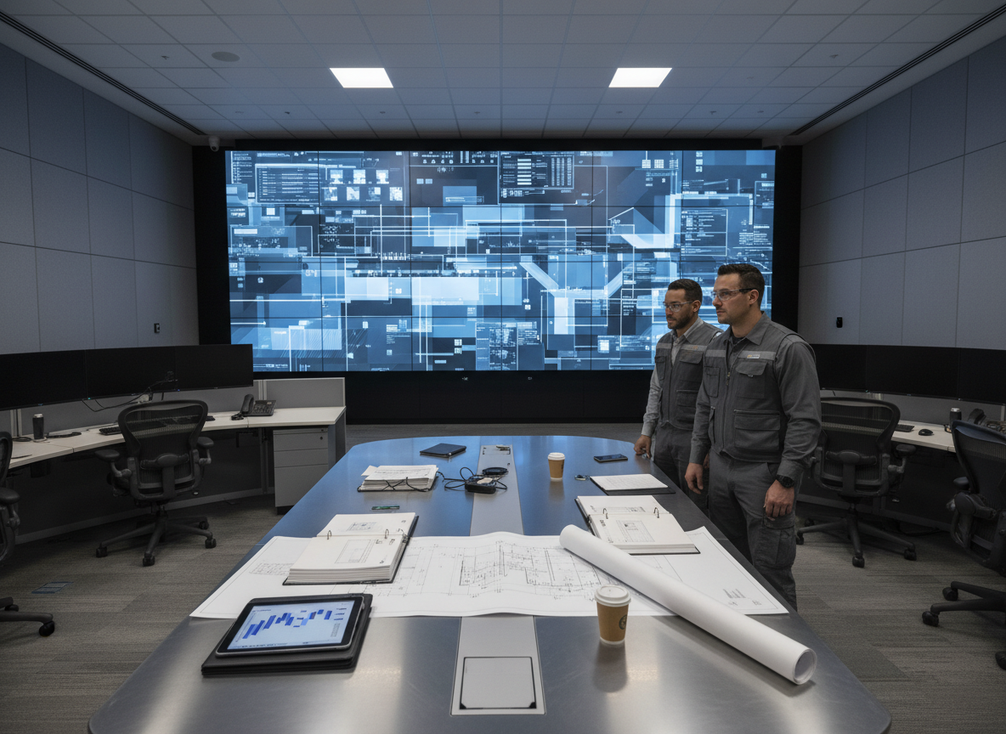
For a 24/7 wall, the handoff points matter more than the marketing headline. If your team has to open the ticket, the integrator has to diagnose it, and the manufacturer has to approve the part release, every extra handoff adds time. In command center use, that delay is often more important than the nominal support promise.
Spare Parts Planning for Fast Recovery
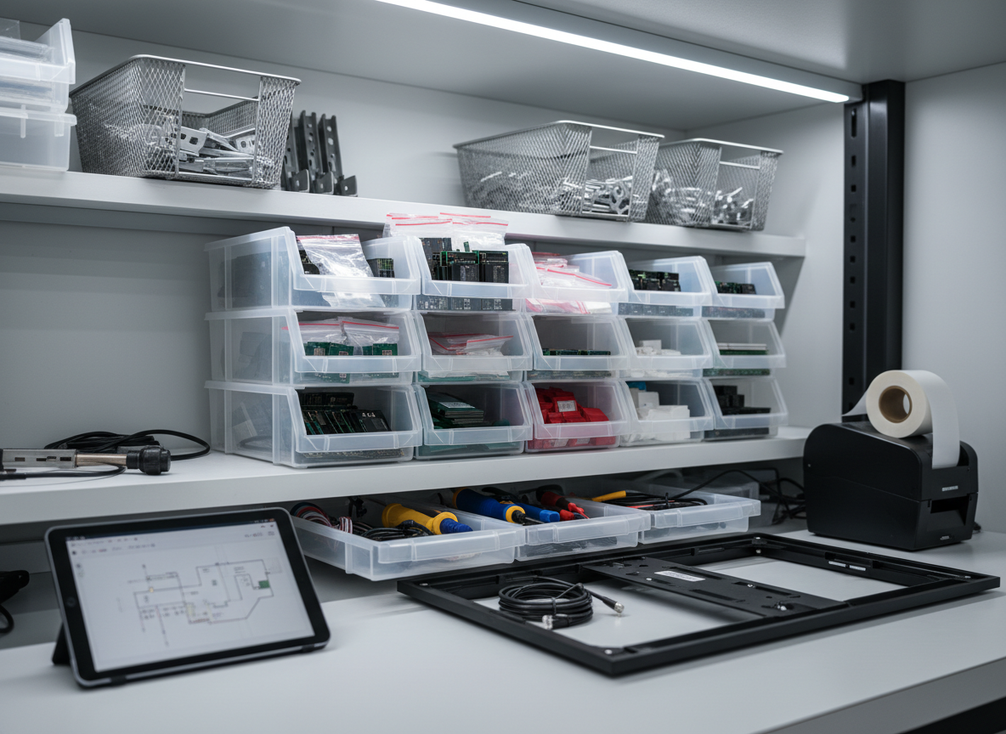
Spare-parts planning is a downtime-control strategy, not a procurement add-on. A realistic LED wall service SLA should explain what parts are stocked, who can release them, and how replenishment works after a swap. Chipshow’s spare-parts budget heuristic suggests planning inventory at roughly 5% to 10% of initial hardware cost, which is a useful starting point for budgeting, not a universal rule.
Critical Spares to Confirm
The best spare list is the one matched to the cabinet design and the service model, not a generic shopping list. Chipshow’s guidance on batch-matched critical spares is especially relevant here: buyers should confirm whether the kit includes LED modules, redundant power supplies, receiving cards, and any other components that affect visual uniformity and recovery speed.
That detail matters because a spare part is only useful if it fits the installed configuration and can be swapped without creating a new problem. A mismatched module may restore the wall quickly but leave a visible difference that creates a second service issue.
Local Stock and Replenishment
US-based inventory can reduce the time lost between failure and restoration because it cuts shipping delay. Chipshow’s note on US warehousing and local support points to the real advantage: not a guarantee of uptime, but a shorter logistics path when a part is needed quickly.
That said, local stock only helps if the release process is clear. Buyers should ask where the parts sit, who can approve release, and how replenishment works after a part is used. If the warehouse exists but the part is not immediately available for dispatch, the practical benefit is much smaller than the marketing phrase suggests.
Ownership and Return Rules
The SLA should also say whether spares are customer-owned, vendor-owned, or loaner-based. Ownership affects who controls availability, who pays shipping, and how quickly the next outage can be covered. Return rules matter too, especially when a defective part must travel back before replacement is finalized.
For command center LED spare parts planning, the buyer should also check whether the service model assumes one local repair kit or repeated shipment cycles. If the wall runs overnight or through weekends, any multi-step replacement process is a risk factor, even when warranty language sounds generous.
How Local Support Changes Downtime Risk
Local support does not just mean "closer." It changes where time is lost: failure detection, diagnosis, part release, shipment, field visit, and final restoration. The more of those steps that can happen domestically, the less exposure the buyer has to cross-border logistics and after-hours handoffs.
| Support Model | Where It Helps Most | Hidden Delay Point | What To Verify |
|---|---|---|---|
| Remote-only support | Fast triage and basic troubleshooting | Parts still need shipping and labor still needs scheduling | Who diagnoses, who dispatches, and what triggers a site visit |
| Domestic dispatch with stocked parts | Faster replacement logistics | Release authority or approval delays | Where stock sits, who can release it, and how replenishment works |
| Local support plus remote monitoring | Earlier fault detection and shorter handoff chains | The repair still depends on the right spare and the right technician | Whether monitoring, parts, and field service are all included |
For 24/7 LED wall service expectations, this is the key trade-off: local support can reduce delay, but only written process reduces uncertainty. A warehouse location is useful if it shortens the path from failure to repair; it is not useful if the repair path still depends on vague approvals or undefined coverage.
Contract Terms Buyers Should Verify
Before you sign, rank the terms by downtime risk, not by how polished they sound.
- Coverage window. Confirm whether support is true 24/7 or only extended-hours with limited overnight handling.
- Escalation authority. Make sure the contract names who can authorize diagnosis, parts release, and on-site work.
- Response definitions. Ask for acknowledgment, dispatch, diagnosis, and restoration to be defined separately.
- Spare-parts access. Verify what is stocked locally, what is customer-owned, and what requires approval before shipment.
- Exclusions. Check what is not covered, especially labor, freight, wear items, or third-party components.
- Service windows and renewal terms. Confirm whether support changes after the first term or after an acceptance milestone.
- Service credits or remedies. If they exist, read the trigger language carefully; vague promises rarely help during an outage.
A realistic LED wall maintenance SLA should make the repair path auditable. If the wording is broad enough that no one can tell when service starts, who owns the next step, or what part of the repair is guaranteed, the contract is not ready for a 24/7 environment.
A Practical Vendor Checklist Before You Sign
Use the final review to make sure the service terms are usable in a real outage, not just on paper.
- Confirm the coverage window and after-hours escalation path.
- Verify who can authorize diagnosis, parts release, and field work.
- Ask how acknowledgment, dispatch, diagnosis, and restoration are defined.
- Check what spares are stocked locally and who controls release.
- Review exclusions, renewal terms, and any service-credit language.
- Request the SLA in writing before you compare vendors.
If you want a cleaner buying path, request a written LED wall service SLA and compare support terms side by side before you sign.
FAQs
What Should a Realistic LED Wall Service SLA Include?
It should spell out coverage hours, escalation path, response definitions, and repair responsibility in writing. The most useful next check is whether the contract separates acknowledgment, dispatch, diagnosis, and restoration, because those are different stages and often different teams.
How Much Does US-Based Spare Parts Access Matter for 24/7 Operations?
It matters most when overnight or weekend downtime is expensive. Local stock can shorten shipping delay, but only if the release process, ownership, and replenishment rules are clear. If those are not written down, local inventory may exist without being immediately usable.
Can a Maintenance Contract Cover Both Remote Help and On-Site Repair?
Yes, and many agreements do, but they usually treat them as separate steps. The buyer should confirm what counts as remote triage, what triggers field service, and whether parts, labor, and freight are all included. That separation matters more in control rooms than in standard commercial installs.
Why Do Response Times Often Feel Vague in LED Wall Agreements?
Because vendors may use one phrase to cover several different clocks. Acknowledgment, dispatch, diagnosis, and restoration can all happen at different times, so ask for plain-language definitions. If the contract cannot distinguish them, you cannot compare offers accurately.
What Should Be Confirmed Before Signing a 24/7 Support Agreement?
Check the coverage window, escalation authority, spare-parts access, exclusions, and who owns each repair step. The practical test is simple: if an outage happens tonight, can you tell exactly who responds first, what part ships, and what event moves the wall back into service?