


Outdoor DOOH LED billboard ROI only works when the site can clear local approval and still leave enough margin after power, maintenance, and downtime are modeled. The first question is not just whether the frontage looks visible, but whether the location can be permitted, powered, and operated without turning the lease into a sunk-cost risk.
Site Fit Before You Buy
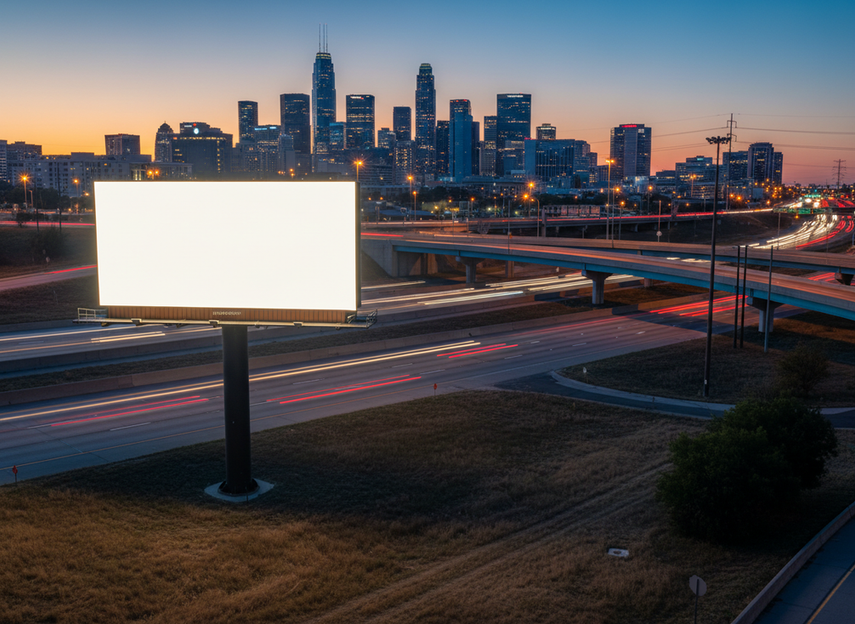
For a roadside screen, the site comes first and the hardware comes second. A location can look strong on traffic count and still fail because of zoning, access, utility distance, or a corridor rule that changes the build economics. That is why outdoor DOOH LED billboard ROI should be screened as one decision: if the site is weak, the return model rarely makes up for it.
Start with a short pre-lease check. Confirm that the property has the right use, the frontage can support the sign class you want, power is realistically reachable, and the view corridor is not blocked by setbacks or local restrictions. If any of those are unclear, the project needs a deeper local review before you spend on engineering or permitting. For a broader category view while you screen sites, our outdoor DOOH solutions page is the cleaner navigation path.
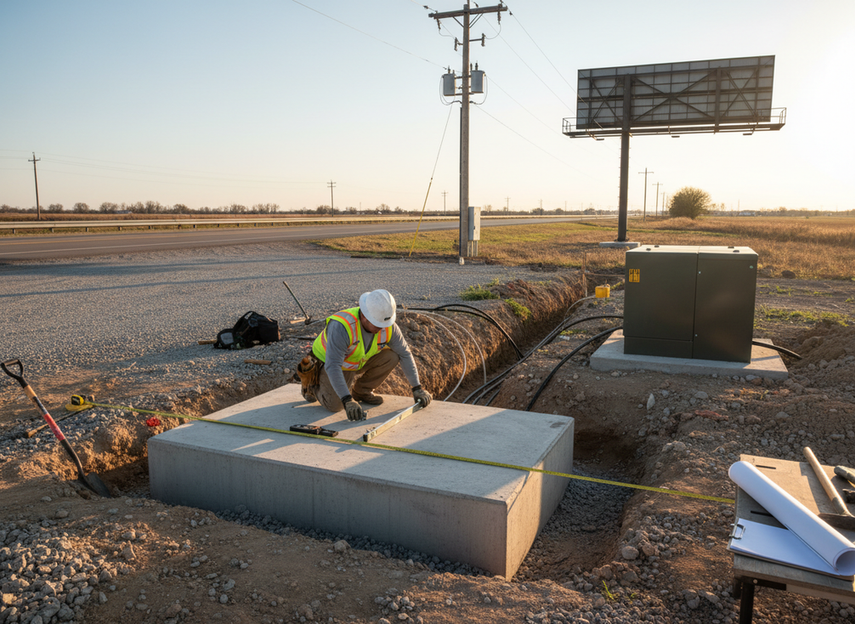
A second pass should test whether the site can support both the permit path and the operating budget. A location that is cheap to lease but expensive to power or service can still miss your return target. In practice, the best-fit site is the one that survives both checks at the same time.
Permits, Zoning, and Approval Paths
The legal frame starts with federal outdoor advertising control, but that does not mean approval is automatic. FHWA guidance says digital billboards can be acceptable when timing, spacing, brightness, and state or local approvals align, which is why the permit path has to be checked early rather than assumed. In other words, federal rules set the frame, but local sign code still decides most real-world outcomes.
In a typical US project, approval usually includes zoning or sign-code review, utility or electrical coordination, and sometimes structural review. The sequence can change by city, county, corridor, and property type. That means there is no universal permit order you can safely copy from one market to another. An operator should treat the first city call, not the purchase order, as the real feasibility gate.
The most common blockers are easy to miss because they are location-specific. State spacing and sign-code controls can limit how close digital signs may sit to one another, while local rules may also restrict setbacks, residential adjacency, or corridor placement. Some jurisdictions also require extra review when a sign projects over public right-of-way or when the structure needs electrical or historic-preservation sign-off.
If you are comparing sites, look for the approvals that stack together rather than for one magic permit. A billable site that needs zoning relief, a utility upgrade, and a separate structural sign-off is not the same as a site that only needs a standard sign permit. If the approval stack looks long on day one, the budget and timeline should both be padded before capex.
Brightness, Visibility, and Hardware Fit
Brightness matters, but it is not the same thing as approval, visibility, or return. The most useful compliance-style benchmark is the 0.3 footcandle brightness guidance, measured against ambient light at size-based distances with automatic dimming. That is the number to keep in mind when the discussion is about permitted brightness, not about a vendor’s headline spec.
The related footcandle versus nit measurement issue matters because nits are a hardware descriptor, while footcandles are the compliance conversation in the OAAA guideline. Put simply, one number helps you choose a display; the other helps you judge whether the display can stay within a local brightness rule. If a supplier leads with nits alone, you still need to verify the dimming behavior and local acceptance standard.
| Planning Factor | Why It Matters | What To Verify | Business Impact |
|---|---|---|---|
| Ambient light and viewing angle | These change how readable the board feels from the road | Daytime and nighttime visibility at the actual site | A strong-looking spec can underperform on a poor sightline |
| Display size and pixel pitch | These affect how text and motion read at distance | Match the viewing distance to the message format | A mismatch can hurt ad quality and sales appeal |
| Automatic dimming | Local brightness rules often depend on it | Confirm the dimming mode and ambient sensor behavior | Missing dimming can create approval or compliance problems |
| Weather exposure and enclosure fit | Outdoor hardware has to survive the site, not just the showroom | Check enclosure design and service access | Better fit usually means fewer service interruptions |
For outdoor DOOH LED billboard ROI, the practical rule is simple: choose brightness as a site-fit variable, not as a promise of better economics. A board that is bright enough but poorly sited still loses money if it is hard to approve, expensive to power, or awkward to service. If the site needs stronger structure or weather resilience, a navigation-only look at fixed outdoor LED display options can help frame the hardware class without turning the page into a product pitch.
Operating Costs That Shape Payback
Power is often the first recurring cost operators underestimate. A common 14×48 billboard energy use reference shows annual consumption in the rough range of 117,000 to 163,000 kWh, which is enough to make utility pricing a real line item in the pro forma. That does not mean every site costs the same, but it does mean electricity should be modeled as an operating expense, not as a rounding error.
Maintenance and downtime matter for the same reason. Every hour the screen is dark is inventory you cannot sell, and every difficult repair path raises the real cost of ownership. Sites with easier access, simpler service conditions, and less weather stress usually keep the economics cleaner because they reduce both labor burden and lost monetization time. If access is awkward, the model should assume more downtime and a slower payback path.
Content operations also affect revenue. A board that is technically live but slow to update, hard to schedule, or awkward to proof can underperform relative to its traffic count. In practice, sellable uptime is part technical and part operational. That is why ROI should be built around the whole delivery chain, not just the screen cabinet.
A Practical ROI Model for US Operators
Use outdoor DOOH LED billboard ROI as a scenario model, not a promise. The goal is to see whether the site survives conservative assumptions, not to force one precise payback date. A useful worksheet can follow this order:
- Start with the site assumptions: zoning status, corridor limits, utility distance, and any known structural constraints.
- Add revenue assumptions from the local market, then keep them conservative until you have real leasing or sales data.
- Layer in operating costs, including power, routine maintenance, access burden, and likely downtime.
- Build a downside case that assumes slower sales ramp or lower utilization.
- Compare the base case and downside case before you commit to lease terms or fabrication.
- If the project only works in the optimistic case, the site is probably too fragile to buy.
That is the best decision threshold: if the board still looks acceptable after you stress the revenue and cost assumptions, keep it under consideration; if it collapses when you model realistic downtime or permit delay, walk away or renegotiate. A conservative scenario range is more useful than a single payback number because it shows where the decision flips.
When you want to compare deployment classes before you lock in a site, the DOOH outdoor solution category can serve as a starting point for fit review rather than as proof of ROI. The right question is not only what looks bright on paper, but what survives the local approval path and operating budget.
Outdoor DOOH LED Billboard Go / No-Go Check
A conservative decision view for operators weighing approval risk against recurring operating cost pressure.
Show decision table
| Approval path | Operating pressure | Decision read |
|---|---|---|
| Clear sign-code fit, utility reachable, dimming verified | Moderate | Usually the best candidate for deeper ROI modeling |
| Zoning unclear, spacing issue, or extra local review | Moderate to high | Hold until the approval stack is confirmed |
| Approval looks possible, but power or access is expensive | High | Stress-test payback before committing |
| Several approvals unresolved and downtime risk is high | High | Not a fit until the site changes materially |
Decision Checklist Before You Commit
Before you sign a lease or release hardware funding, confirm five things: the site is allowed by local zoning or sign code; the permit path is realistic; utility access and any upgrade need are known; brightness and dimming can meet local rules; and the operating budget still works if uptime is not perfect. If any one of those is missing, the site is not ready for capex.
The clean next step is to request a local feasibility review, confirm the utility and permitting requirements in writing, and compare only the site-fit options that survive those checks. If you want the project to pencil, the approval path and the economics have to pass together before you buy.
FAQs
How Much Does an Outdoor LED Billboard Cost to Evaluate Before Permitting?
Early evaluation usually includes site review, zoning checks, utility scoping, and preliminary engineering. The price varies by market and site complexity, so the useful question is not the average fee but whether the site needs one review or several. If you already know the corridor is constrained, budget for more than a basic desktop check.
What Are the Most Common Reasons a Digital Billboard Permit Gets Delayed?
The usual delay points are zoning mismatch, setback conflicts, incomplete drawings, utility coordination, and local review cycles. If a project also needs special approval for visibility, right-of-way, or structural issues, the timeline often stretches further. A clean submittal with local code fit confirmed first is the fastest way to reduce delay risk.
Can a High-Brightness Display Improve Outdoor Billboard ROI?
It can help visibility, but it does not fix a weak site. Brightness only improves the business case when the location is permitable, the power cost is manageable, and the board can stay online reliably. If those basics are not in place, a brighter screen usually just creates a more expensive problem.
Why Do Power and Downtime Matter So Much in ROI Planning?
They affect both recurring cost and sellable inventory. Electricity shows up every month, and downtime turns into lost ad impressions, so both need to be modeled as real margin pressure. A site that looks fine on revenue can still underperform if the utility rate is high or service access is difficult.
What Should Operators Confirm With the City and Utility Before Signing a Lease?
Confirm allowed use, sign classification, setback or corridor rules, power availability, service-upgrade needs, and the structural review path. If any of those answers is vague, the lease should stay conditional. A site that cannot clear the city and the utility in writing is not ready for a digital billboard commitment.





