

The MUTCD VMS requirements for highway projects work best as a spec-mapping exercise, not a guesswork exercise. Start with the current FHWA manual, then turn the standard into procurement language that fits your traffic control plan, deployment type, and message needs. Use the current MUTCD reference frame as the baseline, then verify the exact clause language in the official 11th Edition PDF.
What Changed in the 11th Edition
The 11th Edition is the current national reference for traffic control devices, including MUTCD VMS, so older bid language can fall out of step even when the hardware still looks familiar. FHWA’s current edition page makes that baseline explicit, and that is the first check buyers should make before they reuse an old specification package.
For highway projects, the practical change is not just a new publication date. It is a reminder that the VMS standard sits inside a larger traffic control framework, where message purpose, deployment context, and operational use all matter. A board that worked under a legacy note sheet may still be usable, but the project wording may need a review before it goes into a bid package.

That review matters most when a spec is vague. If the language only says "provide a changeable message sign," the vendor may not know whether the board is meant for lane closures, detours, queue warning, or incident response. The 11th Edition should be the anchor, but the project documents still need to translate it into a usable buying requirement.
If the old spec does not tell a vendor how the sign will be used, it is probably too generic for procurement. When local adoption or agency guidance lags the national edition, verify the current wording before finalizing the bid package. A quick first-pass check is simple: confirm the current edition, confirm the sign category, and confirm whether the message use is temporary traffic control, highway operations, or another deployment context.
For background on adoption timing, the 11th Edition overview is useful context, but buyers should still rely on the FHWA text for the controlling language.
Key VMS Requirements to Map Into Specs
A highway-project VMS spec should cover how the sign will be seen, how it will be used, and what the buyer expects to receive at submittal and acceptance. The MUTCD sets the compliance frame, but the bid language has to make that frame measurable.
For visibility and legibility, the official standard is the strongest source. FHWA’s 11th Edition PDF states that for high-speed roadways, VMS characters must be at least 18 inches high and legible from at least 800 feet. That is not a marketing claim or a general comfort rule; it is a hard checkpoint for highway-class use, especially when the approach speed and sight distance leave little margin for weak displays.

That means the buyer should write the spec around the roadway, not around a brochure headline. If the project is on a high-speed corridor, the legibility requirement belongs in the document. If the site is slower, more constrained, or temporary, the project team still needs to verify which clause applies before assuming the same display setup will work.
The display behavior also matters. The 11th Edition limits changeable message sign message sequencing to two phases, with each phase lasting at least 2 seconds. That affects controller logic, message programming, and how reviewers judge whether the proposed sign can actually show the intended message cleanly. If the board needs more than two alternating screens to communicate one instruction, the message plan should be reworked rather than stretched.
Deployment context is the next filter. Temporary work-zone PCMS belongs in a different review bucket from permanent or semi-permanent highway VMS, and vehicle speed feedback signs are a distinct category from general VMS. A buyer should not collapse those uses into one generic line item, because the approval path, message logic, and project purpose can differ.
Documentation closes the loop. At minimum, request manuals, installation instructions, maintenance guidance, and submittal materials that show the board is configured for the project use. Product literature can help with navigation, but it should not be treated as proof that the device meets the current standard.
How to Turn MUTCD Language Into a Bid Spec
Start with the governing baseline, then work outward to the project-specific requirements. A clean drafting sequence looks like this:
- State the standard. Say the VMS shall comply with the current FHWA MUTCD 11th Edition and any agency-approved traffic control plan.
- Define the use case. Identify whether the sign is for advance warning, lane closure, detour guidance, queue warning, or incident management.
- Set the configuration. Specify display size, mounting type, power package, controller function, and message format.
- Set the operating rules. State who can change messages, how updates happen, and what the board must do if communications fail.
- Set acceptance criteria. Require a field-verifiable startup check and a documented submittal package before deployment.
That structure keeps the bid readable for vendors and reviewers. It also avoids a common mistake: mixing the standard, the project plan, and the hardware wish list into one paragraph that nobody can enforce later.
Use direct verbs in the spec. "Shall comply," "shall provide," "shall submit," and "shall demonstrate" are easier to review than vague phrases like "should support" or "is intended to." The more measurable the requirement, the easier it is to compare bids on the same baseline.
For example, a useful line might read: provide a changeable message sign package sized for the project’s traffic control plan, including the display, controller, power system, and support structure needed for continuous project use. That kind of language stays neutral, but it still forces a complete answer.
If your team needs a place to start comparing broader equipment families, the traffic and VMS solutions category can help with navigation. It should remain a browsing path, though, unless the product facts are verified against the current project requirement.
What to Compare Before You Buy
Before you buy, compare the equipment against the actual project conditions, not just the headline spec. The right question is not "What looks strongest on paper?" It is "What fits the roadway, the review process, and the staffing plan?"
| Comparison point | Ask this before purchase | Why it matters |
|---|---|---|
| Display size and legibility | Can the board be read at the project’s approach conditions? | Prevents under-sized boards |
| Message flexibility | Can it show the exact message pattern the project needs? | Avoids awkward or noncompliant wording |
| Power package | Will it run for the required duty cycle? | Reduces downtime |
| Deployment method | Is trailer, truck, or fixed temporary mounting the right fit? | Supports field logistics |
| Control method | Local only or remote capable? | Affects staffing and response time |
| Documentation depth | Are manuals and submittals complete enough for review? | Lowers approval risk |
| Environmental fit | Can it handle wind, rain, dust, heat, or vibration at the site? | Helps avoid field failure |
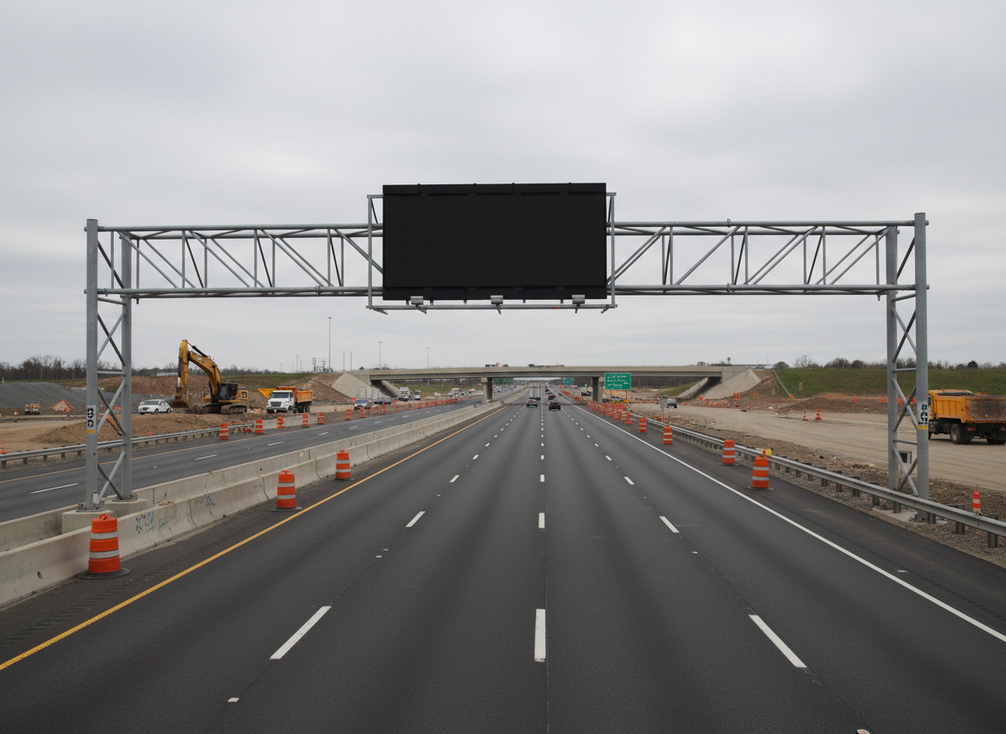
This is also where the comparison flips by scenario. A gantry-heavy freeway project may prioritize support structure and wide viewing conditions, while a retrofit or lower-load site may care more about lighter hardware and simpler installation. A mobile work zone may care more about quick repositioning and message updates than about a fixed support system.
That is why the traffic VMS LED display link is best used as navigation, not proof. The category can help a buyer browse relevant options, but the MUTCD decision still comes first, and the project context still decides fit.
If the board only fits the brochure but not the roadway, it is the wrong buy. If your review team cannot verify the message plan, deployment type, and documentation in one pass, the spec is too loose.
Final Checks Before Procurement
Before you release the bid or approve the submittal, confirm the current FHWA edition is the controlling source, confirm the deployment context matches the project plan, and confirm the documentation package is complete enough for reviewer sign-off.
Also confirm that no one has slipped in unsupported claims about brightness, approval, or safety outcomes. The MUTCD sets the baseline, but the procurement package still has to spell out what the contractor will deliver, how it will be used, and how it will be checked in the field.
If the sign will be used in a temporary work zone, compare the package against the traffic control plan before release. If the project is long duration or corridor-wide, check whether the deployment path, support structure, and message update process match the planned phasing. If the board cannot be reviewed against those items, it is not ready for procurement.
Compare the traffic control plan, the bid spec, and the equipment package side by side before you issue the solicitation. If they do not describe the same deployment context and documentation package, revise the language first and buy second.
FAQs
What Changed in the MUTCD 11th Edition for VMS?
The biggest change for buyers is not a single headline feature, but the fact that the 11th Edition is now the current national reference for these devices. Before reusing an old note sheet, check whether the message use, deployment type, and submittal language still match the current wording.
Are LED Changeable Message Signs Still Allowed Under the Current MUTCD?
LED-based VMS can still be relevant, but they are not automatically a fit for every project. The deciding factors are the sign category, the deployment context, and the documentation needed for review. If the sign’s use case is unclear, verify the current clause language before assuming approval.
What Should a Buyer Verify Before Approving a Highway VMS?
Verify the edition, the deployment context, the message purpose, the operating rules, and the submittal package. If any one of those is missing, the review will usually stall later. A good approval check asks whether the sign can be field-verified, not just whether it looks complete in a catalog.
How Do You Translate MUTCD Language Into Procurement Terms?
Turn the standard into a sequence of buyer checks: reference the current edition, define the use case, specify the configuration, set operating rules, and define acceptance criteria. That approach keeps vendors answering the same question and reduces the chance of a vague bid response.
Can a Product Page Confirm MUTCD Compliance by Itself?
No. A product page can help with browsing and feature screening, but compliance depends on the current standard, the project context, and the submittal documents. If the page does not clearly support the required use case, treat it as a navigation aid rather than proof.