For LED wall TCO, the real comparison is five-year ownership cost, not the panel quote alone. AVIXA defines TCO to include acquisition, installation, operation, maintenance, and end-of-life disposal, which is why command-center buyers should compare equal installed scope, spares, and support terms before they judge price.
Where TCO Starts to Diverge
The first split usually happens before the brand names matter. A quote that looks cheaper on hardware can become a different project once you add mounting, cabling, commissioning, and integration. That is why LED wall TCO works best as an installed-cost and operating-cost comparison, not a sticker-price contest.
In mission-critical rooms, the question is not just “what looks good on day one?” Control-room design standards such as the ISO 11064 control-room standard remind buyers that uptime, visibility, and serviceability affect daily operations, so a display that is hard to service can cost more over time even if the upfront quote is lower.
A useful starting rule is simple: if two bids are not matched on installed scope and service terms, they are not comparable yet. That normalization step keeps value-premium and top-brand bids on the same frame.
The Cost Drivers That Move the Five-Year Total
The biggest five-year differences rarely come from one line item. They usually come from a cluster of smaller costs that add up differently by vendor tier. In many cases, fine-pitch hardware already sits at the higher end of the price spectrum, so pixel pitch alone can push the installed bill upward before service is discussed.
Acquisition Cost Versus Installed Cost
For buyers, the first mistake is treating hardware price as the project price. A wall that needs more structural work, tighter tolerances, or more involved commissioning may narrow the gap between a value-premium bid and a top-brand bid. A five-year ownership-cycle lens helps here: even when the screen type is the same, the installed project can diverge once deployment complexity is included.
What this means is that two bids can look close on paper but land differently in budget review. If one vendor bundles more of the field work and the other shifts it into change orders, the apparent savings may disappear.
Maintenance Access and Parts Strategy
Maintenance is where some lower-priced bids start to lose their edge. If a design is harder to access, slower to repair, or more dependent on remote parts shipments, the ownership cost grows through labor and downtime exposure. That is especially important when a room runs every day and interruptions are visible to operators.
This is also where the support model matters more than the product brochure. A quote that includes clear spare-part planning, service access, and response expectations can reduce uncertainty even if it does not look cheapest at award time. If those items are unclear, the TCO comparison is incomplete.
Energy, Power, and Facility Overhead
Power and cooling belong in the operating-cost bucket, especially for 24/7 rooms. The point is not to claim one vendor is automatically more efficient than another. The point is that always-on rooms accumulate those costs, so they should be counted alongside the display itself. Even modest differences can matter when the wall runs continuously.
This is one reason a command center LED wall total cost of ownership review should include the room, not just the screen. In a budget review, facility overhead can become the quiet cost that turns a “cheap” bid into a more expensive one over time.
Downtime Exposure and Replacement Risk
Downtime is a cost even when no parts are physically replaced. If operators lose the wall during a shift, the operational disruption can outweigh a small purchase-price gap. Replacement exposure also includes waiting for service, waiting for parts, and the extra labor needed to restore the system.
That is why budget LED video wall reliability should be evaluated as a risk question, not a promise. The practical issue is not whether a vendor says the wall is dependable. It is whether your team can recover quickly enough if something fails.
Why Reliability Changes Ownership Cost
In mission-critical rooms, reliability changes the cost model because interruption has an operational price. ISO 11064 is a control-center design standard, not a brand ranking, but it reinforces a useful point: the display has to fit the room’s operating demands, not just its visual target.
That is why buyers often pay for reduced uncertainty, not only for branded hardware. A value-premium LED wall can be a sensible choice when the room can tolerate a slower service path or a simpler support model. A top-brand bid can still make sense when the buyer needs stronger governance, standardization, or support predictability.
The three reliability questions that matter most are practical:
- How quickly can the wall be serviced?
- How much of the system can be repaired in place?
- What happens operationally if a part is unavailable for a few days?
Warranty wording alone does not answer those questions. A long warranty can still leave the buyer with a slow repair path, unclear spare-part logistics, or more labor than expected to restore the room.
Redundancy, Serviceability, and Repair Paths
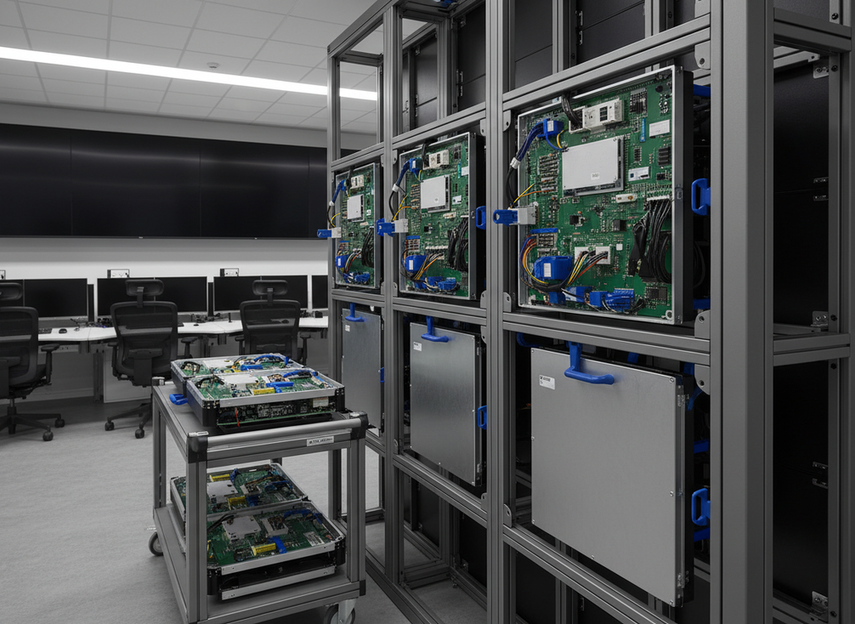
Redundancy and service-friendly design lower the time and labor needed to recover from a fault. Front service, modular replacement, and clear maintenance procedures all matter because they affect how much work it takes to get back online. If the wall is difficult to access, the hidden cost shows up in labor and downtime rather than in the quote.
This is where mission-critical buyers should be strict. Ask whether the bid assumes local spares, whether the service path is documented, and whether the recovery procedure is realistic for your team. If not, the apparent discount may be buying more operational risk than the room can absorb.
Warranty Terms Versus Real Support Burden
Warranty length is only one part of the picture. Response windows, parts logistics, and repair scope can matter more than the headline warranty itself. A cheaper wall with a slower support path may carry more five-year risk than a slightly pricier wall that is easier to recover.
That is why mission-critical LED display lower cost should be tested against your actual downtime tolerance. If the room is public-facing, safety-related, or operationally time-sensitive, support burden can outweigh a modest hardware discount.

Where Top Brands Still Win
Paying more for a top brand is not always overbuying. Sometimes the premium is justified by fleet standardization, existing control-room compatibility, or a support model the buyer already trusts. In those cases, the brand premium is less about visual performance and more about governance and risk tolerance.
Here is a simple way to think about it: if the buyer values consistency across sites, wants fewer surprises during service, or has a strict approval process, the higher-priced bid may be easier to defend. If the room is less fragile and the service path is clear, a value-premium option may be enough.
| Decision Factor | Why Top Brands May Win | When Value-Premium May Be Enough |
|---|---|---|
| Fleet standardization | Easier to keep the same platform, service process, and documentation across locations | No existing fleet requirement and the new wall stands alone |
| Support expectations | Buyers may prefer a known service structure and clearer escalation path | The vendor can document response terms and spare-part handling |
| Documentation needs | Larger organizations often want cleaner procurement files and fewer exceptions | The project team can accept a simpler support package |
| Spare-parts strategy | A mature parts model can reduce uncertainty in long-life deployments | The room has local spares and an acceptable recovery plan |
| Budget pressure | Not the reason to choose premium, but sometimes the premium is unavoidable in standardized environments | The budget is tight and the support model still meets the risk threshold |
The main point is not that top brands are always better. It is that brand premium can buy comfort, consistency, and lower decision friction when those things are worth more than the cash difference.
A Five-Year Buyer’s Checklist
Use this checklist before you compare LED wall quotes:
- Define the operating environment. Spell out whether the wall runs 24/7, how visible downtime would be, and how often the room depends on the display.
- Normalize installed scope. Compare the same mounting, commissioning, cabling, and acceptance work on every bid.
- Compare service and spares. Ask what parts are stocked, who owns them, and how repairs are handled.
- Test support and acceptance criteria. Verify response expectations, escalation path, and what “complete” means at handoff.
- Map the result to risk. If the room cannot tolerate long interruptions or unclear service terms, keep shopping. If the support model is clear and the risk is acceptable, a value-premium bid may fit.
AVIXA’s ROI and system-design guidance supports that normalization approach, which is why bid comparison should include commissioning, spare parts, and response expectations before award. If you are comparing command-center options, start with mission-critical LED walls rather than the most aggressive price on the page. That keeps the first pass focused on fit, not just invoice size.
Final Takeaway
LED wall TCO diverges when installed scope, service burden, and downtime exposure start to outweigh the hardware quote. Value-premium can be a smart choice when the room’s risk is manageable and support terms are clear. Top brands still make sense when governance, standardization, or recovery speed matter more than upfront savings. Use the checklist above to normalize your next bid set before you compare prices.
FAQs
Can a Value-Premium LED Wall Deliver Similar Uptime for Less?
Sometimes, but only when the service model, installation quality, spare-part plan, and room risk all line up. A lower acquisition cost does not guarantee lower ownership risk. For a command center, the question is whether the wall can be restored quickly enough if something goes wrong, not whether the quote looked attractive on day one.
What Costs Get Missed in LED Wall TCO Comparisons?
The usual misses are commissioning, service access, spare parts, cooling, and the cost of disruption during repair. Buyers also forget that a harder repair path can create labor expense even when the part itself is not expensive. That is why installed scope and support terms belong in the comparison from the start.
Why Do Top Brands Often Cost More Over Five Years?
Sometimes the premium reflects support structure, documentation, and lower buyer friction rather than a better-looking panel. In a controlled procurement process, that can be worth paying for. In a less demanding room, it may be more than the buyer needs. The right answer depends on risk tolerance and service expectations.
How Should Government Buyers Compare LED Wall Quotes?
Compare equal installed scope, commissioning, acceptance testing, spare-parts responsibility, and response terms before you award. A government bid is easiest to defend when the comparison is documented and apples-to-apples. If those items are not aligned, the cheapest quote may not be the lowest-risk choice.
Can Support Terms Matter More Than Panel Price?
Yes. In mission-critical use, response time, parts availability, and repair path can matter more than the initial gap in hardware price. If a room depends on the wall continuously, the support model can change the five-year bill more than the invoice does. That is why service should be part of the buying decision, not an afterthought.