

For 24/7 command rooms, LED wall service response time is a procurement risk metric, not a vague support promise. The key question is not just whether a vendor answers quickly, but how fast it acknowledges the issue, dispatches help, and restores the wall after a failure. That distinction matters because a fast call-back can still leave a mission-critical display down if parts or site access lag.

What Response Time Means for 24/7 LED Walls
Response Time Versus Repair Turnaround
Response time usually means the first meaningful action, such as acknowledgment or triage, not the full repair. In other words, a vendor can respond quickly without actually bringing the wall back online yet. That is why buyers should ask for both the response clock and the repair turnaround in the same conversation.
A practical rule is to separate the service promise into two questions: how fast does someone engage, and how fast does the system recover? The first helps you judge support access. The second tells you whether a failure is still tolerable in a 24/7 room. A clear acknowledgment versus full repair distinction keeps those questions from getting blurred.

What Counts as a Real Service Clock
The clock should start from a clearly named event, such as ticket creation, call receipt, or fault confirmation. If the vendor uses business-hours-only handling, that is not the same as 24/7 support for a command center. Buyers should also verify whether remote triage, dispatch, and onsite work are treated as separate milestones.
That matters because each milestone removes a different layer of risk. Remote triage can confirm the problem. Dispatch can get the right person moving. Onsite action is where hardware recovery actually begins. If those milestones are bundled into one broad promise, the support commitment is harder to compare.
Why 24/7 Environments Need Two Benchmarks
Mission-critical rooms need two benchmarks: first-response speed and restoration speed. The better benchmark depends on whether the wall can tolerate a partial outage, a brief degraded state, or no outage at all. If the room cannot absorb much downtime, the buyer should push harder on onsite response and parts readiness, not just phone support.
For 24/7 LED wall service response, the safest mindset is conservative: treat service promises as verification points, not marketing language. The question is not whether support sounds strong; it is whether the milestones match the room’s downtime tolerance.
Practical Response-Time Tiers
A useful comparison starts with the 4-hour onsite reference used in mission-critical service planning for Priority 1 failures. The 4-hour on-site response for Priority 1 failures is not a universal rule for every LED wall, but it is a strong benchmark for high-urgency environments.
| Tier | What it usually means | Where it fits | What procurement should verify |
|---|---|---|---|
| Sub-15-minute triage | Very fast acknowledgment and initial diagnosis | Best for critical command center workflows with low tolerance for ambiguity | Ask whether this covers real human response, not just automated ticket intake |
| Sub-1-hour escalation | Rapid engagement, but not necessarily onsite arrival | Strong for 24/7 rooms that have redundancy and can survive short degradation | Confirm dispatch timing, after-hours coverage, and who owns the next step |
| Same-day or 4-hour onsite | A realistic mission-critical reference for major failures | Better fit for primary command center walls and urgent outages | Verify travel radius, labor availability, and parts access before you accept the promise |
| Next-day or slower backup-only coverage | Lower urgency support | Usually acceptable only for non-critical or redundant displays | Check whether downtime is truly tolerable and whether partial outage support exists |
The decision point is simple: if the wall is operationally central, slower tiers create more exposure unless redundancy and spares are strong enough to offset them. If the wall is secondary, a slower tier can be acceptable, but only when the room can absorb the outage without operational harm.
Local Coverage and Spare-Parts Readiness
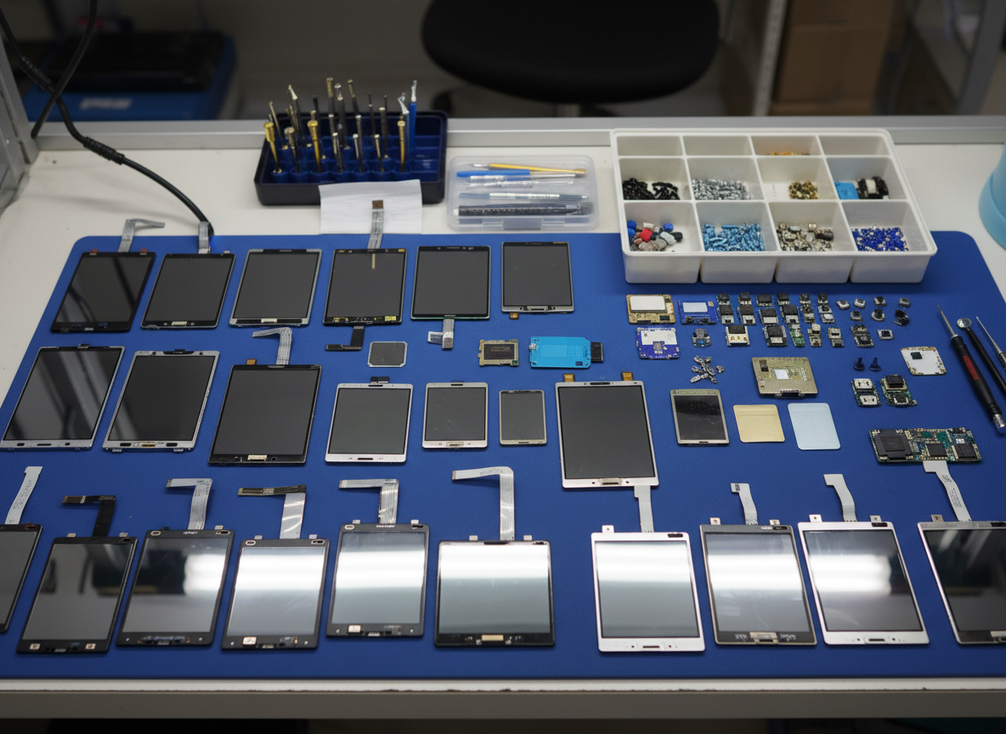
Local service availability helps only when the vendor can actually dispatch, access the site, and bring the right parts. A nearby technician does not guarantee fast restoration if labor is limited, access is delayed, or the needed modules are not stocked. That is why LED display local service availability US should be read as a service-chain question, not a map pin.
Spare parts are the other half of the equation. In high-availability environments, mission-critical planning often includes critical spare modules and power supplies as a practical buffer, and AVIXA’s command-room resilience guidance points to redundant power supplies, hot-swappable components, and modular design as ways to reduce downtime. As a planning heuristic, some teams keep roughly 2% to 5% of critical items on hand, but that is an advisory range, not a fixed rule.
What to ask is straightforward: where are the parts stocked, who owns them, how fast can they be replenished, and do weekend or holiday shipping rules change the answer? If the parts sit far away, a fast help desk response can still turn into a slow repair. That is the gap many buyers miss when they focus only on the initial call.
What Good SLA Language Should Cover
Vendor SLAs should be written around measurable milestones, not general service assurances. The most useful terms are acknowledgment time, dispatch window, escalation path, parts replacement rules, coverage hours, and exclusions. AVIXA’s documented performance verification standards are a good reminder that support claims should be testable, not just promotional.
A strong SLA also makes the remedy structure clear. In public-sector contract language, SLA credits and remedies are often capped, which shows why credits are not the same thing as restored uptime. A refund or service credit may help financially after the fact, but it does not solve the outage itself.
Use this list when you review a contract:
- Acknowledgment time: when a human actually takes ownership of the issue.
- Dispatch window: how long it takes to send the right resource.
- Coverage hours: whether nights, weekends, and holidays are covered.
- Escalation path: who steps in if the first contact stalls.
- Parts replacement: whether the vendor stocks or can quickly source the needed modules.
- Exclusions and maintenance windows: the clauses that can quietly weaken the promise.
If any of those items are vague, the SLA is not yet strong enough for a 24/7 LED wall.
Service Response-Time Milestones for 24/7 LED Wall Support
A compact tier view of the service clock: response means initial acknowledgment and engagement, while dispatch, onsite action, and full restoration are separate milestones. Use the 4-hour onsite target as the clearest anchor, and treat the other tiers as practical response stages rather than universal standards.
View chart data
| Category | Typical service-clock milestone |
|---|---|
| Acknowledgment | 1 |
| Dispatch | 2 |
| Onsite action | 3 |
| Full restoration | 4 |
How to Evaluate a Vendor Before Purchase
Ask for named contacts, actual support hours, and separate response and dispatch milestones in writing. You want acknowledgment, field dispatch, and onsite action spelled out, not blended into one promise. Then verify the parts plan, local coverage, and whether the vendor can support partial outages without replacing the whole wall.
The same review should compare the support model with your downtime tolerance before you sign. For buyers weighing mission-critical support commitments, the question is whether the service response matches the room’s real risk, not whether the offer sounds broad. That is the point where LED wall service response becomes a purchase decision, not just a service line item.
FAQs
How Fast Should LED Wall Support Respond in a Command Center?
There is no universal number that fits every command center, but faster than same-day is usually more compelling for low-tolerance rooms. The practical check is whether the vendor can name acknowledgment, dispatch, and onsite milestones separately. If only one of those is defined, the support offer is still too vague for mission-critical procurement.
What Is the Difference Between Response Time and Repair Turnaround?
Response time is the first meaningful action, while repair turnaround is the time needed to restore service. A fast response can still leave downtime if parts, labor, or access are delayed. When comparing vendors, ask for both measures so you can tell whether the offer reduces the outage itself or only speeds up the first ticket.
Can Local Service Availability Shorten Downtime for 24/7 LED Walls?
Yes, but only when local coverage includes dispatch authority, available labor, and stocked parts. Geography alone does not guarantee faster recovery. The next thing to check is whether the vendor can name the parts location, shipping cutoff, and weekend or holiday rules, because those details often decide the real repair window.
What Should a 24/7 LED Wall SLA Include?
At minimum, it should define acknowledgment time, dispatch window, coverage hours, escalation path, and parts replacement rules. If the SLA only promises “priority support,” that language is too soft for a command center. The best next step is to request the exact support milestones in writing before the contract is signed.
How Do Spare Parts Reduce Command Center Risk?
Spare parts reduce risk by shortening the time between failure and restoration, especially when shipping delays would otherwise stretch the outage. The useful check is whether the vendor or buyer holds the critical modules that fail most often. If the wall is truly 24/7, a small on-hand inventory can matter more than a broad but slow replenishment promise.