


Winter performance for highway VMS is a reliability and maintenance question. For DOT buyers, highway VMS winter performance comes down to cold-start behavior, moisture intrusion, salt exposure, thermal cycling, and how easy the sign is to inspect or service before and during storm season.
What Winter Changes for Highway VMS
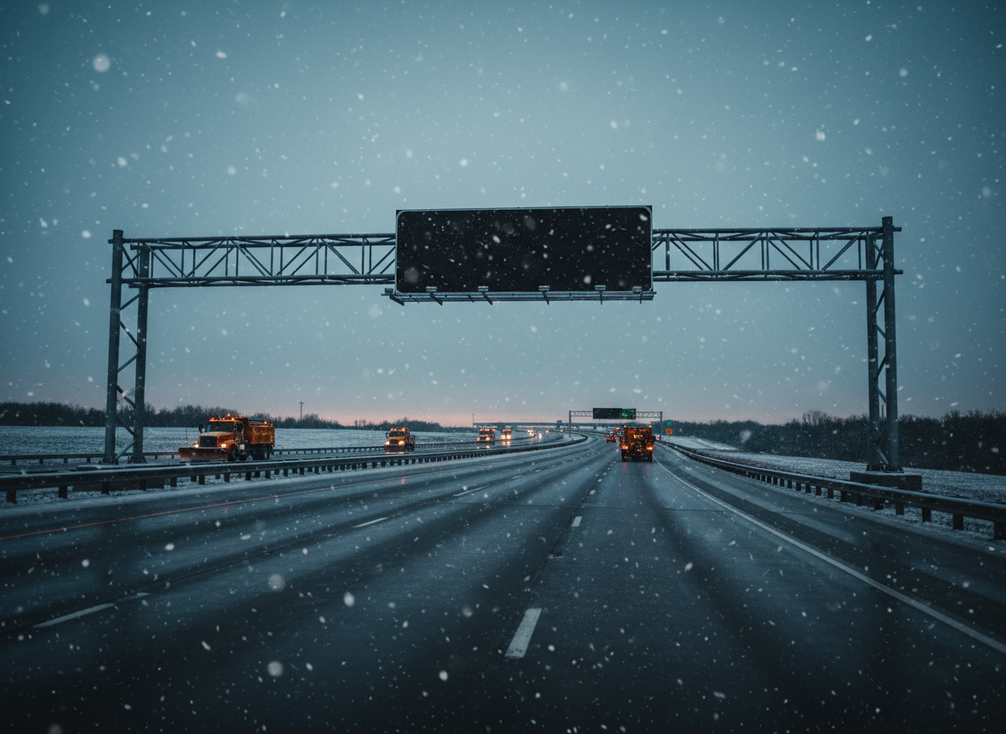
Winter changes how a highway VMS behaves as a system, not just as a display. Electronics, housings, seals, connectors, and service access all face a different load when temperatures swing, roads are treated with salt, and crews have shorter maintenance windows. That is why highway VMS winter performance should be judged by likely failure modes, not by a generic winter-ready label.
For road weather management, reliable messaging matters more when conditions are changing fast. FHWA notes that adverse weather can have a major impact on highway operations, which is one reason winter uptime matters for traffic communication FHWA road weather management. If the sign misses a warning window or drops offline during a storm, the cost is usually a delayed message and a longer maintenance call, not just a cosmetic issue.
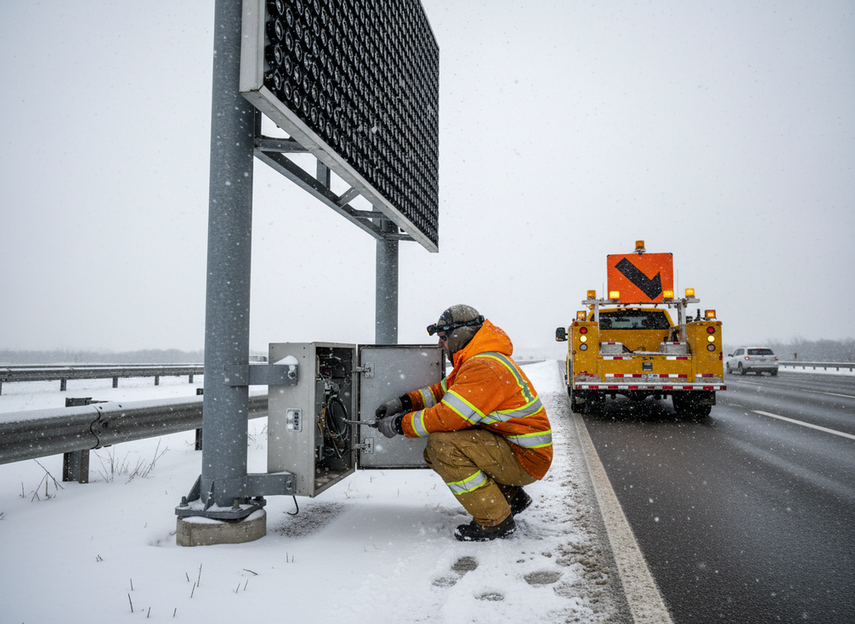
A good first filter is this: if a VMS only looks fine in mild weather, that is not enough for snowbelt use. Buyers should ask what happens after an overnight freeze, after repeated wet-dry cycles, and after several weeks of salt spray. Those conditions are where hidden faults tend to show up.
Key Winter Stressors on VMS Equipment
The winter stressors are different enough that it helps to separate them.
Moisture, Frost, and Condensation
Moisture is often the hardest winter problem to diagnose because it can create intermittent faults rather than a full outage. Meltwater, frost, and refreezing can leave water in seams, cable entries, or cabinet edges, and the sign may fail only under certain temperature swings. That makes the problem look random even when the cause is environmental.
In practice, the question is not just whether a cabinet is sealed. It is whether the enclosure, vents, drains, gasket interfaces, and cable entries work together when snow turns to slush and then back to ice. NEMA TS 4 is the hardware standard framework for Dynamic Message Signs, so it is a useful baseline when you are reviewing environmental expectations for roadside equipment NEMA TS 4 hardware standards. That does not make any model winter-proof, but it does give buyers a technical starting point.
Road Salt and Corrosion Exposure
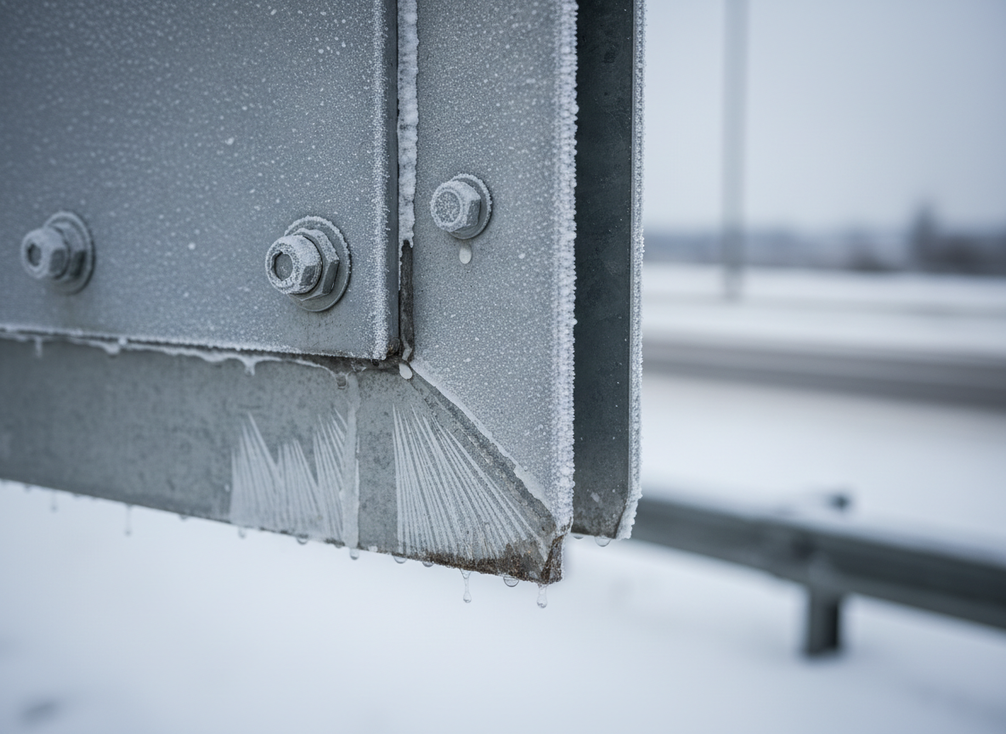
Road salt is more than a surface-cleanliness issue. Salt-laden spray and fog can reach fasteners, connector faces, cabinet edges, and other exposed parts that buyers may not inspect closely during a quick walkaround. The reason salt fog testing matters is that it helps benchmark corrosion resistance under conditions that resemble roadside winter exposure, rather than treating corrosion as a vague concern salt spray testing.
The practical buying lesson is simple: do not judge winter durability by the cabinet skin alone. Ask what is protecting the connectors, exposed metal, and seams where salt can settle. If those parts are not addressed, the visible enclosure can still look fine while the service burden rises.
Thermal Cycling and Seal Fatigue
Thermal cycling matters because repeated expansion and contraction can stress seals, joints, and enclosure interfaces over time. A sign may pass a summer check and still develop winter service problems later if the gaskets, joints, or entry points slowly loosen under freeze-thaw swings.
This is where winter performance becomes a lifecycle question. A design that survives one cold snap is not the same as a design that stays stable through a full season of repeated temperature swings. Buyers should treat thermal cycling as a wear factor, not a one-time event.
Low-Temperature Startup Behavior
Cold-start behavior is different from steady-state operation. A VMS can appear normal once it is warmed up, but still show delays, resets, or partial function after a cold soak. That distinction matters because traffic operations often depend on the first power-up after an overnight freeze, not on how the sign behaves at midday.
A Florida DOT environmental checklist tied to NEMA TS 4 shows the kind of cold operating range and humidity exposure that buyers may need to verify, including a range from -34°C to +74°C in the checklist material FDOT NEMA TS 4 environmental checklist. That number should be treated as model- and documentation-specific, not as a blanket claim for every highway VMS.
Winter Stressor Comparison
| Winter stressor | What it can do | What DOT buyers should verify |
|---|---|---|
| Moisture, frost, condensation | Create intermittent faults, ice paths, or water ingress at seams and cable entries | Enclosure sealing, drainage, vents, and entry-point protection |
| Road salt | Increase corrosion risk on fasteners, edges, and connectors | Materials, coatings, exposed metal protection, and connector design |
| Thermal cycling | Stress seals, joints, and interfaces over time | Gasket quality, enclosure fit, and seasonal inspection access |
| Cold startup | Cause delays, resets, or partial function after cold soak | Documented operating range and startup behavior after overnight freeze |
Winter-Ready Design Features to Compare
The best winter-ready design features are the ones that reduce a specific failure path. A sealed cabinet is helpful, but only if the water-management design, cable entries, and service access also make sense for a snowbelt site. The same is true for heating, venting, or coatings: each one should be tied to a problem it actually addresses.
Start with the features below and ask what they change in winter operation.
| Feature | Why it matters in winter | What to verify |
|---|---|---|
| Enclosure sealing | Helps limit moisture entry during snow, slush, and refreeze cycles | Gasket design, door fit, cable-entry sealing, and any water-management path |
| Drainage or venting approach | Helps reduce trapped moisture and condensation buildup | Whether the design is documented and how it behaves in cold conditions |
| Heating or anti-condensation support | Can reduce cold-start moisture problems in some designs | Whether it is actually specified, how it is controlled, and what it is meant to prevent |
| Corrosion-resistant materials and coatings | Helps protect exposed edges, fasteners, and hardware from salt exposure | Materials list, coating details, and connector protection |
| Front-service or easy-access design | Reduces winter downtime when crews have short work windows | How maintenance is performed, what tools are needed, and whether access is practical in cold weather |
| Documented operating range | Gives buyers a model-specific limit to compare against site conditions | The exact published range and any startup notes in the technical documentation |
If you are comparing options in a winter procurement, the traffic and VMS solutions category can be useful as a navigation path. Use it to compare the right class of equipment, then check the documentation for cold-weather fit.
A useful rule of thumb is this: if a feature sounds good but the documentation does not say what problem it solves, treat it as marketing until proven otherwise. That keeps buyers from overvaluing a vent, heater, or coating that may help in one condition but not in another.
What DOT Buyers Should Verify Before Winter
A winter-ready procurement review should feel like an acceptance checklist, not a brochure review. The point is to confirm what the sign is designed to handle, how it is installed, and how crews will keep it online when roads are treated and visibility is poor.
- Confirm the documented operating range and ask whether startup behavior after a cold soak is described in the technical materials.
- Review the enclosure sealing and water-management details, including drainage, cable entries, and gasket interfaces.
- Verify the corrosion-protection materials, coatings, and exposed hardware treatment.
- Inspect connector protection and cable-entry design, since those spots often see the most winter wear.
- Check service access, because front-service or easy-access layouts can reduce winter downtime when maintenance windows are short.
- Match the maintenance plan to the site, so the team knows how winter inspections, cleaning, and response timing will work when conditions worsen.
For that last step, the maintenance logic matters as much as the hardware. New York State Thruway guidance on VMS use emphasizes regular maintenance and inspection, especially during adverse weather and winter months NYSTA VMS guidance. That is a good reminder that winter performance is partly a planning problem: the easier the sign is to reach, inspect, and clean, the less likely a small issue turns into a longer outage.
If you need a simple procurement filter, use this: buy the model that can document its cold range, show how it handles moisture and salt, and still be maintained safely and quickly in the field. If any one of those three is vague, the winter risk is still open.
Maintenance Implications for Snowbelt Operations
Winter maintenance usually becomes more proactive, not less. Crews have fewer daylight hours, weather windows close faster, and service calls are harder to schedule around storms. That is why highway VMS winter performance should be read as an uptime-and-access issue, not just a hardware specification.
The sites that struggle most are usually the ones where cleaning, inspection, or part replacement takes too long. A sign with better access can reduce the time crews spend exposed to winter conditions, and a sign with clearer service points can shorten diagnosis when faults are intermittent. The buyer takeaway is not that maintenance disappears, but that the equipment can make maintenance more predictable.
In snowbelt operations, the most expensive winter problems are often the ones that repeat. If moisture, salt, or cold-start issues keep coming back, the true cost is the pattern of service calls, not the first repair. That is why the maintenance plan belongs in the procurement decision.
Before winter, we recommend a quick review of the sign’s access points, cleaning plan, and response path so crews can work faster in poor weather. If you are comparing options, review winter-ready VMS options and check the operating range, corrosion protection, and maintenance access before you buy.
FAQs
How Do Highway VMS Perform in Winter?
They can perform well in winter when the model, installation, and maintenance plan all match the site conditions. The main check is not "winter or not," but whether the documented operating range, moisture control, corrosion protection, and service access fit your corridor and your crew schedule.
What Causes a VMS to Fail More Often in Cold Weather?
The most common winter problems are moisture intrusion, freeze-thaw stress, corrosion, and cold-start issues. The useful distinction is that these often show up as intermittent faults before they become a full outage, so buyers should watch for repeated resets, delayed startups, or problems that appear only after overnight freezes.
Can Road Salt Affect Highway LED Signs?
Yes, road salt can increase corrosion risk on exposed edges, fasteners, connectors, and cabinet interfaces. The practical check is whether the design protects those smaller parts, not just the face of the sign, because salt fog and splash often reach the details crews do not notice first.
What Should DOT Buyers Check in a Cold-Climate Spec?
Start with the documented operating range, cold-start behavior, sealing details, materials, connector protection, and service access. If the spec only says a sign is "outdoor" or "weather-resistant," that is not enough for a snowbelt buy; you need model-specific winter details that can be compared across bids.
Can Better Design Reduce Winter Maintenance?
Yes, better design can reduce avoidable winter work, but it will not remove the need for inspections, cleaning, and response planning. The best way to judge the payoff is to ask whether the design shortens access time, limits moisture and salt entry, and makes repeated winter diagnosis less likely.





