

An LED wall rental vs buy decision is mainly about utilization and cost. Renting fits irregular schedules and changing screen requirements. Buying becomes more economical when the same system is used often across repeatable events. Compare the full cost per event, including labor, freight, storage, maintenance, downtime, depreciation, and resale value.
Why LED Wall Rental vs. Buy Needs a TCO Model
Rental fees and purchase prices only become comparable after all operating costs use the same assumptions.
Event Companies Need a Full Cost Comparison
The cabinet price covers only part of a show-ready LED system.
| Decision Factor | Renting | Buying | Main TCO Effect |
| Annual utilization | Costs follow each booking. | Fixed costs spread across bookings. | Higher utilization lowers ownership cost per event. |
| Format changes | Size and pitch can change by project. | Existing inventory may not fit new briefs. | Changing formats often favor renting. |
| Crew and storage | Supplier support may cover both. | Internal staff and storage become necessary. | Limited capacity raises ownership costs. |
| Cash flow | Costs follow confirmed work. | Capital is committed earlier. | Uncertain demand creates more financial risk. |
| Availability | Stock may tighten during busy periods. | Dedicated inventory protects confirmed dates. | Repeat demand may favor ownership. |
Utilization and operating capacity usually affect the result more than the cabinet quote.
What the LED Wall TCO Model Should Include
Use the same event count, system scope, service level, and risk assumptions for both options.
Include the following costs:
- Cabinets, processors, power distribution, and signal equipment must be included.
- Rigging hardware, flight cases, carts, cables, and spare parts also add cost.
- Freight, storage, insurance, labor, and maintenance continue throughout the holding period.
- Downtime and emergency rentals should appear as risk costs.
How to Calculate LED Wall TCO for Renting or Buying
Convert all expenses into annual cost and cost per completed event.
- Annual rental TCO = Rental fees + delivery + labor + technical support + insurance + damage charges
- Annual ownership TCO = Economic depreciation + financing + storage + insurance + labor + freight + maintenance + expected downtime
- Cost per event = Annual TCO ÷ completed events
- Break-even event count = Annual fixed ownership cost ÷ rental savings per event
Rental savings per event equal the rental cost minus variable ownership costs.
Equipment, Rigging, Cases, and Spare Parts
A purchase budget should cover the complete operating package.
That package may include:
- LED cabinets and processors.
- Power and signal distribution equipment.
- Rigging hardware and support structures.
- Flight cases, carts, cables, and adapters.
- Spare modules, receiving cards, and power supplies.
Rental quotes should cover the same scope. Check if technical support, spare parts, and structures are included.
Freight, Storage, Insurance, and Handling Costs
Touring expenses may include mileage, truck space, fuel surcharges, loading equipment, lodging, and overnight storage.
Use the packed system weight for freight calculations. Include cases, cables, processors, rigging, power equipment, and spare inventory.
Owned equipment also needs secure storage. Warehouse labor, inventory checks, charging space, and insurance add ongoing costs.
Setup Labor, Maintenance, and Downtime Risk
Event labor includes loading, assembly, alignment, testing, show support, teardown, and repacking.
Maintenance may include cleaning, calibration, module repair, connector replacement, and technician hours.
Expected downtime cost = Failure probability × revenue exposed per event
Use completed events when calculating utilization. Cancelled shows and technical delays should not increase the deployment count.
Depreciation, Resale Value, and Upgrade Cycle
Economic depreciation measures the expected loss in equipment value during the planned holding period.
Annual economic depreciation = (Total acquisition cost − expected resale value) ÷ holding years
Use a conservative resale estimate. Cosmetic wear, unavailable parts, processor changes, and shifting pixel-pitch demand may lower resale value.
When Does Renting an LED Wall Make Better Business Sense
Renting often suits irregular demand, changing technical needs, and limited internal resources.
| Rental Condition | TCO Reason |
| Irregular annual bookings | Ownership costs remain high during idle periods. |
| Frequent size or pitch changes | Rental stock can match each project. |
| Short contracts | Equipment may have little repeat use. |
| Limited storage or crew capacity | Renting avoids new fixed infrastructure. |
| Uncertain sales pipeline | Cash remains available for other operations. |
Local rental rates, labor costs, freight, and financing still need to be added.
Low Annual Event Frequency
Low utilization leaves expensive equipment unused between shows.
Storage, insurance, inspections, and depreciation continue during those idle periods. Renting keeps major equipment costs linked to confirmed work.
Changing Screen Size or Pixel Pitch Requirements
Concerts, exhibitions, conferences, and festivals may need different screen formats.
Owned stock may not cover every size, shape, pitch, brightness level, or protection rating. Those gaps create extra rental costs.
Short-Term Projects With Limited Repeat Value
A short contract may not provide enough deployments to recover the purchase cost.
Rental costs remain tied to the contracted project. The company avoids holding equipment with limited future use.
Occasional Buyers With Limited Storage and Crew Capacity
Occasional users may lack trained technicians, secure storage, repair stock, and suitable transport.
Compare a full-service rental quote with the full cost of building those capabilities internally.
When Does Buying a Rental LED Display Improve LED Rental ROI
Ownership may improve LED rental ROI when inventory stays active and event packages remain consistent.
| Ownership Condition | ROI Effect |
| Consistent paid utilization | Capital costs spread across more deployments. |
| Repeatable wall packages | Existing inventory fits recurring projects. |
| Stable pitch requirements | Upgrade risk becomes easier to manage. |
| Established crew and warehouse | Existing resources absorb ownership tasks. |
| Strong peak demand | Dedicated stock protects booking revenue. |
High event volume cannot correct poor inventory planning or weak pricing.
High Utilization Across the Year
Track paid deployment days, preparation days, repair days, and idle days separately.
Annual ownership cost should be divided across paid deployments. Preparation and repair days do not generate the same revenue.
Repeatable Stage Sizes and Event Formats
Standard packages make quoting, loading, setup, crew training, and spare planning more consistent.
Inventory should match the packages sold most often. Buying the largest possible wall may leave too much stock unused.
Better Control Over Inventory, Quality, and Availability
Ownership gives the operator direct control over maintenance records, calibration, packing methods, spare stock, and booking availability.
Poor asset tracking may lead to missing parts, damaged cabinets, and emergency supplemental rentals.
Faster Payback Through Multi-Event Deployment
Use contribution margin after event-level costs.
Payback events = Initial ownership investment ÷ contribution margin per owned event
Contribution margin should exclude event labor, freight, repairs, power, insurance allocation, and sales commissions.
Test low, expected, and high utilization scenarios. Financing decisions should use the low scenario.
How Does Lightweight Rental LED Wall Design Reduce Operating Costs
Cabinet weight affects labor, freight, rigging loads, handling damage, and event turnaround.
Lower Cabinet Weight Reduces Labor Pressure
Lighter cabinets reduce repeated lifting during loading, installation, teardown, and repacking.
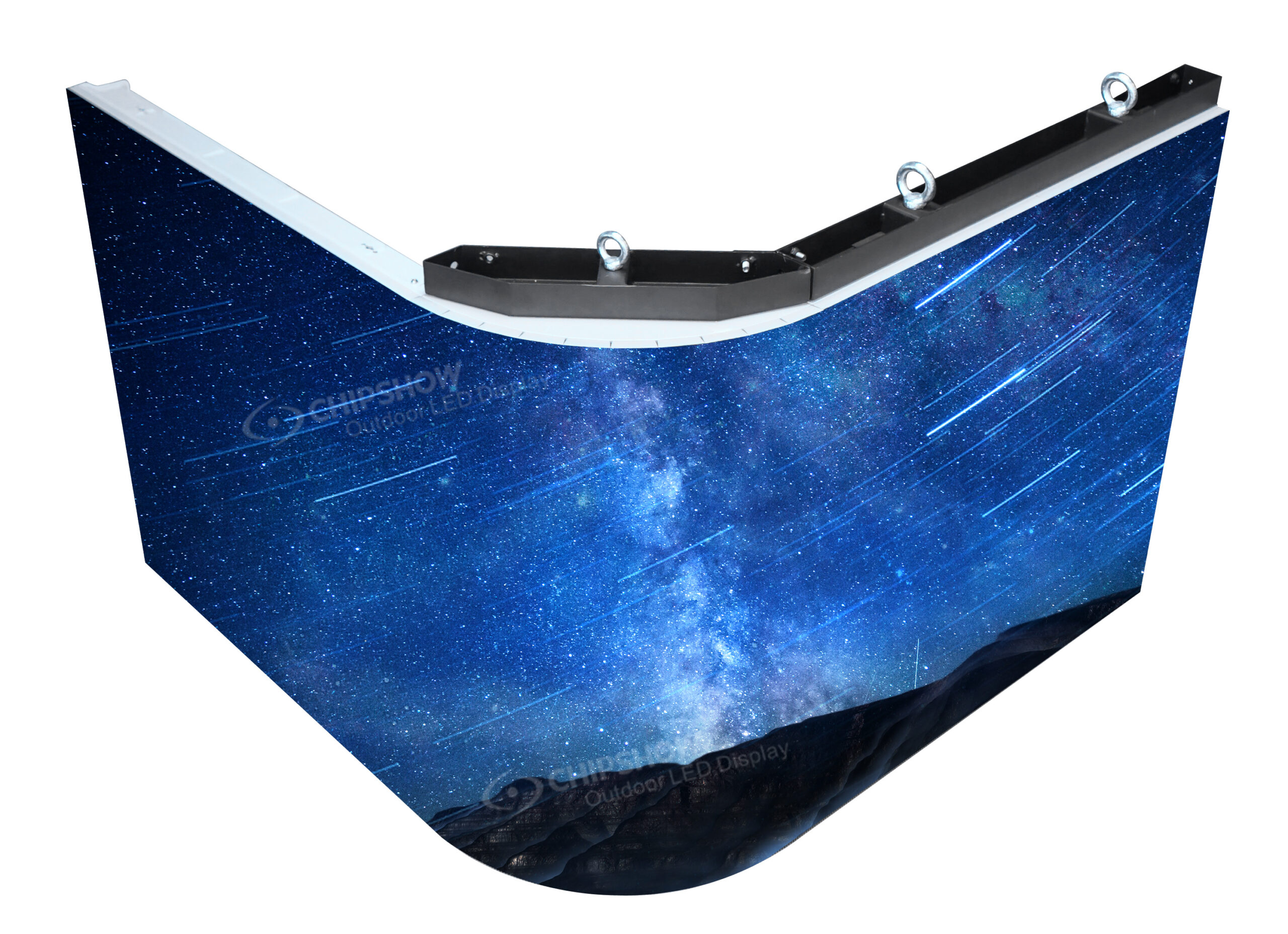
The C-Carbon P3.91 Rental LED Wall uses a carbon-fiber and magnesium-alloy structure.
Each cabinet measures 1000 × 1000 × 83.75 mm (39.4 × 39.4 × 3.3 in). It weighs 20 kg (44.1 lb) and covers 1 m² (10.8 sq ft).
The large cabinet format may reduce the number of seams, cables, and rigging points. Average power consumption is 195 W/m² (18.1 W/ft²) or less.
Faster Installation Improves Event Turnaround
A lower cabinet count may shorten installation and teardown.
Measure installation in labor-hours per 10 m² (107.6 sq ft). Use the same wall size, crew skill, and rigging method for each comparison.
Fast locks and accurate cabinet alignment also affect setup time. Weight alone does not determine installation speed.
Lower Freight Load Reduces Touring Cost
Freight costs repeat at every tour stop.
Lower packed weight may reduce truck load, lift requirements, and manual handling. Calculate the complete shipment, not only the LED panels.
Include:
- Flight cases and carts.
- Rigging and support hardware.
- Power and signal cables.
- Processors and distribution equipment.
- Spare cabinets and components.
Durable Lightweight Frames Reduce Handling Damage Risk
Lightweight construction still needs to withstand frequent loading and transport.
Check corners, locks, handles, module edges, power boxes, and frame alignment. Record damage after every event.
Useful records include failed locks, bent frames, damaged modules, connector wear, and flight-case damage.
Which Specs Matter Most in a Rental LED Display Cost Model
Only specifications that affect project fit, reliability, labor, or operating cost belong in the financial model.
| Specification | Cost Impact | What to Check |
| Pixel pitch | Finer pitch raises hardware and spare costs. | Match pitch to the closest viewing distance. |
| Brightness and IP rating | Outdoor capability adds cost and complexity. | Match the screen to light and weather exposure. |
| Refresh rate | Camera performance affects rental suitability. | Use 3,840 Hz as a current comparison baseline. |
| Service access | Faster repairs reduce labor and downtime. | Check front, rear, and tool-free access. |
| Average power | Power affects generators and distribution. | Request average consumption under expected settings. |
Extra capability may reduce LED rental ROI when clients will not pay for it.
Pixel Pitch Based on Viewing Distance and Event Type
Use the closest viewing distance as the initial filter.
An early estimate allows around 0.9 m (3 ft) of viewing distance per 1 mm (0.039 in) of pixel pitch.
| Pixel Pitch | Approximate Minimum Viewing Distance | Common Rental Use |
| 1.9 to 2.6 mm (0.075 to 0.102 in) | 1.7 to 2.3 m (5.7 to 7.8 ft) | Corporate stages, studios, and close-view events |
| 2.9 to 3.9 mm (0.114 to 0.154 in) | 2.6 to 3.5 m (8.7 to 11.7 ft) | Concerts, conferences, and general staging |
| 4.8 mm (0.189 in) and above | 4.3 m (14.4 ft) and above | Large outdoor stages and long-view applications |
These distances are planning estimates. Content detail, camera position, and audience expectations may require a finer pitch.
Brightness and IP Rating for Indoor and Outdoor Events
Indoor projects usually need controlled brightness, low noise, stable grayscale, and reliable camera performance.
Outdoor projects need suitable brightness and protection against expected exposure.
IEC 60529 defines IP codes for protection against solids and liquids. An IP rating does not replace weather planning, connector checks, or safe installation procedures.
Refresh Rate for Cameras and Live Streaming
A 3,840 Hz refresh rate is a common comparison point for current rental LED displays.
Broadcast and XR projects may use 7,680 Hz when camera requirements are stricter.
Refresh rate can reduce visible camera flicker and scan artifacts. Moiré comes from the interaction between the LED grid and camera sensor.
Front Serviceability and Average Power Consumption
Service access should fit the wall position and technician working area.
Front access reduces the rear clearance needed in tight spaces. Dual access may suit rental stock used across varied stage layouts.
Average power affects generators, electrical distribution, cooling, and venue power orders.
Ask for measured power use at the planned brightness and content settings.
Compare LED Wall Rental vs. Buy Using Real Project Costs
Base the decision on paid deployments, labor, freight, storage, maintenance, and outside rental needs. Run several utilization scenarios and compare the cost per completed event. Contact Chipshow for a project-specific assessment if cabinet weight, setup time, or touring logistics have a major impact on your margins.
FAQs
Q1. How Many Events per Year Justify Buying an LED Wall?
No single event count applies to every company. Compare annual costs at 10, 20, and 35 paid deployments. Buying becomes more attractive when conservative usage produces a lower cost per event than renting. Include storage, labor, financing, maintenance, and expected resale value in the calculation.
Q2. What Is Included in a Full-Service LED Wall Rental?
A full-service rental usually includes cabinets, processors, power distribution, rigging hardware, delivery, setup, testing, operation, teardown, and basic spares. The exact scope varies by supplier. Request an itemized quote covering travel, labor hours, venue charges, insurance, damage terms, content support, and overtime.
Q3. Does Buying an LED Wall Eliminate Future Rental Costs?
No. Additional rentals may still be needed for peak demand, specialized pixel pitches, curved walls, transparent displays, or backup inventory. Include these costs in the ownership model. Review supplemental rental spending each quarter to identify equipment that may justify a future purchase.
Q4. How Should Venue Power Capacity Affect an LED Wall Purchase?
Venue power can materially affect ownership costs. Some systems require added distribution equipment, cables, generators, cooling, or qualified electrical support. Calculate average demand and required circuit capacity for each wall package. Renting may remain more economical when venue power conditions vary widely between projects.
Q5. Can a Hybrid Rental and Ownership Model Reduce Financial Risk?
Yes. Own the wall packages used for recurring projects, then rent specialized formats or additional cabinets when needed. This approach limits idle inventory while protecting margins on regular work. Review utilization, repair costs, supplemental rentals, and lost bookings before expanding owned inventory.