


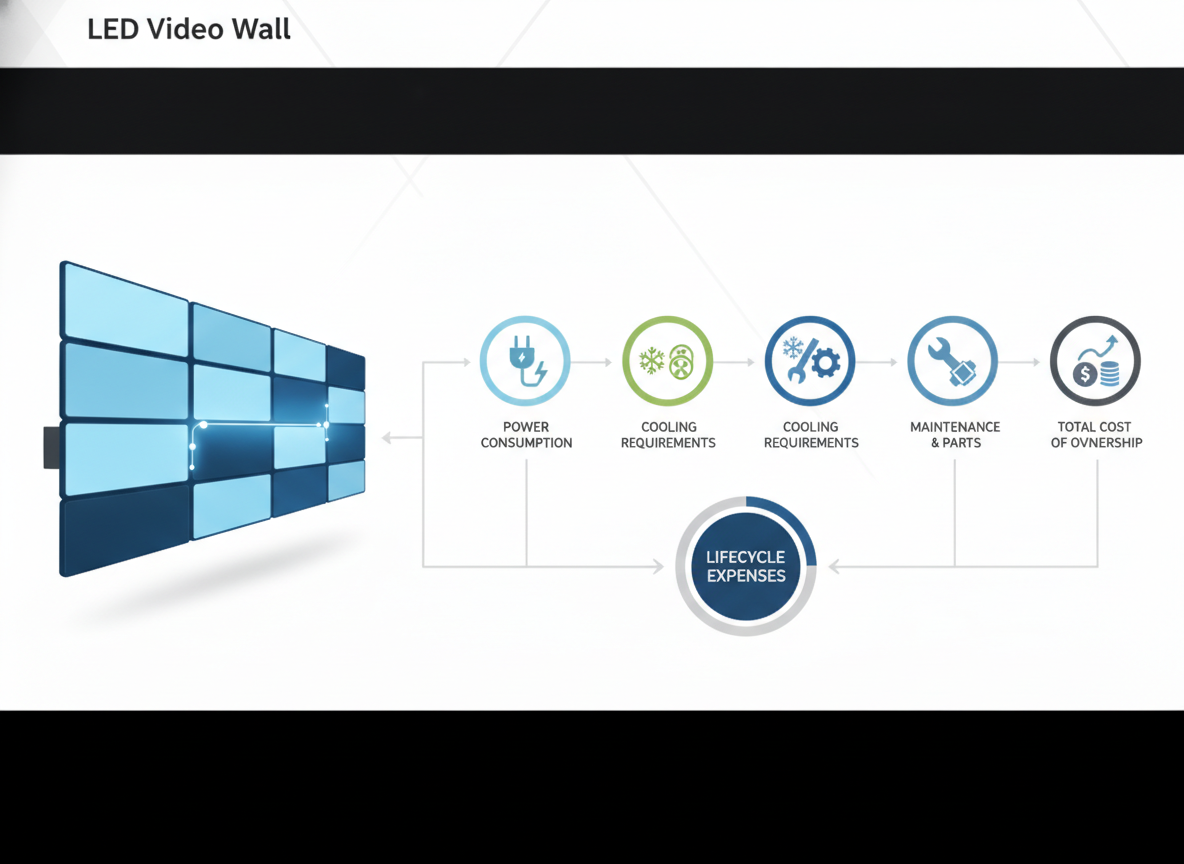
24/7 command center LED video wall energy efficiency is really a total cost question: what does the wall draw, how much heat does it add, and what does that mean for maintenance and uptime over time? For always-on rooms, the first check is not the sticker price. It is whether the wall fits your power, cooling, and service model at full runtime.
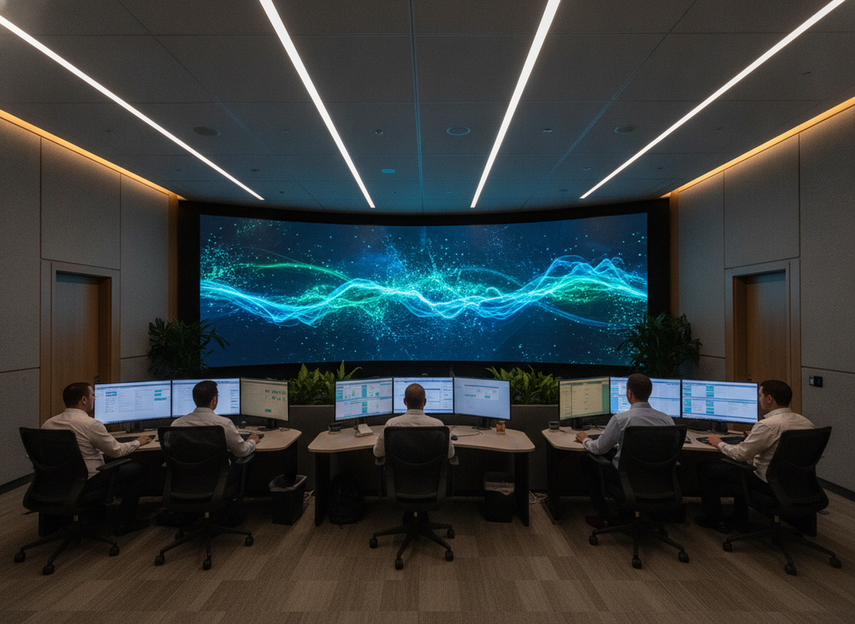
What Drives LED Wall Operating Cost
For a 24/7 command center, LED wall operating cost starts with continuous electrical load. In practical terms, that means the wall should be planned like any other always-on equipment, not like a meeting-room screen that gets switched off at night. The continuous load planning rule is the right baseline for electrical sizing, because the load is present hour after hour, not just during peak use.
Power draw is only one part of the bill. Brightness targets, content type, pixel pitch, and how hard the wall is driven all affect consumption. A wall that is brighter than the room needs may look impressive in a demo, but it can raise both electrical use and heat without improving decision quality. That is why LED video wall energy efficiency should be judged as a system choice, not a single spec.
Cooling matters because display power does not disappear after it reaches the cabinet. It becomes room heat that the HVAC system has to remove. That heat load is part of the operating cost, especially in rooms with tight cooling margins or long runtime. Efficiency gains can help, but only if the room can actually convert them into lower HVAC demand.
[[IMAGE_PLACEHOLDER_BODY_1]]
A useful decision rule is simple: if two walls look similar on paper, prefer the one that needs less brightness to do the job, is easier to service, and does not force the room into a higher cooling tier. If the room already has limited HVAC headroom, even a modest efficiency difference can matter more than it would in a larger control space.
There are also architecture-level differences. Some power distribution approaches can reduce losses and heat, which helps, but that is a directional advantage rather than a universal savings promise. In other words, better design can lower waste, but the actual result still depends on the installation, controls, and room conditions.
How Cooling Changes the TCO Equation
For most buyers, the cooling question is where the savings story gets overstated. A wall that uses less electricity does create less heat, and the standard thermal conversion is useful for planning: one watt of power becomes about 3.412 BTU per hour, and LED displays convert a meaningful share of input power into waste heat that the facility must remove. The waste heat and BTU conversion gives you a way to think about room load before you talk about bills.
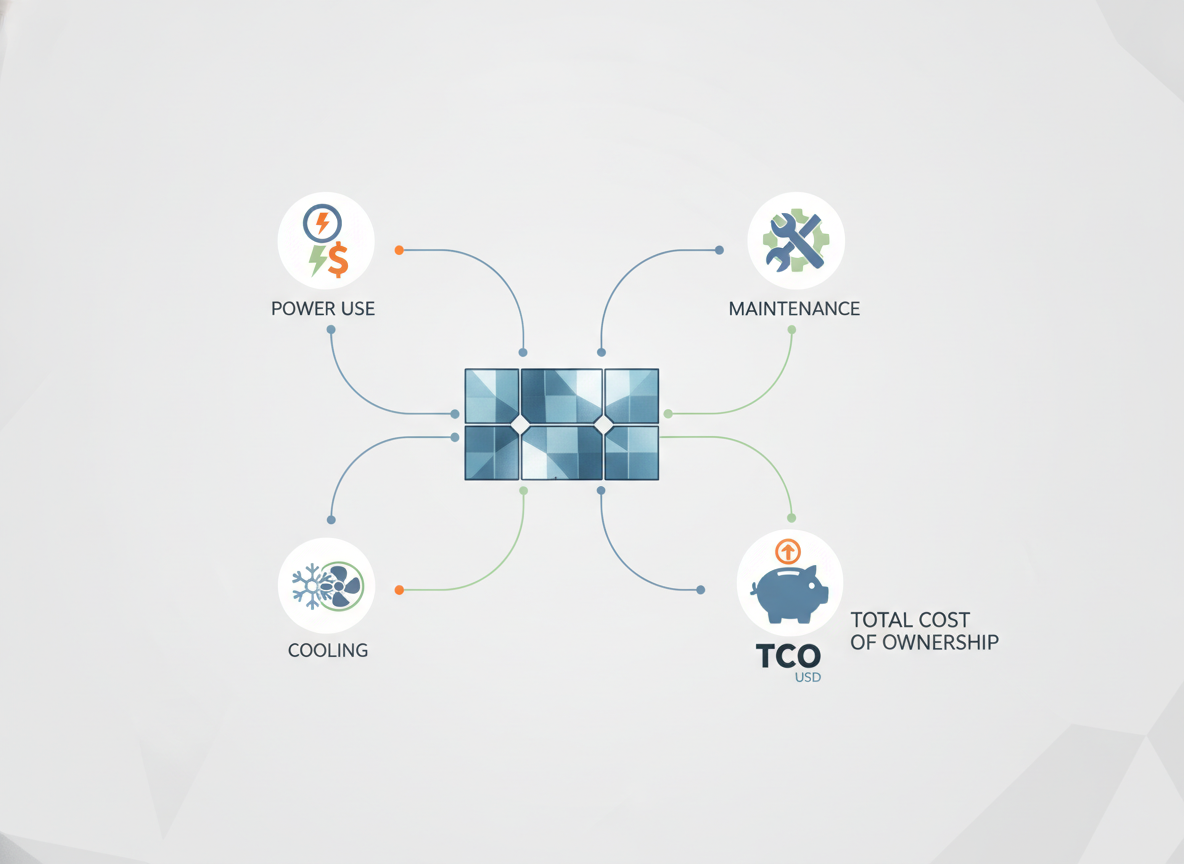
The next step is to separate load from cost. A room with strong HVAC margin may absorb the added heat with little noticeable impact. A tighter room, or one with higher ambient targets, may see that same heat show up as a meaningful HVAC planning issue. That is why the cooling question is site-specific. It is not safe to assume every watt saved at the wall becomes a dollar saved in the utility room.
The practical check is whether your current system has enough margin for the new wall at expected brightness and runtime. Equipment-heavy rooms often need extra headroom for stable operation, but the exact margin depends on the site, the rest of the load, and the HVAC design. If your team is still early in the process, treat cooling as a design input, not as a guaranteed payback line.
What Total Cost of Ownership Includes
A serious TCO model for a 24/7 wall goes well beyond purchase price. It should include electricity, cooling, maintenance labor, spare parts, and downtime exposure. The total cost of ownership inputs are the pieces that prevent a cheap quote from looking better than it really is.
This is where command centers differ from typical commercial installs. If a display failure interrupts operations, the cost is not just the repair. It can include delayed decisions, staff disruption, and higher service urgency. That is why the lower-price option is not always the lower-cost option. For mission-critical rooms, service access and repair speed belong in the buying model from day one.
A simple planning checklist helps keep the math honest. Gather the hardware price, estimated watts, hours per day, utility rate, cooling estimate, service intervals, spare-parts plan, and expected service life. Then compare proposals on the same assumptions. That gives procurement and operations teams a usable fine pitch LED TCO calculator mindset without pretending the room is more predictable than it is.
Which LED Wall Choices Help Lower TCO
The biggest TCO wins usually come from avoiding overspecification. Pixel pitch should match the viewing distance, not the marketing ideal. If the wall is much finer than the room needs, you may pay for resolution, processing, and cabinet complexity you will never use. The viewing distance heuristic is useful here because it helps keep cost aligned with the actual room.
Brightness strategy is another hidden lever. Many command rooms do not need maximum output all day. If content is mostly data, maps, and dashboards, a wall that can do the job at a lower sustained brightness may be the better ownership choice. That reduces wasted power and can also ease thermal load.
Serviceability matters just as much. Front access, fast module replacement, and sensible spare-parts planning can reduce labor and shorten outages. Redundancy architecture helps too, but only if it actually simplifies recovery instead of adding complexity. The question is not whether the wall looks advanced. It is whether it is easy to keep running.
| Decision Factor | Why It Matters For Energy | Why It Matters For TCO | Buyer Check Before Purchase |
|---|---|---|---|
| Pixel pitch | Over-fine pitch can raise processing and cost without helping the room | Affects upfront spend and possible over-specification | Does the pitch match the viewing distance? |
| Brightness strategy | Higher sustained brightness usually uses more power | Higher power can raise cooling and operating cost | Can the wall run at the brightness the room actually needs? |
| Front service access | Does not change power much directly, but it can reduce service time | Easier maintenance lowers labor and downtime | Can technicians replace modules without major disassembly? |
| Redundancy architecture | More efficient architecture can reduce losses, but results are site-specific | Reduces failure impact if recovery is fast | Does the redundancy plan improve uptime without adding unnecessary complexity? |
| Room cooling headroom | Lower heat is easier for HVAC to absorb | Cooling constraints can change the real operating cost | Does the room have enough thermal margin at full runtime? |
| Warranty and support | No direct energy impact | Support terms shape repair cost and outage risk | What response time and spare-parts coverage are included? |
For buyers comparing two short-listed walls, this table is usually more helpful than a raw spec sheet. If one option is slightly more efficient but much harder to service, the lifecycle cost can flip. If another option needs less brightness for the same operator task, that can be the better TCO choice even before you calculate the utility bill.
Build a Buyer’s Checklist
Use this six-step checklist before you approve a 24/7 command center LED wall. First, confirm the runtime and brightness requirement for the room. Second, ask for power data at the intended operating level. Third, estimate HVAC impact using the room’s existing cooling margin. Fourth, compare service access, spare parts, and replacement time. Fifth, model purchase cost plus energy, cooling, maintenance, and downtime risk. Sixth, verify warranty and support scope before you sign.
If a vendor cannot explain the wall’s continuous load, service path, or thermal impact in plain language, that is a warning sign. If the proposal depends on vague savings language without room-specific assumptions, ask for the numbers behind it. For command centers, the best buying path is the one that gives you reliable uptime, manageable operating cost, and a support model your team can live with.
Final Takeaway
The right way to judge LED video wall energy efficiency is as part of TCO, not as a standalone promise. For 24/7 command centers, the winning option is usually the one that fits the room’s power, cooling, service, and uptime requirements with the least waste. If you are comparing proposals now, ask for continuous-load data, cooling assumptions, and a multi-year ownership model before you compare prices.
FAQs
How Do You Estimate 24/7 LED Video Wall Power Consumption?
Start with the wall’s intended brightness, size, and hours per day, then combine that with the local electricity rate. For a useful estimate, you also need the installation’s actual operating level, not just the maximum spec. The best quote is the one that gives you measured or clearly bounded runtime data, not just a headline watt figure.
What Drives Cooling Requirements for a Command Center LED Wall?
The main drivers are display heat output, room size, airflow, and the amount of HVAC margin already available. A wall in a tight equipment room can affect cooling planning more than the same wall in a larger space. Treat the thermal load as a site-specific input, not a universal bill saver or bill raiser.
What Should Be Included in a Fine Pitch LED TCO Calculator?
At minimum, include purchase price, power, cooling, maintenance labor, spare parts, service response, and expected service life. For command centers, add downtime exposure if a failure interrupts operations. That keeps the model practical for procurement and operations instead of turning it into a rough sticker-price comparison.
How Long Can a 24/7 LED Wall Last in Mission-Critical Use?
There is no single number that fits every room. Lifespan depends on thermal management, runtime, service access, and component quality. The safer buying move is to ask for documented service expectations and maintenance conditions, then compare that against your actual operating pattern.
Can Energy Efficiency Offset the Higher Upfront Cost of LED Walls?
Sometimes, but only when the site runs long hours and the HVAC and maintenance assumptions are clear. In shorter-use rooms, the savings may be too small to matter. In a 24/7 command center, the better comparison is usually multi-year TCO, not payback alone.
Related Resources
- mission-critical LED walls
- front-service COB wall
- compliance and test files
- mission-critical wall





