

When a section of a command-center LED wall goes dark, a quick reply is welcome. What the team needs next is a clear recovery plan. A service-level agreement (SLA) should explain who takes the incident, how diagnosis and escalation work, where the spares are and who pays for the work. Compare those commitments alongside the warranty before choosing a supplier.
Why SLA Terms Decide Command Wall Risk
For mission-critical buyers, the question is not whether the wall looks good in the demo room. It is whether the system can be restored when a module, power supply, controller, or cable fails. That is why AVIXA guidance on documenting audiovisual system requirements is consistent with asking for the service terms in writing — see the standard overview — and why the service SLA belongs in the procurement review, not in the afterthought pile.
Weak support terms can turn a repair into a chain of delays: no clear contact, no defined escalation, no spare on hand, and surprise charges for labor or shipping. A mission-critical LED wall needs a support plan that matches the uptime expectations of the room it serves. If the vendor only talks about picture performance and avoids service detail, that is a warning sign.
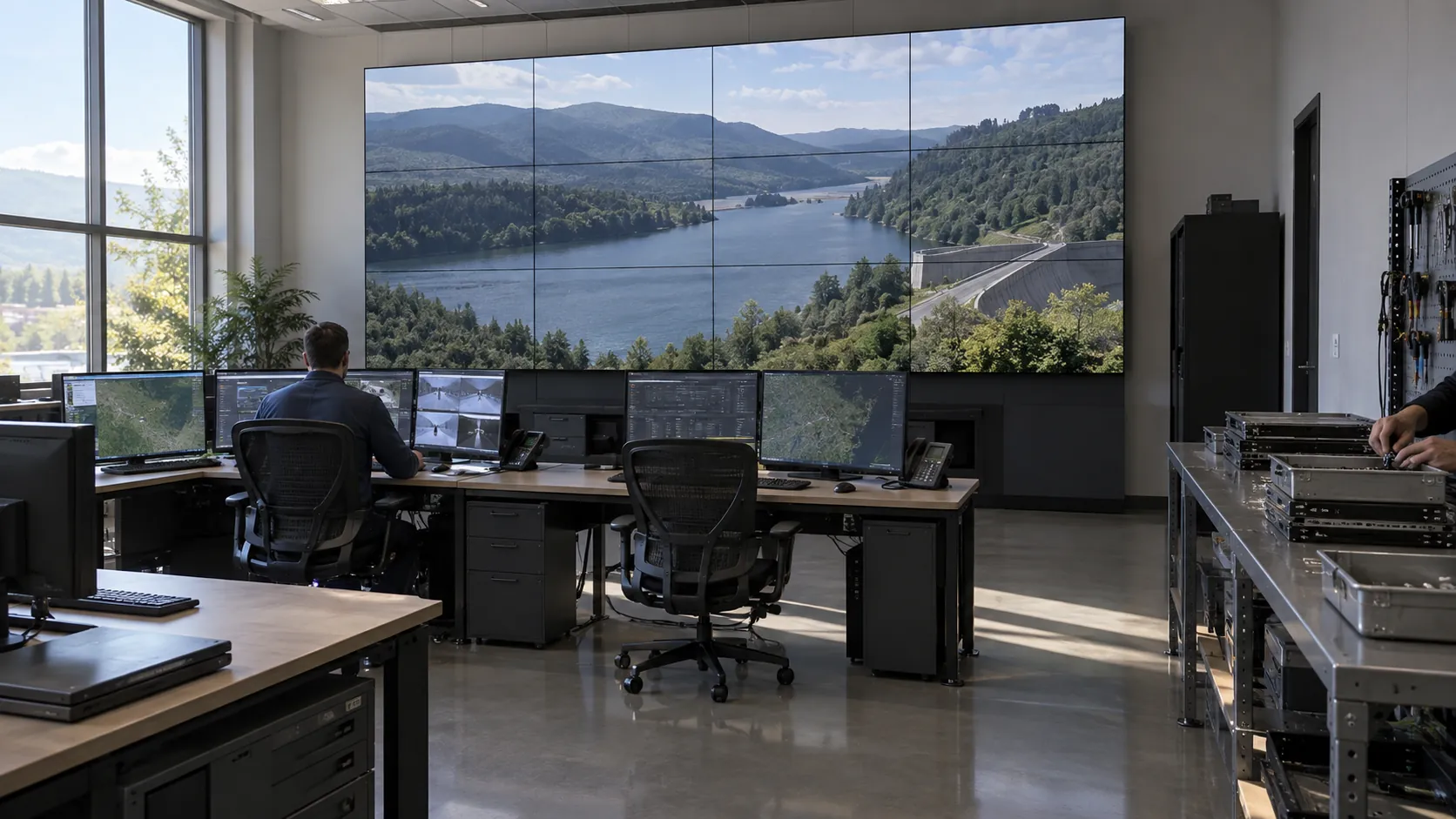
Ask each bidder to answer the same service questions in its proposal. You should be able to follow a fault from the first ticket through diagnosis, parts dispatch, repair and the final image check, with an owner and a timing commitment at each stage.
What a Real Service SLA Should Cover
A real LED display service SLA should separate four things: how support starts, what parts are covered, who pays for labor and shipping, and how failures are escalated. Those are different questions, and vendors sometimes blur them together.
Response Time and Escalation
Separate acknowledgement time from remote diagnosis, on-site attendance and service restoration. Define when each clock starts, the covered hours and any agreed pauses, such as waiting for site access. Record the normal and after-hours contact routes, plus who takes over when the first contact cannot resolve the issue.
That matters because a display failure is often a coordination problem before it is a hardware problem. If no one is clearly responsible for triage, the first hour can disappear into status updates instead of recovery. In procurement terms, the buyer should ask for a written support path, not just a general promise to be responsive.

Spare-Parts Coverage and Inventory
The spares question should focus on recovery-critical items, not just generic replacement language. Ask which modules, power supplies, control components, cables, and related assemblies are included in the spare-parts plan, and where those parts are stocked. For a COB video wall marketed for continuous-duty rooms, the practical issue is whether the failed section can be restored without waiting on an uncertain shipment; verify that marketing language against the written SLA terms before treating it as a service guarantee.
Ask how replacement modules are identified, stored and calibrated. Batch-matched spares can help maintain color and brightness consistency, while the final image check confirms how the repaired area looks beside the existing wall. Have the proposal state the recommended stock, replenishment process and dispatch target for your system.
Warranty Scope Versus Service Scope
Warranty and service answer different questions. The warranty describes covered defects and exclusions; the service agreement explains how support is delivered and whether diagnosis, travel, labor and freight are included. Read the two documents together so a covered replacement part does not come with unexpected costs for getting the wall back into service.
Ask the vendor to show where physical damage, installation error, misuse, consumables, or other exclusions appear. Then check whether labor and freight are included or billed separately. That distinction often decides whether the lowest quote is actually the lowest support cost.
Hidden Costs Buyers Miss
The common budget traps are easy to overlook when the quote is bundled: technician travel, emergency labor, expedited parts, freight, packaging requirements, and after-hours support fees. A service contract can still be expensive even if the hardware line looks competitive.
Compare support costs over the same term, including likely call-outs, travel, expedited freight and any after-hours fees. The command-center LED wall TCO guide helps put those costs beside the hardware quote. A stronger service offer can justify a higher purchase price when it reduces work or disruption your team would otherwise absorb.
| Operational Need | SLA Term To Ask For | Proof To Request | Red Flags |
|---|---|---|---|
| After-hours coverage | Clear after-hours support window, named contact path, and response expectations for urgent wall outages | Support policy, on-call roster, escalation contacts, example ticket workflow | "Best effort" language, no defined after-hours contact, support only during business hours |
| Spare stock | Vendor-held or site-held spare parts plan for critical modules, power supplies, controllers, and cables | Spare parts list, stocking location, replenishment process, ownership terms | Spare parts mentioned vaguely, no critical-item list, buyer expected to identify needs alone |
| Escalation ownership | Single point of accountability for incident triage, vendor handoff, and cross-team coordination | Escalation matrix, account ownership map, incident management process | Passing responsibility between teams, no named owner, unclear decision authority |
| Shipping / fulfillment | Defined process for urgent parts shipment, packaging, dispatch handling, and destination tracking | Fulfillment workflow, shipping terms, carrier options, order-to-dispatch process | No commitment on dispatch handling, unclear shipping responsibility, vague lead-time language |
| Install / swap labor | On-site or remote swap support for failed modules, with clear labor responsibility boundaries | Service scope statement, labor coverage terms, deployment or swap procedure | Buyer expected to perform complex swaps without support, labor scope excluded without warning, unclear access or safety requirements |
Map Vendor Promises to Operational Needs
Walk through one realistic incident with each finalist: a display section fails outside normal office hours. Ask who answers, who diagnoses it, which spare is used and who signs off the restored image. Put the answers into the proposal. This exposes gaps between sales, technical support and local service before they become your team’s problem.
Here is the simplest way to map the terms: if the room cannot tolerate long outages, the vendor needs clear after-hours ownership; if color uniformity matters after repair, the spares plan needs traceability; if freight or travel can become a surprise, the contract should spell out who pays. The command center solutions path only makes sense when the service model matches that operational burden, and spares depth behind that model is a planning question in its own right — see the guide to spare-parts planning and LED wall turnaround.
If a vendor will not put those items in writing, treat that as a gap in the recovery plan. A command wall is a system purchase, but the service layer decides how much risk stays with your team.
Write RFP Language Vendors Can Answer
A good RFP makes the vendor prove service readiness in writing. The questions below are designed to surface support gaps before you compare pricing.
- State your support hours for standard cases and urgent failures, and identify the escalation contact for after-hours incidents.
- List the spare parts you recommend for mission-critical recovery, and identify which items are stocked locally, regionally, or only shipped on demand.
- Explain whether labor, shipping, packaging, and return handling are included in the warranty, in the service agreement, or billed separately.
- Describe the process for replacing failed modules or assemblies, including who owns dispatch, installation, and sign-off.
- Confirm any assumptions, exclusions, travel rules, or expedited fees that apply during the contract term.
- Provide the written support locations and fulfillment timelines that will apply if the wall needs urgent recovery.
For a C-Pad command-center proposal, attach the six questions above and ask for the answers inside the quotation. Send your operating hours, site location and available maintenance team through the contact page so the support plan can be scoped to the room.
Keep the wording neutral so every bidder can answer the same way. If one proposal relies on broad statements while another gives named contacts, documented spares, and a clear escalation path, those are not equivalent offers.
Final Checks Before You Sign
Before signature, make sure the final contract still says what the proposal said. Recheck who owns response, repair, escalation, shipping, and labor. Confirm that any spares commitments, exclusions, and support-hour promises moved from the quote into the executed agreement.
Before signing, bring the SLA, spares list and fulfillment plan into the same review. Use the mission-critical supplier scorecard to compare the finalists, including any costs or service tasks left with your team. The preferred offer should make sense during an outage as well as on the purchasing spreadsheet.
FAQs
How Do You Compare LED Wall Service SLAs Across Vendors?
Compare the written support terms side by side: support hours, escalation path, spare-parts coverage, shipping responsibility, labor coverage, and exclusions. The key is to compare what is documented, not what was implied in the sales call. If one vendor uses vague best-effort language, score that lower than a bid with named contacts and explicit handoff rules.
What Spare Parts Should a Command Center LED Wall Contract Include?
At a minimum, ask how the vendor handles recovery-critical modules, power supplies, control components, and the cables or assemblies most likely to stop a section from working. The exact list can vary by system, so the useful check is whether the vendor can explain where those parts live, how fast they are dispatched, and who owns replenishment.
Why Do Hidden Costs Show Up in LED Wall Service Contracts?
They often appear when the warranty and service scopes are split across different terms. Freight, travel, expedited shipping, after-hours labor, and return handling can be outside the headline quote. Ask the vendor to identify those line items in writing so you can compare total support cost, not just purchase price.
Can a Warranty Replace a Service SLA for a 24/7 LED Wall?
Usually not. A warranty is about defect coverage under defined conditions, while a service SLA should tell you how support is delivered, how incidents are escalated, and what parts of the recovery process are covered. For a 24/7 environment, you want both documents to line up instead of relying on one to do the other’s job.
What Proof Should You Ask for Before Trusting a Local Inventory Claim?
Ask for written support locations, a named fulfillment process, and the contract language that matches the claimed coverage. If the vendor cannot document where parts are stocked or how urgent requests are handled, treat "local inventory" as unverified until the contract makes it explicit.