A highway variable message sign procurement guide should start with roadside exposure, maintainability, and compliance, not just brightness or headline specs. For public projects, the right question is whether the sign can survive the site, be serviced without major disruption, and clear the project’s documented acceptance checks.
What Highway VMS Buyers Should Prioritize
For highway and arterial deployments, the first filter is whether the display fits the roadside environment and the procurement process at the same time. NEMA TS 4, the hardware standard for dynamic message signs, is a useful anchor because it keeps buyers focused on functional, maintainable roadside equipment rather than marketing language.
That matters because a display can look impressive on a spec sheet and still be a poor fit if the enclosure, mounting approach, or service workflow creates avoidable maintenance pain. A good highway VMS durability checklist separates must-have requirements from nice-to-have features early. In practice, that means asking: will this sign work on the actual structure, in the actual weather, with the actual maintenance access your team has?
If you are comparing options for a traffic VMS LED sign, begin with the traffic and VMS solution path after the site requirements are clear. A traffic VMS LED sign should be judged on fit first, then on display features.
A useful decision sentence is this: if the project is a roadside or gantry deployment, start with standards, structure, and service access; if the project is mostly about display behavior or animation features, you are likely in the wrong review order. Buyers who treat durability as a procurement question usually catch problems sooner and avoid rework later.
Durability Factors That Matter on the Road
Cabinet and Enclosure Construction
Cabinet stiffness, finish quality, and enclosure layout influence how a sign handles wind, vibration, debris, and long-term outdoor exposure. The LRFD specifications for structural supports for highway signs, luminaires, and traffic signals are relevant here because the display is only as dependable as its support system and mounting interface. Buyers should verify that the sign and support structure are treated as one system, not two separate purchases.
That is where many proposals become hard to compare. A rugged-looking cabinet is not automatically the better choice if it is awkward to mount, difficult to inspect, or incompatible with the gantry or mast arm already in use. If the support structure, cabinet depth, or attachment points do not match the project, durability claims become much less meaningful.
Environmental Protection and Thermal Control
Highway electronics need to tolerate broad environmental exposure, but the exact envelope should be tied to the project’s cited standard and the vendor’s documentation. NEMA environmental expectations for DMS equipment are commonly discussed in terms of wide temperature and humidity operation, and the NEMA TS 4 environmental requirements summary is a useful reference when you are checking whether a proposed sign is suited to the site.
For buyers, the practical point is simple: thermal design is not just an electronics detail. It affects reliability, enclosure stress, and how often the unit will need attention in the field. If the location has strong sun, high humidity, salt, dust, or rapid temperature swings, verify how the cabinet manages heat and sealing before you compare brightness or pixel pitch.
Visibility, Readability, and Day-Night Use
Visibility is part of durability because a sign that cannot be read reliably in glare, fog, rain, or nighttime conditions is not doing its job. That does not mean every project needs the same brightness target. It means buyers should match the display to the road geometry, viewing distance, and conditions the sign will face.
A highway VMS that performs well in a controlled demo can still be a weak field choice if the viewing angle, placement, or ambient light create readability issues. In other words, durability is not just about surviving the weather; it is also about staying operationally useful after weather, traffic spray, and seasonal light changes affect the site.
Service Access and Maintenance Planning
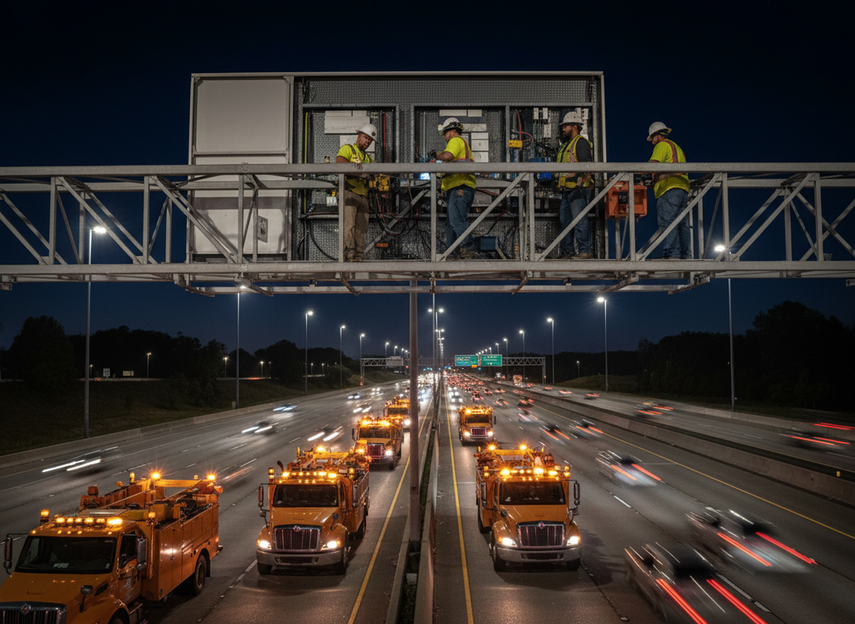
Serviceability is a procurement issue, not an afterthought. If routine inspections or repairs require difficult access, long lane closures, or extra lifting equipment, the lifecycle burden rises even if the cabinet itself is rugged. This is why front-service access, clearance around the unit, and replaceable modules matter in the field.
A sign that is easier to inspect and repair can reduce downtime and simplify maintenance planning. That does not make front-service mandatory in every project, but it does make it a meaningful comparison point when roadside access is constrained. For buyers, the best question is not "Is it rugged?" but "How will it be serviced safely and predictably over time?"
If you are comparing product families after the site review, look at the traffic and VMS LED display category as a browsing path, then verify the exact service and mounting details against your bid package.

Compliance Checks Buyers Should Not Skip
Before award, separate product claims from project acceptance requirements. A vendor may say a sign is compliant, but the bid package still needs to show how the display, controls, mounting, and electrical details fit the agency’s actual requirements. Start with the standard reference, then move to the site-specific documents.
Use this list as a conservative procurement check:
- Confirm the cited hardware standard for the proposed DMS or VMS equipment, starting with NEMA TS 4.
- Verify structural support assumptions against the project’s highway sign support requirements, including the applicable AASHTO LRFD guidance.
- Check that mounting drawings match the gantry, mast arm, or other support being used.
- Review control-interface compatibility, including the communication and integration details your agency expects.
- Confirm electrical documentation, grounding assumptions, and installation details before submittal approval.
- Request service-access information so maintenance crews can inspect and replace components without unnecessary disruption.
- Make sure the submittal package clearly distinguishes what the product claims versus what the project requires for acceptance.
The cleanest rule is this: if a claim cannot be tied to a project document, a standard, or a clearly stated submittal, treat it as marketing until proven otherwise. That approach is especially important for highway VMS purchases because compliance ambiguity can delay award or create acceptance problems later.
How to Compare Vendors for Long-Term Reliability
When buyers compare proposals, the goal is not to assign a fake score. It is to see which vendor gives the best evidence for the conditions that matter on the road. The matrix below is a safe way to compare proposals without over-claiming precision.
| Evaluation Item | What To Ask The Vendor | Why It Matters | Red Flags |
|---|---|---|---|
| Materials evidence | What cabinet materials, coatings, and connector protection are included? | Corrosion and wear resistance affect roadside service life. | Vague "rugged" language with no build detail. |
| Testing evidence | What environmental, vibration, or endurance testing is documented? | Testing supports durability claims better than marketing copy. | Claims of toughness without test reports. |
| Service access | How are modules accessed and replaced in the field? | Easier maintenance lowers disruption and closure burden. | No clear maintenance workflow. |
| Documentation completeness | Are drawings, manuals, and parts information included? | Strong documentation reduces approval delays. | Missing installation or service documents. |
| Structural fit | Does the design match the support structure and load assumptions? | Mounting mismatch can undermine reliability. | Generic fit claims with no structural detail. |
| Retrofit friendliness | Can the unit replace an existing sign without major civil work? | Retrofit projects often face tighter structural limits. | No guidance on legacy replacement. |
A practical decision sentence here is: choose the vendor that proves fit with submittals, not the vendor that sounds most rugged. If a proposal looks strong on brightness but weak on serviceability and documentation, it may be the riskier option for a public roadside project.
For teams comparing overhead or mainline options, the gantry VMS solution page can help with navigation after the evidence review, while the lightweight VMS options are worth checking when retrofit load or existing structure constraints are part of the project. If you are narrowing a traffic VMS LED sign shortlist, keep the evidence trail ahead of the brochure language.

Procurement Checklist Before You Issue the Bid
Use this final pass before the spec goes out:
- Confirm the site exposure first, including wind, dust, rain, salt, temperature swings, and access constraints.
- Check the support structure and mounting assumptions against the project’s structural requirements.
- Verify the hardware standard reference and any agency-specific acceptance language.
- Review service access, replacement workflow, and maintenance clearances.
- Confirm control-interface, electrical, and installation documents are complete.
If you want a broad browsing path after the checklist, the traffic and VMS category is a reasonable next step. The best outcome is a bid package that is clear enough to compare, strict enough to verify, and practical enough to maintain.
FAQs
How Do I Write Durability Requirements for a Highway VMS Specification?
Start with site conditions, mounting constraints, service access, and required documentation. Then write the requirement in terms of verifiable submittals and accepted standards rather than vague claims like "weatherproof" or "long-life." That keeps the spec useful for evaluation and reduces argument during award review.
What Documentation Should a Vendor Provide Before Award?
At minimum, ask for installation drawings, electrical information, mounting details, control-interface documentation, maintenance guidance, and the specific standard references used in the submittal. If the package is incomplete, treat that as a procurement risk, not a minor paperwork issue.
Can a Highway VMS Be Retrofitted Onto an Existing Gantry?
Sometimes, but only after a structural and installation review. Retrofit suitability depends on load, geometry, access, and the condition of the existing support system. If the vendor cannot show how the new sign fits the existing structure, the project may need redesign or additional engineering.
Why Does Service Access Matter as Much as Display Hardware?
Because maintenance happens in the field, not in the brochure. If the sign is hard to reach or repair, crews may need more time, more equipment, and more lane control. That affects lifecycle cost and can become a bigger problem than the cabinet itself.
What Red Flags Suggest a Vendor Is Overselling Durability?
Watch for vague compliance language, missing drawings, no test evidence, and evasive answers about service procedures. Another warning sign is a proposal that talks a lot about brightness but says little about mounting, maintenance, or the documents needed for acceptance.