A highway VMS acceptance test should prove that the installed sign matches the project specification, not just that it powered on at delivery. For DOT projects, the safest approach is to trace each requirement to a test case, separate factory checks from field acceptance, and keep an auditable record of what passed, what was corrected, and what still needs closure.
What DOT Acceptance Testing Must Prove
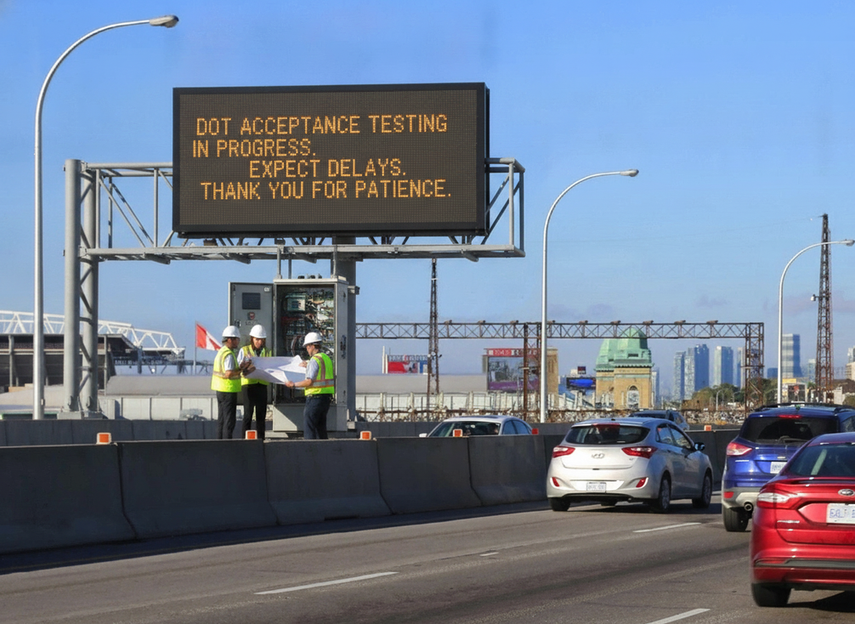
The core question is whether the highway VMS acceptance test shows installed, contract-ready performance in the field. FHWA’s systems engineering guidance recommends a verification plan that traces requirements to test cases, which is the right starting point for buyers and contractors. In practice, that means the test is not just a delivery check. It is the final proof that the installed system matches the approved submittal package and project documents.
That distinction matters. Factory or pre-shipment inspection can confirm build quality and shipping condition, but it does not replace field acceptance of the installed asset. If a check depends on site wiring, communications, control integration, or mounted display performance, it belongs in field acceptance. If the project documents are missing or unclear, the exact checklist should come from the DOT special provisions, plans, and acceptance records, not from a generic template.
A practical acceptance outcome usually covers four things: conformance to the specification, safe operation under the project rules, readable output in the installed location, and documented sign-off evidence. If any one of those is missing, the project may still be physically installed, but it is not ready for clean acceptance.
Build the Acceptance Test Plan
Start with the project documents, then translate each requirement into one of three things: a field check, a record to collect, or a witness test to observe. That is the most procurement-safe way to turn a spec into a usable highway VMS acceptance test requirements checklist. If the spec says a function matters, the plan should show how that function will be verified and who will sign the result.

A workable sequence is simple:
- Review the contract documents, submittals, and any DOT special provisions.
- Break each requirement into a verification method, such as inspection, demonstration, or test.
- Assign who performs the check, who witnesses it, and who signs the record.
- Define the test conditions that matter at the site, including any traffic control or access limits.
- Execute the field checks and document the results immediately.
- Route exceptions to a punch list before final acceptance.
FDOT’s training material shows that DOTs may separate testing into stages such as factory acceptance, pre-installation, field acceptance, sub-system, and system testing. That is useful as a planning model, but it is not a universal sequence. The buyer’s job is to make sure the project record links each stage to the right responsibility and the right sign-off point.
One useful rule of thumb is this: if a deviation can affect installed performance, it should stop the sign-off path until it is corrected or formally accepted by the project authority. That keeps the highway VMS acceptance test tied to project control instead of informal operator approval.
Core Field Checks Buyers Should Verify
For most DOT projects, the acceptance checklist should stay centered on observable behavior and documented evidence, not vendor claims. NJDOT’s ITS inspection guidance is helpful here because it covers physical, electrical, and functional verification items rather than relying on brochure language. NTCIP 1203 v03 conformance procedures are the standard reference for DMS object definitions and test procedures, so they belong in the communications and remote-control portion of the plan.
Power-Up, Controls, and Basic Operation
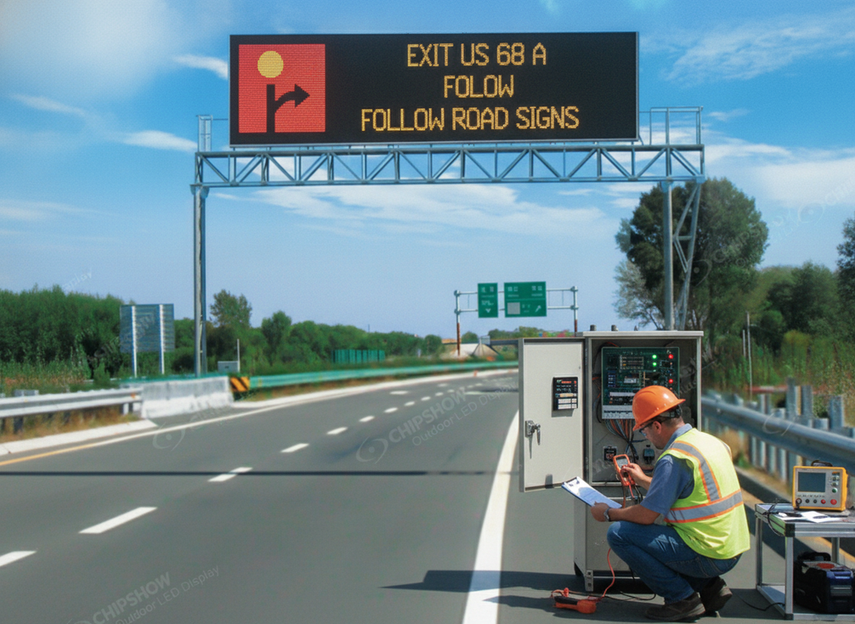
Confirm that the sign powers on cleanly, responds to basic commands, and shows normal startup behavior. Also verify that local controls, access methods, and operator actions work the way the project documents require. If the restart behavior is erratic, the command path is inconsistent, or the access method does not match the approved setup, record it as a field exception instead of a minor nuisance.
Message Display and Visibility Checks
The question here is not whether the screen lights up. It is whether the displayed message is correct, complete, and readable under the project’s installed conditions. Check for broken characters, partial updates, alignment problems, and obvious content errors. If the project defines brightness, contrast, or viewing-angle expectations, evaluate them against the project documents and site conditions rather than assuming a universal pass/fail number.
Communications and Remote Command Verification
This is where the standards language matters most. NTCIP 1203 v03 covers DMS conformance and test procedures, so the acceptance plan should verify that the sign receives commands, returns status, and behaves as expected through the specified communications path. If the project requires acknowledgments, status reporting, or remote updates, test those functions in the actual installed configuration. Intermittent connectivity or slow response should be documented because it can become a turnover issue even when the display itself looks fine.
Faults, Alarms, and Recovery Behavior
If the project requires fault reporting or recovery checks, test them while the system is still in the acceptance window. The goal is to see whether the VMS reports the issue clearly and returns to the expected state after the interruption is removed. Treat temporary test noise differently from repeatable failure. Repeatable failure should block acceptance until the cause is corrected or formally dispositioned.
| Acceptance Check Category | What It Verifies | Why It Belongs in the Protocol |
|---|---|---|
| Traceability | Each requirement maps to a test case | Keeps the plan aligned with the contract and the FHWA verification approach |
| Conformance | The DMS behaves according to the standard and project spec | Supports communications and control verification |
| Physical checks | Condition of the installed sign, hardware, and mounting | Catches damage or installation issues before sign-off |
| Electrical checks | Power, cabling, and related connections | Confirms the system can operate reliably in the field |
| Functional checks | Display behavior, commands, and responses | Shows the installed system actually performs the required tasks |
| Testing-stage separation | Factory, pre-installation, field, subsystem, and system checks are not collapsed into one step | Prevents factory inspection from being treated as final acceptance |
| Turnover records | Results are documented in an auditable package | Helps the buyer defend the acceptance decision later |
What Records the Buyer Should Require
A complete turnover package matters because acceptance is both physical and documentary. NYDOT examples show the kind of record set that can include approved test data forms, NTCIP compliance logs, and an operational log when the agency requires it. That state example is useful as a model, but buyers should still treat the project documents as the final authority for what must be submitted.
| Record Buyers Should Request | Why It Matters for Acceptance |
|---|---|
| Field test report | Shows what was tested, who witnessed it, and what passed or failed |
| Requirement-to-test traceability matrix | Proves the protocol covers the full specification, not just visible features |
| As-built or installation record | Confirms the installed condition matches the approved project setup |
| Communications or configuration record, if applicable | Helps verify remote control, addressing, and setup consistency |
| Exception log | Tracks open issues instead of hiding them in informal notes |
| Corrective action closeout | Shows the punch list was resolved before sign-off |
| Final sign-off package | Creates the record the agency can archive and defend later |
If the paperwork is incomplete, the sign may still appear to work, but the acceptance package is not ready. That is one of the most common reasons a project slips from apparent completion into delayed closeout. For buyers, the right question is not only, "Does it display the message?" It is also, "Can we trace every required check to a signed record?"
Closeout Checks Before Final Sign-Off
Before final approval, confirm four things: all required tests passed, exceptions are closed, the turnover package is complete, and the sign-off authority matches the contract process. If any open mismatch remains between the installed condition and the approved submittal, the project should stay in the punch-list stage.
A good readiness check is simple. If the field results are traceable, the records are complete, and the remaining issues are administrative rather than technical, final sign-off is usually within reach. If the team is still debating what was tested, what was approved, or who owns the remaining exceptions, pause the approval step and close the record set first.
Final Takeaway
A highway VMS acceptance test works best when it is treated as a requirement-traceable field verification, not a delivery-day checklist. Start with the project documents, separate factory inspection from field acceptance, and require an auditable package that shows what passed and what was corrected. If you are assembling a protocol or turnover review, use the checklist logic above to confirm that the installed sign, the records, and the sign-off authority all line up before approval.
FAQs
What Should a VMS Checklist Include?
A useful checklist usually covers installation, power-up, display quality, communications, fault handling, and the records needed for sign-off. The best version also ties each item to a project requirement, so the buyer can see whether the test is verifying a contract obligation or just confirming general function.
How Is Acceptance Testing Different From Pre-Shipment Inspection?
Pre-shipment inspection checks the unit before delivery and can catch build or packing issues. Acceptance testing checks the installed system in the field and verifies that it works in the actual project environment. For DOT projects, that field step is the one that supports final sign-off.
Why Do DOT Projects Ask for Traceable Test Records?
Traceable records create an auditable path from the specification to the field result. That helps the buyer defend the decision later, especially if a dispute comes up about scope, performance, or missing work. It also makes it easier to see which requirement is still open if the project stalls at closeout.
Can a VMS Pass Acceptance If Documentation Is Incomplete?
Usually not cleanly. Even if the display appears to work, missing records can block approval because the agency still needs proof of what was tested, how it was tested, and who signed it. In practice, acceptance is both a technical and documentary decision.
What Issues Most Often Delay Final Sign-Off on Highway VMS Projects?
The most common blockers are unresolved exceptions, mismatched configuration, communications problems, and missing turnover artifacts. A project can look finished in the field but still fail closeout if the record set does not show requirement traceability and formal closure.