


An outdoor LED billboard can look simple on paper, but the access path changes how long it stays offline, how much crew time it needs, and how much service staging the job requires. Front-service is often the better fit when rear clearance is tight or unavailable, while rear-service can still make sense when access is easy and service windows are predictable. The right choice depends on rear space, maintenance frequency, and how painful downtime is for your ad inventory.

Why Access Method Changes the Economics
Access method changes more than install convenience. It affects how long a screen stays offline for module swaps, inspections, and troubleshooting, and it changes how much crew time and equipment staging the job needs. On a digital board, those minutes matter because offline time removes sellable inventory and can interrupt multiple rotations, not just one static panel. The billboard pricing and CPM model helps explain why downtime can ripple through several advertisers at once.
For operators, the real question is not "Which side opens easier?" It is "Which layout reduces the total cost of access over the next several service calls?" That is why front-service vs rear-service DOOH economics should be treated as a lifecycle decision, especially for elevated roadside or high-rise sites where access windows are limited.
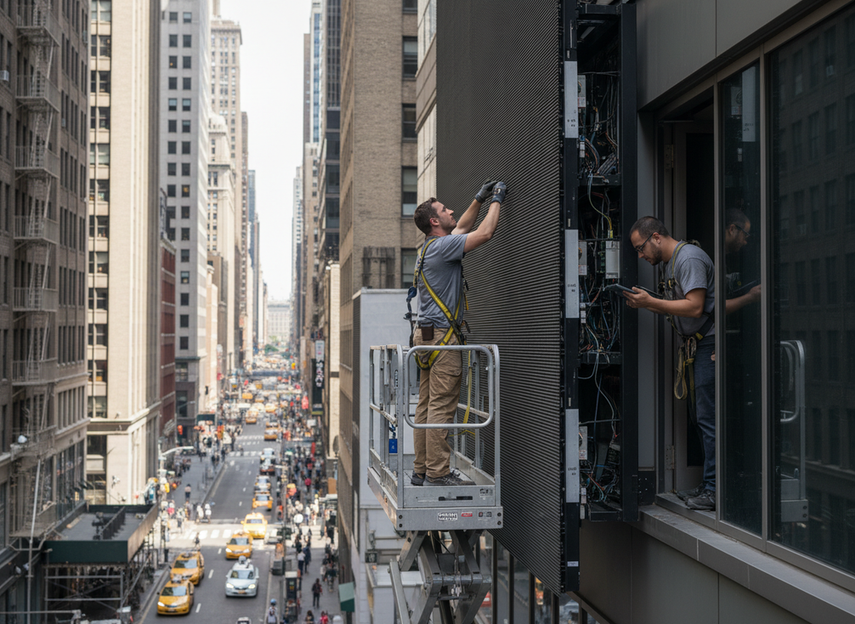
A practical decision sentence is simple: if rear access is constrained, front-service often becomes the better operational fit; if rear clearance is open and service is rare, rear-service can still be the cleaner, lower-complexity choice.
Outdoor DOOH systems and fixed outdoor LED options sit in this planning space, but the access choice still has to match the site rather than the catalog page.
Front-Service and Rear-Service Compared
The table below shows the practical difference in access layout, not just the label on the cabinet.
| Factor | Front-Service | Rear-Service |
|---|---|---|
| Access path | Service from the viewing side | Service from the back side |
| Rear-clearance need | Low or none | Needs real working room |
| Service disruption | Often lower in constrained sites | Can be low when access is simple |
| Equipment staging | May reduce some rear-side staging | Can require more room for lifts, access, or positioning |
| Best-fit site | Tight high-rise or blocked rear access | Sites with open, safe rear working space |
| Main trade-off | Easier access, but still depends on enclosure design | Simpler when space is available, but less forgiving in tight sites |
The distinction matters because front-service is engineered for environments where rear clearance is limited or unavailable, while rear-service depends on having enough room to work safely and efficiently. That does not make rear-service obsolete. It just means the layout is more sensitive to site geometry.
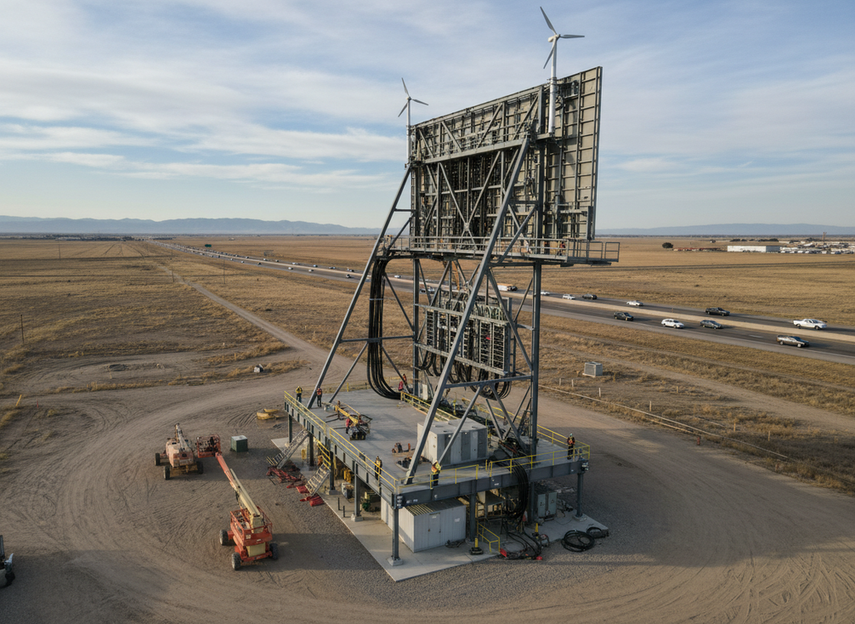
In practice, the choice flips when a site has open backside access and low service frequency. In that case, rear-service can remain workable, especially if the maintenance team already has a straightforward path to the cabinet. But if the project sits on a façade, a narrow right-of-way, or a structure with blocked rear access, front-service usually avoids the hardest part of the job.
If you are comparing highway VMS solutions with street pole LED screens, the access path should be evaluated alongside mounting geometry and service access, not after the hardware is selected.
Where Downtime Costs Show Up
Downtime cost is usually a stack of small frictions, not one single line item. Labor time increases when technicians need extra staging or a longer access path. Equipment and site logistics add more cost when the job needs lifts, lane control, or traffic management. Lost media inventory is the most visible part, because a board that is offline cannot deliver the rotations that were sold.
A useful benchmark from the Economic Feasibility and Return on Investment of Digital Signs report puts average daily revenue loss for a digital billboard in a wide range, from roughly $466 on mid-traffic sites to more than $890 on premium high-traffic boards. Treat that as a site-dependent illustration, not a universal number, because traffic, rotation model, and market strength all change the result.
That range matters because it shows why the value of front-service rises as service frequency rises. If a display needs repeated access for module swaps, inspections, or troubleshooting, faster access can reduce the size of each offline event. Planned maintenance is easier to coordinate than emergency repair, so a layout that shortens service time can matter most when the site sees repeat calls.
Roadside work can add another layer of cost. The Dallas barricade and lane closure fee schedule shows how traffic control and lane closures can become a real expense bucket, and lift rental costs can add still more friction when the display sits high enough to need special access. That is why front-service can be valuable even when the cabinet itself does not look dramatically different on a spec sheet.
Wind Load and Site Constraints
Wind load planning is a structural issue first and a maintenance issue second. On elevated or exposed sites, the support structure, mounting geometry, and sign profile all shape what is practical. The ASCE 7 wind load calculation examples for signs are a good reminder that height and exposure change the engineering conversation.
For high-rise façades, front-service often helps when rear clearance is limited, but engineering review still has to confirm attachment, load path, and safe service conditions. That is the key boundary: access convenience does not override structural review. If the back side is blocked or unsafe, front access can simplify maintenance, yet the structural design still has to carry the load.
Roadside sites bring a different mix of constraints. Wind exposure, working room, and safe access can all be tighter than they look from the parking lot. Rear-service may be harder where the back side is blocked by a wall, fence, or utility zone. Front-service can reduce access burden in some of those cases, but it does not eliminate the need to verify clearance, mounting, and service planning as a package.
How to Choose the Right Access Strategy
- Start with rear clearance. If the back side is blocked, unsafe, or too tight for repeat service, front-service moves up the list fast.
- Estimate service frequency. If the board will need routine access, simpler access usually matters more than a small difference in upfront cabinet preference.
- Compare downtime tolerance. If offline time directly hits ad delivery or campaign commitments, access time has more economic weight.
- Review roadside logistics. Traffic control, lifts, staging, and access permits can outweigh the labor line item.
- Confirm the structural review. Wind load, mounting geometry, and service safety still need to be verified before approval.
- Choose the layout that fits the life of the site, not just install day.
That decision path is why front-service vs rear-service DOOH economics should be read as a site-fit question. Front-service is usually the stronger candidate when rear access is limited, service calls are frequent, or downtime is expensive. Rear-service is still workable when rear working room is open, access is straightforward, and the maintenance pattern is predictable.
Before you approve the design, compare outdoor video wall maintenance needs against the actual service path and the structural plan. If those two do not match, the lower-friction access method is usually the better long-term choice.
Final Takeaway
Front-service vs rear-service DOOH economics is really about how a site behaves after installation. If rear access is cramped, service calls are frequent, or downtime has a clear revenue cost, front-service usually deserves serious attention. If rear access is open and service is occasional, rear-service can still be the practical choice. Before you sign off, check rear clearance, maintenance rhythm, downtime tolerance, and structural review together.
FAQs
How Do I Estimate Downtime Cost for a Roadside LED Billboard?
Start with the offline window, then add technician time, lift or traffic-control logistics, and the value of the ad inventory that cannot run. The important signal is not a perfect dollar figure; it is whether the site loses enough sellable time that faster access would change the economics of each repair.
What Maintenance Tasks Benefit Most From Front-Service Access?
Front-service tends to help most with repetitive tasks such as module swaps, inspections, and fault-finding on sites with tight rear clearance. The benefit grows when each visit would otherwise require extra staging, because the saved setup time matters more than the actual wrench time.
Why Does Wind Load Matter More on Exposed High-Rise Sites?
Because height and exposure change the structural load the sign has to handle. On tall or roadside sites, wind load becomes part of the approval and engineering review, so access choice should be checked alongside support structure and service safety rather than treated as a separate preference.
Can Rear-Service Still Be the Better Choice for Some Projects?
Yes. Rear-service can be the better fit when the site has open, safe working room and service access is simple. If the maintenance pattern is light and the back side is easy to reach, rear-service may be the cleaner design because it avoids over-specifying access for a site that does not need it.
What Should a Buyer Verify Before Approving Front-Service Design?
Verify rear clearance, service frequency, downtime tolerance, and the structural review together. If any one of those fails, front-service may still be useful, but it may not be the safest or most economical choice for the whole project.





