

Front service outdoor LED design can be a strong fit when roadside or high-rise access is tight, but it is not automatically the better choice for every site. The real question is whether front access will make maintenance easier, safer to coordinate, and less disruptive than a rear-access layout at your specific location. If the back side of the cabinet is hard to reach, front-service may protect uptime and simplify repairs; if rear access is open and controlled, a rear-access system can still be the cleaner solution.
Why Service Access Shapes DOOH Uptime
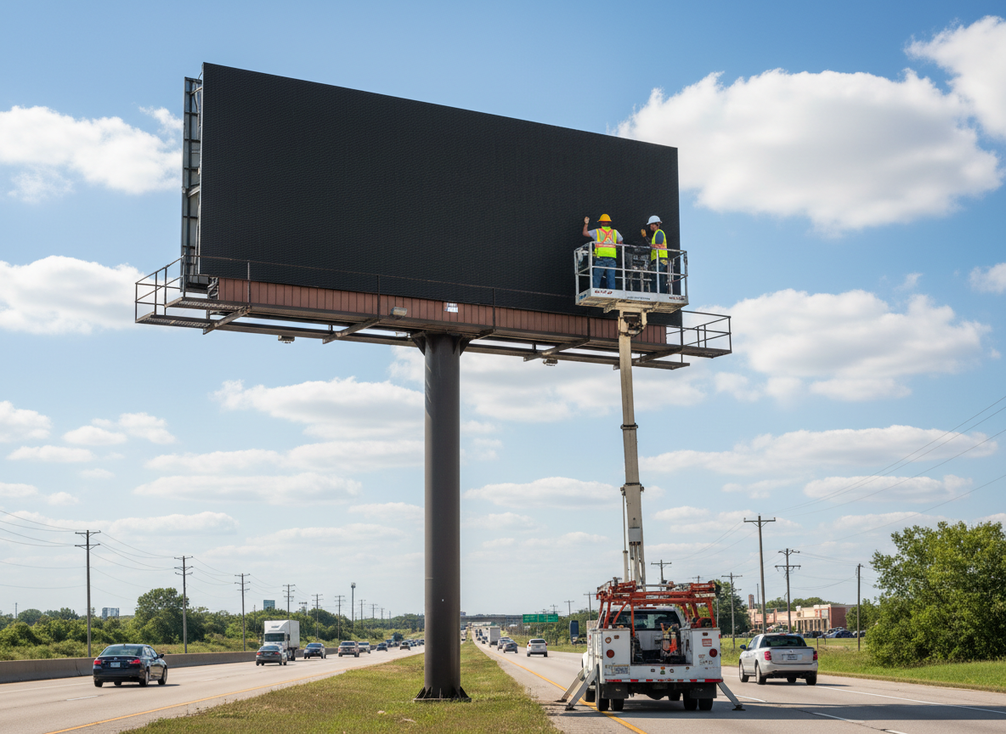
For roadside and high-rise DOOH, service access is not a minor hardware detail. It affects how quickly a failed module can be reached, whether crews need extra access equipment, and how much interruption the site may face while repairs happen. That matters because DOOH value depends on visibility and campaign delivery, not just the cabinet itself, as the OAAA’s DOOH exposure framework shows in its focus on measurable audience delivery.
In practical terms, a display that is easy to service is often easier to keep revenue-generating. A difficult access path can stretch fault recovery, raise labor coordination costs, and force service windows around traffic, building, or security constraints. For roadside work, OSHA’s highway work zone guidance is a reminder that the maintenance plan has to fit the work zone, not the other way around.
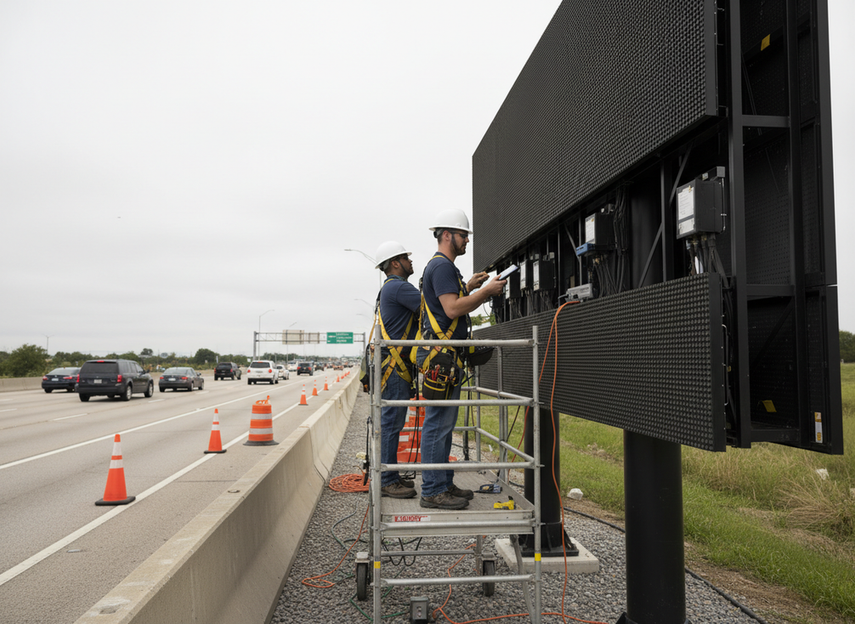
That is why front service outdoor LED planning belongs in the early design phase. The cabinet layout should match the site access pattern from the start, rather than asking the maintenance team to solve an access problem after installation.
Front-Service Versus Rear-Access Cabinets
Front-service and rear-access layouts solve the same maintenance problem in different ways. The difference is where the crew works and how much clearance the site needs behind the display.
| Factor | Front-Service Design | Rear-Access Design |
|---|---|---|
| Access path | Service from the display face | Service from behind the display |
| Best fit | Tight roadside, façade, or constrained sites | Sites with ample rear clearance |
| Maintenance workflow | Can reduce dependence on rear corridors | Works well when the rear of the cabinet is easy to reach |
| Disruption risk | May lower some site-access bottlenecks | May be simpler when the service area is already controlled |
| Access equipment needs | Still may need lifts, traffic control, or site-specific support | Still may need lifts, traffic control, or site-specific support |
| Planning trade-off | Can simplify the access footprint | Can be easier when the structure already has service space |
The comparison is not about declaring one design superior. It is about matching the cabinet to the site. Front-service changes where the work happens; rear-access changes how much space and coordination the site must provide.
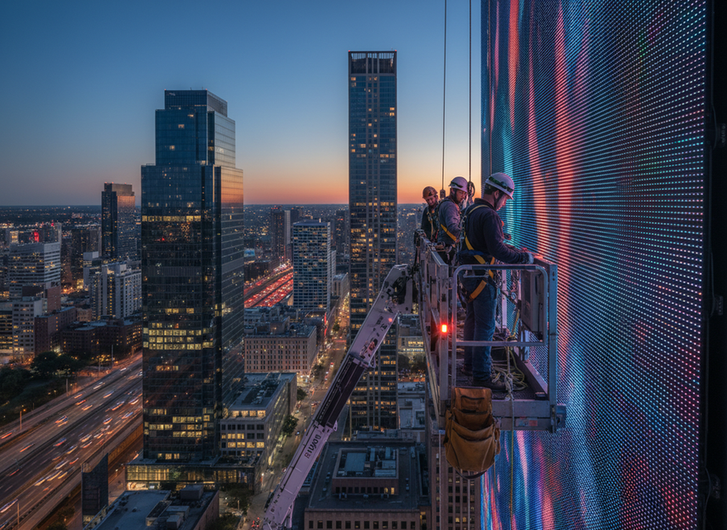
A useful decision sentence is this: if the rear of the display is hard to reach, front-service is often the more practical path; if the rear side is open and controlled, rear access can still be the better fit.
Where Front-Service Design Pays Off
Front-service design is most valuable when access, not display size, is the hardest part of the project. That is common in roadside and high-rise deployments where the best billboard location is also the most constrained service location.
Roadside Sites With Limited Rear Clearance
Roadside sites often leave little room behind the cabinet because of lanes, barriers, utilities, fencing, or other infrastructure. In those cases, a front-access cabinet can reduce the need to build or maintain a rear service corridor. That makes the site easier to plan and can shorten the path to a failed module or component.
The gain is not that roadside service becomes effortless. The gain is that crews may have one less access bottleneck to manage. When the display sits close to a traffic-sensitive area, front-service can be the difference between a workable maintenance plan and a difficult one.
High-Rise Locations With Access Constraints
High-rise outdoor LED service planning is usually about more than the screen. The building envelope, elevation, tenant areas, access permissions, and equipment staging all affect how maintenance will work. When rear access is limited, front-service can reduce dependence on a difficult back-side route.
That said, high-rise service still depends on the building, the permit path, and the crew’s access method. Front access may reduce some access complexity, but it does not eliminate safety procedures or building-specific controls. A site that looks convenient from the street can still require careful access planning once you account for height and work positioning.
Module Failure Recovery and Downtime
A failed module does not just create a cosmetic issue. It creates visible downtime until crews can reach the problem area and replace it. Front-service can help by making that reach faster in some layouts, which may shorten service interruption.
The important boundary is this: front-service may reduce recovery time, but it does not guarantee it. Fault location, weather, crew readiness, and site procedures all affect how long a repair takes. For operators, the business value is not a promised number; it is the chance to restore the screen more efficiently when a failure happens.
Safety and Crew Workflow
Front-service can improve crew workflow by reducing some awkward rear-side maneuvers, especially where the cabinet backs onto traffic, a wall, or a restricted service zone. It can also make it easier to keep the maintenance path short and predictable.
Still, safe work depends on the project, not the cabinet label. OSHA’s roadway work zone rules and broader hazard-control expectations mean traffic control, fall protection, and crew positioning still matter. A front-service layout may simplify some steps, but it does not remove the need for the site safety plan.
If the project involves height, confined access, or active traffic, front-service should be treated as an operational advantage, not a safety guarantee.
Service Planning That Protects Revenue
The best front service LED billboard maintenance plan starts before the cabinet is ordered. Once the site is built, access problems become more expensive to solve.
-
Assess Site Access
Map where technicians will actually work, where equipment will stage, and what blocks the rear side of the display. -
Map The Maintenance Path
Decide how a crew reaches a failed module, how they move tools, and whether the route stays clear under normal operating conditions. -
Verify Crew And Equipment Clearances
Check whether the site needs lifts, protective systems, escort access, or temporary closures to complete repairs safely. -
Define Outage And Traffic Procedures
In high-traffic areas, maintenance should follow a written process for shutdown, warning, and re-entry. OSHA emphasizes proactive hazard control in high-traffic work, and that logic applies directly to work planning for roadside sites. -
Confirm Spare Parts And Response Timing
Even a front-service cabinet cannot help if replacement parts are not ready or the response plan is vague.
Here is the practical takeaway: front-service only protects revenue when the rest of the service process is also planned. Access, parts, crew timing, and traffic controls all have to line up.
Choose the Right Access Strategy
The right choice depends on site conditions, not the marketing label.
- Choose front-service when rear clearance is limited, the display sits close to traffic or a façade, or the access route is expensive to build and maintain.
- Choose rear-access when the site already has open, controlled service space and the maintenance route is easy to manage.
- Check the maintenance path first, then confirm the safety plan and outage tolerance before purchase.
- Treat front-service as a site-fit decision, not a universal upgrade.
A front service outdoor LED layout is strongest when it solves a real constraint. If the site does not have a clearance problem, the extra design complexity may not be worth it. If the site does have one, front-service can be the difference between a practical install and a hard-to-maintain asset.
If you are comparing roadside or high-rise options, we can help review the access path first and match the cabinet style to the site, not the other way around. Start with the outdoor DOOH solution path and compare it against the maintenance conditions at your location.
FAQs
How Is an Outdoor LED Display Serviced?
Servicing depends on the cabinet design and the site access plan. Front-service layouts allow more work from the display face, while rear-access designs depend on open space behind the screen. The right approach is the one that fits the actual maintenance route.
What Happens When Modules Fail?
A failed module usually creates a visible dark area or an outage section until crews can reach and replace it. The impact depends on how fast the team can access the fault, what equipment is needed, and how well the site is prepared for response.
Can Front-Service Reduce Lane Closures?
It can reduce the need for rear-side access in some roadside sites, which may help avoid lane closures or other traffic disruption. But traffic control still depends on local conditions, work-zone rules, and the maintenance method used on the day.
Why Does Access Planning Matter for High-Rise DOOH?
High-rise projects often involve building access limits, elevation, and work-positioning rules that make service coordination more complex. Access planning affects how quickly maintenance can happen and how much disruption the building and operator may face.
How Do You Decide Between Front and Rear Access?
Start with clearance, then check crew safety, outage tolerance, and access equipment needs. Front-service is usually more attractive when rear access is constrained. Rear-access can still be the better choice when the site already has generous, controlled service space.