


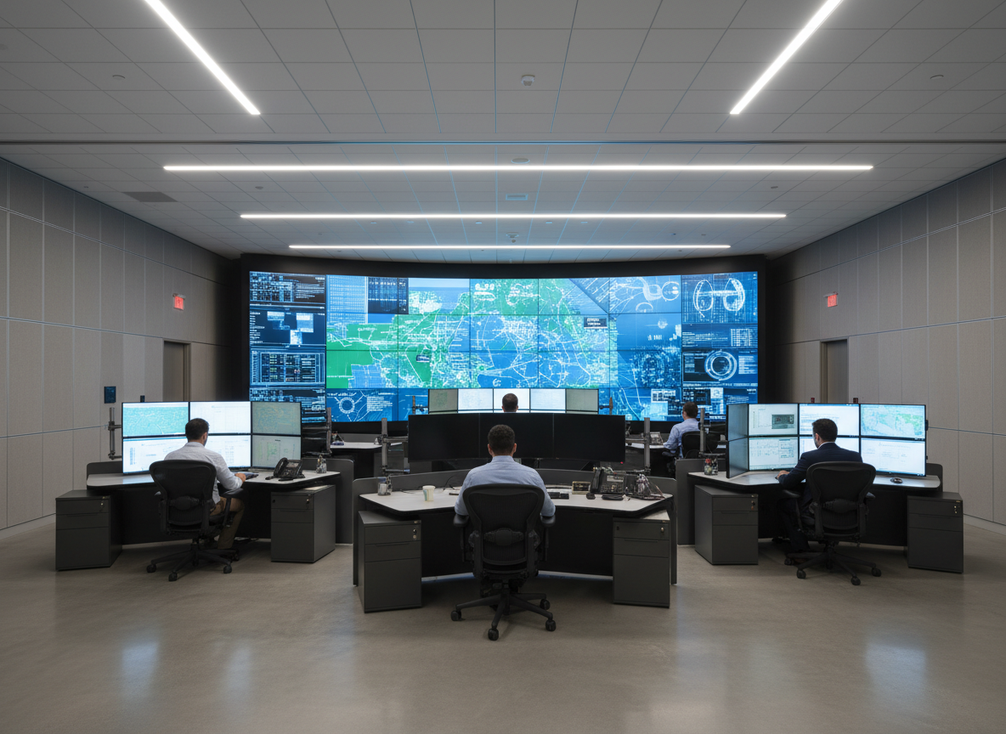
For a five-year TCO model for a command center LED wall, the right question is not "Which quote is lowest?" It is "Which option stays lowest after spares, service, energy, and downtime exposure are included?" For 24/7 mission-critical rooms, that lifecycle view is usually the one that holds up. A five-year total cost of ownership lens, paired with the AVIXA TCO framework, is a practical way to compare value-premium and Tier-1 proposals on the same terms.
What a Five-Year TCO Model Covers
A useful model separates upfront cost from recurring cost. That means hardware, installation, commissioning, spares, maintenance, support response, energy, and any downtime allowance all sit in the worksheet as separate lines. If you lump them together, a lower initial price can look better than it really is.
For command center buyers, the five-year window matters because the room is usually on long hours and the screen is not a decorative display. It is part of the operating environment, so support scope and repair speed affect the buying decision as much as cabinet price does. In practice, the model should accept your own numbers, not force a universal answer. AVIXA’s TCO guidance for audiovisual systems is a useful methodology anchor when you build the worksheet.
If you are still comparing classes of systems, start with mission-critical wall options as a navigation path, then fill the worksheet with your project’s actual scope. For a vendor-side overview of lifecycle modeling, the command center LED video wall TCO guide gives the same five-year framing from a product angle.
Build a Like-For-Like Comparison Base
- Lock the same screen size, pixel pitch class, aspect ratio, runtime, and room conditions for both vendors. If those inputs change, the five-year result is no longer apples to apples.
- Separate one-time project costs from recurring costs. Installation, commissioning, and control-room fit-out belong in the installed price, while maintenance and energy belong in operating cost.
- Ask each vendor for the same scope sheet. The most common source of confusion is not price, but what the price includes: remote diagnostics, on-site labor, advance replacement spares, or escalation support.
- Record editable inputs in one worksheet row per proposal. That keeps the comparison honest when the quotes are structured differently.
- In the US, continuous-load circuit sizing can affect installation planning, so treat electrical scope as part of the setup cost rather than an afterthought.
Map the Core Cost Drivers
Hardware and Installation
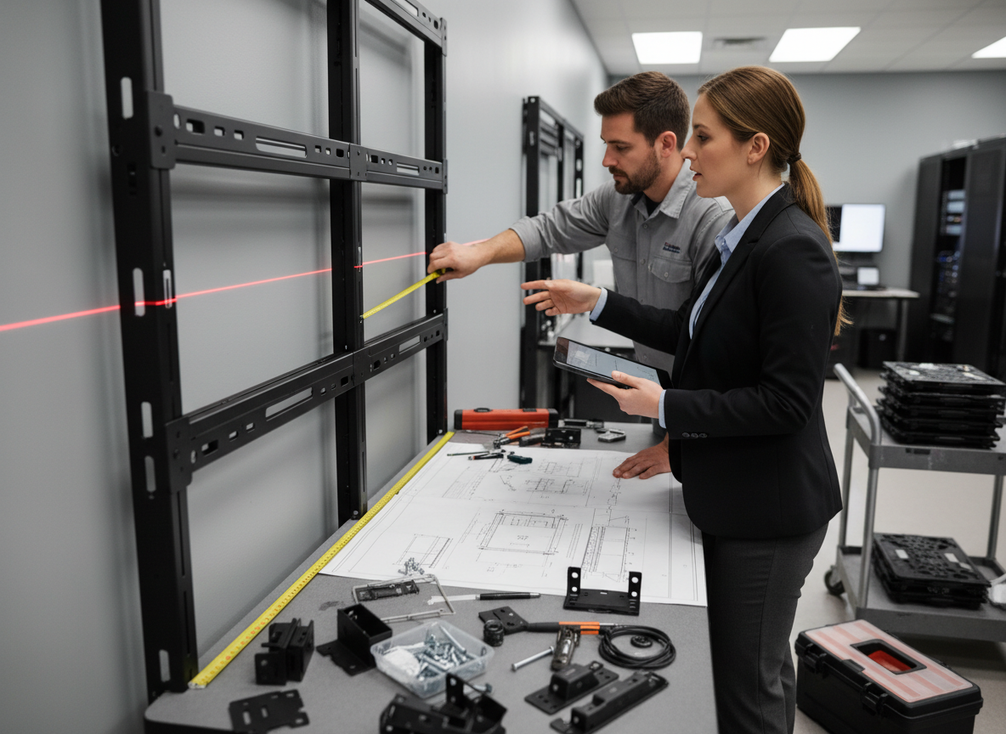
Capture the base system price, installation labor, commissioning, and any integration work as separate line items. Cabinet count, mounting complexity, and control-room fit-out can move installed cost more than buyers expect. This is why the budget should show the full installed price, not just the display invoice.
Spare Parts and Repair Coverage
The spare-parts line is often where value-premium and Tier-1 proposals start to diverge in five-year cost. A practical planning band is a preventive maintenance budget of 1% to 2% of initial hardware cost per year, plus a spare-parts planning floor of 5% to 10% of hardware cost. Use those as starting points, not universal guarantees. The exact number depends on what is stocked, what is included in the quote, and who pays to replenish used parts.
Service Levels and Downtime Exposure
For 24/7 rooms, a 4-hour emergency response is a useful mission-critical support benchmark. Slower response does not automatically break the deal, but it can widen downtime exposure and make the cheaper quote more expensive over time. That is especially true when the room has limited redundancy or when operators cannot simply pause the display and wait. For a deeper look at support planning, our LED display maintenance contracts guide covers the service terms buyers usually need to confirm.
Five-Year Energy Cost
Energy should be modeled as runtime hours multiplied by average power draw and the local electricity rate. That is the most defensible way to compare a value-premium command center LED wall with a Tier-1 alternative. AVIXA’s energy management standard for audiovisual systems supports this kind of ongoing power-consumption planning. A small wattage gap can matter over 24/7 use, but the size of the impact depends on your screen size, brightness settings, room efficiency, and utility rate. Keep it editable rather than hard-coding a universal answer.
Compare Value-Premium and Tier-1 Scenarios
The table below is the most useful decision aid because it keeps the comparison aligned by cost line rather than by sales pitch. Use it to plug in your own assumptions before you decide whether the upfront savings survive five years.
| Cost Item | Value-Premium LED Wall | Tier-1 LED Wall | Five-Year Takeaway |
|---|---|---|---|
| Purchase price | Often lower upfront | Often higher upfront | Lower CapEx can look attractive before service and spares are added |
| Install complexity | Varies by room and scope | Varies by room and scope | Compare installed scope, not just hardware price |
| Maintenance burden | Budget using your vendor quote and support plan | Budget using your vendor quote and support plan | Small annual differences compound over five years |
| Spare parts policy | Check stock depth, replenishment, and advance replacement terms | Check stock depth, replenishment, and advance replacement terms | A tighter parts plan can reduce resilience even if the quote is lower |
| Service response | Compare response window, remote support, and on-site coverage | Compare response window, remote support, and on-site coverage | Slower recovery can raise the real cost of a brief outage |
| Energy use | Model from runtime, power draw, and electricity rate | Model from runtime, power draw, and electricity rate | Energy matters most when the display runs continuously |
| Ownership risk | Higher if spares and service are thin | Lower if service and parts are stronger | The cheapest quote is not always the lowest-risk choice |
| Five-year TCO implication | Can win if the installed-price gap stays larger than recurring costs | Can win if support and operating costs stay controlled | Judge the quote by the full five-year total, not the sticker price |
If you are comparing mission-critical platforms, you can also browse command center solutions after the worksheet is filled in. The point is not to recommend a model before the math is done; it is to see whether the price difference survives the full ownership model.

Read the Result and Decide What to Request
A lower upfront price only wins when the five-year total stays lower after support, spares, and energy are added. If the gap between proposals is narrow, the safer choice is usually the one with clearer service coverage, better parts access, and fewer surprises in the installed scope.
Before you issue an RFQ or final award, ask vendors for:
- A written spare-parts list and replenishment policy.
- The exact service scope, including remote support and on-site labor.
- The stated response time for emergency calls.
- Power draw documentation and any assumptions behind it.
- Installation exclusions, so the quote is truly comparable.
If you are narrowing the field, a mission-critical wall category search path is more useful than a broad product hunt because it keeps the comparison tied to the room’s operating needs. If the vendor cannot support the response time or spares plan you need, treat that as a real cost, not a footnote.
Final Takeaway
A five-year TCO model for a command center LED wall works best when you separate installed cost, spares, service, and energy before you compare value-premium and Tier-1 proposals. If you want the cleanest decision, make every vendor fill the same worksheet and ask for the missing support details before award. We treat service scope and spare-parts policy as cost items, not fine print, because those terms usually decide whether a lower quote really stays lower.
FAQs
How Do You Estimate Five-Year Energy Cost for a Command Center LED Wall?
Use the display’s average power draw, multiply it by the hours it runs each day, then multiply by your local electricity rate and the five-year operating period. That gives you an editable planning number. If a vendor provides power data in watts per square meter, keep the same screen area in both proposals so the comparison stays fair.
What Spare Parts Should Be Included in a TCO Comparison?
Compare the stocked modules, front-line spares, advance replacement terms, and who pays to replace used parts. The important question is not just "Are spares included?" but "How quickly can the room recover if a key component fails?" A thin spare-parts plan can make a lower quote more expensive in practice.
Why Does SLA Response Time Affect Total Cost of Ownership?
Because slower response can extend outage exposure in a room that depends on the wall to keep operations moving. Even if you do not assign a dollar penalty, the service window still changes the business risk. A 4-hour emergency response is a useful benchmark for mission-critical comparison, especially when the room has limited redundancy.
Can a Lower Upfront Price Still Produce a Higher Five-Year Cost?
Yes. That usually happens when maintenance, parts replenishment, service coverage, or energy use adds more than the upfront savings. The lower quote may still be the better buy, but only if the recurring costs stay controlled and the support terms match the room’s uptime needs.
What Data Should You Request From Vendors Before Finalizing the Model?
Ask for power draw, service scope, spare-parts policy, response time, installation exclusions, and warranty terms in writing. You are trying to normalize the proposals before you compare the totals. If two vendors quote different scopes, the cheapest line item may not be the lowest-cost option once the missing pieces are added.





