

While SMD technology currently dominates indoor and standard outdoor displays, it often struggles under severe weather conditions. In environments characterized by high heat, intense humidity, and direct sunlight, DIP LED screens remain a practical option for long-distance outdoor displays, while SMD technology continues to dominate applications requiring finer pixel pitches and closer viewing distances. This article breaks down the technical principles and return on investment of these displays to help operators make informed decisions. We will explore why High-ROI DIP LED Technology continues to be a highly reliable choice for extreme climates and specific outdoor billboard projects, while analyzing the scenarios where each technology excels.
What Is DIP LED Technology and How Does It Differ from SMD?
To make an informed purchasing decision, buyers must first understand the fundamental physical differences between DIP and SMD packaging methods.
DIP vs SMD LED — Structure, Brightness, and Durability Compared
DIP (Dual In-line Package) and SMD (Surface Mounted Device) refer to how the LED diodes are attached to the printed circuit board (PCB).
In DIP technology, three separate diodes (Red, Green, and Blue) are encased in tough epoxy resin. The legs of these diodes are passed through the PCB and soldered on the back (through-hole soldering). In contrast, SMD technology integrates the three colors into a single flat chip, which is soldered directly onto the front surface of the board.
Because of this structural difference, a DIP display offers superior physical durability. The through-hole soldering provides a much stronger mechanical bond than surface mounting. Additionally, the individual encapsulation of DIP diodes allows them to project light forward with greater intensity, making them naturally brighter than standard SMD configurations.
Here is a quick reference guide comparing the two technologies across key operational metrics:
| Feature | DIP LED Technology | SMD LED Technology |
| Pixel Pitch Range | Typically P10 and above (P10, P16, P20) | Ultra-fine to standard (P0.9 to P10+) |
| Brightness | Extremely high (7,000 – 10,000+ nits) | Moderate to high (up to 6,500+ nits) |
| Viewing Angle | Narrower (approx. 110° H / 60° V) | Wider (approx. 140°+ H / 140°+ V) |
| Impact Resistance | Very High (Epoxy resin encapsulation) | Moderate (Exposed surface components) |
| Heat/Weather Tolerance | Excellent (Natural heat dissipation) | Good (May require extra cooling in extreme heat) |
| Best Applications | Highway billboards, high-altitude signs, long-distance viewing | Pedestrian areas, indoor displays, close-distance viewing |
| Limitations | Cannot achieve fine pixel pitches (HD/4K) | Can be more susceptible to physical impact and extreme heat |
Common Misconceptions About DIP Being “Outdated”
While it is true that DIP is an older, more traditional packaging method and its physical diode size limits it to larger pixel pitches (typically P10 and above), it is far from obsolete; it is highly specialized. Just as industrial heavy-duty machinery is not “outdated” compared to consumer vehicles, DIP is purpose-built for rugged environments. While SMD remains the undisputed choice for finer pixel pitch and wider viewing-angle applications, DIP is often preferred for long-distance outdoor billboards where high brightness, rugged packaging, and direct sunlight visibility matter.
Why Do Extreme Environments Still Demand DIP LED Screens?
Standard commercial screens can face accelerated wear in extreme climates. The physical design of DIP inherently solves the environmental challenges that destroy surface-mounted alternatives.
Superior Heat Dissipation in High-Temperature Climates
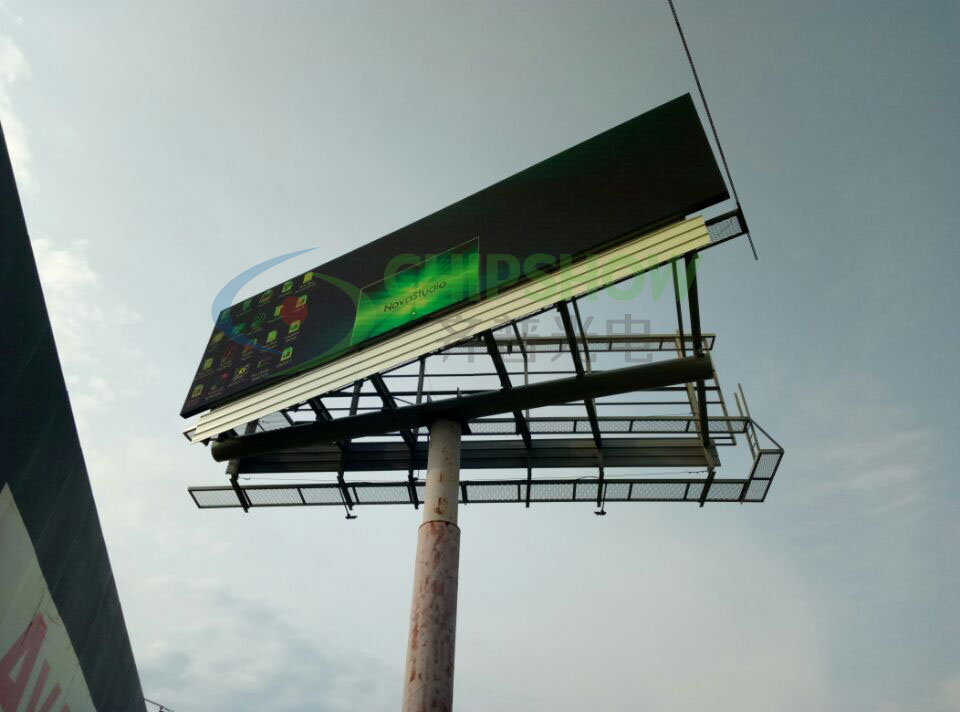
Heat is the primary cause of LED degradation. In high-temperature environments like deserts, SMD screens can be more sensitive to surface heat accumulation, which may require additional cooling systems depending on the project scale. DIP structures manage heat much more efficiently. Because the pins pass through the board, heat is transferred away from the light-emitting face and dissipated through the back of the module. This natural thermal management prevents overheating, stabilizes performance, and significantly reduces the need for external cooling.
Higher Single-Lamp Brightness for Direct Sunlight Readability
Outdoor billboards must compete with the sun. If a screen is not bright enough, the content becomes washed out and unreadable, rendering the advertising space useless. Because DIP uses three distinct, larger diodes for each pixel, it operates at a higher brightness efficiency. A dip led screen can maintain clear, vivid visibility even at high noon in tropical zones, without pushing the power supply to destructive limits.
Stronger Impact Resistance and Longer Field Life
Extreme environments often come with high winds, sandstorms, and hail. The individual diodes on a DIP screen are coated in a thick layer of hardened epoxy resin. This acts as a physical shield against flying debris and mechanical impact. Furthermore, the robust through-hole solder joints prevent the diodes from being knocked loose. SMD chips, sitting exposed on the surface of the board, can be more susceptible to physical damage and moisture penetration during severe weather events.
DIP LED Screen Performance Specs for Outdoor Billboards
When evaluating a dip led screen for an outdoor project, buyers must verify specific technical specifications to ensure long-term performance and reliability.
Brightness Levels, Viewing Angle, and Refresh Rate
- Brightness: Outdoor screens facing direct sunlight require at least 6,500 nits to remain legible. For instance, Chipshow’s outdoor screens deliver a standard brightness of 7000+ nits, with custom upgrades available to meet specific project demands.
- Viewing Angle: DIP typically provides a narrower viewing angle (around 110° horizontal and 60° vertical) compared to SMD. However, for elevated highway billboards where traffic approaches from a direct, long-distance path, this angle is more than sufficient and concentrates the light toward the target audience.
- Refresh Rate: A standard refresh rate of ≥1920Hz or ≥3840Hz is necessary to ensure the screen does not flicker when photographed or recorded on video.
IP65/IP68 Protection and Salt-Spray Resistance
Water and dust ingress will quickly ruin electrical components. A reliable dip technology led display must feature an IP65 rating for both the front and rear of the cabinet. For extremely wet areas, IP68 modules are recommended.

Furthermore, coastal installations face the threat of salt-spray corrosion, which eats away at exposed solder joints. The thick epoxy sealing and through-hole design of DIP screens naturally protect the internal circuitry from salt air, preventing dead pixels and extending the functional lifespan of the hardware.
DIP vs SMD — Total Cost of Ownership Analysis
Evaluating the true cost of an LED billboard requires looking beyond the initial purchase price to calculate the Total Cost of Ownership (TCO) over several years.
Upfront Cost, Energy Consumption, and Maintenance Frequency
While the upfront hardware costs of SMD and DIP for larger pixel pitches (like P10 or P16) are relatively comparable today, the operational costs diverge significantly. Because DIP technology is inherently brighter, it requires less electricity to achieve the high nits necessary for daytime visibility. Lower energy consumption directly reduces monthly utility bills.
Furthermore, because DIP is highly resistant to extreme heat and weather, the frequency of hardware failures and dead pixels is drastically lower. This translates to fewer maintenance calls and significantly reduces the reliance on heavy HVAC cooling systems in harsh climates.
5-Year ROI Comparison for Desert, Coastal, and Tropical Installations
Utilizing High-ROI DIP LED Technology yields massive financial benefits over a standard 5-year operating period in severe climates.
- Desert Installations: While standard SMD configurations might require robust cooling setups to survive 50°C (122°F) temperatures, a DIP screen relies on natural airflow and standard exhaust fans, saving thousands in electricity and HVAC maintenance.
- Coastal Installations: Salt and humidity cause SMD surface pins to rust, leading to frequent module replacements. The encapsulated DIP diodes resist corrosion, preserving the structural integrity of the display.
Over 5 years, the slightly reduced viewing angle of DIP is vastly outweighed by the savings in power, maintenance, and replacement parts, resulting in a significantly higher return on investment.
How to Specify a DIP LED Screen for Your Project
Selecting the right hardware ensures the screen meets both visual expectations and environmental demands without unnecessary expenditure.
Choosing the Right Pixel Pitch and Module Configuration
Because DIP requires separate red, green, and blue diodes, it cannot achieve the ultra-fine pixel pitches of SMD. Typical DIP pitches range from P10 to P20 (10mm to 20mm distance between pixels).
To choose the right pitch, use the industry standard rule: Pixel Pitch (mm) = Optimal Viewing Distance (meters). Therefore, a P16 screen is perfectly clear to viewers 16 meters away. For massive highway billboards, P16 or P20 configurations (often using a 1R1G1B or 2R1G1B layout to boost brightness) are highly cost-effective and provide excellent clarity for passing traffic.
Chipshow DIP LED Solutions for Harsh-Climate Billboard Projects
For operators deploying screens in demanding environments, selecting a manufacturer experienced with High-ROI DIP LED Technology is critical. Chipshow provides DIP LED screens designed for extreme conditions, combining high brightness, IP protection, and custom configuration options suitable for deserts, coasts, and high-humidity areas. By specifying these industrial-grade components, buyers can ensure their outdoor advertising networks remain operational, bright, and profitable regardless of the weather conditions outside.
Conclusion
Ultimately, choosing the right display depends on the installation environment rather than fleeting market trends. While SMD suits standard uses and close-distance viewing, DIP remains a proven and practical solution for extreme heat, salt, and direct sunlight installations. By investing in a robust dip led screen, operators guarantee lower maintenance costs, consistent brightness, and a longer operational lifespan. Evaluating these environmental factors ensures a successful deployment and maximizes the long-term profitability of your digital billboard network.
FAQs
Is DIP LED technology still relevant in 2026?
Yes. While it is rarely used for indoor or close-viewing screens, DIP remains highly relevant and is the preferred technology for large-scale outdoor displays in environments with extreme heat, direct sunlight, and severe weather conditions due to its durability.
What pixel pitch options are available for DIP LED screens?
Due to the physical size of the three separate diodes required for each pixel, DIP pixel pitches typically start at P10 and go up to P16, P20, and beyond. These pitches are ideal for long-distance viewing.
How does DIP LED handle coastal salt-air environments?
DIP LEDs perform exceptionally well on coasts. The thick epoxy resin covering the individual diodes and the through-hole soldering design on the back of the PCB naturally protect the vulnerable metal connections from salt-spray corrosion.
Can DIP and SMD LED modules be mixed in one billboard?
No. DIP and SMD modules have different driving ICs, varying brightness levels, different viewing angles, and distinct visual characteristics. Mixing them would result in a heavily distorted image and severe calibration issues.
What is the typical lifespan of a DIP LED billboard?
Under normal operating conditions and proper maintenance, a DIP LED billboard can achieve a lifespan of up to 100,000 hours. However, actual longevity heavily depends on operating conditions, daily usage hours, and maintenance practices. In extreme climates, DIP’s robust encapsulation helps it maintain excellent durability against environmental wear.