


Fixed-installation and rental-oriented LED displays differ mainly in their deployment lifecycle. A fixed display is planned for one site; equipment used across events also needs suitable handling, transport, inspection and crew-handover arrangements.
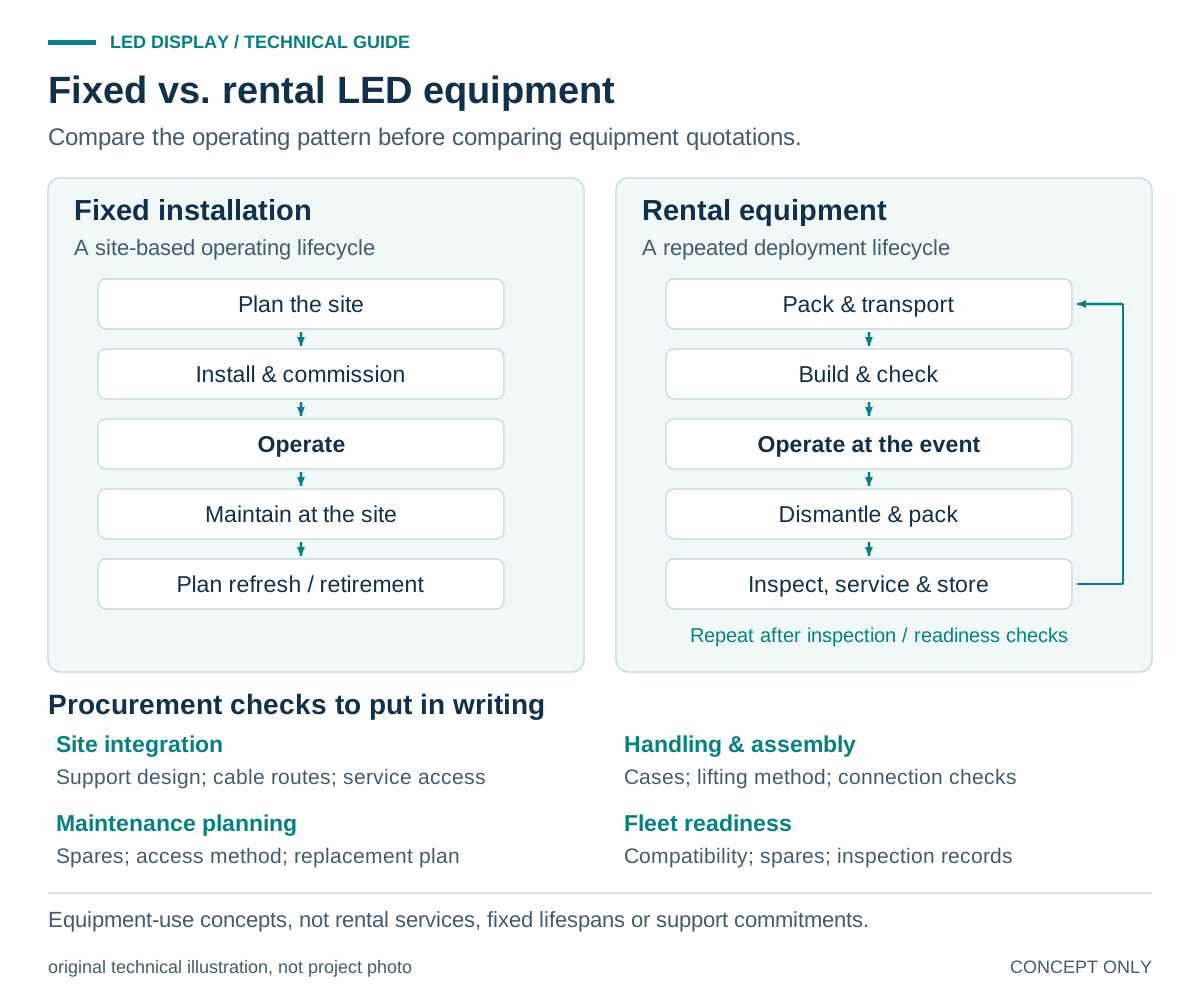
Start with how the screen will be used
In this context, “rental” describes a deployment category, not necessarily a commercial rental agreement. A company may own equipment intended for repeated event use. Conversely, using rental-oriented cabinets at one site does not remove the need for an appropriate site design and installation approval.
Compare the lifecycle responsibilities
| Decision area | Fixed installation | Repeated rental use |
|---|---|---|
| Layout | Resolve the permanent viewing area and service access. | Define the layouts required across planned venues. |
| Structure | Review the proposed site-specific support. | Review the approved support arrangement for each deployment. |
| Handling | Plan delivery, installation and future component access. | Plan packing, transport, inspection and repeated handling. |
| Operation | Train the site operator and document routine use. | Document configuration changes and crew handovers. |
| Maintenance | Confirm access, isolation and service responsibilities. | Also define checks between deployments and spare-parts arrangements. |
Do not let quick assembly replace qualified work
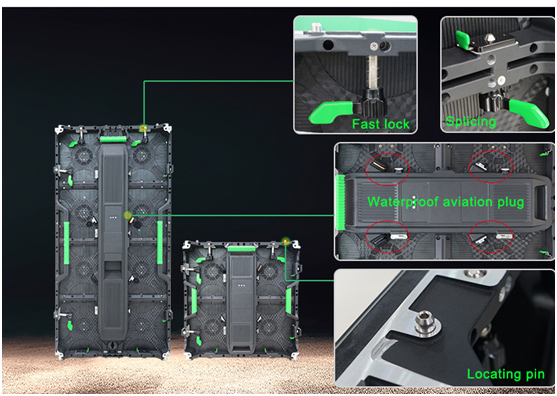
Ask for the installation manual and a demonstration of the proposed assembly process. Confirm the skills, tools and approvals required for the site. Features intended to simplify handling do not eliminate electrical, lifting or structural responsibilities.
Compare picture quality under matched conditions
Compare the same source content at similar image settings and viewing positions. Record the model, pixel pitch and active display dimensions so differences in the test setup are visible.
The Tini SoundGarden stage-screen reference illustrates a documented event setting, not a universal rental specification. Use project references to identify useful questions, then test the proposed system against your own requirements.
Include the costs around the cabinets
For a fixed screen, identify installation, access and ongoing service costs. For repeated-use equipment, also request the scope for transport cases, handling, inspections, replacement parts and crew training. Ask each supplier to state exclusions so the comparison does not reward a quotation that simply omits necessary work.
The German trailer-screen delivery story is a historical example of a reported turnaround. It should not be used to forecast another project’s shipping or installation time.
Choose the deployment plan that fits
Use the business display requirements guide to record whether the screen will remain at one site, move regularly or serve a mixed role. Ask bidders to explain how their configuration supports that plan and what must be checked before each use. The right choice is the one with a suitable, documented operating lifecycle—not simply the fixed or rental label.





