


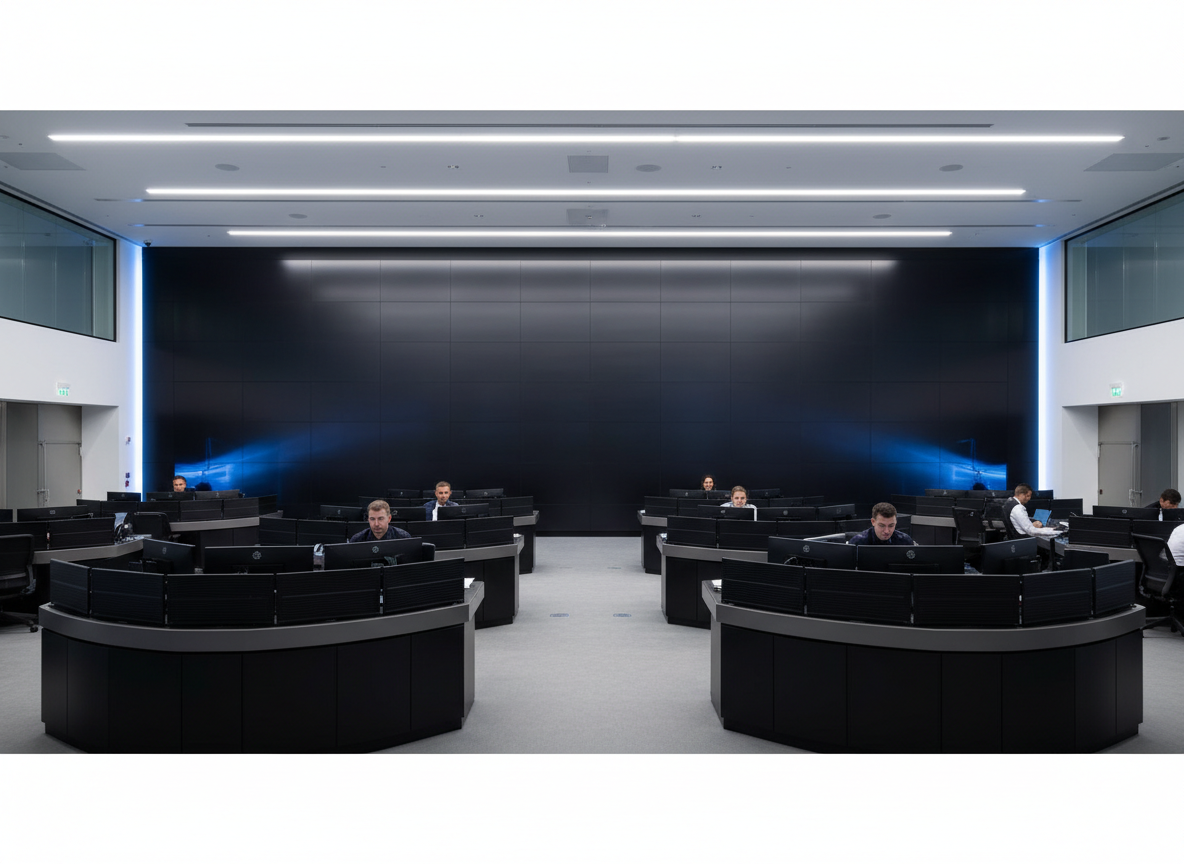
COB LED display repair tradeoffs for 24/7 command center walls usually come down to one question: does the uptime benefit outweigh the harder repair path if something goes wrong? For mission-critical walls, the answer depends less on marketing and more on access, spares, downtime tolerance, and who will service the wall when it is live.
The COB Repair Tradeoff at a Glance
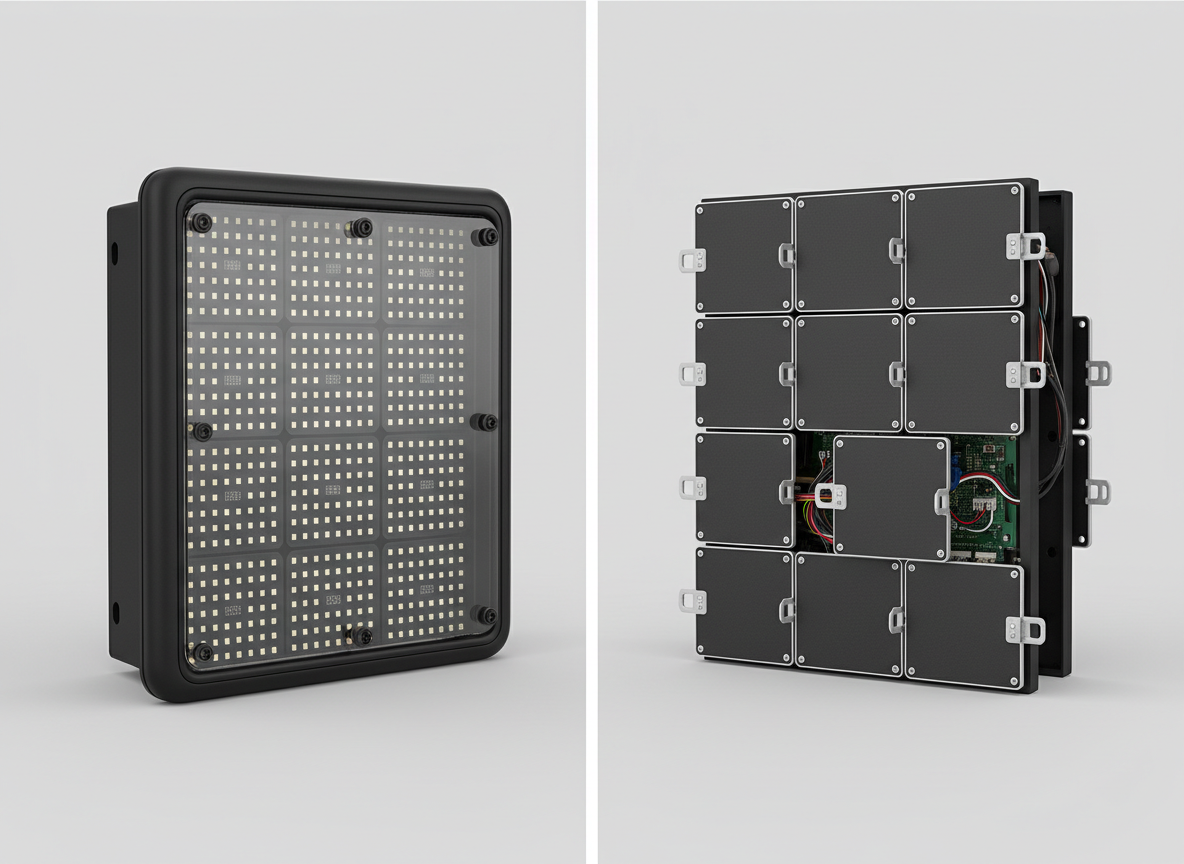
COB technology encapsulates LED chips directly on the PCB, and that protected surface is one reason COB chip encapsulation improves physical protection against dust, moisture, and accidental impact compared with exposed-chip SMD designs. That protection is the main reason buyers expect fewer visible failures and less day-to-day damage in busy control rooms.
The tradeoff is simple to state but not simple to ignore: a COB LED display can reduce expected fault frequency, yet a fault may be more involved to repair when it does happen. In a 24/7 room, that matters because maintenance windows are limited and a slow recovery can turn a small issue into an operations problem. 24/7 command center display operations usually leave little room for a long repair cycle.
| Decision factor | COB tends to help when… | COB tends to hurt when… |
|---|---|---|
| Surface protection | You want a more protected front face | The room is already easy to damage during cleaning or handling |
| Failure risk | You care about reducing visible defects | You need the fastest possible field repair |
| Service model | You have planned access and spare parts | You depend on ad hoc repair with limited parts on hand |
| Uptime impact | A fault can wait for a controlled maintenance window | Any outage is immediately user-facing and costly |
| Buyer fit | Support ownership is clear before install | No one owns the repair workflow end to end |
For a command center, the question is not whether COB looks good. It is whether the room can tolerate the repair workflow if a damaged section needs attention. That is the decision layer that should come before product selection.
Why Fewer Failures Matter in 24/7 Walls
In an always-on control room, even a small reduction in faults can matter because the wall is tied to visibility, incident response, and operator confidence. A display that stays clean and intact is easier to trust, and fewer emergency calls usually mean less disruption for the team.
That is why buyers care so much about lower failure risk. COB displays are commonly described as having a lower dead-pixel or chip-fall-off risk because the emitters sit under a protective layer, which is the basic COB and GOB comparison overview many buyers use when they start comparing structures. That does not make them failure-proof, but it can lower the odds of a visible issue becoming a recurring maintenance event.
What this means in practice is straightforward. If your room loses more value from surprise interruptions than from a slightly more complex repair process, COB becomes more attractive. If your operation already has generous maintenance windows and fast swap access, the reliability gain matters less than the service path.
What Makes COB Module Repairs Harder
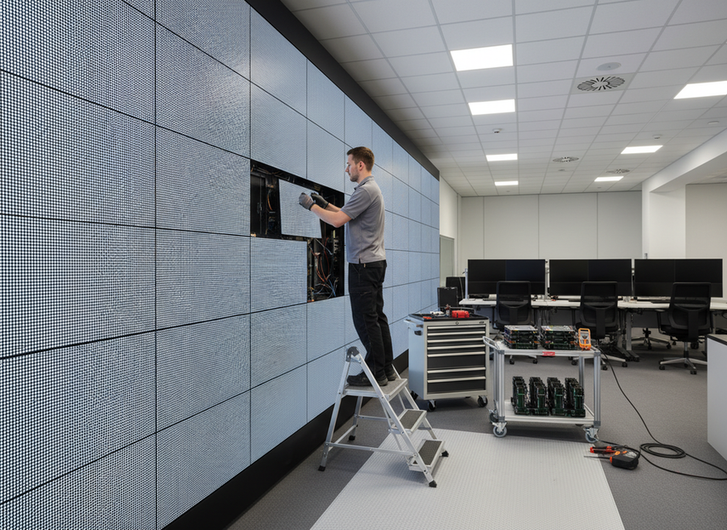
The repair side of COB is where many buyers pause. A damaged section is usually repaired by replacing the module or panel section rather than repairing individual chips one by one, and COB module replacement or full panel swap is the service path most buyers need to plan for. That is the core serviceability difference, and it is the part that affects downtime planning.
A practical repair workflow usually looks like this: identify the fault, confirm access, remove the affected module or section, install the replacement, and bring the wall back online. The exact difficulty depends on the cabinet layout, front-access design, labeling, and whether the right spares are already in stock. COB’s protected surface can also make handling more delicate than a simpler exposed-chip repair.
For 24/7 command centers, the friction is often not the swap itself. It is the coordination around it. If the wall sits in a tightly managed room, the service team may need approval, a narrow access window, and a technician who already knows the platform. That is why front-service planning for mission-critical LED walls matters as much as the panel choice.
COB vs SMD for Uptime and Serviceability
The best comparison is not feature-by-feature bragging. It is whether the wall is easier to keep available in your room, with your team, under your operating rules. The COB vs SMD mission-critical tradeoff usually comes down to repairability versus expected failure frequency.
| Buyer question | COB answer | SMD answer | What it means for the buyer |
|---|---|---|---|
| Which side lowers visible damage risk? | COB usually has the edge because the surface is more protected | SMD leaves more of the structure exposed | Better protection can reduce day-to-day accident risk |
| Which side is easier to service quickly? | Often harder if access or parts are limited | Often easier when technicians are used to modular swaps | Faster restoration matters more in short maintenance windows |
| Which side needs more support planning? | COB usually needs stronger spare-part and access planning | SMD may fit more familiar service workflows | The support model can decide the real winner |
| Which side suits a mission-critical room? | COB if durability matters and service is well planned | SMD if repair simplicity is the top priority | The room’s uptime tolerance should drive the choice |
For command centers, the answer often flips based on staffing and downtime pressure. If the room can absorb a more binary repair workflow because service is well organized, COB can be a sensible durability choice. If you need the simplest possible restoration path, serviceability should outweigh the visual advantage.
How to Decide If COB Is Worth It
Use this checklist before you approve COB for a 24/7 wall:
- Set the outage tolerance first. If even a short impairment creates operational risk, repair simplicity matters more than visual protection.
- Map the repair owner. Decide who handles diagnosis, part replacement, and escalation before the wall ships.
- Check access and spares. A protected front face is less useful if the right module is not stocked or the cabinet is hard to reach.
- Confirm the service window. Narrow maintenance windows make faster, more predictable repair paths more valuable.
- Compare the fallback option. If you need the easiest possible restoration process, a more service-friendly LED wall may fit better.
If you are still comparing wall families, review broader command center solutions to narrow the service model before you lock in a specification.
FAQs
Is COB Always Harder to Repair Than SMD?
Not always, but it is often less straightforward in real support settings. The difference usually shows up in access, replacement workflow, and the level of technician familiarity required. If your team already has a clean swap process and stored spares, the gap can narrow.
Do Fewer Failures Usually Offset COB Repair Complexity?
They can, but only when downtime is expensive and the wall can be restored within a realistic service plan. If the room has short maintenance windows, lower fault frequency is more valuable. If repair access is already a headache, service simplicity may matter more.
What Should Procurement Ask Before Choosing COB for 24/7 Walls?
Ask who owns diagnosis, what parts are stocked, how long a replacement typically takes to arrive, and whether the wall can be serviced without disrupting live operations. Those questions tell you more about fit than headline specs do.
Can COB Be a Better Fit for Command Centers Than Other LED Walls?
Yes, when the room values surface protection and lower expected fault frequency, and when the support model is mature enough to handle module-level repair. COB is not automatically the best choice, but it can be the better choice when uptime discipline is strong.
Why Does Service Planning Matter More in 24/7 Control Rooms?
Because the wall cannot disappear into a long repair window without affecting operations. In ordinary installs, a service delay may be inconvenient. In a control room, it can affect monitoring, handoff, and incident response, so access and spares matter more.





