


A cabinet-less LED display can be the better fixed-install choice when the project is permanent, the edge detail matters, and the service path is planned early. For many teams, cabinet less LED display planning starts with the same three questions: will the wall stay put, can the finish stay tight, and is access already mapped? It is less compelling when the wall structure is uncertain, rear access is limited, or the budget depends on a more standardized enclosure. The real question is not whether cabinet-less looks cleaner, but whether the site can support the right sub-frame, access method, and finish tolerance.
When Cabinet-Less LED Makes Sense
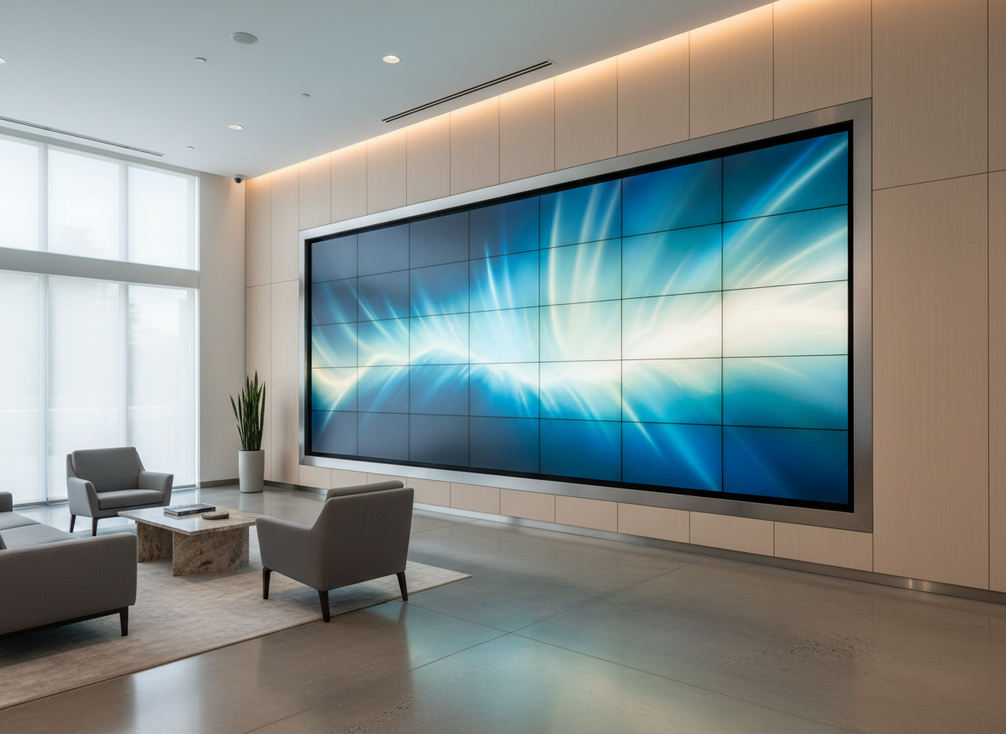
For lobbies, command rooms, and other design-led interiors, a cabinet-less LED display is usually worth considering when the wall should feel built in rather than bolted on. That is the main value behind cabinet less LED display installation benefits: less visible bulk, tighter perimeter detailing, and a cleaner transition into surrounding materials. A fixed-install LED wall without cabinets can be a strong fit when the display is part of the architecture, not just mounted inside it.
The caution is just as important. If the wall backup is unclear, the access path is still undecided, or the team has not settled the finish details, cabinet-less can add coordination work instead of reducing it. Fixed-install structural planning still matters because the display is only one part of the assembly; the support system, wall tolerance, and attachment method decide whether the result is dependable.
Choose cabinet-less when the project is permanent, visible, and finish-sensitive. Choose a cabinet-based wall when standardized replacement logistics or a simpler enclosure matter more. In that sense, cabinet-less is best viewed as an architectural LED display option, not a universal simplification.
How Cabinet-Less Architecture Changes the Install
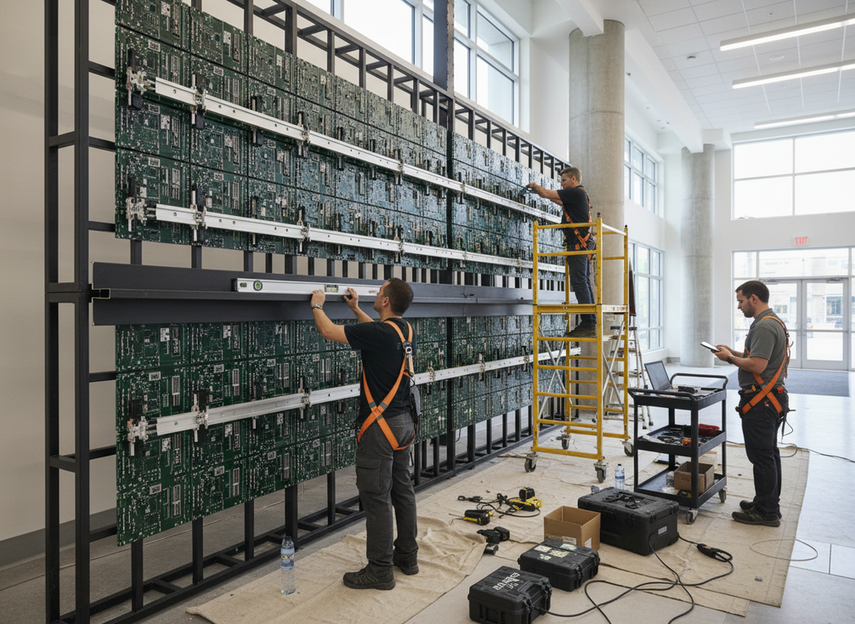
Cabinet-less systems change the install in three practical ways. First, they can reduce the visual mass of the wall, which helps the display feel more integrated into the space. Second, they shift the engineering burden onto the backing structure or sub-frame, because removing the cabinet shell does not remove the need for flatness control, anchoring, or alignment. Third, they make service strategy something you design, not something you assume.
That is why the phrase lightweight LED video wall fixed installation should be treated carefully. Some designs are easier to integrate into curtain wall mullions or suspended structures when the panel format is compact and the build-up is planned well, but the actual support design still has to account for the full assembly. The LED support structure requirements are still part of the specification, especially when the display is integrated into a custom build-up rather than a standard frame.
Reduced Visual Bulk
Cabinet-less construction can create a slimmer-looking perimeter because there is less outer enclosure to draw attention to the display. That matters in boardrooms, reception areas, and premium interiors where the screen should read as part of the wall treatment. The benefit is visual, not automatic. If trim, reveals, and surrounding finishes are sloppy, the screen will still look like a separate object.
Structural Planning Considerations
Cabinet-less does not mean engineering-free. Fixed LED installations still need load review, wall support, and attachment points that fit the full assembly, not just the modules. The support plan should be checked early because a wall that looks feasible in concept can become difficult once tolerances, service clearance, and backing materials are added.
Service Access Paths
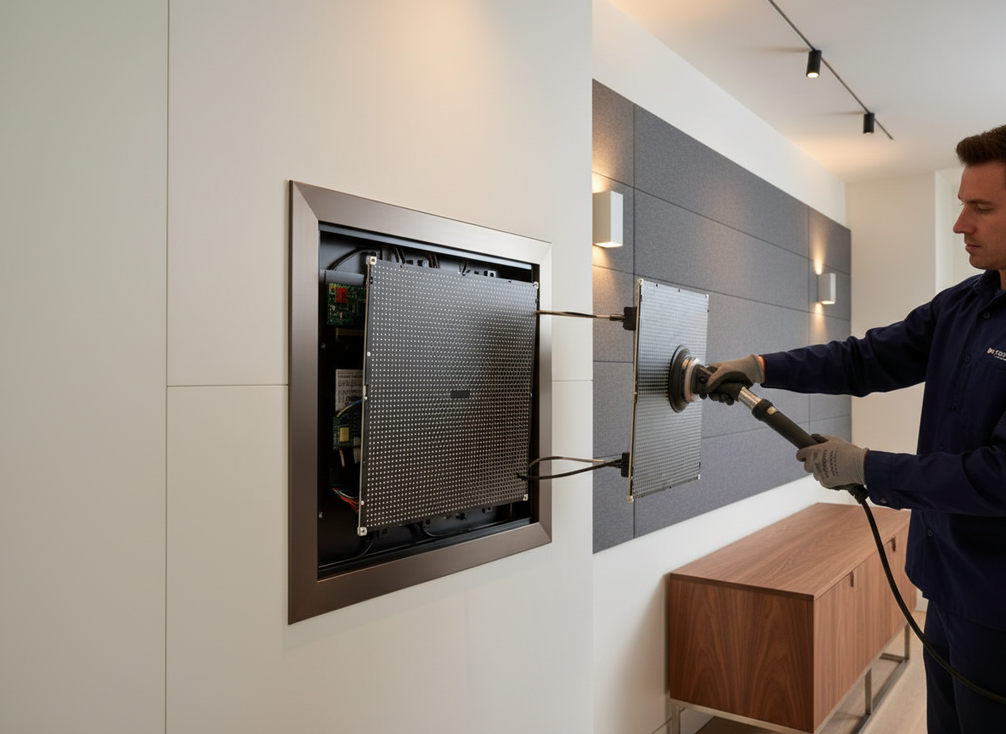
Service is one of the biggest decision points. In many fixed installs, cabinet-less architecture can work well when front-access service is planned from the start, but that is a system and layout decision, not a given. If the maintenance path is unclear, the convenience advantage can disappear fast. The right access strategy should be designed before fabrication so technicians know how modules or internal components will be reached.
Installer Workflow Differences
Cabinet-less systems often change how teams align, level, and finish the wall. Fewer external cabinet boundaries can make the surface look cleaner, but they do not remove the need for precise tolerances or detailed documentation. The practical upside is better architectural integration; the practical tradeoff is that installation discipline matters more, not less.
Cabinet-Less Versus Cabinet-Based Walls
The comparison below helps separate appearance, service planning, and project fit so you can shortlist the right architecture.
| Comparison Factor | Cabinet-Less LED Display | Cabinet-Based LED Wall | Decision Note |
|---|---|---|---|
| Visual finish | Cleaner built-in look with fewer visible enclosure lines | More visible cabinet boundaries and a more obvious frame | Choose cabinet-less when the display must blend into the architecture |
| Structure and load planning | Still requires a careful backing structure and flatness control | Also requires structural planning, but the enclosure is more standardized | Cabinet-less is not simpler by default; it is just different |
| Service access | Can work well with front-access planning in the right layout | Often easier to think about as a modular enclosure with clearer replacement logic | Decide the access method before you finalize the wall |
| Alignment and installation workflow | More dependent on sub-frame precision and detailing | More dependent on standard cabinet alignment and enclosure fit | Cabinet-less suits custom builds; cabinet-based suits repeatable installs |
| Best-fit project type | Permanent walls where finish quality matters most | Projects where modularity, enclosure familiarity, or simpler replacement flow matter more | Use the system that matches the site, not the trend |
A cabinet-less LED display is often the more attractive choice when the buyer is optimizing for built-in appearance and architectural fit. A cabinet-based wall is often the safer choice when the team wants a more standardized enclosure and a familiar replacement path. The best answer depends on the project constraints, not on the idea of being more advanced.
Architectural Integration and Visual Finish
Cabinet-less design tends to win when the wall must feel like part of the room rather than a separate object. That is why architectural LED display advantages show up most clearly in premium interiors, feature walls, and control spaces with tight visual framing. The screen edge, reveal depth, and surrounding materials all influence whether the result feels intentional.
Use this short integration check before you specify:
- Edge treatment: decide how the screen perimeter will terminate against adjacent finishes.
- Material coordination: match the display finish to surrounding textures, sheen, and color.
- Reveal depth: confirm the wall build-up can hide what needs to disappear while keeping service workable.
- Lighting interaction: check how ambient light will affect the perceived edge and surface quality.
- Hidden access planning: make sure the maintenance route does not fight the visual goal.
The key point is that finish quality comes from detailing, not from cabinet-less architecture alone. If the wall needs a visible frame or perimeter treatment to absorb tolerances, that can be the right design choice. In that sense, cabinet-less LED display installation benefits are real, but they depend on the surrounding build-up doing its job.
What to Verify Before You Specify
Before you lock in a cabinet-less fixed install, verify the conditions that can change the outcome.
- Confirm that the installation is truly permanent and that the wall location will not need to be reconfigured soon.
- Confirm the structural support path, including dead load, wall backup, and attachment geometry. For fixed installations, the LED support structure requirements should be checked before you finalize the build-up.
- If any portion is suspended or overhead, verify the overhead safety factor expected for the rigging hardware and confirm the full assembly rating, not just the face modules.
- Decide whether front or rear access is the better maintenance path, and make sure the room layout supports it.
- Confirm tolerances, backing details, and the finish edge so the architectural intent survives real installation conditions.
- Review documentation for service workflow, replacement sequence, and who owns long-term maintenance.
One decision sentence captures the whole article: specify cabinet-less only when structure, access, and finish goals have been checked together; otherwise, a cabinet-based wall may be the more practical fixed-install answer. If you are still shortlisting options, browse our commercial indoor LED options for architecture-led projects or compare mission-critical video wall options when service continuity matters more than perimeter minimalism.
Final Takeaway
A cabinet-less LED display is most persuasive when the project is permanent, the visual edge matters, and the team is ready to plan structure and service together. It is less persuasive when the wall backup is still unclear or when a standard enclosure would reduce risk. Before you specify, confirm the support path, access method, and finish target, then compare cabinet-less and cabinet-based options against the real site conditions.
FAQs
What Are the Main Benefits of a Cabinet-Less LED Display?
The main benefits are usually visual integration, a slimmer-looking edge, and more flexibility in how the wall is framed into the architecture. Those advantages matter most when the display is permanent and the finish quality is part of the project brief. The tradeoff is that the install still needs careful support and access planning.
How Do You Decide If Cabinet-Less Is Right for a Fixed Install?
Start with the wall conditions, not the product name. If the space is permanent, the surrounding finish is tight, and the service route is already understood, cabinet-less may be a strong fit. If the structure is uncertain or the maintenance path is unclear, the concept can create more coordination risk than value.
Can Cabinet-Less Designs Reduce Structural Complexity?
Not automatically. Cabinet-less systems can change how the wall is engineered, but they do not remove the need for load review, backing structure, attachment points, or flatness control. The complexity may shift from enclosure management to sub-frame precision, which is why the full build-up should be reviewed early.
What Service-Access Questions Should Be Asked Before Specification?
Ask whether the wall will be serviced from the front or rear, what clearances are available, and how individual components will be reached without disrupting the finish. Also confirm who handles routine maintenance and what the replacement sequence looks like. Those details matter more than the concept name.
When Is a Cabinet-Based LED Wall Still the Better Choice?
A cabinet-based wall can be the better choice when the project favors a standardized enclosure, simpler replacement logic, or a more conservative budget approach. It may also fit better when the site layout makes custom detailing or hidden access harder to support. In those cases, the traditional structure can be the safer project decision.





