


Wind resistant mesh LED for high rise buildings is often the safer starting point when wind exposure, dead load, and façade visibility all matter. It can reduce sail effect and help preserve daylight and views, but it is not a blanket approval path. The real decision is whether the building can support the full system, not just the panel face.
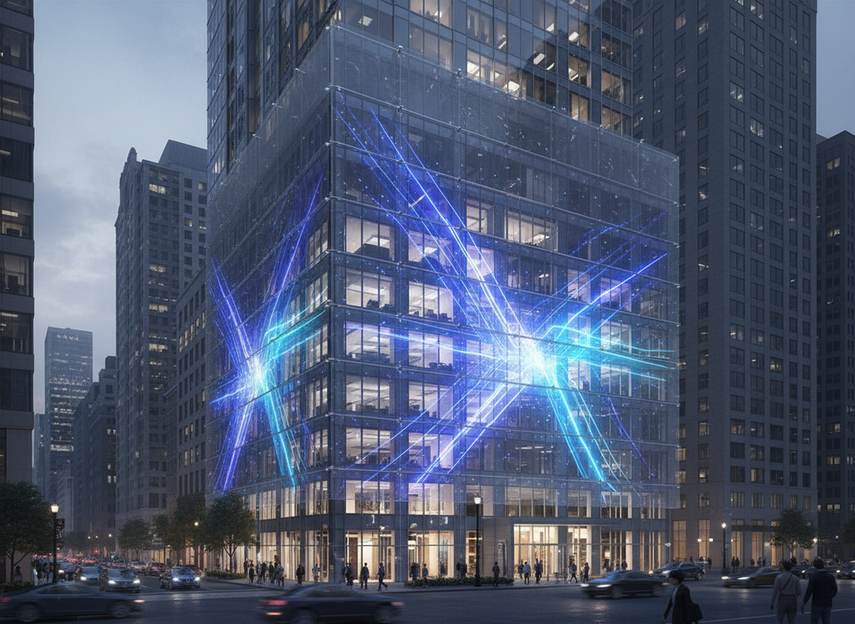
Why High-Rise Facades Demand Mesh LED
High-rise DOOH projects face stronger wind exposure, tighter attachment limits, and less tolerance for added dead load. That is why a solid-face display can become a structural problem even when the media brief looks simple. In US projects, wind design for signs and façade-related assemblies is generally tied to ASCE 7 and the IBC framework, while the building-envelope wind safety guidance in WBDG reinforces that tall buildings need wind-aware detailing. Additional references include wind-pressure requirements and ASCE 7 provisions for signs.
For most teams, the first filter is not brightness. It is whether the façade can tolerate the combination of wind pressure, attachment load, and service access. A display that looks attractive on paper can still be a poor fit if the project team has not cleared those constraints.
A useful rule of thumb is this: if the building is exposed, tall, or difficult to access, the risk moves from the LED face to the whole assembly. That is where a Transparent / Mesh LED Display collection becomes worth reviewing as a design path rather than a style choice.
How Wind-Resistant Mesh LED Reduces Load
A mesh structure gives air a path through the display instead of forcing the façade to act like a solid billboard. That matters because a sealed face tends to catch more wind than a ventilated one. In practice, the point is not that mesh eliminates wind risk. The point is that it can reduce the pressure burden enough to make a difficult façade more workable.
Ventilated Structure and Lower Wind Drag
The biggest practical advantage is airflow. A ventilated face usually creates less resistance than a sealed panel, which can lower the structural demand on the mounting system. For tall façades, that often changes the conversation from "can we hang this?" to "what framing, spacing, and engineer sign-off do we need?"
Lightweight Build and Attachment Efficiency
Weight matters just as much as airflow. On retrofit projects, the total installed load can decide whether the design is feasible. Teams should count the modules, frames, substructure, cabling, and access hardware together, because the panel weight alone can understate the real burden.
That is why a mesh solution often becomes the better fit when the structure is already carrying other loads or when the owner wants to avoid major reinforcing work. A lighter concept is not automatically approved, but it usually gives the engineer more room to work.
Transparency, Daylight, and Façade Usability
Transparency changes how the building feels from the street and from inside. On glass-heavy towers, a mesh or transparent format can preserve daylight, sightlines, and the architectural character of the façade better than an opaque wall of LEDs. The trade-off is that the media image may be less like a traditional billboard and more like an integrated façade layer.
If the project goal is to turn glass into a media skin without blocking the building, the C-Mesh G Invisible Strip (Custom) is a relevant browsing path. If the site needs a broader outdoor media direction, the Outdoor DOOH collection is the wider category to compare against.
Where Mesh LED Fits Best on Tall Buildings
Mesh LED is usually strongest on façades, parapets, and large media skins where wind and visibility both matter. It is less compelling when the project needs a fully opaque, close-view image or when the façade cannot support the mounting geometry. In other words, wind resistant mesh LED for high rise buildings is a fit when the structure needs relief, not when the brief demands a conventional solid billboard look.
If the brief is a roadside screen rather than a tower skin, the C-Vent P16 Wind-Resistant Billboard can be a more natural navigation point because its use case is closer to exposed outdoor advertising than to premium curtain-wall integration.
Spec Checks Before You Specify
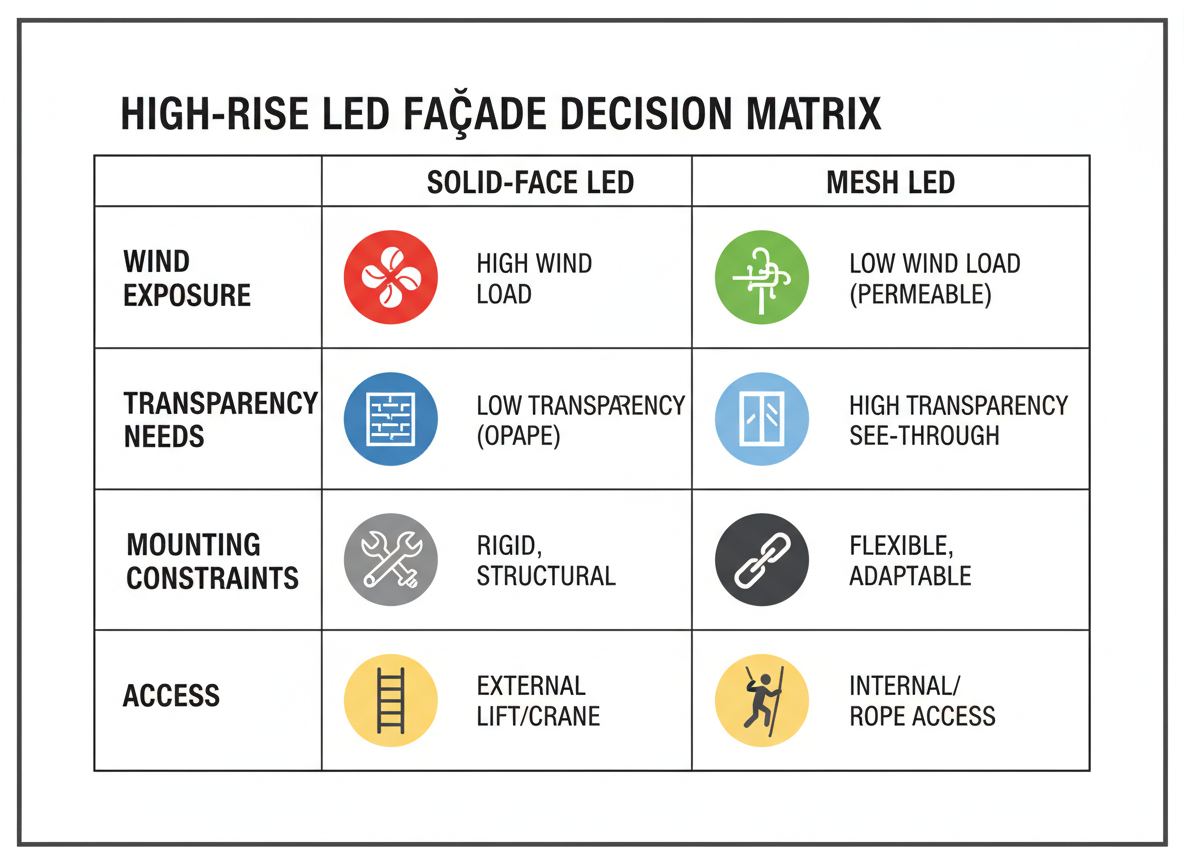
Before anyone approves a proposal, the project team should check more than pixel pitch. The table below helps visualize the basic fit pattern: mesh usually becomes more attractive as wind exposure and transparency needs rise, while solid-face displays stay more relevant when the project is less exposed and wants a fully opaque look.
| Scenario | Solid-face LED | Mesh LED |
|---|---|---|
| Low wind exposure | Stronger | Good |
| Moderate wind exposure | Moderate | Stronger |
| High wind exposure | Weaker | Stronger |
| Transparency needed | Weaker | Stronger |
| Heavy mounting constraints | Moderate | Good |
| Access / maintenance constraints | Moderate | Good |
For teams writing a submittal, the practical checklist is simple: confirm the façade exposure, confirm total installed load, confirm the mounting method, confirm service access, and confirm what documents the engineer and building owner need. If any one of those is unclear, the project is not ready for a final yes.
A C-Vent collection page is useful here only as a browsing path, not as proof of fit. The real check is whether the project data is detailed enough for engineering review.
Choose the Right Fit for the Project
The best choice depends on structure, visibility goals, and local approval requirements, not only on pixel pitch. For high-rise advertising, the safest instinct is to start with the façade and work backward to the display.
- For a skyscraper media skin, prioritize the lightest practical structure and the strongest wind review. A mesh format usually deserves first look when the tower is exposed and the owner wants to limit added load.
- For glass-heavy façades, prioritize transparency and clean sightlines. A more transparent mesh or curtain-style solution is often a better fit than a dense, opaque screen.
- For retrofit projects, prioritize mounting simplicity and maintenance access. If the building is already difficult to service, a lighter and more open system usually reduces friction.
- For roadside DOOH, prioritize ruggedness and brightness alongside wind resistance. A display built for open-air advertising may be a better fit than a façade-first product.
If the project is clearly in the outdoor-advertising lane rather than the architectural-glass lane, the Outdoor DOOH collection is the right category to compare first. If the brief is specifically about a lighter billboard-style setup, the C-Vent P16 Wind-Resistant Billboard remains the more direct product path.
One decision sentence worth keeping: if transparency and wind relief are both project priorities, mesh LED is usually the better starting point; if the goal is a fully opaque image wall and the façade is easy to load, a different outdoor LED format may be more appropriate.
Final Checks for a Safer High-Rise Proposal
Confirm that a structural engineer has reviewed the full installed load and the site’s wind exposure assumptions. Verify that the installation team can reach the façade safely for maintenance and replacement. Review permitting, owner approvals, and local restrictions before the project is locked. Request the exact drawings and submittal documents needed for review. Compare the media objective with the façade impact to make sure the concept still fits the building. Wind resistant mesh LED for high rise buildings is valuable when it solves a real structural and visual problem, not when it is used as a shortcut around engineering review.
FAQ
How much wind can a mesh LED facade handle?
Mesh LED does not remove wind load — the perforated face lets air pass through, which reduces the sail effect compared with a sealed cabinet, but the governing wind-load figures must come from a project-specific structural calculation. Ask each vendor for cabinet clamp-test data and a project-specific wind-load calculation that references your building’s local code requirements before you approve the facade design.
Is mesh LED suitable for floors where people work or live?
Transparency is a key reason mesh LED gets specified above occupied floors. The aperture design keeps daylight and outward views working during the day, and content brightness can be scheduled down at night. Confirm transparency percentage, viewing distance, and any interior glare review with your facade consultant as part of the design package.
Should we choose mesh LED or transparent film LED for a curtain wall?
It depends on the glass system, span, and how much of the wall must stay clear. Mesh strips suit long horizontal bands, mullion-mounted layouts, and projects that prioritize airflow and mullion-mount flexibility. Film and high-transparency panels suit full-glass media facades where content coverage matters more than airflow. Both routes need a facade-specific attachment and maintenance plan, so request both options when the project is on the boundary.





