


Value-premium LED procurement risk framework is less about finding the cheapest wall and more about avoiding the wrong risk. For mission-critical rooms, U.S. government projects, and budget-sensitive replacements, the first question is not "What looks best?" It is "What could stop this project from being accepted, supported, or recovered quickly if something goes wrong?" That is why buyers use the value premium LED framework instead of a simple price or feature comparison.

Start With the Risk That Matters
For buyers comparing value-premium LED walls to premium brands, the real issue is how much uncertainty the project can tolerate. Compliance, support responsiveness, spare-parts logistics, and project-failure scenarios are the four risk buckets that usually decide whether a quote fits the room. In practice, the value premium LED procurement risk framework helps you screen out quotes that look competitive on paper but carry hidden schedule or acceptance risk.
That framing matters because LED project failures are not caused only by bad panels. AVIXA notes that installation-related failures can come from power inrush, thermal management, and mechanical stress, which means the project can fail even when the display itself is technically sound. For a command room, that changes the buying question from brand prestige to recovery risk.

A useful decision sentence is this: if the room cannot absorb a slow recovery, a cheap quote is not automatically cheaper. If the buyer can tolerate slower recovery and has strong documentation, a value-premium option can be rational. The right answer depends on whether the project is judged on price alone or on how quickly it can be restored after a problem.
Check Compliance Before Anything Else
For U.S. government or compliance-sensitive projects, compliance is the first gate, not the last review. The GSA’s TAA guidance makes eligibility a procurement question, which means the offered system must be manufactured or substantially transformed in the U.S. or a designated country. China is generally not a designated country for this purpose, so a quote that looks fine commercially may still fail the federal gate.
NDAA screening is a separate step. The FAR 52.204-25 clause covers prohibited telecommunications and video-surveillance equipment, and LED buyers should treat embedded controllers, processors, and other components as part of the review. The buyer should not rely on a vendor’s verbal assurance alone. Ask for the compliance statement, the exact bill of materials, and a project-specific confirmation that matches the quoted configuration.
The DoD OIG report on LED procurement errors shows why sourcing verification matters: when contracting personnel could not support that installed LED product models met origin requirements, the project faced compliance problems and delay risk. In a government procurement file, the safe rule is simple: if the compliance package cannot be tied to the actual quoted system, the quote is not ready for award.
Evaluate Warranty and Local Support
Warranty language only matters if the support path works when the room is down. In mission-critical buying, the important questions are who answers first, who owns escalation, and how repair coordination actually happens. That is why the value-premium LED procurement risk framework should treat warranty terms and support geography as one topic, not two.
Use this checklist:
- Who handles the first response, and how is the ticket opened?
- Who owns escalation if the first answer is not enough?
- Is there a local or regional service path for onsite work?
- What does the vendor require before repair starts?
- Which exclusions or handoffs slow recovery the most?
AVIXA’s installation guidance is useful here because many outages are really coordination problems, not product defects. If the project has low recovery tolerance, a support promise that looks fine for a commercial lobby may be too weak for a control room. That is the key threshold: the warranty only matters when it fits the room’s downtime limit.
Map Spare-Parts Risk to Project Delay Risk
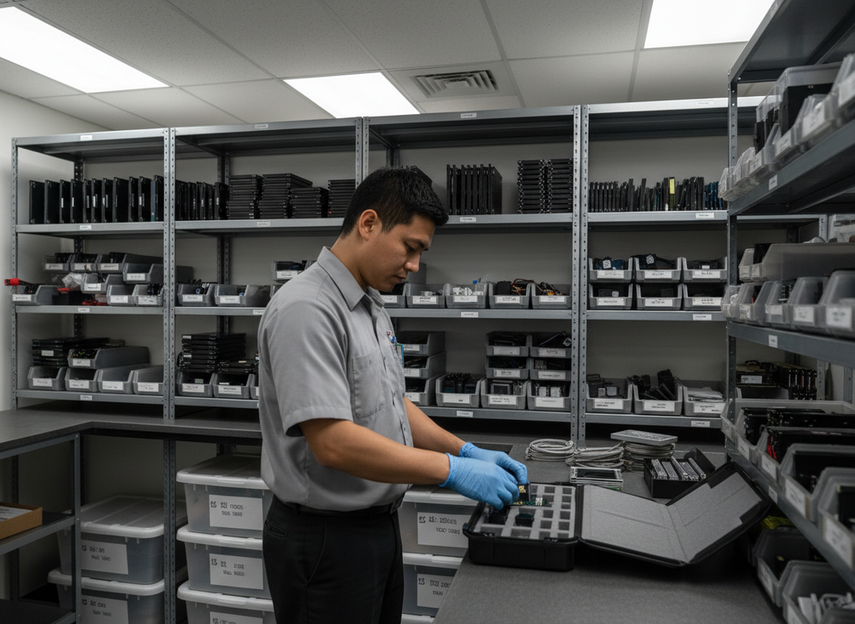
Spare parts are not a back-office detail. They are part of the project’s outage risk. If a module, power supply, or controller fails, the real question is how long the room can wait and who is responsible for getting the replacement into service. In that sense, parts planning is a procurement variable, not just a maintenance task.
The easiest way to judge the risk is to compare four variables side by side:
| Risk factor | Why it raises delay or recovery risk | Premium vs. value-premium implication | Buyer check |
|---|---|---|---|
| Spare-parts availability | No part on hand can turn a small failure into a long outage | Premium can help if the vendor has proven support depth; value-premium can still work if parts access is documented | Ask what is stocked and where |
| Replacement path | More handoffs usually mean slower recovery | Premium is only better if it shortens the actual repair path | Ask who ships, who installs, and who closes the ticket |
| Batch uniformity | Modules from different runs can show visible color or brightness mismatch | Value-premium is fine only if calibration controls and spare strategy are clear | Ask how replacement units are matched |
| Escalation ownership | Unclear ownership often creates the longest delays | Premium support matters if it assigns one accountable path | Ask who owns escalation end to end |
AVNetwork’s discussion of batch matching is a useful reminder that replacement parts from different production runs can create visible uniformity issues. That is why buyers should treat batch consistency as a practical heuristic, especially in fine-pitch rooms where mismatches are easier to see.
The decision rule is straightforward: if replacement uniformity matters more than lowest first cost, document the parts strategy before award. If the room can accept more maintenance flexibility, a value-premium option may still be viable, but only when the replacement path is explicit.
Compare Value-Premium and Premium Risk Profiles
Comparing value-premium LED walls vs Leyard or Barco by brand alone misses the point. The buyer should compare the actual risk profile: compliance burden, support coverage, parts access, and the project’s recovery tolerance. Premium pricing only pays off when it materially reduces one of those risks.
Here is the cleanest way to think about it:
- Choose a premium option when the project has strict compliance documentation, very low downtime tolerance, or a hard recovery deadline.
- Choose a value-premium option when compliance is documented, support coverage is clear, and the room can tolerate a more standard repair path.
- Do not compare only cabinet price or brand reputation, because either one can hide the real cost of delay.
- Treat the right answer as project fit, not prestige.
The TAA eligibility gate and the NDAA screening clause make this especially important for federal buyers. If the project is compliance-sensitive, a premium quote that cannot document the system properly is not a premium solution; it is a risk. The same is true if the room cannot afford long downtime and the support model is vague.
Use a Decision Checklist Before You Issue the RFP
Turn the framework into an RFP gate. If the vendor cannot document the compliance path, support ownership, parts strategy, and failure-recovery plan, keep the bid under review. That gives procurement a cleaner record and makes the value premium LED decision easier to defend.
- Confirm TAA and NDAA documentation for the exact quoted configuration.
- Request the full BOM and any project-specific compliance statement.
- Ask who owns first response, escalation, and onsite repair coordination.
- Verify spare-parts availability, shipping path, and replacement ownership.
- Document the failure scenario the room can tolerate and the one it cannot.
If the team cannot explain how it will recover from a failed module, a missing part, or a compliance challenge, the procurement is not ready for award. We can help teams document that gap before the RFP goes out.
FAQs
How Do I Verify a Value-Premium LED Display for a U.S. Government Project?
Start with the project-level compliance package, not the brochure. You want written TAA eligibility language, the exact BOM for the quoted system, and any statement that identifies the manufacturing or substantial-transformation path. If the documentation does not match the actual configuration, treat it as unverified until corrected.
What Warranty Details Matter Most When Buying an LED Wall for a Control Room?
Focus on the process behind the warranty, not just the warranty length. The useful details are first response, escalation ownership, onsite coordination, and exclusions that slow repair. A longer warranty can still be weak if the recovery path is unclear or if service geography is too limited for the room’s tolerance.
Why Do Spare Parts Matter So Much in LED Wall Procurement?
Because parts availability controls how long a fault lasts. A missing module, controller, or power component can turn a small issue into an extended outage or a delayed acceptance test. In fine-pitch systems, replacement matching also matters because a part from another run may not blend perfectly without calibration control.
Can a Value-Premium LED Wall Be a Better Fit Than a Premium Brand?
Yes, if the project conditions line up. Value-premium can be the better fit when compliance is documented, support is clear, and the room can tolerate a standard recovery path. Premium is more defensible when the project has low downtime tolerance, strict paperwork needs, or higher recovery risk.
What Should Be in an LED RFP to Reduce Procurement Risk?
Include the compliance documents, the BOM request, service and escalation terms, spare-parts ownership, and a failure-recovery scenario the vendor must address. That makes the bid easier to compare and gives procurement a record of how risk was handled before award.





