


Transit corridor DOOH uptime and impression measurement only work as a pricing story when both parts hold up: the screen has to stay visible, and the audience estimate has to be explainable. If either side is vague, the rate discussion gets shaky fast. For a DOOH LED display, the practical question is not just whether it runs, but whether the network can prove delivered value with a method buyers can review.
Why Transit Corridor Uptime Changes Ad Rates
Advertisers pay for visible, active inventory, so downtime is not a side issue. In transit corridors, every missed hour reduces the amount of inventory a buyer can actually see, which weakens the value story for the campaign. That is why outdoor LED transit advertising uptime belongs in the rate conversation, not just the maintenance log.
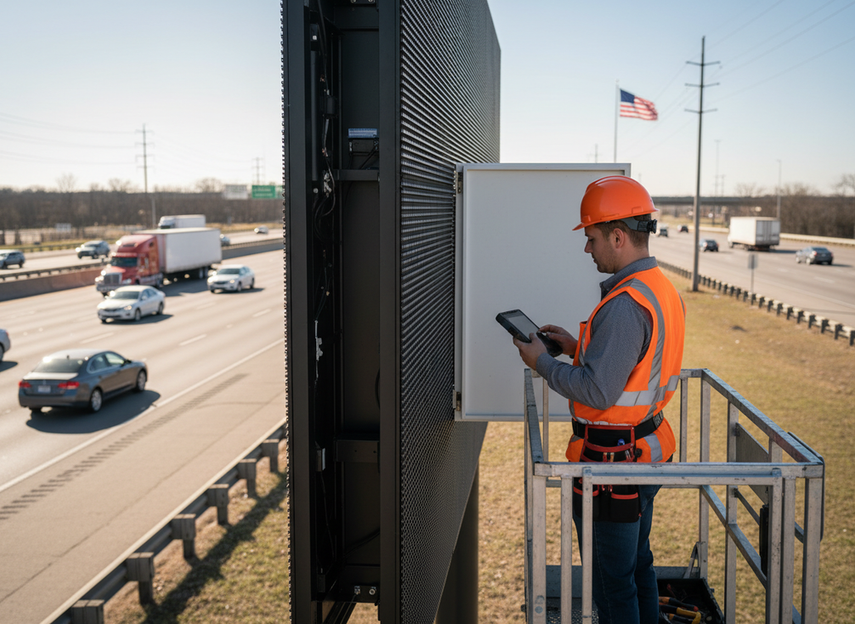
The operational risks are easy to underestimate. Weather exposure, power interruptions, access constraints, and short maintenance windows can all reduce availability. On a roadside or corridor screen, those interruptions are public, so the trust hit is immediate. A buyer does not need a perfect uptime promise; they need a clear explanation of what keeps the display visible and what gets in the way.
For that reason, the first decision filter is simple: if the deployment cannot tolerate weather stress or hard-to-service locations, it is a weak fit for premium transit pricing. That does not mean the network is unusable. It means the seller has to justify a narrower rate case, a more conservative delivery promise, or a different placement plan.
If you are comparing hardware families, start with a broad outdoor DOOH solution path rather than assuming every outdoor display behaves the same in corridor conditions.
What Drives Outdoor LED Transit Advertising Reliability
Reliability in transit-facing LED is mostly about whether the display stays visible under real operating stress. Weather-hardening matters, but it is only one part of the picture. The IP65 baseline is a useful reference point for exposed outdoor environments because it signals protection against dust and water ingress, but it still does not prove campaign delivery or audience reach.
Weather Exposure and Enclosure Protection
Rain, dust, humidity, heat, and wind are the most obvious stressors in transit corridors. An enclosure that handles those conditions better can reduce avoidable downtime, but the buyer still needs to verify the claim instead of treating it as automatic. In practice, the question is whether the weather protection matches the exposure level of the site, including splash zones, wind loading, and maintenance access.
Brightness, Visibility, and Power Stability
In high-ambient-light locations, visibility is part of uptime because a screen that is technically on but hard to read does not deliver the same value. Brightness, thermal behavior, and power stability all influence whether the screen remains usable across long operating hours. If a proposal leans on visibility claims, ask how the display handles daytime conditions, heat, and unstable power without drifting into a dark or unreadable state.
Service Access and Maintenance Windows
Maintenance-friendly design is a real commercial issue in transit networks. Front-service access or otherwise easy servicing can reduce the time a screen stays offline during repairs. That matters more in transit corridors than in many indoor settings because missed hours are visible to the public and harder to recover in a rate card. The better question is not "Can it be serviced?" but "How disruptive is the service path when the screen is already revenue-bearing?"
Placement Choices for Transit Corridors
Roadside, pole-mounted, and gantry-adjacent placements each change the exposure and service trade-off. Roadside units may face more weather and traffic stress. Pole-mounted units can be easier to fit into dense corridors but may require tighter coordination for access. Gantry-adjacent placements often improve sightline consistency, yet they can complicate maintenance logistics. The right choice depends on traffic pattern, viewing distance, and how often the site can realistically be serviced without creating extended downtime.
If the buying task is mainly about highway or traffic-controlled environments, a gantry sign option or the broader traffic and VMS solutions category may be the more natural starting point.
How to Measure Impressions Without Overclaiming
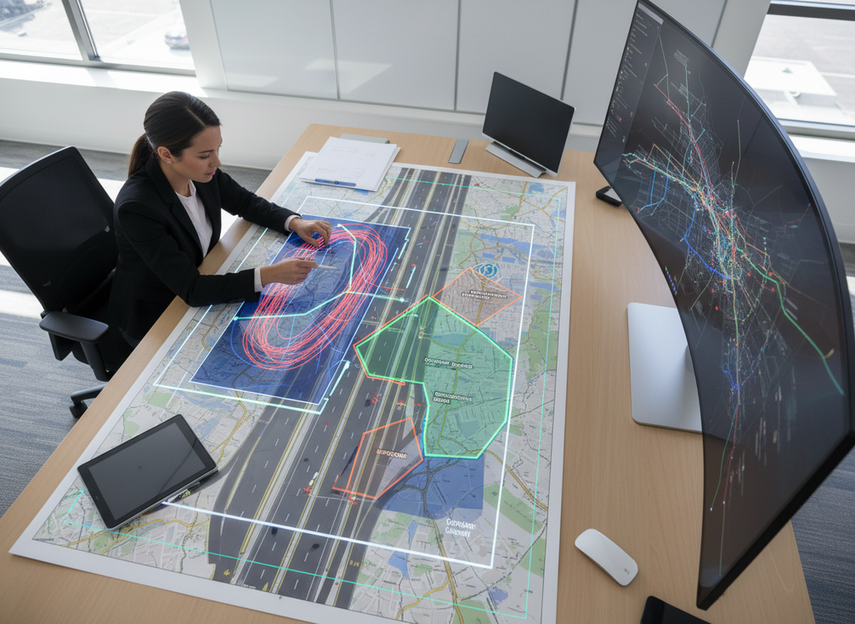
Transit corridor impression measurement should be presented as a modeled estimate, not as exact person-by-person counting. The strongest industry frameworks use exposure-based language. The MRC out-of-home measurement standards define OTS and LTS around a display exposure zone, and the OAAA impression guidelines treat OTS as the core DOOH metric.
A buyer should not stop at the headline number. The real question is which inputs drive the estimate. Geopath’s best-practices framework uses movement and audience data such as traffic volume and location intelligence to support out-of-home measurement, which is why corridor proposals should show what is counted, what is modeled, and what is excluded. The Geopath standards and protocols are useful here because they make the input mix part of the conversation.
For corridor ads, dwell time also matters because a fast pass-by is not the same as a longer exposure window. The IAB DOOH glossary defines dwell time as the time a person or vehicle remains within the viewable range of a screen. In plain terms, the slower the traffic or the longer the viewing window, the more defensible the exposure estimate tends to be.
Input Data That Supports Impression Estimates
Start by checking whether the proposal uses traffic volume, direction of travel, time of day, and local movement data. Those inputs do not guarantee accuracy, but they do tell you whether the estimate has a visible method behind it. If the seller cannot say whether the number is measured, modeled, or blended, the proposal is hard to compare against another corridor plan.
Visibility and Exposure Assumptions
Exposure depends on line of sight, viewing angle, dwell time, and placement geometry. A screen can be in a high-traffic location and still produce a weak estimate if the angle is poor or the view window is too short. That is why a defensible transit corridor DOOH ROI measurement discussion has to include the assumptions, not just the reach estimate.
Attribution Boundaries Buyers Should Ask About
Attribution gets messy when exposure, attention, and conversion are mixed together. Buyers should ask what is counted, what is estimated, and what is excluded, then check whether the same definition is used across campaigns. If one seller counts glance opportunities while another uses a stricter exposure zone, the numbers may look similar but mean different things.
How to Present Estimates to Advertisers
The cleanest client-facing explanation shows the method, assumptions, and caveats together. That format protects the sales team from overstating certainty and helps the advertiser compare proposals on the same terms. In practice, the best pitch is not "We can prove every impression." It is "Here is the exposure model, here are the inputs, and here is what the estimate can and cannot claim."
| Disclosure item | What a strong proposal should show | Why it matters |
|---|---|---|
| Traffic and movement inputs | Whether the estimate uses counts, modeled movement data, or both | Helps buyers judge method quality |
| Visibility assumptions | Viewing angle, dwell time, and exposure zone logic | Prevents apples-to-oranges comparisons |
| Exclusions | What the model leaves out or treats conservatively | Reduces overclaiming |
| Update cadence | How often the estimate is refreshed | Keeps the plan tied to current conditions |
A Buyer Checklist for Uptime and Measurement Claims
Use this as a quick RFQ or proposal review filter before you accept a transit corridor plan.
- Ask for the operating conditions behind the uptime claim, including weather exposure, access constraints, and service windows.
- Separate hardware proof from measurement proof. A durable enclosure does not validate the audience estimate.
- Confirm whether the impression method is measured, modeled, or blended, and whether the inputs are disclosed.
- Check whether the proposal defines OTS, LTS, exposure zone, or similar terms consistently.
- Look for what is excluded, not just what is counted.
- Ask how often the estimate or operating data is updated.
- Verify whether maintenance assumptions are realistic for the corridor location.
- If the proposal shifts between exposure language and conversion language, ask where the attribution boundary sits.
If the answers are vague at this stage, the network may still be viable, but it is not ready for a strong rate argument. That is where a broader outdoor DOOH review can help you compare deployment paths without locking into the first headline number.
How Uptime and Impression Data Support ROI Conversations
ROI conversations in transit corridor DOOH depend on both delivered availability and the credibility of the audience estimate. If uptime is unstable, the campaign may have a strong location but a weaker delivered volume. If the impression method is opaque, the rate discussion loses comparability.
That is also where transparent assumptions matter most. A proposal that clearly separates exposure, estimate, and outcome is easier to defend than one that treats modeled reach as guaranteed business impact. For transit corridor DOOH, that distinction keeps CPM discussions grounded in method quality instead of wishful thinking.
If you are moving from framework to hardware review, compare outdoor DOOH and transit corridor options with the same two filters: can the site stay visible, and can the exposure method be explained without overclaiming? We build our own B2B recommendations around that same standard at 齐普光电子(B端) on chipshow.com.
FAQs
How Do Buyers Estimate Transit Corridor Impressions?
They should start with traffic volume, direction of travel, dwell time, and exposure geometry, then check whether the seller says the number is measured, modeled, or blended. The strongest proposals show the input mix and the assumptions, not just the final estimate. If those pieces are missing, the number is better treated as a planning placeholder than a firm audience claim.
What Causes Outdoor LED Transit Advertising Downtime?
The usual causes are weather exposure, power interruptions, access constraints, and limited maintenance windows. The practical test is whether the site can stay serviceable after rain, heat, wind, or a utility issue without turning into a long outage. If service requires difficult access, the risk is not just downtime, but slower recovery when the screen is already revenue-bearing.
Can Uptime Support Higher Ad Rates?
Yes, but only when the rate story also has a credible audience method. Reliable uptime strengthens the value case because buyers are paying for visible inventory, yet the final rate still depends on traffic quality, exposure assumptions, and demand. If the method is weak, uptime alone rarely justifies a premium on its own.
What Should Buyers Verify Before Trusting Measurement Claims?
Check the inputs, the exposure definition, the exclusion list, and the update cadence. Then ask whether the proposal uses the same definitions across campaigns. A strong vendor can explain what OTS or LTS means in the specific corridor context, while a weak one tends to jump straight to a headline reach number without the supporting method.
Why Is Attribution Harder in Transit Corridors Than in Other DOOH Settings?
Corridor attribution is harder because motion, speed, and limited direct counting make exposure more model-dependent. In practice, that means the buyer should expect estimation rather than literal counting. The boundary to watch is whether the seller is talking about exposure, attention, or conversion, because those are different claims and should not be merged.





