


A smart pole cybersecurity checklist helps cities catch IT, network, and data issues before a purchase order turns into a delay. The checklist below is for pre-RFP review, vendor comparison, and cross-department approval, not a promise that a deployment is secure by default. For smart city infrastructure, CISA recommends zero trust and MFA for admin access, which is a good reason to review projects early.
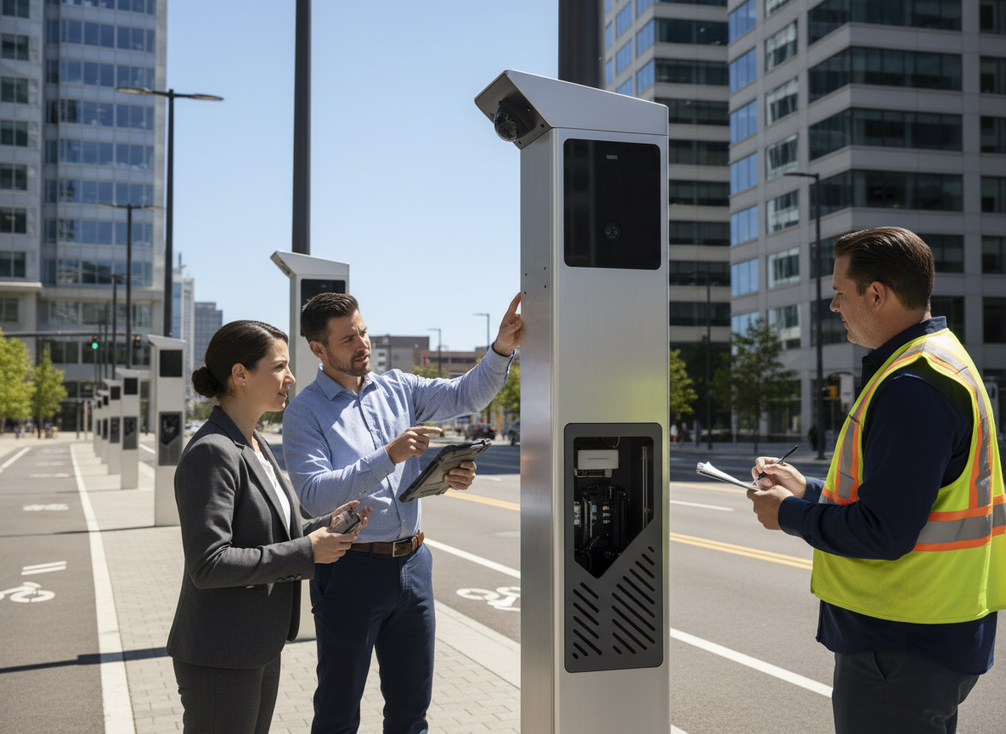
Why Municipal IT Review Comes First
Connected street-pole LED projects affect more than lighting or display performance. They can touch municipal identity systems, network access, data handling, and field operations, so vendor brochures rarely cover the full approval burden.
For that reason, a smart pole cybersecurity checklist should start before procurement advances. If IT, operations, and procurement are not aligned early, the city may discover later that access controls, logging, support terms, or data rights need to be renegotiated. That is when delays and rework usually show up.
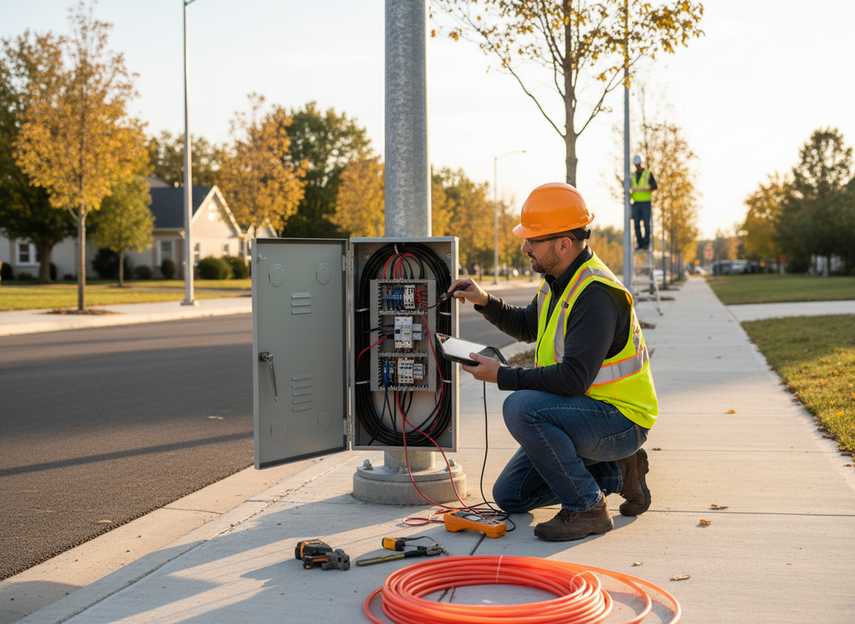
In practice, the checklist is a decision aid. It helps the city ask what must be verified, what should be written into the RFP, and what is still open enough to stop a purchase from moving forward. If the answers stay vague, treat that as a review problem, not a minor paperwork gap.
Core Network and Power Requirements
Power and Site Readiness
Start with the basics: does the pole location have enough power, and is the electrical setup ready for the proposed load? Confirm available capacity, metering, protection, and any utility coordination that may be required before the city approves the project. If backup behavior or fail-safe operation matters, verify it explicitly instead of assuming the vendor has designed for it.
A deployment can look simple on paper and still stall if the pole needs enclosure changes, separate electrical work, or site-specific approvals. That is why power should be reviewed as a procurement item, not just a field-installation detail.

Network Topology and Backhaul
Next, map how the pole will connect to city systems and where that traffic will terminate. The key question is not just whether the device can connect, but who owns the network segment, who manages it, and what path data takes back to the city or vendor environment.
If the proposal depends on fiber, cellular, or another backhaul path, verify coverage, bandwidth, and operational responsibility during site review. A connected pole can also introduce assumptions about latency, monitoring, or remote updates, so the city should test those assumptions before procurement closes. That matters when the deployment must fit into existing municipal network boundaries.
Device Access and Remote Management
Confirm how administrators authenticate to devices, dashboards, and management tools. Cities should know whether the proposal supports role-based access, whether shared accounts are allowed, and who can create or remove user access during the contract term.
Remote management affects maintenance workload and control. Ask who can push firmware, change settings, or reboot devices, and whether those actions leave an auditable trail. Some smart pole technical guidance also emphasizes device identification, status monitoring, and secure over-the-air update mechanisms, which makes management design part of the security review, not an afterthought.
Environmental and Maintenance Access
Review service access, lockout procedures, and maintenance windows before the city signs off. A pole that is difficult to service may be fine in a brochure but costly in a real deployment.
Also check weather exposure, mounting constraints, and tamper risk. Those issues can affect uptime, inspection cadence, and staff workload. If the installation requires frequent field access, the city should factor that into both operations planning and the approval decision.
Security Controls to Verify
The smart pole cybersecurity checklist should turn abstract security language into concrete procurement questions. For a municipal review, the baseline is not “Is it secure?” but “Which controls are in place, who manages them, and how will the city verify them at acceptance?” CISA’s smart city cybersecurity guidance gives cities a conservative starting point for connected deployments.
Identity and Access Control
Verify how users and administrators are authenticated and whether the system supports role-based permissions. Shared accounts, default passwords, or unmanaged credentials should conflict with city policy unless there is a documented exception and a compensating control.
The practical question is who can change what, and when. If the vendor cannot clearly explain how access is granted, reviewed, and removed during the contract term, the city should treat that as an unresolved risk. Administrative access is where many later disputes start.
Firmware Updates and Patch Handling
Ask how firmware updates are delivered, approved, tested, and rolled back. Update cadence matters because a city does not want surprise changes that clash with maintenance windows or break approved configurations.
The vendor should also explain how security-relevant changes are documented and how end-of-life support is handled. CISA’s vendor guidance recommends asking about firmware updates and incident response questions, which is useful because “we update regularly” is not the same as a supportable lifecycle plan.
Logging, Alerts, and Audit Trails
Confirm what events are logged, how long logs are retained, and who can access them. Outage events, failed update attempts, suspicious logins, and configuration changes are all worth checking because they help the city reconstruct what happened if something breaks.
Alerts matter too. If the system cannot surface meaningful alerts without overwhelming staff, the city may end up with blind spots or alert fatigue. The right level of logging is the one that supports review without creating unnecessary overhead.
Segmentation and Incident Response
Verify how smart pole traffic is separated from other municipal systems and public services. Segmentation is a reasonable design principle for reducing lateral movement, but it should be treated as a deployment choice, not a universal guarantee.
Also ask who handles breach notification, quarantine, disablement, and service restoration after a security event. If the vendor cannot describe response roles and escalation contacts, the city should not assume those steps will appear later in practice. A smart pole cybersecurity checklist should make incident response part of the acceptance criteria, not just the emergency plan.
Data Governance and Ownership
| Governance Question | What the City Should Confirm |
|---|---|
| Who owns the data? | Confirm whether the city, vendor, or another party controls the collected data and any derived analytics. |
| How long is data retained? | Verify retention periods, deletion triggers, and whether offsite storage changes the review burden. |
| Can the vendor share data with third parties? | Ask whether subcontractors, platform partners, or advertising partners can access or reuse the data. |
| Who can analyze or export it? | Confirm whether city staff can retrieve usable data without vendor lock-in or extra fees. |
| What happens if the contract ends? | Check export format, deletion rights, and transition support so the city can move data cleanly. |
NIST’s municipal IoT blueprint is a useful reminder that governance is not just about privacy language. The city should know who can use the data, how it is stored, and whether the format leaves room to switch systems later. Control over the data is part of the buying decision.
How to Turn Checks Into Procurement Language
- Define the review scope. State whether the city is reviewing one pole type, a pilot, or a full rollout. That keeps the security and integration questions tied to the actual procurement.
- Convert each open issue into a vendor question. Ask for access control details, firmware support, logging, response roles, and data handling in writing.
- Move unresolved items into the RFP. Include the technical and governance requirements the city will not accept as verbal promises.
- Add acceptance criteria. The city should know what evidence, documentation, or test result is required before sign-off.
- Add accountability terms. NIST procurement guidance supports right to audit and cyber insurance clauses, along with independent risk assessment language where appropriate.
This is where the smart pole cybersecurity checklist becomes operational. If a vendor says a feature exists, the city should still ask how it is configured, who maintains it, and what happens if support ends. That shift from brochure language to contract language is often what keeps approval moving.
Final Review Before You Approve
Before approval, check whether the network path is documented, the access model is clear, and the logging plan is usable. Also confirm that data ownership, retention, sharing, and export terms are written down, not implied.
The final pass should also cover firmware support, incident response, maintenance access, and who signs off on each unresolved risk. If any answer is still fuzzy, document it and send it back to IT, operations, legal, or the vendor for clarification. A good smart pole cybersecurity checklist ends with a clear go/no-go decision, not a guess.
FAQs
How Do Smart Poles Connect to City IoT Systems?
Most smart poles connect through a backhaul path such as fiber, cellular, or another managed network segment, then feed data into a city or vendor management system. The exact topology matters less than the ownership and control questions, which should be confirmed during procurement so the city knows where traffic terminates and who manages it.
What Security Questions Should We Ask a Vendor First?
Start with identity and access control, firmware update handling, logging, and incident response. Those questions quickly show whether the vendor has thought through admin access, support lifecycle, and breach response. If the answers are vague, the city should treat that as a screening issue before moving to deeper technical review.
Why Does Data Ownership Matter in a Smart Pole Project?
Data ownership affects control, retention, sharing, and the city’s ability to export information later. If the contract does not spell those terms out, the city may face lock-in or extra friction during a future platform change. That is why data governance belongs in procurement, not just in legal review after the fact.
Can a City Require Network Segmentation for Connected Poles?
Yes, a city can usually ask for segmentation as part of its network design and procurement requirements, but the exact implementation should be reviewed with city IT and the vendor. The key is to define the isolation goal clearly so the city can judge whether the proposed design actually fits its environment.
What Should Go Into a Smart Pole RFP Checklist?
Include network ownership, access control, logging, firmware support, data handling, maintenance access, and acceptance criteria. If the city wants stronger accountability, add audit rights, cyber insurance expectations, and a clear incident response path. The best RFP checklist is short enough to use and specific enough to enforce.





