

Outdoor LED display decisions in 2026 start with the site, not a generic product list. Media owners need a screen plan that protects content visibility, operating margin, service access, and project approval.
Turn Outdoor LED Display Requirements Into Site Inputs
The useful planning decisions are the ones that change the project brief.
An outdoor LED display should be specified around the closest meaningful viewer, content size, audience approach, ambient light, operating hours, and service route. A road-facing screen viewed from moving vehicles has different priorities from a pedestrian-facing retail façade.
Record direct sunlight, shadow periods, nearby light sources, traffic flow, installation elevation, and available access equipment. Include the creative team early. Small type and fast-cut content can change the required pixel pitch and playback plan.
The project brief should also separate peak electrical load from normal operation. Use average power, planned brightness levels, content mix, and annual operating hours to model operating energy. Peak power remains important for electrical design.
Pair Pixel Pitch and Cabinet Layout With Viewing Conditions
Use a planning reference, then confirm the result with sightlines and sample content.
The following table uses minimum viewing distance (ft) ≈ 3 × pixel pitch (mm) as a planning aid. It is not a Chipshow product recommendation or a fixed viewing outcome.
| Pixel Pitch | Planning Starting Point | Typical Site Condition | Cabinet Layout Review |
|---|---|---|---|
| P4 | About 3.7 m (12 ft) | Close pedestrian viewing on a commercial façade. | Review compact layout needs and front service access. |
| P5 | About 4.6 m (15 ft) | Street-facing retail and mixed pedestrian traffic. | Confirm content size, mounting depth, and glare control. |
| P6.67 | About 6.1 m (20 ft) | Medium-distance urban DOOH and elevated façades. | Review screen scale and the shortest real viewing point. |
| P8 | About 7.3 m (24 ft) | Longer street views and many rooftop concepts. | Prioritize readable large-format creative and structure. |
| P10 | About 9.1 m (30 ft) | Long-view advertising where viewers do not approach closely. | Check sightlines, daylight conditions, and structural loads. |
Our C-Slim (Ma) Standard SMD outdoor LED display lists P4, P5, P6.67, P8, and P10 options. The current product page also lists 960 × 960 × 95 mm and 480 × 640 × 71.5 mm cabinets, 5,500+ nits, front and rear service, and IP65 protection.
Use those facts only for the matching current product configuration. Cabinet footprint, screen aspect ratio, and the service route should be reviewed as one layout decision.

Price the Outdoor LED Display Project, Not Only the Screen
A low hardware figure can hide the work required to deliver a functioning site.
Use this cost structure from the first feasibility review:
Project cost = display hardware + support structure + electrical distribution + installation and access + controls and content + commissioning + spares and maintenance + permits or approvals.
| Cost Area | What Changes the Budget | Procurement Question |
|---|---|---|
| Display hardware | Pixel pitch, screen area, brightness class, cabinet configuration, and control system. | Which exact configuration supports the content and viewing plan? |
| Steelwork and mounting | Existing structure, mounting elevation, wind criteria, and installation geometry. | What data does the structural engineer need from the supplier? |
| Electrical work | Supply capacity, distribution distance, grounding, disconnects, and operating schedule. | What average and peak loads apply to the final configuration? |
| Installation and access | Crane or lift needs, working height, site restrictions, and service route. | How will installation and future maintenance be performed safely? |
| Content and control | Creative production, playback, brightness schedules, monitoring, and commissioning. | What content formats and operating controls are included? |
| Spares and support | Spare modules, power supplies, receiving cards, response scope, and service labor. | Which spares match the final production batch? |
Build the cost model from the proposed configuration, local labor, access method, electricity tariff, content schedule, and maintenance scope. Keep hardware, installed project cost, and operating energy as separate comparison items.
Use Different Outdoor LED Display Directions for Each Site
The installation condition should determine the configuration direction.
| Site Type | Primary Decision | Sensible Configuration Direction | Project Checks |
|---|---|---|---|
| Roadside billboard | Legibility at driving distance and daylight operation. | Consider P8 or P10 after reviewing content size and the shortest vehicle viewing point. | Confirm roadway restrictions, brightness control, sightlines, and safe service access. |
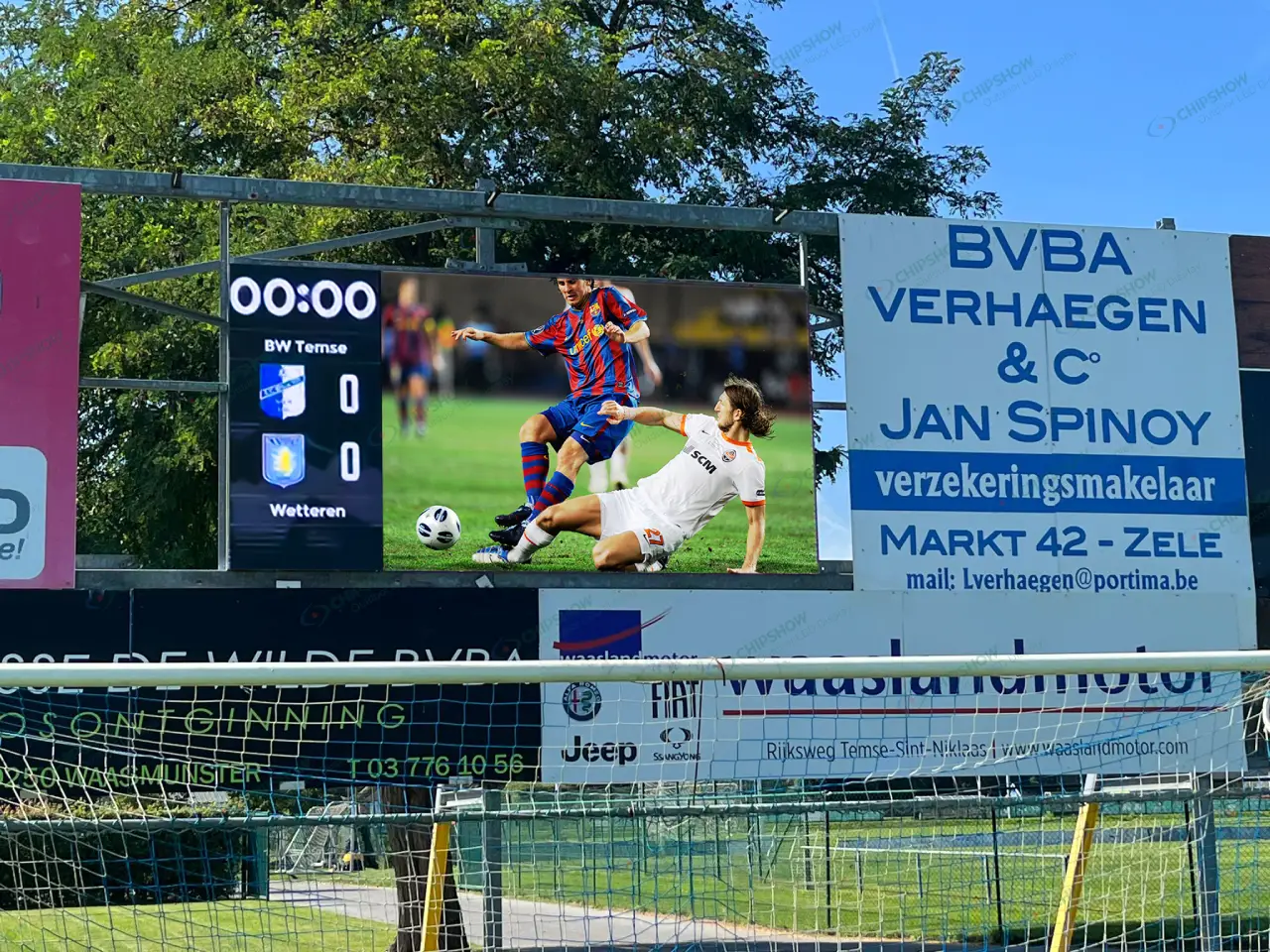
| Commercial street façade | Close pedestrian viewing and integration with the building. | Consider P4 or P5 where close views and detailed creative matter. | Confirm façade clearance, screen layout, glare management, and front-service working space. |
| Rooftop display | Structure, wind exposure, distant viewing, and access. | Consider P6.67, P8, or P10 after the structural and viewing review. | Confirm wind and snow inputs, lifting plan, electrical routing, maintenance access, and permits. |

These directions are project-planning examples, not product guarantees. The selected outdoor LED display still needs a final review of screen dimensions, elevation, content, ambient light, and local constraints.
Confirm Compliance and Engineering Inputs Ahead of Purchase Release
Product protection ratings do not replace a project approval process.
First, identify the country, city, landowner, permit authority, and any advertising or roadway-visibility restrictions. Confirm the intended operating hours and content constraints with the relevant authority.
Next, give the structural engineer the final screen area, cabinet mass, mounting geometry, elevation, and site wind, snow, seismic, and corrosion inputs. The engineer should define the structural requirements for the actual location.

Give the electrical designer the final average and peak loads, supply details, distribution approach, grounding, disconnects, surge-protection needs, cable routing, and applicable local code basis. A generic IP rating does not confirm electrical compliance.
Then verify that any test report, declaration, or certificate applies to the exact product, pixel pitch, enclosure, and market. Approve the drawings, access plan, commissioning scope, and maintenance responsibility prior to purchase release.
Request a Matched Outdoor LED Display Proposal
The supplier can only match a configuration when the site inputs are clear.
Send the project country and city, display width and height, mounting elevation, closest and farthest viewing distances, audience approach, content type, sun exposure, weather conditions, and operating hours. Add available structural drawings, electrical supply details, service-access limits, camera needs, target launch date, and spare-parts expectations.
These inputs allow a review of pixel pitch, cabinet layout, brightness control, load assumptions, service access, energy planning, and documentation scope. They also make proposal comparisons more reliable.

FAQs
What Content Format Works Best on an Outdoor LED Display?
Design the first creative test around large type, clear contrast, short messages, and a safe margin around the screen edge. Review the file format, resolution, playback schedule, and content-approval limits with the control-system team before launch.
When Does an Outdoor LED Display Need Camera Testing?
Request camera testing when the display will appear in broadcast footage, social content, or other recorded media. Confirm the required camera setup and the final receiving-card configuration as part of the project technical review.
How Should a Team Plan Outdoor LED Display Spare Parts?
Agree the spare-module, power-supply, receiving-card, and critical-component list after the final configuration is approved. Keep spares identified to the production configuration and include replacement procedures in the handover plan.
What Should Operators Monitor After an Outdoor LED Display Goes Live?
Monitor fault notifications, brightness schedules, playback status, power behavior, and recurring service issues. A regular review helps the operator schedule maintenance before a visible fault affects the campaign.
When Should a Site Team Request a Pre-Installation Survey?
Request the survey before a final quotation or purchase release when drawings, service access, lifting routes, electrical capacity, or mounting conditions are uncertain. The survey turns assumptions into an executable installation plan.