


MUTCD changeable message sign requirements start with one basic split: MUTCD governs how the sign is used on the road, while NTCIP governs how the sign talks to controllers and central systems. For a highway VMS project, that means protocol support is important, but it is not the same thing as full compliance or approval. The safest review path is to check the governing standard first, then the agency-specific submittal rules, then the hardware and interface fit.
What MUTCD and NTCIP Each Govern
MUTCD Scope for Changeable Message Signs
The MUTCD is the national baseline for the use, design, and application of changeable message signs on public roads. In plain procurement terms, it tells you when the sign is appropriate, how the message should be framed, and what message discipline matters for driver comprehension. The MUTCD 11th Edition is the starting point for that review.
What this means for buyers is simple: a vendor feature list does not prove the sign is ready for roadway use. If a proposal skips over message rules, legibility expectations, or the agency’s preferred operating context, it still needs review.
Where NTCIP Fits in the System
NTCIP 1203 is the interoperability layer for dynamic message signs. The NTCIP 1203 v03 object definitions define the logical interface that lets a field sign exchange data with a central management system or controller.
That distinction matters. A sign can be built for communication compatibility and still fail a project if the message design, acceptance documents, or agency approval package are incomplete. In other words, NTCIP support helps the system work; it does not by itself establish MUTCD compliance.
How State DOT Specs Add Another Layer
Most public projects add state DOT manuals, special provisions, or standard drawings on top of the federal baseline. In practice, that is where buyers see the real approval path: required submittals, approved product lists, test evidence, and signoff steps. NYSDOT’s VMS certification and APL process is a useful example of the kind of documentation chain a state may require.
For procurement teams, the takeaway is to treat the agency process as project-specific. Do not assume a national standard means automatic acceptance.
Technical Checks Buyers Should Verify
Brightness and Day-Night Visibility
Brightness should be verified in the project context, not treated as a universal one-number shortcut. Roadway speed, sight distance, mounting height, ambient light, and the agency’s documentation expectations all affect whether a sign is acceptable. The MUTCD and NEMA TS 4 hardware standards are better read as verification anchors than as a simple brightness claim.

A practical decision rule helps here: if the proposal only gives a headline brightness number but does not explain how visibility is documented for the roadway and agency involved, keep it in the "needs verification" column.
Message Content and Layout Rules
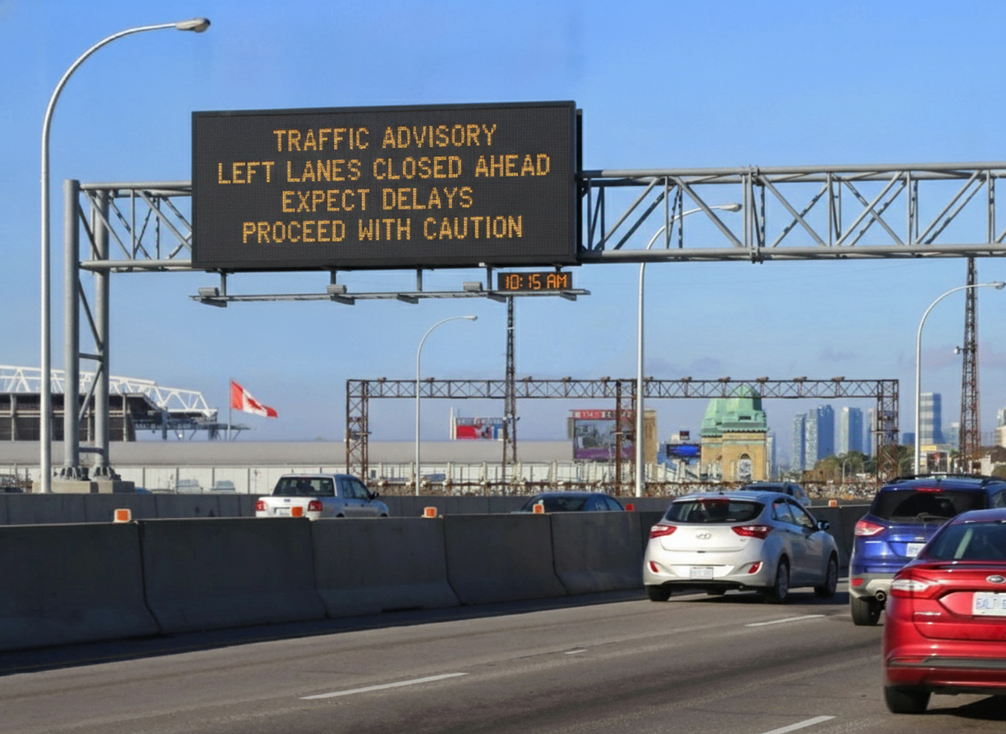
MUTCD message design is where many proposals look fine on paper but fail on review. The federal guidance limits standard message structure to no more than two phases, with each phase limited to three lines of text and a maximum cycle time of 8 seconds. It also ties minimum letter height to roadway context, with 18 inches typically used for roads with speed limits of 45 mph or higher in the cited guidance. See MUTCD Chapter 2L: Design Characteristics of Messages.
For buyers, the judgment is not just "can it display text?" It is "can it display the right text in the right format without forcing the agency into exceptions?" Unconventional or humorous syntax is also a bad fit because FHWA has warned that it can distract drivers and weaken the sign’s effectiveness.
Controller, Protocol, and Integration Checks
NTCIP-related compatibility should be checked against the project architecture, not assumed from marketing language. Ask how the sign is addressed, updated, monitored, and tested in the field, and confirm which NTCIP objects or conformance statements the vendor is actually claiming. The NTCIP 1203 v03 standard is the right reference point for that discussion.
This is also where a lot of project risk hides. If the central system needs a specific interface behavior and the submittal only says "NTCIP compliant," the team still needs to confirm the exact version, supported functions, and test method. A sign that is theoretically interoperable can still create delays if the submittal does not match the control system spec.
Environmental and Maintenance Factors
Highway VMS hardware has to survive the site, not just pass a brochure review. NEMA TS 4 covers physical performance, environmental resistance, and NTCIP-related hardware requirements for dynamic message signs. That makes it a useful anchor for wind, corrosion, ingress, service access, and field maintenance checks.
For procurement teams, the question is whether the cabinet, mounting, and access design fit the location and maintenance plan. A sign that is hard to service can raise lifecycle cost and slow acceptance even if the messaging features look strong.
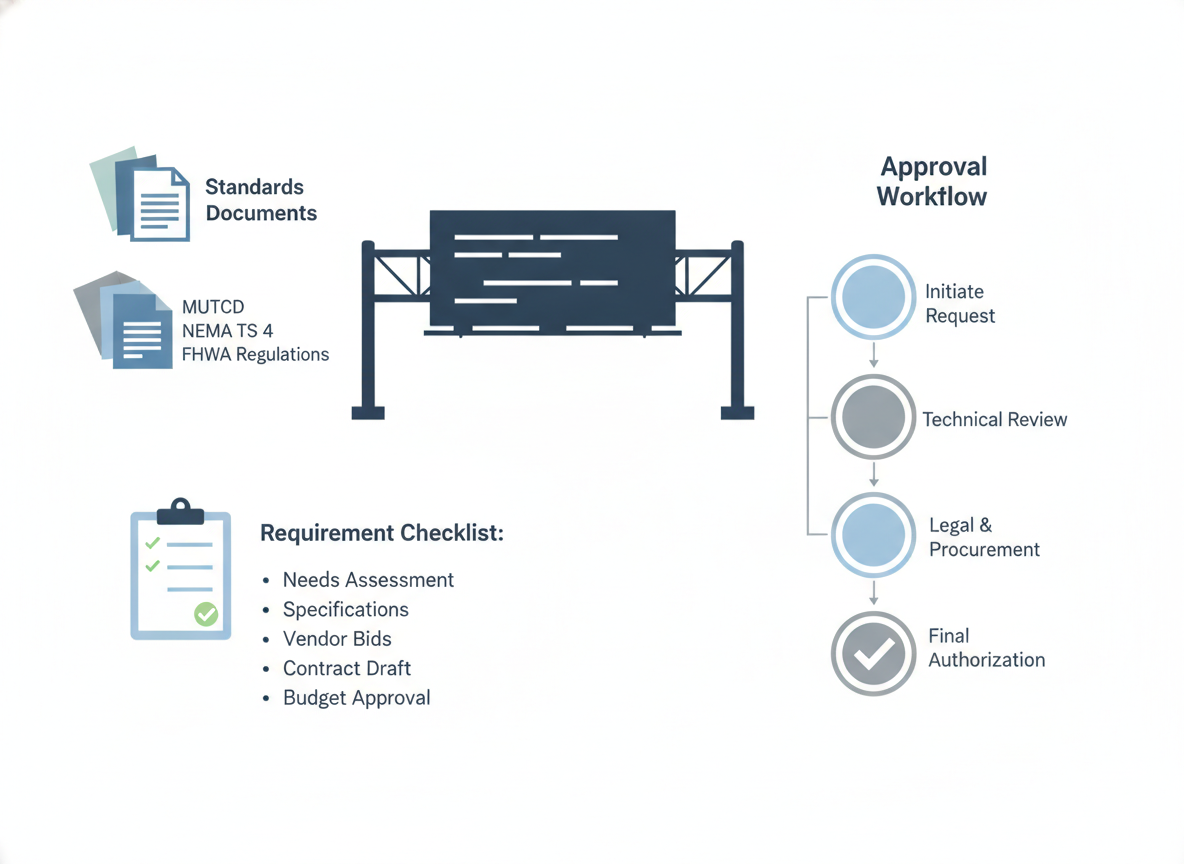
Approval and Submittal Workflow
- Confirm the governing specs. Start with the MUTCD, then read the state DOT standard drawings, special provisions, and submittal rules. If the project has a local standard or approved-products list, that comes into the review early.
- Map the project requirements. List the roadway context, control architecture, message rules, power and mounting needs, and any agency-specific acceptance language before you compare vendors.
- Request a complete submittal package. Ask for shop drawings, compliance statements, protocol details, test evidence, and any forms the agency requires for qualification or approval.
- Review deviations and exceptions. Any gap between the proposal and the project spec should be identified before award, not after delivery.
- Finish with field acceptance and handoff. Make sure the delivered sign, controller interface, and documentation package match the approved submittal, not just the brochure.
This is where many teams lose time. A brochure can support early screening, but it cannot replace the actual approval package. If the agency asks for a specific submittal path, the safest move is to match that path exactly and document every exception clearly.
Buyer Checklist for Spec and Vendor Review
The table below turns MUTCD changeable message sign requirements into a practical bid-review tool.
| Review Area | What To Confirm | What Evidence To Ask For | Common Risk Flag | Decision Notes |
|---|---|---|---|---|
| Governing standard | MUTCD use, message, and legibility rules apply to the project | Cited standard section and project spec references | Vendor only cites product brochure language | Treat standards as the baseline before comparing features |
| Brightness and visibility | Visibility is documented for the roadway context and mounting location | Project-specific legibility or visibility support | One brightness number presented as universal proof | Verify in context, not by headline specs alone |
| Message formatting | Line count, phase structure, and cycle timing fit MUTCD guidance | Message examples and layout support | Too much text or nonstandard syntax | Readability beats packing in extra words |
| Control protocol | NTCIP version and supported objects match the control architecture | Conformance statement and interface details | "NTCIP compliant" without version detail | Confirm how the sign will be addressed and tested |
| Hardware durability | Cabinet, mounting, and enclosure fit highway exposure | NEMA TS 4-related documentation or equivalent hardware evidence | No proof of environmental resistance | Match durability to site conditions and service plan |
| Approval documents | Agency-required forms, lists, and certifications are included | Shop drawings, certification statements, APL/QPL items | Missing state-specific paperwork | Agency completeness can be as important as technical fit |
| Acceptance testing | Factory and field test steps are defined | Test plan, test results, and handoff checklist | Acceptance criteria left vague | Do not leave final acceptance open to interpretation |
A compact checklist like this is usually more useful than a broad feature comparison. It helps teams separate must-have compliance items from preferences, and it makes deviations visible before the contract is signed.
How to Read the Checklist in a Bid Review
If a row has no evidence, treat it as a risk until the vendor fills the gap. If a row is only partly supported, keep the item in the exception log and decide whether the agency will accept a deviation. For public-sector buyers, the practical goal is not to find the fanciest sign. It is to find the sign that can survive review, installation, and acceptance with the fewest surprises.
FAQs
What Is the MUTCD Requirement for Changeable Message Signs?
MUTCD sets the baseline for how changeable message signs are used, how the message is structured, and how readable it should be on public roads. The exact project path can still change by state DOT and roadway context, so the federal rule is the starting point, not the whole approval story.
What Does NTCIP Add to a Highway VMS Project?
NTCIP adds the communication and control layer. It matters when the sign must integrate with a central system, field controller, or agency monitoring setup. Buyers should verify the version, conformance scope, and any project-specific interface requirements instead of accepting a generic "NTCIP compliant" statement.
How Do Buyers Check Brightness and Visibility Claims?
Start with the roadway context, then ask for the project documents that explain how visibility will be supported at the site. A single advertised number is not enough if the sign will be used in different lighting, sight-distance, or mounting conditions. If the proposal lacks that context, the claim needs verification.
Can a Vendor Brochure Prove DOT Compliance?
No. A brochure can help with early screening, but it does not replace shop drawings, compliance statements, test evidence, or any state-specific approval forms. For procurement review, brochure language should be treated as marketing until it is matched to the project submittal package.
Why Do Approval Steps Vary by State DOT?
Because state DOTs may add their own standard drawings, approved-product lists, testing evidence, or certification forms on top of the federal baseline. That is why a sign can look acceptable nationally but still need local verification before award or acceptance.
For teams writing specs or reviewing bids, the safest approach is to separate standards, protocol, and agency process before you compare vendors. That keeps MUTCD changeable message sign requirements from getting blurred with product claims and helps prevent rework later. If you are building a submittal package, start with the agency rules first, then verify the interface, then confirm the hardware evidence.





