

A strong LED display warranty and spares package lowers downtime risk; it is not just the one with the longest term. For fine-pitch LED walls, compare what is covered, what is excluded, how spares match the wall, and how parts will be supplied later. If those four items are weak, the lowest bid can become the most expensive one.

What a Meaningful Warranty Covers
A meaningful warranty for an LED display warranty and spares review is a coverage package, not a calendar entry. Procurement teams should separate panel, module, power, control, and labor coverage because each one affects ownership risk differently. A warranty that sounds broad but does not clearly name the covered parts, the claim path, and the service handoff is not giving you much protection.
Scope, Not Just Duration
Start with the actual scope. Ask which components are covered, whether labor is included, and whether the warranty applies to replacement work as well as the part itself. That matters because a short, clearly written warranty can be more useful than a longer one with vague language.
A practical rule is simple: if the written terms do not tell you who fixes what, when the clock starts, and how service is requested, the warranty is still a risk item. The AVIXA standards overview is useful here because it frames long-term system performance as a service and operations issue, not just a hardware purchase.
Exclusions and Conditions
This is where many proposals get weaker than they look. Environmental factors such as humidity, dust, and improper ventilation are common environmental exclusions and installation conditions, so a wall installed outside its intended operating environment may lose practical coverage even if the sales sheet sounds generous.
Check whether the warranty depends on approved installation, approved maintenance, or documented operating limits. For command center buyers, that is not a minor detail. It decides whether a future claim is routine or disputed. If the site conditions are borderline, the safer move is to treat the warranty as conditional rather than broad.
Service Path and Ownership Impact
Warranty language also needs a service path. Response process, escalation path, and repair method affect downtime risk even when the coverage headline looks strong. A wall with decent coverage but a clumsy claim process can still create expensive delays.
This is why procurement should align the warranty with uptime needs and internal maintenance capability. If your team can handle first-line diagnostics and swap procedures, a clearer part-and-labor structure may matter more than a glossy promise. If the room is mission critical, the service path should be written down, not assumed.
Included Spares That Actually Matter
Included spares should reduce maintenance risk, not just make the quote look fuller. In an LED display warranty and spares comparison, the right question is not “How many extras are included?” It is “Do these extras match the way this wall is actually maintained?”
A few spare categories deserve attention:
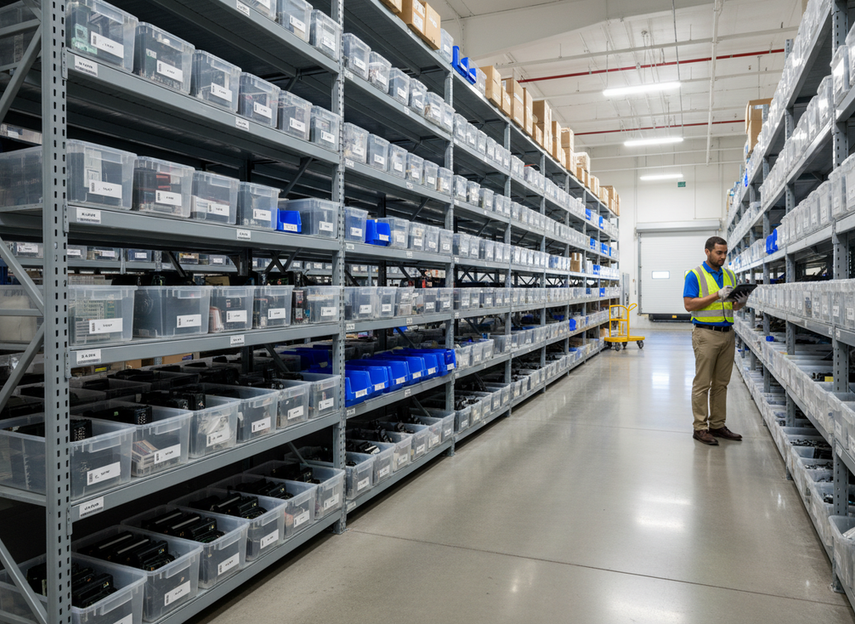
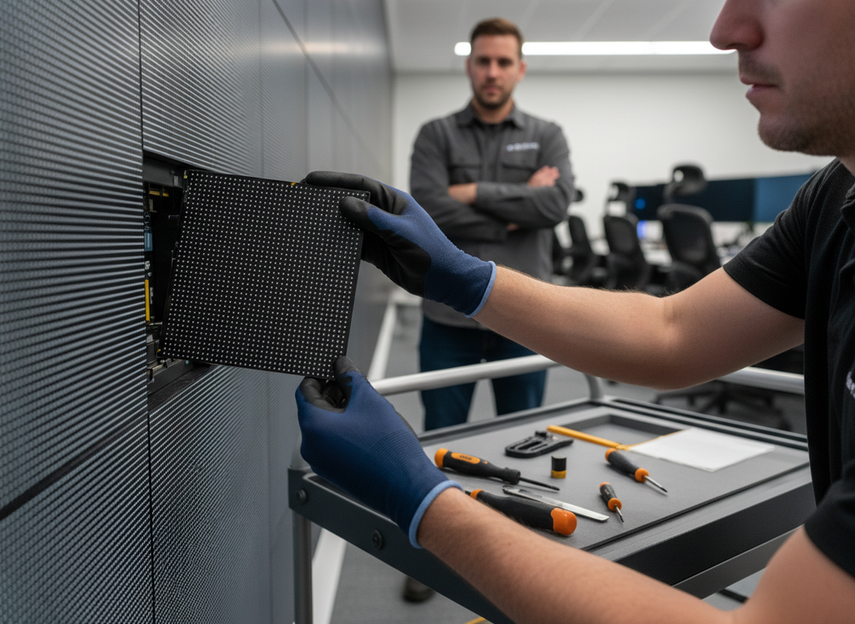
- Spare modules, because they address visible failures but only help if they match the original bin and calibration.
- Spare power supplies, because power faults can take down a portion of the wall quickly.
- Signal-related spares, because control and data issues can look like display failures when they are not.
- Service tools, because access method and swap speed affect how fast a fault is corrected.
- Commissioning spares, because some packages are built for startup risk rather than long-term service.
The most important compatibility point is module matching. Industry guidance on batch-matched spare modules shows why same-batch replacement matters for color and brightness consistency. A spare that is physically compatible but visually mismatched can create a new problem instead of fixing the old one.
A common heuristic is to think about a 5% spare-module buffer for mission-critical deployments, but only as a planning reference, not a rule. If the proposal includes a different quantity, judge it against maintenance access, fault tolerance, and how quickly replacements can be sourced. More spares are not automatically better if they do not fit the maintenance plan.
Parts Availability and Lifecycle Risk
Parts availability is a lifecycle-risk question. The buying decision is not only whether parts exist today, but whether you can still source the right parts later without turning a small failure into a long outage. Procurement teams should treat this as part of the LED display warranty and spares review, not as a separate afterthought.
| Decision Factor | What It Means In Practice | What To Ask Before Approval |
|---|---|---|
| Stocking model | Whether parts are kept locally, regionally, or only on order | Where is the nearest inventory, and who holds it? |
| Lead-time exposure | How long a replacement may take once a fault occurs | What is the normal ordering path for replacement parts? |
| Obsolescence risk | Whether older parts will still be supported after a platform change | How are discontinued modules handled? |
| Compatibility risk | Whether later replacements will still match the original wall | Will replacements remain bin-matched and compatible? |
The practical point is that parts availability changes repair speed, downtime, and the economic life of the wall. A part that is “available” but slow to obtain may still be a weak answer for a control room. A useful lifecycle article on parts availability and lead times makes the same basic point: buyers should verify stocking approach, obsolescence handling, and replacement compatibility before they sign.
For long-term planning, ask about regional inventory, model changes, and whether older modules can still be matched cleanly later. If the vendor cannot answer those questions in writing, the proposal is not as low-risk as it looks.
Warranty Terms Versus Ownership Costs
A lower upfront quote can cost more if the buyer absorbs labor, shipping, spare stocking, or downtime risk later. That is the ownership-cost framing procurement and finance teams need when they evaluate fine-pitch LED walls. The AVIXA standards overview is a useful reference for thinking about system performance, access, and long-term operation as part of total cost, not just initial purchase price.
The easiest way to see the hidden cost is to break it into buckets. If the warranty excludes labor, you may pay for repeated site visits. If spare modules are not included, you may need to self-stock. If parts are slow to arrive, the cost is not just the repair invoice; it is also the operational impact of the outage.
That matters most in command and control rooms, where a display issue can affect decision speed, situational awareness, and staffing effort. For that reason, the cheapest bid is only the better deal when the written terms preserve uptime and do not push the real risk back onto your team.
Use a Comparison Checklist Before You Approve
Use this checklist before you approve any fine-pitch LED wall proposal:
- Confirm the warranty scope in writing, including covered parts, labor, and the claim path.
- Check the exclusions and operating conditions, especially installation, ventilation, dust, and humidity limits.
- Verify whether included spares match the wall’s binning, maintenance access, and fault profile.
- Ask how parts will be stocked, ordered, and replaced over time.
- Request written language on obsolescence handling and replacement compatibility.
- Compare the service path against your uptime needs and in-house maintenance capability.
- Approve only if the written terms fit your downtime tolerance, not just your budget.
If a proposal cannot answer those items clearly, keep comparing. Before approval, compare the written warranty, spares, parts availability, and service terms line by line.
FAQs
How Do You Compare LED Wall Warranties?
Compare the covered components, exclusions, labor terms, and claim process before you compare duration. A longer warranty is not automatically better if it leaves out service steps or narrows coverage through site conditions and installation rules. The best comparison shows who pays for the fix, who performs it, and what triggers a valid claim.
What Should Be Included in a Fine-Pitch LED Warranty?
At minimum, the written terms should identify what parts are covered, whether labor is included, and which conditions can limit coverage. If the proposal only repeats marketing language, ask for the specific exclusions and the service path. That is the point where a vague promise becomes a real procurement term.
What Included Spares Actually Reduce Downtime?
The most useful spares are the ones that match likely failure points and your access method. Spare modules help only if they are bin-matched and compatible, while power or signal spares may matter more when a fault can take down a larger section. The right package depends on how the wall will be serviced.
How Do You Judge Parts Availability Over Time?
Ask how parts are stocked, how replacements are ordered, and how discontinued components are handled. Also ask whether later replacements will still match the original wall. If the vendor cannot explain obsolescence handling or regional inventory, the long-term risk is higher than the quote suggests.
Can a Lower-Priced Quote Still Be the Better Deal?
Yes, but only if the lower price does not shift labor, shipping, spare stocking, or downtime risk back to you. A lower bid can be the smarter option when the written terms are still strong and the service path is clear. If those terms are vague, the cheaper quote may cost more over the wall’s life.